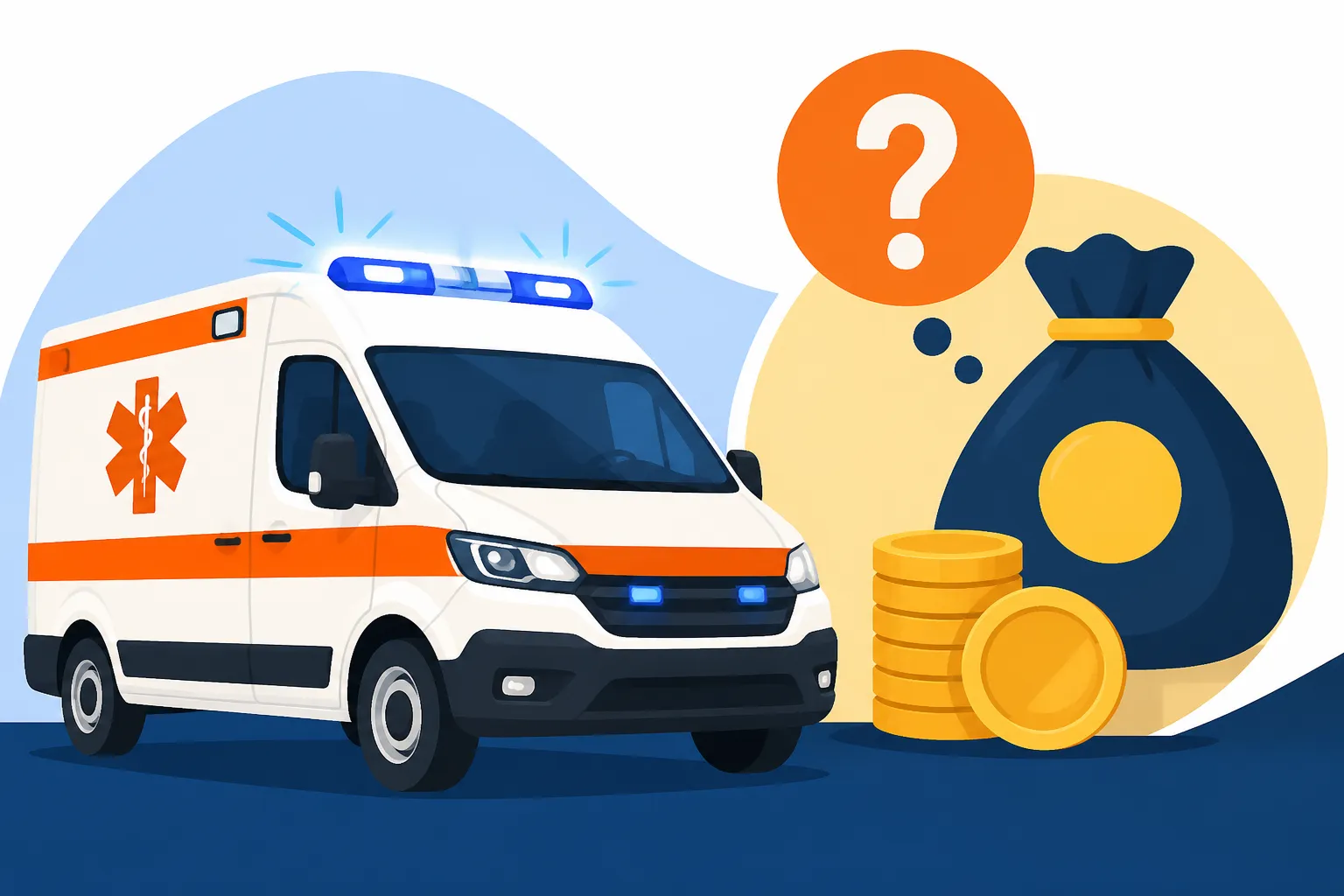
How Much Does an Ambulance (Ambulanță) Cost in Romania?
One of the most paralyzing fears for any foreigner living in Romania is facing a medical emergency without knowing the financial consequences. You might be staring at your phone, wondering if calling an ambulance will result in a four-figure bill or a bureaucratic nightmare that complicates your residency. This guide breaks down the exact costs of ambulance services in Romania, ensuring you know when it is free, when you will be charged, and how to navigate the system as an expat or tourist.
Understanding the Dual System: Public vs. Private Ambulances in Romania
When you see a siren-blaring vehicle weaving through the legendary traffic of Bucharest or Cluj-Napoca, you are likely looking at one of two distinct systems. Understanding the difference between them is the first step in managing your expectations and your wallet. Romania operates a robust public emergency system, but it is supplemented by a growing private sector that offers different levels of comfort and speed for non-life-threatening situations.
The Public Emergency System: 112 and SMURD
The public system is what most people encounter first. It is triggered by dialing 112, the universal emergency number. In Romania, this dispatch system controls both the National Ambulance Service (SAJ) and SMURD (Serviciul Mobil de Urgență, Reanimare și Despistare). Generally, the white ambulances with yellow or orange stripes belong to the SAJ, while the bright red vehicles belong to SMURD, which is part of the Fire Department.
For a veteran expat, the most important thing to know is that for "code red" or life-threatening emergencies, the public system is the primary responder. Whether you have insurance or not, if you are in a life-threatening accident, the ambulance will come, and they will treat you. The immediate cost of that intervention is covered by the state budget for everyone on Romanian territory, regardless of nationality. However, the "free" nature of this service can change once you reach the hospital doors, depending on your insurance status. For more context on this, you should read about Emergency Medical Care in Romania: What Every Expat Needs to Know to see how the triage process works.
Private Ambulance Services and Medical Taxis
Beyond the public sirens, there is a thriving private market. Companies like Regina Maria, MedLife, and Sanador operate their own fleets. These are not typically the ones responding to a 112 call for a major highway accident. Instead, they are used for scheduled medical transport, urgent (but not life-threatening) home consultations, or moving a patient from one facility to another.
Private ambulances are rarely "free" unless they are part of a high-end corporate subscription. If you call a private provider because you have a high fever or a painful but non-emergency injury, you are looking at a fee-for-service model. This is where many expats get confused. They call a private clinic they are registered with, expecting a "free" ambulance, only to find that their specific subscription level doesn't cover the transport. It’s essential to understand Public vs Private Healthcare in Romania: Which Should Expats Choose? before you find yourself in a situation where you need to make a split-second decision about which number to call.
Costs for Expats: Who Pays and Who Does Not
The question of "how much" depends almost entirely on your legal status in Romania. The system is designed to be generous to those who contribute to the national fund, but it can be rigid for those who fall through the administrative cracks.
EU Citizens and the EHIC Advantage
If you are an EU citizen visiting or newly arrived in Romania, your European Health Insurance Card (EHIC) is your best friend. In a legitimate emergency, the public ambulance transport is covered by the same reciprocal agreements that apply across the Union. You won't be handed a bill by the paramedic as you climb into the back of the vehicle.
However, the "emergency" definition is strictly applied. If you call an ambulance for something a doctor deems a "consultation" rather than an "emergency," the hospital might try to bill you for the service later. To avoid these headaches, make sure you understand the nuances of How to Use Your EHIC (Cardul European) in Romania as an EU Citizen so you can present the right documentation at the right time.
Non-EU Residents and the CASS System
For those of us from outside the EU, the cost of an ambulance is tied to our residency permit and our contributions to CASS (the National Health Insurance Fund). If you are employed by a Romanian company or you are a PFA (sole trader) paying your monthly contributions, the public ambulance service is included in your coverage.
The frustration usually arises during the "gap" period—the time between arriving in Romania and finally receiving your plastic residence card with your CNP (Personal Numerical Code). During this window, you are technically uninsured in the eyes of the public system. If you need an ambulance during this time, you may be billed for the transport and subsequent hospital care. This is why many expats rely on temporary solutions like SafetyWing to cover medical emergencies while they wait for their Registering for Public Health Insurance (CASS) in Romania (2027) to be processed. SafetyWing is particularly popular among digital nomads because it bridges that gap between arrival and official residency.
Tourists and Short-Term Visitors
If you are a tourist from a non-EU country, a public ambulance for a life-threatening emergency is technically free at the point of delivery, but the hospital stay that follows is definitely not. If the situation is not a life-threatening emergency, you might be asked to pay for the ambulance transport itself. Prices for a non-emergency public ambulance ride for an uninsured foreigner can range from 300 to 800 RON, depending on the distance and the level of medical equipment required in the vehicle.
For these travelers, having a dedicated travel medical insurance like SafetyWing is vital. SafetyWing can reimburse the costs of emergency transport if you are billed, which is much better than trying to negotiate with a hospital administrator in a language you might not speak.
| Service Type | Cost for CASS Insured | Cost for EU (EHIC) | Cost for Uninsured/Tourist |
|---|---|---|---|
| 112 / SMURD (Life Threatening) | 0 RON | 0 RON | 0 RON (at point of service) |
| 112 / SAJ (Urgent but Stable) | 0 RON | 0 RON | 300 – 800 RON |
| Private Ambulance (Emergency) | Subscription Dependent | Full Price | 500 – 1,500+ RON |
| Private Medical Transport | 400 – 1,000 RON | 400 – 1,000 RON | 400 – 1,000 RON |
Private Ambulance Pricing and Subscription Models
If you choose to bypass the public system—perhaps because you want an English-speaking dispatcher or a guaranteed shorter wait for a non-life-threatening issue—you need to know the price list. Private medical care in Romania is high quality, but the logistics of ambulance transport are expensive.
One-Off Emergency and Transport Costs
If you do not have a medical subscription (an "abonament"), calling a private ambulance from a provider like MedLife or Regina Maria will cost you. Typically, there is a "call-out" fee which starts around 400 RON. On top of that, you will pay for the "intervention" (the time the doctor or nurse spends with you) and a "per kilometer" fee if they are transporting you to a clinic.
There are cases where a simple transport across Bucharest, involving a doctor on board, ended up costing nearly 1,200 RON. This is a significant sum, but for some, the comfort and the direct path to a private hospital are worth it. Before you commit to a private provider, it is worth asking: Is a Private Medical Subscription (Abonament) Worth It in Romania? for your specific lifestyle. Many mid-tier subscriptions actually don't include the ambulance for free, only a discount on the transport fee.
The Role of SafetyWing and Private Insurance
For those who are not yet in the CASS system, or who prefer to avoid the public system entirely, private health insurance is the answer. SafetyWing provides a reliable safety net that can cover the high costs of private emergency interventions. In a country like Romania, where the public system is often overwhelmed, having the ability to call a private ambulance and know that your insurance will handle the claim is a massive relief.
When choosing between a local subscription and an international plan, remember that local "abonamente" are often just "discount clubs" for consultations. They rarely provide the full financial coverage for emergency surgery or long-distance ambulance transport that a plan from SafetyWing offers. This distinction is crucial when calculating the real The Cost of Healthcare in Romania: A Complete Breakdown for Foreigners (2026) and deciding how much risk you are willing to take.
Practical Steps: Calling for Help in Romania
When the moment of crisis hits, your brain won't be thinking about CASS contributions or insurance tiers. You need to know exactly what to do.
Navigating the 112 Call
If you dial 112, you will be asked "Ce urgență aveți?" (What is your emergency?). The dispatchers often speak English, but it is not guaranteed. State your location clearly—give the sector in Bucharest or the landmark in other cities. Be prepared to explain if the patient is conscious and breathing.
The dispatcher will decide whether to send a SMURD crew or a standard ambulance. You cannot "order" a SMURD vehicle; they are dispatched based on the severity of the case. For a deeper dive into how this dispatching logic works, check out our guide on Understanding Emergency Numbers (112) and the SMURD Service in Romania. Knowing the difference can save you a lot of anxiety while waiting for the sirens.
What Happens at the Hospital?
Once the ambulance arrives at the hospital (usually a "Spital de Urgență"), you will go through triage. If you are uninsured and it is not a life-threatening emergency, this is the moment you might be asked for payment or a guarantee of payment. If you are in the public system, you should have your "Card de Sănătate" (Health Card) or a certificate from CNAS.
If you are a visitor, this is when you would present your EHIC or your SafetyWing policy details. Most public hospitals in Romania are used to dealing with the state insurance, so presenting private international insurance might require a bit of patience and a call to your insurance provider’s emergency line. It is also helpful to understand What Is the Difference Between a Policlinică and a Spital in Romania? so you know what kind of facility the ambulance is likely taking you to.
The "Hidden" Costs of Recovery
The ambulance ride is just the beginning. While the ride might be covered, the medications, specialized tests like MRIs, or a multi-day stay in a "salon" (hospital room) can add up quickly for the uninsured. Romania’s healthcare system is incredibly affordable compared to Western Europe or the US, but 500 Euro for a minor surgery and a two-day stay is still a lot of money if you haven't budgeted for it.
If you are an expat who plans on staying long-term, especially if you have a family, you should look into Health Insurance in Romania: Mandatory, Private and Travel Options Explained to ensure you have a comprehensive shield. And if you are here as a parent or expecting to be one, the rules change slightly—emergency care for children and pregnant women is often covered more broadly by the state, though you should verify the specifics in What Should Expats Know About Maternity Leave Healthcare in Romania? to be certain.
Final Thoughts for the Veteran Expat
Living in Romania means embracing a bit of administrative chaos in exchange for a vibrant, beautiful life. The ambulance system is a reflection of that. It is highly capable and remarkably affordable (often free) for those who are "in the system," but it can feel like a maze for those who are not.
My advice is simple: If it is a life-or-death situation, call 112 immediately. Do not worry about the money; the Romanian state prioritizes life over paperwork in those first critical minutes. But for everything else—the late-night fevers, the broken ankles, the sudden pains—make sure you have your documentation in order. Whether that means your CASS is active or you have a reliable policy from SafetyWing, having that peace of mind is the best way to ensure that a medical emergency doesn't become a financial one.
Disclaimer
The information provided in this guide is for informational purposes only and does not constitute legal or medical advice. Healthcare regulations and costs in Romania are subject to frequent changes. Always verify your insurance coverage and residency status with the relevant Romanian authorities or your insurance provider. In the event of a medical emergency, always call 112 or seek immediate professional medical assistance.