What Should Expats Know About Maternity Leave Healthcare in Romania?
The thought of navigating a healthcare system in a new country is daunting enough, but when you add pregnancy and maternity leave into the mix, it can feel absolutely overwhelming. Many expats in Romania find themselves grappling with unfamiliar bureaucratic processes, language barriers, and a constant worry about how everything works when it comes to bringing a new life into the world. This guide is here to shed light on what you, as an expat, need to know about maternity leave and healthcare during this special time in Romania, from understanding your entitlements to accessing quality medical care.
Understanding Maternity Leave and Benefits in Romania
Let's cut through the confusion right away. In Romania, maternity leave isn't just one type of leave; it's a combination of different entitlements designed to support new mothers and parents. For expats, understanding these distinctions is crucial, especially when it comes to eligibility and benefits.
Concediu de Maternitate: The "Medical" Maternity Leave
This is the actual maternity leave in the medical sense, officially called concediu de maternitate. It's a period of 126 calendar days, during which you receive an indemnity. This leave is typically divided into two parts: prenatal leave (concediu de sarcină) and postnatal leave (concediu de lăuzie). You can distribute these 126 days as you wish, but there's a legal requirement that you must take at least 42 days after the birth.
To be eligible for this, you need to have been employed and paid into the public health insurance system (CASS – Contribuția de Asigurări Sociale de Sănătate) for at least six months out of the last 12 months before applying for the leave. This means if you're a relatively new arrival, or if you've had a break in employment, your eligibility might be affected. The indemnity you receive is 85% of your gross average income from the last six months of the 12-month contribution period. It’s paid through your employer, who then recovers the amount from the National Health Insurance House (Casa Națională de Asigurări de Sănătate – CNAS). The paperwork for this usually starts with your gynecologist issuing a medical certificate, which you then submit to your employer.
Concediu pentru Creșterea Copilului: The Child-Raising Leave
After the 126 days of concediu de maternitate are over (or even if you weren't eligible for it, but meet different criteria), you can apply for concediu pentru creșterea copilului, which translates to child-raising leave. This is a longer period, allowing one parent to stay home with the child until they are either one year old (if you opt for an additional stimulating activity benefit) or two years old (three years for children with disabilities). During this leave, you receive a monthly allowance from the state, which is generally 85% of your average net income from the last 12 months preceding the birth, with a minimum of 850 RON and a maximum cap.
This benefit is managed by the Agenția Națională pentru Plăți și Inspecție Socială (ANPIS) at the local level. The eligibility criteria are slightly different, focusing on income-generating activity for at least 12 months in the past two years before the child's birth, rather than just CASS contributions. This income could be from employment, self-employment (like a PFA), or other taxable activities. The application process is notoriously bureaucratic, involving a lot of paperwork, including birth certificates, residence permits, proof of income, and sometimes even a certificate from your employer confirming the end of your maternity leave. It's truly one of those moments where you wish you had a local friend to help translate all the necessary documents and navigate the various offices.
Here’s a quick overview of the two main types of leave:
| Aspect | Concediu de Maternitate (Medical Maternity Leave) | Concediu pentru Creșterea Copilului (Child-Raising Leave) |
|---|---|---|
| Purpose | Medical recovery (prenatal/postnatal) | Raising a child |
| Duration | 126 calendar days | Until child is 1 year (or 2 years; 3 for disabilities) |
| Eligibility Criteria | 6 months CASS contributions in last 12 months | 12 months income-generating activity in last 2 years |
| Benefit Calculation | 85% of gross average income (last 6 months) | 85% of net average income (last 12 months), min/max limits |
| Administered By | Employer (reimbursed by CNAS) | ANPIS (local agencies) |
| Mandatory Post-Birth | At least 42 days | No, optional after medical leave |
Navigating Healthcare for Pregnancy and Childbirth
Once you know your leave entitlements, the next big hurdle is understanding how to access quality healthcare throughout your pregnancy and for childbirth itself. Romania offers both public and private healthcare options, and for something as personal and critical as maternity care, many expats find themselves weighing the pros and cons very carefully.
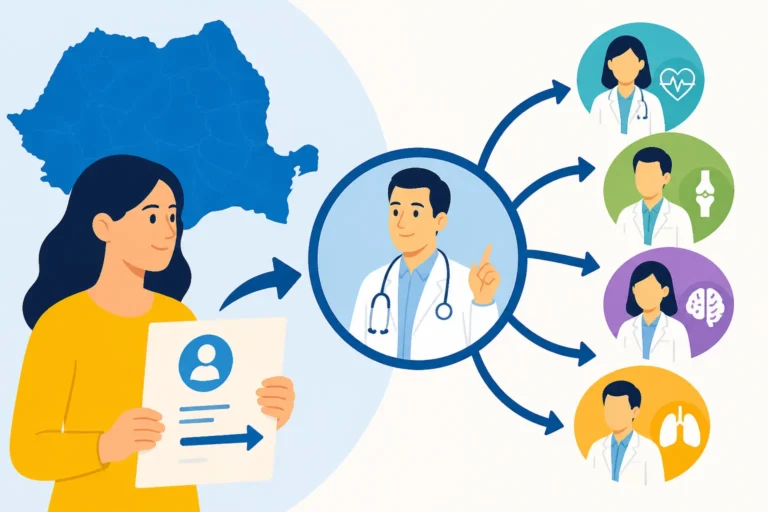
Finding Your Healthcare Team: Gynecologist and Family Doctor
Your first port of call will be finding a good gynecologist (medic ginecolog). This is perhaps the most personal choice you’ll make during your pregnancy journey. While you can opt for a public hospital gynecologist, many expats lean towards private clinics for their prenatal care due to the promise of better English communication, more streamlined appointments, and a more comfortable experience. Popular private networks like Regina Maria or MedLife often have English-speaking doctors and modern facilities, offering everything from routine check-ups to advanced ultrasounds. You can read more about this in our guide on Public vs Private Healthcare in Romania: Which Should Expats Choose?.
Remember, even if you primarily use private services, you'll still need to be registered with a family doctor (medic de familie) if you plan to access any public health services or benefits, including concediu de maternitate. Your family doctor will issue referrals for certain tests and can also advise on basic health matters for you and, later, your baby. Don't underestimate the role of your family doctor, as they are your gateway to many aspects of the public health system here. For a detailed walkthrough, check out The Expat Guide to Finding a Family Doctor (Medic de Familie) in Romania.
Prenatal Care and Choosing Your Birthing Plan
Prenatal care in Romania typically follows a standard schedule of appointments, blood tests, and ultrasounds. If you're covered by the public system (CASS), many of these services should be covered or partially covered, especially if referred by your family doctor to a public facility. However, the reality for expats often involves longer waiting times, less English communication, and sometimes, older equipment in public hospitals. This is why many choose to pay out-of-pocket for private prenatal care, even if they have CASS, for a more consistent and comfortable experience. Understanding Maternity and Prenatal Care in Romania can help set expectations.
When it comes to the birth itself, you have options. Public hospitals are generally well-equipped for emergencies and offer free or low-cost childbirth for CASS-insured individuals. However, the standard of care can vary, and private rooms, if available, usually come with an extra fee. Private hospitals, on the other hand, offer a more hotel-like experience, with private rooms, dedicated staff, and often more flexible birthing plans. These come at a significant cost, ranging from a few thousand to well over ten thousand Lei, depending on the hospital and type of birth. Many private clinics offer maternity packages that bundle all prenatal care and the birth itself. It's a hefty expense, but for many, the peace of mind is worth it.
If you're new to Romania and haven't secured full CASS eligibility yet, or if your CASS status is in flux, having a robust international health insurance plan can be a lifesaver. Some providers, like SafetyWing, offer plans that could cover emergency maternity situations, though it’s always crucial to check the specifics of their coverage regarding pregnancy and waiting periods before you commit. You can find more information about the overall healthcare landscape in our comprehensive guide, The Complete Guide to Healthcare in Romania for Expats (2027).
Postnatal Care and Beyond for Expat Families
Congratulations, you've welcomed your little one! But the journey doesn't end there. Postnatal care for both mother and baby, as well as accessing ongoing support and benefits, are equally important aspects for expat families in Romania.
Immediate Post-Birth and Newborn Registration
After the birth, typically, you and your baby will stay in the hospital for a few days, depending on the type of birth and your health. During this time, the baby will undergo initial checks, including hearing tests and a heel prick test (Guthrie test). Before you leave the hospital, you'll receive a birth certificate for the baby, called a "certificat constatator al nașterii." This document is vital for registering your child's birth at the local civil status office (Starea Civilă) and applying for their Romanian birth certificate, which is usually necessary for obtaining a CNP (Personal Numeric Code) for your child and registering them for health insurance.
Getting a CNP is a critical step for your child to access healthcare. While you might be familiar with the process for yourself from How to Get Your CNP (Personal Numeric Code) for Healthcare Access in Romania, doing it for a newborn has its own specific set of documents and procedures. Without a CNP, registering your baby for CASS, and therefore for free public healthcare, becomes complicated.
Ongoing Care for Mother and Child
Once home, both mother and baby will need follow-up care. The mother typically has a postnatal check-up with her gynecologist, usually around six weeks after birth. For the baby, you'll need to find a pediatrician (medic pediatru). Many expats choose a pediatrician associated with the private clinic where they had their prenatal care or birth, again for ease of communication and access. However, public polyclinics also have pediatricians who can provide care, especially for vaccinations, which are largely covered by CASS.
Speaking of vaccinations, Romania has a national vaccination schedule for children that is generally mandatory for school enrollment. Your pediatrician will guide you through this, but it’s always good to be aware of the schedule. Our article on Understanding Vaccination Schedules and Requirements in Romania provides a detailed look at what to expect.
It's also important to register your newborn for health insurance. This involves submitting the baby's birth certificate and CNP to the local health insurance house. This step ensures your little one has access to all the necessary medical services. You can read more on this process in How to Register Family Members for Health Insurance in Romania.
Child Benefits and Support
Beyond healthcare, Romania also offers financial support for families with children. The Alocația de stat pentru copii (State child allowance) is a monthly universal child benefit provided to all children residing in Romania, regardless of the parents' income or contribution status. The amount varies based on the child's age (e.g., higher for children under two years old or with disabilities). This allowance is also applied for through ANPIS, often at the same time as the concediu pentru creșterea copilului if you're applying for both. It’s another layer of paperwork, but it’s a non-contributory benefit, meaning everyone is eligible.
Throughout this entire journey, remember that administrative processes in Romania can take time, and unexpected hurdles might appear. It’s always best to start researching and preparing your documents well in advance. Having a solid support network, whether it's fellow expats, a trustworthy Romanian friend, or even a local lawyer specializing in immigration or social security, can make a huge difference in navigating these sometimes-challenging waters. And for those times when you're caught between systems or still figuring things out, comprehensive travel or international health insurance like SafetyWing can offer a valuable safety net, covering unforeseen medical needs while you establish full local coverage.
Disclaimer
The information provided in this guide is intended for general informational purposes only and does not constitute legal, medical, or financial advice. While we strive to provide accurate and up-to-date information, regulations and procedures in Romania can change frequently. It is essential to consult with relevant Romanian authorities, such as the National Health Insurance House (CNAS), the National Agency for Payments and Social Inspection (ANPIS), a local legal expert, or a qualified medical professional for advice tailored to your specific situation.