Understanding Vaccination Schedules and Requirements in Romania
When you first move to Romania with a family, one of the most jarring realizations is that your home country’s immunization records might look nothing like the local "National Vaccination Program." You show up at a local school or a pediatrician’s office with a folder of foreign documents, only to be met with confusion about missing doses of the BCG vaccine or different timing for the MMR. This guide is designed to bridge that gap, helping you navigate the Romanian vaccination schedule, fulfill school requirements, and handle the administrative hurdles of the public and private healthcare systems.
The Romanian National Vaccination Program PNV
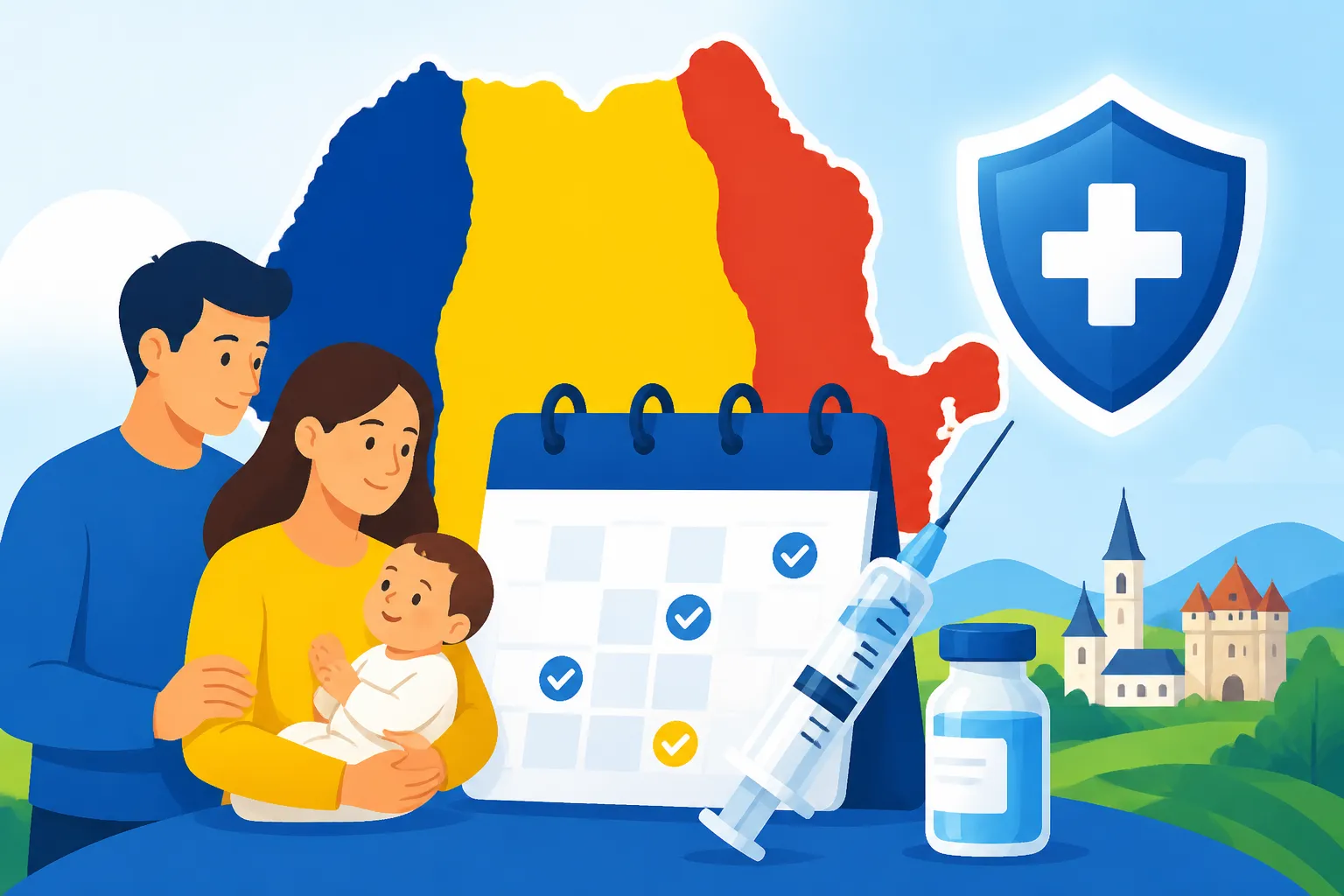
The National Vaccination Program in Romania, often referred to as the PNV (Programul Național de Vaccinare), is the framework that dictates which immunizations are provided for free by the state. For many expats, the sheer density of the schedule in the first year of a child's life can be overwhelming. In Romania, the philosophy is heavily focused on early intervention, particularly regarding tuberculosis and Hepatitis B, due to historical public health challenges in the region. Unlike some Western European countries or parts of North America, the schedule here starts literally hours after birth.
How the Schedule Works for Infants and Children
The journey begins in the maternity ward. Within the first 24 hours, newborns receive their first dose of the Hepatitis B vaccine. This is followed closely by the BCG (Bacillus Calmette-Guérin) vaccine, which protects against tuberculosis. For parents from countries where TB is rare, such as the UK or the US, the BCG vaccine is often a surprise. In Romania, however, it is a staple of public health. As your child grows, the schedule shifts to the "Medic de Familie" or family doctor. At two, four, and eleven months, children receive the "Hexavalent" vaccine, a combined shot that covers Diphtheria, Tetanus, Pertussis, Polio, Haemophilus influenzae type b, and Hepatitis B.
Navigating this as an expat requires a good relationship with your local practitioner. You will need to bring any previous records to be transcribed into a "Carnet de Vaccinare," a small yellow or white booklet that acts as the official history of your child’s health in the eyes of the Romanian state. If you are still in the process of setting up your residency and haven't yet accessed the public system, having a plan like SafetyWing can provide the necessary buffer for general medical consultations while you wait for your official CASS registration.
Mandatory vs Recommended Vaccines
There is often a significant amount of confusion among the expat community regarding whether vaccines are "mandatory" by law in Romania. As of 2026, while there have been numerous legislative debates, vaccinations remain technically "strongly recommended" rather than legally forced. However, the nuance lies in the "Requirements for School and Residency." Most public and many private schools require a complete vaccination record for enrollment. If a child is missing doses, parents are often required to provide a medical justification or a plan to catch up on the schedule.
Beyond the free PNV shots, there are several "optional" vaccines that are highly recommended by Romanian pediatricians but must be paid for out of pocket. These include the Rotavirus vaccine, the Meningococcal vaccine (ACWY and B), and the Varicella (Chickenpox) vaccine. Because these are not always stocked by the public family doctor, you may have to purchase them from a pharmacy and bring them to the clinic in a specialized "cold bag" to ensure the temperature remains stable, or simply visit a private clinic where they handle the stock for you.
The Critical Role of the Family Doctor
In the Romanian system, the family doctor is the gatekeeper for all things related to immunizations. They are the ones who receive the vaccine batches from the District Public Health Directorate (DSP). If you are registered with the public system, these vaccines are free. However, the supply chain can sometimes be inconsistent. It is not uncommon for a family doctor to run out of a specific vaccine for a few weeks, leading to delays in your child’s schedule. This is one of the many cultural frustrations you will face; the "system" is designed to work, but the logistics can be brittle.
To make this work, you must first master The Expat Guide to Finding a Family Doctor (Medic de Familie) in Romania. Your doctor will be the one to issue the "Adeverință medicală" (medical certificate) that proves your child is up to date. They also maintain the electronic record of vaccinations. If you are moving from abroad, your family doctor is the person responsible for "equating" your home country's records with the Romanian schedule. This process can be tedious, often requiring a legalized translation of your records if they aren't in a language the doctor understands.
Vaccination Requirements for School and Residency
One of the most stressful moments for expat parents is the "School Entry" phase. Whether you are enrolling in a local state school or a prestigious international academy in Bucharest or Cluj-Napoca, you will be asked for a medical file. This isn't just a formality; it is a rigorous check of the child's immunization status against the PNV. Without the proper stamps and signatures from a licensed Romanian physician, your child may be denied entry or face significant delays in starting the school year.
Documentation Needed for School Enrollment
To successfully enroll a child, you will need a specific set of documents. The most important is the "Aviz epidemiologic," which is a certificate issued by the family doctor shortly before school starts (usually within 3-5 days of the first day of class). This document states that the child is healthy and fit for a "community environment." Alongside this, you must provide a complete copy of the vaccination record. If the child was vaccinated abroad, the Romanian family doctor must have already transcribed these into the local format.
In addition to the vaccination records, schools often require a series of tests, such as an exudat faringian (throat swab) and a coproparazitologic (stool test). These are standard in Romania to prevent the spread of common parasites and infections in classrooms. While these requirements might feel like an invasive administrative hurdle, they are part of a deep-seated culture of preventative health. Having The Complete Guide to Healthcare in Romania for Expats (2027) handy can help you understand where to get these tests done quickly, whether at a state laboratory or a private facility like Synevo.
Legal Requirements for Residency and Work
For adults, the vaccination requirements are generally less stringent regarding residency permits. When you apply for your "Permis de Ședere," the Immigration Inspectorate (IGI) typically focuses more on whether you have health insurance and a clean bill of health regarding contagious diseases like TB (often via a chest X-ray) rather than a line-by-line check of your childhood immunizations. However, certain professions, especially in healthcare, food service, or education, require a "Medicina Muncii" (Occupational Health) check-up, which may include verifying your immunity to certain diseases.
If you are entering Romania on a work visa, you should check if your specific industry has mandatory immunization requirements. For instance, hospital staff are expected to have updated Hepatitis B and MMR coverage. If you are still navigating the initial months of your move and don't yet have your CNP (Personal Numeric Code), you may need to rely on private consultations. In these bridge periods, SafetyWing is a popular choice for expats who need coverage before they can officially join the Registering for Public Health Insurance (CASS) in Romania (2027) program.
Handling Foreign Vaccination Records
This is where the real administrative headache begins. Romania is a country of "ștampile" (stamps) and official signatures. If you arrive with a digital printout from a US-based clinic or a handwritten note from a UK GP, the Romanian system might not immediately accept it. To avoid being forced to re-vaccinate your child (which does happen when records are deemed "unverifiable"), you should ensure your home records are as official as possible. Having them notarized or apostilled in your home country before you leave can save you weeks of back-and-forth.
Once in Romania, you will likely need to visit a sworn translator. They will translate the names of the vaccines—many of which are similar in Latin-based Romanian but different enough to cause confusion—into the local equivalent. You then take this translation to your Romanian family doctor. If the doctor is satisfied, they will enter the data into the "Registrul Electronic Național de Vaccinări" (RENV). This digital registry is essential because it follows your child throughout their life in Romania, allowing any clinic to see their history.
Adult Vaccinations and Travel Health
While much of the focus in Romania is on pediatric health, adult vaccinations are becoming an increasingly important part of the public health conversation. Many expats forget that vaccines like Tetanus or Diphtheria require boosters every ten years. In the rush of moving to a new country, these "maintenance" health tasks often fall through the cracks until an emergency occurs, such as a rusty nail injury while renovating a villa in the Transylvanian countryside.
Booster Shots for Adults
The Romanian public system provides certain boosters for free, but you must be proactive. The DTP (Diphtheria, Tetanus, Pertussis) booster is the most common one sought by adults. If you are registered with a family doctor and pay your CASS contributions, you can often get this shot during a routine check-up. However, availability can be spotty in the public system, and many expats find it easier to simply book an appointment at a private clinic like MedLife or Regina Maria.
For those moving to rural areas, Tick-Borne Encephalitis (TBE) is a concern that shouldn't be ignored. While not part of the standard PNV for adults, the TBE vaccine is highly recommended if you plan on hiking in the Carpathian Mountains or spending time in the forested areas of the north. This is an out-of-pocket expense, but given the severity of the disease, it is a small price to pay for peace of mind. During these excursions, having a plan like SafetyWing ensures that if you do experience a medical emergency while traveling, you are covered globally, not just within the Romanian state system.
Seasonal Vaccinations: Flu and Beyond
Flu season in Romania typically runs from late October through March. The government usually purchases a large quantity of flu vaccines to be distributed for free to "at-risk" groups, which includes children, the elderly, and people with chronic illnesses. However, "healthy" expats often fall outside this free category. You can purchase the flu vaccine (Vaxigrip or Influvac are common brands) at most pharmacies for a relatively low cost, usually between 60 and 100 Lei.
The process is uniquely Romanian: you go to the pharmacy, buy the vaccine, and then immediately take it to your family doctor to have it administered. You cannot simply walk into a pharmacy and have them jab you on the spot (though some pilot programs are trying to change this). COVID-19 boosters also remain available through a mix of dedicated vaccination centers and specific family doctors. To understand how these seasonal shots fit into your broader health strategy, check How Romania's Health Insurance House (CNAS) Works: A Full Overview for a breakdown of what the state covers versus what you pay for.
Travel-Specific Vaccines for the Region
Romania's location makes it a great hub for exploring Eastern Europe, the Balkans, and the Middle East. If you are planning trips to nearby non-EU countries, you should consult a "Cabinet de Vaccinări Internaționale." These specialized clinics, often found in major hospitals like "Victor Babeș" in Bucharest, provide vaccines for Yellow Fever, Typhoid, and Rabies. They also issue the "International Certificate of Vaccination or Prophylaxis" (the "Yellow Book"), which is required for entry into certain countries.
| Vaccine | Romanian Name | PNV Status | Typical Age / Frequency |
|---|---|---|---|
| Hepatitis B | Hepatitic B | Free (PNV) | Birth, 2, 4, 11 months |
| Tuberculosis | BCG | Free (PNV) | 2-7 days after birth |
| 6-in-1 (DTPa-VPI-Hib-HepB) | Hexavalent | Free (PNV) | 2, 4, 11 months |
| MMR | ROR | Free (PNV) | 12 months, 5 years |
| Pneumococcal | Pneumococic | Free (PNV) | 2, 4, 11 months |
| Rotavirus | Rotavirus | Paid / Optional | 2, 4 months |
| Meningococcal | Meningococic | Paid / Optional | Variable |
| Tetanus Booster | Tetanos | Free (CASS) | Every 10 years (Adults) |
Accessing Vaccinations: Public vs Private Systems
The eternal debate for expats in Romania is whether to use the "Sistemul Public" or go "Privat." When it comes to vaccinations, both have distinct advantages and drawbacks. The public system is free but bureaucratic and sometimes faces supply shortages. The private system is efficient and comfortable but can be surprisingly expensive when you factor in the cost of the vaccines themselves plus the consultation fees.
Getting Free Vaccines Through CNAS
If you are an employee or a PFA in Romania, you are likely paying into the health system. This entitles you to free vaccines under the PNV. The benefit here is purely financial; you save thousands of Lei over the course of a child's early years. However, the experience of a state-run "Policlinică" can be a bit of a culture shock. Waiting rooms are often crowded, and the administrative staff may not speak English. You will need to be well-versed in Understanding Public Health Insurance (CASS) in Romania (2026) to ensure your paperwork is in order before you show up.
The state system also tends to be more rigid. If your child is sick on the day of a scheduled shot, rescheduling within the public system can sometimes mean waiting another month for a new "batch" of vaccines to arrive. For parents who prefer a more flexible approach, this can be incredibly frustrating. However, for those on a budget, the PNV is a solid, scientifically backed program that ensures the population remains protected against major outbreaks.
Opting for Private Clinics
Many expats choose to use private medical networks like Regina Maria, MedLife, or Sanador. These facilities feel more like the hospitals you might be used to in Western Europe or the US. The doctors almost always speak English, the scheduling is done online, and the "cold chain" for the vaccines is strictly managed. When you use a private clinic, you are often paying for the "Abonament" (subscription) or a per-visit fee.
In these clinics, you can choose to follow the Romanian PNV or, in some cases, work with the doctor to follow a schedule more aligned with your home country (though you still must meet Romanian school requirements). The downside is that even if you have a premium subscription, you still have to pay for the actual "vial" of the vaccine if it’s an optional one. Before deciding, it is worth reading Public vs Private Healthcare in Romania: Which Should Expats Choose? to weigh the long-term costs. If you are traveling frequently during this period, SafetyWing can provide an extra layer of protection for complications that might arise, ensuring you are never stuck without medical support.
Costs and Availability Issues
Even in the private sector, Romania sometimes experiences national shortages of certain vaccines. This is often due to the government’s centralized purchasing power—if the state doesn't buy enough, the manufacturers may not prioritize the Romanian market. This happened recently with the 6-in-1 vaccine and the MMR. Expats often resort to "vaccine tourism," traveling to nearby countries like Bulgaria or Hungary to find a dose that is out of stock in Bucharest.
The cost of optional vaccines can add up. A full course of Meningococcal B (Bexsero) can cost over 1,000 Lei per dose, and a child needs at least two or three doses. Rotavirus and Varicella vaccines are usually in the 300-500 Lei range. To prepare your budget, take a look at The Cost of Healthcare in Romania: A Complete Breakdown for Foreigners (2026) so you aren't surprised by the bill at the end of your pediatrician visit.
Navigating the Administrative Hurdles
The actual medical act of getting a shot is the easy part. The real challenge is the Romanian "Dosar" (the file). Everything in Romania revolves around the collection of documents, and your vaccination records are no different. If you don't have the right stamps, the system effectively thinks the vaccine never happened.
Translating and Validating Your Records
As mentioned earlier, your foreign records need to be "Romanian-ized." Do not wait until the week before school starts to do this. The process of finding a translator, getting the translation notarized (if required by your doctor), and then having the doctor enter it into the RENV can take weeks. Some family doctors are more relaxed and will accept an English record if they can clearly read the vaccine names (e.g., "Polio" and "Hepatitis B" are almost the same in both languages), but many will insist on a formal translation to cover themselves legally.
If you are missing a dose that is standard in Romania but wasn't in your home country (like the BCG), your doctor will suggest a "catch-up" plan. For the BCG, this might involve a PPD skin test first to see if you have already been exposed to TB. This can be a confusing process for those who aren't used to the focus on tuberculosis. For more help on how to communicate with medical staff, check Understanding Private Clinics and Medical Networks (Regina Maria, MedLife) in Romania for tips on finding English-speaking providers who can simplify these steps.
Communicating with Non-English Speaking Staff
If you are using the public system, you will eventually encounter a nurse or an admin who only speaks Romanian. Learning a few key phrases can go a long way. "Vreau să programez o vaccinare" (I want to schedule a vaccination) and "Carnetul de sănătate" (The health booklet) are essential. Romanian medical culture is professional but can feel a bit "stern" compared to the customer-service-oriented approach of some other countries. Don't take it personally; it's just the way the system operates.
If you feel overwhelmed, consider hiring a local "medical concierge" or asking a Romanian friend to accompany you to the first few appointments. Once you are in the system and your child’s records are in the RENV, it becomes much easier. The first year is the hardest. For a broader overview of the administrative landscape, Navigating the Romanian Healthcare System: An Expat's Roadmap (2027) is a great resource to keep your bearings.
What to Do If You Missed a Dose
Life happens. Maybe you were moving between countries, or perhaps there was a shortage at the clinic. Missing a dose in the PNV schedule isn't the end of the world, but you must document why. In the eyes of school administrators, a "delayed" schedule is acceptable as long as a doctor has signed off on a "re-scheduling" plan. If you simply skip it without a medical note, you will run into trouble during the annual school medical checks.
The most important thing is to keep your own digital copies of everything. Scan every "Adeverință," every receipt, and every page of the yellow "Carnet." Romanian paper records have a way of disappearing or getting "misplaced" in the transition between different doctors or schools. By having your own digital "Dosar," you ensure that your child’s health history remains intact, regardless of where your expat journey takes you next in the country.
Disclaimer
This guide is for informational purposes only and does not constitute professional medical or legal advice. Vaccination schedules and requirements in Romania are subject to change by the Ministry of Health and local authorities. Always consult with a licensed Romanian medical professional (Medic de Familie) or a specialized travel health clinic to confirm the requirements for your specific situation. The author is an expat sharing personal and researched experiences, not a healthcare provider.