Understanding the Romanian Pharmacy (Farmacie) System and Opening Hours
Finding yourself feverish at midnight in a new country is a rite of passage for many expats in Romania, but it doesn’t have to be a nightmare. This guide breaks down exactly how the Romanian pharmacy system works, where to find 24/7 help, and how to navigate the complex world of prescriptions so you aren't left stranded when you're unwell.
Navigating the Romanian Farmacie Landscape
When you first land in Bucharest, Cluj, or Timișoara, you will immediately notice the "Farmacie" signs and neon green crosses on nearly every street corner. Romania has one of the highest densities of pharmacies in Europe. However, not all pharmacies are created equal, and understanding the landscape is the first step to getting the care you need without a headache. There is a distinct difference between the massive corporate chains that dominate the high streets and the smaller, independent "apothecary" style shops you might find in residential neighborhoods or rural villages.
Major Chains vs. Neighborhood Apothecaries
The Romanian market is dominated by several massive chains: Catena, Dr. Max, Help Net, and Dona. Catena is easily recognizable by its bright orange and yellow branding and the omnipresent "heart" logo. Dr. Max, which recently took over many smaller brands, is known for its "low price" model and is often found inside or adjacent to large supermarkets like Kaufland. These chains are generally very reliable, well-stocked, and likely to have at least one pharmacist on duty who speaks functional English. Because they are part of larger networks, they can often check their system to see if a specific, rare medication is available at another branch across town if they don't have it in stock.
Independent pharmacies still exist, though they are becoming rarer in major cities. These smaller shops often have a more personal touch. If you live in a specific neighborhood for a long time, the local pharmacist might get to know you and your family's needs. However, their stock is usually more limited, and they might not have the same digital infrastructure to check for medications elsewhere. For most expats, starting with a major chain is the safest bet for finding what you need quickly. If you are moving to a smaller town, you might find that the local "Farmacie" is the social hub of the street, where people go for medical advice as much as for medicine.
Identifying a Pharmacy and the Layout
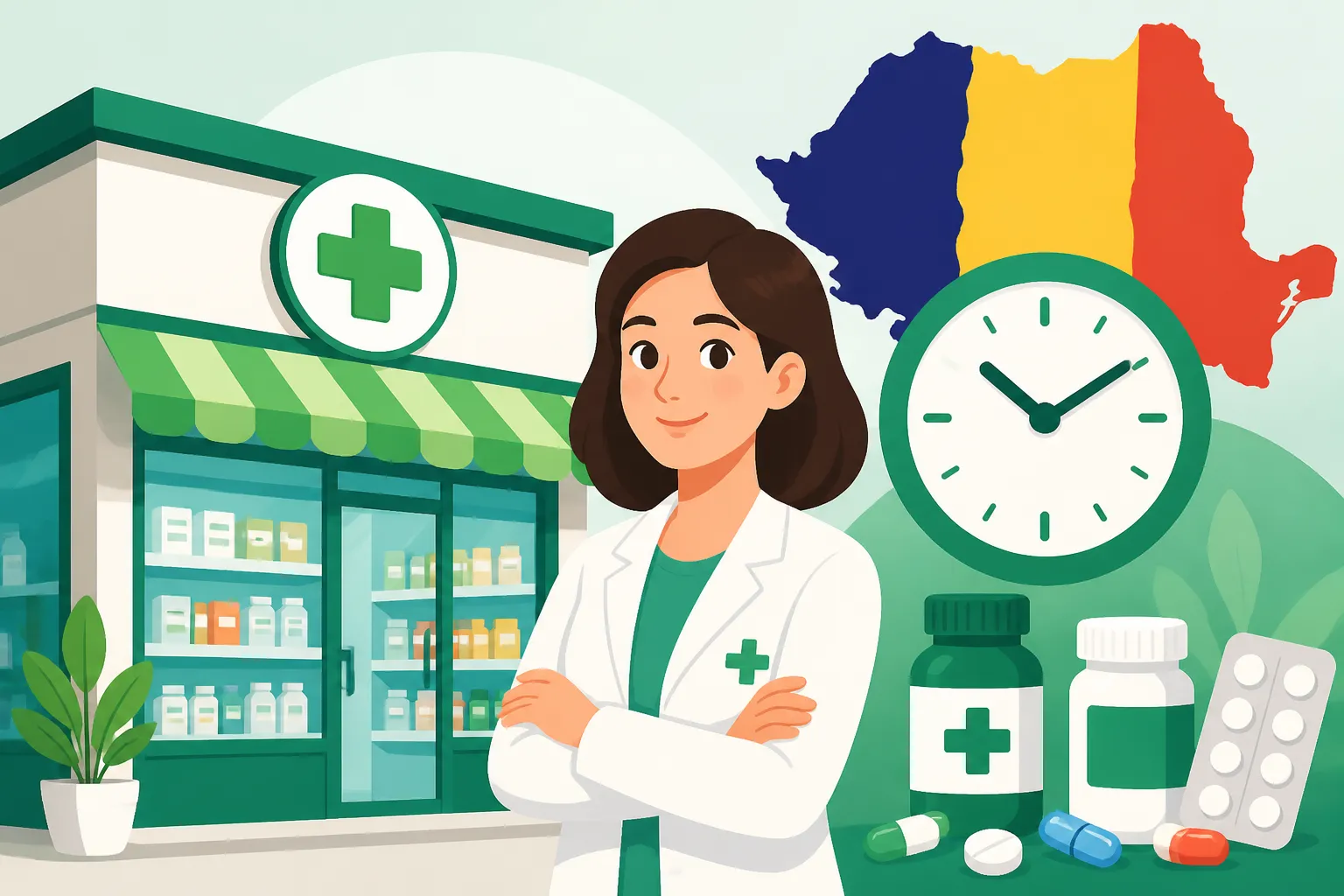
In Romania, pharmacies are strictly regulated and easy to spot. Look for the illuminated green cross, which usually flashes or displays the current temperature and time. When you step inside, you’ll find a layout that is likely familiar: a counter area where you speak to a pharmacist (this is where all "real" medicine is kept) and a retail floor with shelves for vitamins, skincare, and basic hygiene products. It is important to note that you cannot just grab a bottle of ibuprofen off a shelf and walk to the register. Almost everything that isn't a vitamin or a face cream must be requested directly from the pharmacist behind the counter.
This "over-the-counter" interaction is mandatory. Even for basic painkillers, the pharmacist may ask you a few questions about your symptoms or if you are taking other medications. This is part of the Romanian medical culture where pharmacists act as a first line of defense in the healthcare system. Many Romanians will visit a pharmacist for a minor ailment—like a cough or a skin rash—before they ever think about booking an appointment with a doctor. If you are an expat with a minor issue, don't be afraid to ask for a recommendation; pharmacists here are highly trained and often provide excellent, practical advice.
Understanding Prescription Tiers and Regulations
One of the biggest culture shocks for expats in Romania is the strictness regarding certain medications. Back home, you might be used to buying a large bottle of a certain painkiller at the grocery store. In Romania, that same medication might be kept behind the counter, or in some cases, require a formal prescription from a local doctor. Navigating the Prescription Medications and Pharmacies in Romania: The Complete Guide is essential if you have chronic conditions or need specific treatments like antibiotics.
The Electronic Prescription System
Romania has modernized its healthcare system significantly over the last decade, moving to a robust electronic prescription system known as "Rețeta Electronică." When you visit a doctor, they don't usually give you a handwritten, illegible slip of paper. Instead, they enter the prescription into a national database linked to your CNP (Personal Numeric Code). When you go to the pharmacy, you simply hand over your ID card or your residency permit, and the pharmacist pulls up your active prescriptions on their screen.
This system is incredibly efficient but requires that you have your administrative ducks in a row. If you are a foreigner, you will need your CNP to access this system seamlessly. For more information on getting this set up, you should look into How to Get Your CNP (Personal Numeric Code) for Healthcare Access in Romania. Without a CNP, the process becomes manual and much more cumbersome, often requiring the doctor to print a specific "off-line" version of the prescription that may or may not be accepted by all pharmacies. If you are using international insurance like SafetyWing, keep in mind that while they provide excellent coverage for emergencies, the local public digital system is strictly tied to the Romanian state ID. You can still use SafetyWing to get reimbursed for your costs, but you will need to pay upfront and keep every single receipt and printed prescription the doctor gives you.
Compensated vs. Non-Compensated Medications
Not all prescriptions cost the same. Romania has a "compensated" system where the government covers a percentage of the cost of essential medications—sometimes 50%, 70%, or even 100%. This is only available to those who are contributing to the public health fund (CASS). If you are Registering for Public Health Insurance (CASS) in Romania (2027), you can benefit from these significantly lower prices. The pharmacist will see your insurance status on their computer and apply the discount automatically.
If you are not in the public system—perhaps you are a digital nomad or waiting for your residency permit—you will pay the "full price" for medications. Even at full price, many medications in Romania are surprisingly affordable compared to Western Europe or North America. However, high-end specialty drugs or certain imported brands can still be pricey. For those relying on private solutions, it is worth Understanding Private Health Insurance and Subscriptions (Abonament) in Romania to see how they might cover or reimburse these costs. For travelers or those in between permits, having a plan like SafetyWing can provide a safety net if a sudden illness requires expensive medication, as they can help cover the costs of prescriptions resulting from an emergency.
Pharmacy Opening Hours and the "Non-Stop" System
The biggest challenge for any expat is needing medicine outside of standard business hours. While most shops in Romania stay open late compared to other European countries, pharmacies have their own specific rhythms. Knowing where to go on a Sunday afternoon or at 3 AM on a Tuesday can save you a lot of stress.
Standard Operating Hours
Generally, most pharmacies in urban areas are open from 8:00 AM or 9:00 AM until 8:00 PM or 9:00 PM on weekdays. On Saturdays, many stay open but might close earlier, around 4:00 PM or 6:00 PM. Sundays are the tricky days. In smaller towns or residential areas, most pharmacies are closed entirely on Sundays. In major cities, pharmacies located inside shopping malls follow the mall's hours, which usually means they are open from 10:00 AM to 10:00 PM every single day, including Sundays.
If you find yourself in a residential neighborhood on a weekend and your local spot is closed, look at the front door. By law, every pharmacy must display a list of the nearest "Farmacie Non-Stop" or pharmacies that are currently on duty. This is part of the government’s effort to ensure Emergency Medical Care in Romania: What Every Expat Needs to Know is always accessible. It’s a good habit to snap a photo of this list on your phone when you first move into a new apartment so you aren't searching for it while you're sick.
Finding a 24/7 "Farmacie Non-Stop"
In every major city, there are designated 24-hour pharmacies. In Bucharest, for example, there are several famous ones like Farmacia Dona on Gheorghe Magheru or the Help Net near Piața Unirii. These are literally "non-stop." However, there is a specific protocol for using them at night. After a certain hour (usually 10:00 PM or 11:00 PM), the main doors are locked for safety. You have to walk up to a small window, often called a "ghișeu," and ring a bell. A pharmacist will come to the window, take your request, and pass the medicine and your change through a small slot.
Be prepared for a wait. On Friday and Saturday nights, the "non-stop" pharmacies in city centers can have long lines of people looking for everything from aspirin to baby formula. Also, note that while these pharmacies are open 24/7, they may not always have a full staff, so service can be slow. If you are a visitor or a new arrival and don't yet have your local health card, having your SafetyWing documentation ready is smart in case of a major emergency that requires hospital follow-up, though for a simple pharmacy visit, you will just pay cash or card at the window.
Duty Pharmacies (Farmacie de Permanență)
In smaller municipalities where a 24/7 pharmacy isn't financially viable, the local government organizes a "permanență" (on-duty) rotation. This means one pharmacy in town stays open through the night while the others close. This rotation changes weekly or monthly. Again, the schedule is always posted on the door of every pharmacy in town. This system ensures that even in the middle of the Carpathian Mountains, you can find a pharmacist if you truly need one. For expats living in remote areas, learning the phrase "Care este farmacia de permanență?" (Which is the on-duty pharmacy?) is vital.
| Pharmacy Type | Typical Hours | English Proficiency | Best Used For |
|---|---|---|---|
| Large Chain (Catena, Dr. Max) | 08:00 – 21:00 | High | Regular prescriptions, vitamins, cosmetics |
| Mall Pharmacy | 10:00 – 22:00 | High | Weekend needs and late evening shopping |
| Farmacie Non-Stop | 24 Hours | Moderate | Emergency meds in the middle of the night |
| Independent/Neighborhood | 09:00 – 18:00 | Variable | Quick local pick-ups, personal advice |
Buying Medications: Practical Advice for Expats
Navigating the actual purchase can sometimes feel like a hurdle due to language or differing brand names. Many of the medications you know by a specific brand name in the US or UK might have a different name here, even if the active ingredient is identical.
Common OTC Medications and Local Substitutes
Paracetamol and Ibuprofen are the kings of the over-the-counter world in Romania. You will find brands like Nurofen (Ibuprofen) and Panadol (Paracetamol) easily. However, you should be aware of "Algocalmin" (Metamizole). For decades, Algocalmin was the "cure-all" painkiller in Romania, used for everything from headaches to post-surgery pain. Due to EU regulations and concerns over rare side effects, it now officially requires a prescription, though some smaller shops might still be lax about it.
If you have a cold, pharmacists will often suggest "Fervex" or "Coldrex," which are sachet powders you mix with hot water. For digestive issues, "Colebil" and "Triferment" are the local favorites. If you are unsure what to ask for, it is helpful to have the name of the active ingredient (e.g., "Loperamide" for diarrhea) written down or pulled up on your phone. If you are covered by Public vs Private Healthcare in Romania: Which Should Expats Choose?, you might find that your private subscription covers some of these common meds, but usually, OTC items are paid out of pocket.
The Strictness of Antibiotics
Romania has become very strict about antibiotics. Years ago, you could practically buy them like candy, leading to high rates of antibiotic resistance. Today, it is nearly impossible to get antibiotics without a valid prescription from a doctor registered in the Romanian system. If you feel a sinus infection or strep throat coming on, do not waste time going from pharmacy to pharmacy hoping someone will take pity on you. You will need to see a [Medic de Familie] or go to a private clinic to get a prescription first.
If you are a traveler and your condition is urgent, you might end up at a [Spital] (hospital) or an emergency room. In these cases, the hospital doctor will provide the necessary paperwork. This is where a plan like SafetyWing is invaluable; if you need an emergency doctor visit just to get that antibiotic prescription, SafetyWing can help cover the consultation costs that lead to the pharmacy visit.
Insurance and Reimbursement
For most expats, pharmacy visits are "pay-as-you-go." You use your Romanian debit card or cash, take your medicine, and go home. However, if you are using international insurance like SafetyWing, the process is different. You must ask the pharmacist for a "factură fiscală" (a formal tax invoice) in addition to the standard receipt ("bon fiscal"). The tax invoice will include your name and passport number or CNP. Most insurance companies, including SafetyWing, will require this formal invoice to process a reimbursement claim for prescriptions.
Without that "factură," your receipt is just a slip of thermal paper that most insurance adjusters won't accept. It takes the pharmacist an extra two minutes to type your details into the system and print it, so don't be shy about asking. Simply say, "Factură, vă rog" (Invoice, please) and hand them your ID. This is especially important if you are managing The Cost of Healthcare in Romania: A Complete Breakdown for Foreigners (2026) and trying to keep your out-of-pocket expenses low.
Language and Communication at the Counter
While many pharmacists in big cities like Bucharest or Cluj speak English, the technical nature of medical talk can still lead to confusion. Being prepared with a few local terms can make the interaction much smoother and ensure you get exactly what you need.
Language Realities in the Pharmacy
In a Catena or Dr. Max in a central area, you will likely find a young pharmacist who studied English in school and can explain dosages clearly. However, if you are in a neighborhood where mostly retirees live, or in a rural village, the pharmacist might only speak Romanian. In these situations, Google Translate is your best friend, but keep it simple. Don't type long sentences; just type the symptom or the ingredient name.
Pharmacists in Romania are generally patient, but they are often overworked. If there is a long line behind you, try to have your ID and any prescriptions ready before you reach the front. If you are an EU citizen and using your EHIC card, make sure to mention it early, as it affects how they process the paperwork. For more on this, see How to Use Your EHIC (Cardul European) in Romania as an EU Citizen.
Essential Romanian Pharmacy Vocabulary
You don't need to be fluent, but knowing these few words will help you navigate the "ghișeu" with confidence:
- Rețetă (Re-tse-tuh): Prescription.
- Durere (Doo-re-re): Pain.
- Febră (Fe-bruh): Fever.
- Răceală (Ruh-chea-luh): A cold.
- Tuse (Too-se): Cough.
- Pastile (Pas-tee-le): Pills.
- Sirop (See-rop): Syrup.
- Prospect (Pros-pect): The leaflet inside the box (vital if you need to check dosage in your own language later).
- Câte una pe zi? (Kuh-te oo-na pe zee?): One per day?
If you are dealing with a more complex situation, like a chronic illness, it might be worth How to Find an English-Speaking Doctor in Romania to get a doctor who can write clear instructions that you can show to the pharmacist. This avoids any dangerous misunderstandings regarding dosage or frequency.
Dealing with Chronic Conditions and Specialized Meds
If you are moving to Romania with a pre-existing condition, the pharmacy system requires a bit more foresight. You cannot simply bring a bottle of pills from your home country and expect a local pharmacist to "refill" it based on the foreign label.
Transferring Foreign Prescriptions
Strictly speaking, Romanian pharmacies are only supposed to honor prescriptions from doctors licensed in the EU. If you have a prescription from the US, Canada, or elsewhere, you will likely need to visit a local doctor to have it "converted" into a Romanian electronic prescription. This is a standard process. You bring your medical records and your current medication to a local specialist or a family doctor, and they will issue the Romanian equivalent.
This is a great time to ensure you have consistent coverage. Whether you are using the public system or a private expat plan like SafetyWing, having a local doctor who understands your history is crucial. Some specialized medications—like certain biologics or psychiatric meds—are only stocked at specific larger pharmacies or hospital-adjacent shops. Your local doctor will usually know which "Farmacie" is most likely to have your specific brand in stock.
Ordering Rare Medications
If you need a medication that isn't commonly used in Romania, the pharmacy can often order it for you. This usually takes 24 to 48 hours. You will need to leave a deposit, and they will call you (or give you a time to come back) when the delivery truck arrives. The supply chain in Romania is quite robust, linked to major European distributors, so unless there is a global shortage, you can usually get what you need within a few days.
Always check the expiration date and the "prospect" (leaflet). While Romanian pharmacies are very professional, it’s a good habit for any expat to double-check that the medication name matches what you were expecting, especially if a generic substitute was offered. If you're unsure about the substitute, you can always ask "Este același lucru?" (Is it the same thing?).
Final Tips for a Smooth Pharmacy Experience
Living in Romania means embracing a system that is highly efficient but deeply bureaucratic. The pharmacy is often where these two worlds collide. To make your life easier:
- Always carry your ID: Whether it's your passport or your Permis de Ședere, you'll need it for any prescription.
- Keep a digital copy of your CNP: If you have one, keep it in a "favorites" folder on your phone.
- Don't wait until the last pill: If you have a chronic condition, start the renewal process at least a week before you run out.
- Check the "Non-Stop" locations now: Don't wait until you have a 39-degree fever to find out where the nearest 24-hour window is.
- Use Private Apps: Chains like Dr. Max and Help Net have apps where you can check stock or even order OTC items for home delivery via apps like Glovo or Tazz.
While the system might seem daunting at first, the density of pharmacies and the high level of training among Romanian pharmacists mean you are rarely more than a few blocks away from professional help. With a little bit of preparation and a basic understanding of the opening hours, you'll find that managing your health in Romania is one of the more straightforward parts of expat life.
Disclaimer
The information provided in this guide is for informational purposes only and does not constitute medical or legal advice. Healthcare regulations and pharmacy policies in Romania can change frequently. Always consult with a qualified medical professional or a licensed pharmacist regarding your specific health needs and medications. The author is an expat sharing personal experiences and research, not a healthcare provider.