Driving in Romania: Licences, Registration and Rules for Expats (2027)
Moving to a new country like Romania brings a whirlwind of excitement, but let's be honest, it also brings a tsunami of administrative hurdles. One of the biggest stressors, especially if you're used to the freedom of your own wheels, is figuring out how to navigate the local driving rules, licence requirements, and vehicle registration. Don't worry, I've been there, and this comprehensive guide is designed to demystify everything you need to know about driving in Romania as an expat.
Understanding Your Driving Licence in Romania as an Expat
When you first arrive in Romania, the roads might seem like a chaotic dance, and the thought of navigating them with a foreign licence can feel daunting. But rest assured, there are clear rules on what you can and can't do, and a well-defined process to get compliant. It’s not always straightforward, mind you, but with a bit of patience, you’ll get there.
Initial Driving Rights with a Foreign Licence
For many expats, the initial period in Romania allows you to drive using your existing foreign licence. This grace period is incredibly helpful for getting settled, but it’s crucial to understand its limitations and deadlines. The rules vary significantly depending on where your licence was issued – specifically, whether it's from an EU/EEA country or a non-EU/EEA country.
If you’re from an EU or EEA member state (that’s the European Union plus Iceland, Liechtenstein, and Norway), you're in a relatively comfortable position. Your driving licence is fully recognised in Romania. You can generally continue using it for as long as it's valid, even after becoming a resident. There's no mandatory requirement to exchange it for a Romanian one, though many expats choose to do so purely for convenience and to avoid potential misunderstandings with local authorities. Imagine presenting your beautifully laminated home country licence and having a quick exchange, only to be met with a blank stare or a lengthy consultation of obscure rulebooks. Exchanging it can simplify things like traffic stops or dealing with insurance claims. It’s also worth noting that if your EU/EEA licence has an indefinite validity period, you might be required to exchange it after two years of ordinary residence in Romania to comply with local administrative practices.
For those of us coming from non-EU/EEA countries, the situation is a bit more time-sensitive and complex. Generally, you can use your foreign licence for a maximum of 90 days from the date you establish your ordinary residence in Romania. This isn't 90 days from arrival; it's from when you get your residence permit. This can be a tight window, especially with all the other things you're trying to set up. After these 90 days, your foreign licence is no longer considered valid for driving in Romania. This means you absolutely must either exchange it for a Romanian one or, in some cases, go through the entire process of obtaining a new Romanian licence from scratch. Driving beyond this period with an invalid licence can lead to significant fines, confiscation of your vehicle, and even legal trouble, so it’s not a rule to take lightly.
The Process of Exchanging Your Foreign Driving Licence
Exchanging your foreign driving licence in Romania can feel like navigating a labyrinth designed by ancient bureaucrats. The key is knowing which maze to enter. The process is handled by the Public Community Service for Driving Licences and Vehicle Registration (Serviciul Public Comunitar Regim Permise de Conducere și Înmatriculare a Vehiculelor – short, SPCRPCIV, but everyone just calls it "Permise"). You'll typically need to schedule an appointment, often online, which can be a competitive sport in itself, especially in bigger cities like Bucharest or Cluj-Napoca.
For EU/EEA citizens, the exchange is usually a straightforward administrative procedure. You'll need your valid foreign licence, your Romanian identity document (like your residence permit or identity card), proof of address (often your rental contract or a document from your landlord), a medical certificate from an authorised Romanian clinic, and sometimes a declaration that you haven't had your licence suspended or revoked elsewhere. They'll take your old licence and issue a Romanian one. It's relatively painless, all things considered. Many expats recommend getting this done earlier rather than later, just to be on the safe side, even if it's not strictly mandatory for all. More detailed guidance can be found in our guide on How to Exchange Your Foreign Driving Licence in Romania.
If your licence is from a country with which Romania has a bilateral agreement on licence recognition, the process will be similar to that for EU/EEA citizens, but you might need additional certified translations of your original licence. It’s always best to check the exact list of countries with bilateral agreements at the SPCRPCIV or on the Romanian Police website, as these agreements can change. The medical examination is a critical step for everyone. You’ll need to visit a specific type of medical clinic that is authorised to issue these certificates for driving licences. They’ll check your vision, hearing, neurological health, and often conduct a basic psychological assessment. Expect to pay a fee for this, and don't expect it to be a quick in-and-out visit – bureaucratic processes sometimes feel designed to test your patience, remember?
Specific Rules for Non-EU/EEA Licences
Now, if your licence is from a non-EU/EEA country without a bilateral agreement with Romania, this is where things get truly "Romanian" in terms of complexity. After that initial 90-day grace period from getting your residence permit, you generally cannot just exchange your licence. You will, in most cases, be required to go through the full process of obtaining a Romanian driving licence from scratch. This means enrolling in a driving school, taking theory classes, passing a written exam (in Romanian or English, depending on the centre's availability), and then undertaking practical driving lessons, culminating in a practical driving test with a Romanian examiner.
This can be a significant undertaking, especially if you're not fluent in Romanian. While some driving schools in larger cities cater to English speakers, the official exams might still lean heavily towards Romanian. It's a huge commitment of time and money, so planning ahead is key. If you're pondering whether to tackle this, remember that your ultimate goal is to drive legally and safely. For those without a previous licence, or whose foreign licence isn't recognised, our post How Do I Get a Romanian Driving Licence from Scratch? provides a deeper dive. Many expats who've been through this recommend starting the process well before your 90-day window closes, as driving school courses and exam dates can have significant waiting lists.
Another common point of confusion arises with the International Driving Permit (IDP). An IDP is essentially a translation of your original driving licence. While it can be very useful for short-term stays or tourist visits, and is often required in conjunction with your original non-EU/EEA licence, it does not replace your original licence and it does not extend your 90-day driving privilege as a resident. Think of it as a helpful companion document, not a standalone solution for long-term expat driving. After your 90 days of residence, even with an IDP, your non-recognised foreign licence is invalid for driving, and you'll need the Romanian licence.
| Licence Origin | Initial Validity (as Resident) | Exchange Process | Requirements |
|---|---|---|---|
| EU/EEA | Fully valid, indefinitely* | Exchange optional (mandatory if indefinite validity) | Original licence, residence permit, proof of address, medical certificate |
| Non-EU/EEA (with agreement) | 90 days from residency date | Exchange required | Original licence (+ certified translation), residence permit, proof of address, medical certificate |
| Non-EU/EEA (no agreement) | 90 days from residency date | Full driving school & exams required | Original licence (for proof of experience), residence permit, proof of address, medical certificate, driving school completion, theory & practical exams |
Note: If your EU/EEA licence has an indefinite validity, you might be required to exchange it after 2 years of ordinary residence in Romania. Always verify current regulations with SPCRPCIV.
Registering Your Vehicle in Romania
Whether you're bringing your cherished car from home or buying a new set of wheels here, getting your vehicle legally registered in Romania is a crucial step. This process, like many administrative tasks, involves multiple stops and can test your patience, but it’s entirely manageable with the right information. Failing to register your vehicle properly can lead to fines, confiscation, and major headaches, so let's get it right.
Bringing Your Car to Romania: Import and Customs
If you're considering bringing your own car into Romania, it’s not as simple as just driving across the border. There are specific procedures, particularly concerning import duties and VAT, which depend heavily on your country of origin and how long you've owned the vehicle. For EU citizens, bringing a car from another EU member state is generally simpler, as it falls under the free movement of goods, meaning no customs duties. However, you will still need to handle the Romanian registration process. If you’re moving your entire life, including your car, companies aggregated via platforms like Sirelo sometimes offer services that can help coordinate vehicle transport, though the registration legwork will still be yours.
For non-EU citizens, importing a vehicle typically involves customs procedures and potentially significant duties and VAT. There are exemptions, usually if you are transferring your habitual residence to Romania and have owned and used the vehicle in your previous country for a certain period (e.g., usually at least six months to a year) before moving. These exemptions are critical to understand as they can save you a substantial amount of money. You'll need to present various documents, including proof of ownership, previous registration documents, and evidence of your residency status in Romania. It’s highly advisable to consult with a customs broker or the Romanian customs authorities (Autoritatea Națională a Vămilor) well in advance to understand the exact requirements for your specific situation. This step can be quite intricate, and mistakes here can lead to delays and unexpected costs. Once cleared through customs, you'll receive the necessary documents to proceed with the technical inspection and registration.
The Step-by-Step Vehicle Registration Process
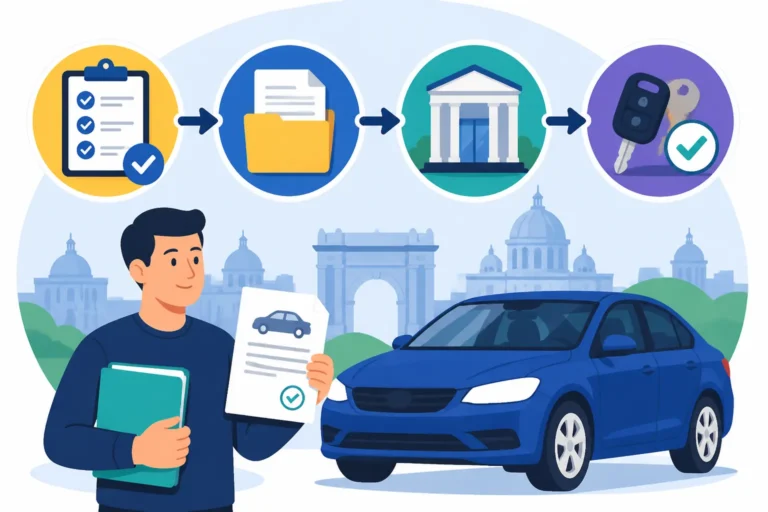
Once your vehicle is in Romania and any import/customs issues are sorted, the next big hurdle is getting it registered. This multi-step process can feel like a relay race where each government office is a different leg, and they don't always communicate perfectly. A detailed walkthrough of What Is the Process for Registering a Car in Romania? can give you the full picture, but here’s a condensed overview:
-
Obtain a Certificate of Authenticity (Certificat de Autenticitate) from R.A.R. (Registrul Auto Român – the Romanian Auto Register). This is a mandatory technical inspection that verifies the car's identity, confirms it meets Romanian technical standards, and checks for any major chassis modifications. Even if your car passed an MOT or equivalent recently in another country, this R.A.R. check is essential. It’s a thorough inspection, and you'll typically need to schedule an appointment online, sometimes weeks in advance. During this inspection, they will check everything from emissions to lights, brakes, and chassis numbers. They will also issue the vehicle's Romanian technical data sheet (Cartea de Identitate a Vehiculului – CIV), which is vital.
-
Pay the Environmental Tax (Timbrul de Mediu or Taxa de Poluare) if applicable. While the old pollution tax was largely abolished, there can still be certain fees or taxes related to vehicle emissions, especially for older, more polluting vehicles, or those imported from outside the EU. You'll need to check the current legislation regarding this at the time of registration, usually at the local tax office (ANAF or Primărie).
-
Obtain Mandatory Car Insurance (RCA). This is a civil liability insurance that covers damages you might cause to third parties in an accident. It's legally required for all vehicles on Romanian roads. You can get RCA from various insurance providers. The cost varies based on your car's engine size, your age, driving history, and sometimes even your address. It's usually valid for 6 or 12 months.
-
Register the vehicle with your local tax office (Direcția de Taxe și Impozite Locale/Primărie). This is where you pay the annual local vehicle tax (impozitul pe mașină). You'll need the CIV, proof of ownership, your ID, and the RCA policy. Once paid, they will issue a fiscal certificate proving the tax is settled.
-
Submit all documents to the SPCRPCIV (Driving Licences and Vehicle Registration Service). This is the final step where you hand over all your accumulated paperwork: the CIV from R.A.R., fiscal certificate, RCA, original ownership documents, your ID/residence permit, and the application form. They will then process your request, issue the registration certificate (certificatul de înmatriculare), and provide your new Romanian number plates. Again, an appointment is usually required, and having all your ducks in a row – and copies of everything – is crucial. For more details on this process, see How to Register a Vehicle and Get Romanian Plates.
Understanding Romanian Number Plates
Romanian number plates follow a fairly standard European format, but with a few local quirks. The standard plate is white with black characters. On the left side, there's a blue strip with the EU flag's twelve stars and the country code "RO". This is the standard for vehicles registered in the EU.
The characters on the plate consist of:
- A one or two-letter county code (e.g., "B" for Bucharest, "CJ" for Cluj, "TM" for Timișoara).
- A two-digit number (for Bucharest, it's usually three digits).
- Three letters.
So, a typical plate might look like "CJ 12 ABC" or "B 123 ABC". The number is sequential within the county, and the letters are also sequential. You'll be issued two plates, one for the front and one for the back of your vehicle.
When you go through the registration process at the SPCRPCIV, you’ll usually be offered the next available sequential number plate. However, you do have the option to request a personalised number plate for an additional fee. This allows you to choose your preferred number and letter combination, provided it’s available and not deemed offensive or inappropriate. Many Romanians opt for personalised plates, so don't be surprised to see some rather creative combinations on the road! The choice between a standard plate and a personalised one is purely aesthetic, but knowing the option exists can add a touch of personal flair to your new Romanian car.
Key Romanian Road Rules and Regulations
Driving in Romania, particularly in cities, can be an exhilarating, if sometimes frustrating, experience. Traffic can be dense, road conditions vary, and local driving habits might differ from what you're used to. Understanding the core road rules and regulations is paramount to ensure your safety and avoid any unpleasant encounters with the law.
Speed Limits and Traffic Laws You Must Know
Like any country, Romania has specific speed limits that vary depending on the type of road and area. These are generally well signposted, but it's crucial to be aware of the standard limits.
Here’s a general overview:
| Road Type | Standard Speed Limit (km/h) | Notes |
|---|---|---|
| Motorways (Autostrăzi) | 130 | Often marked with "A" followed by a number (e.g., A1, A2, A3) |
| European Roads (E-roads) | 100 | Main national roads, often single carriageway outside built-up areas |
| National Roads (Drumuri Naționale) | 90 | Other major roads, usually single carriageway |
| Inside Built-up Areas (Localități) | 50 | This is the general rule, but watch for signs indicating lower limits (e.g., 30 km/h in residential zones) |
Penalties for speeding can range from significant fines to points on your licence, and even suspension of your driving rights for serious infringements. Romania uses speed cameras, both fixed and mobile, and police often conduct roadside checks with radar guns, so it’s wise to stick to the limits.
Beyond speed, other critical traffic laws include:
- Alcohol Limit: Romania has a strict zero-tolerance policy for alcohol when driving. Any measurable amount of alcohol in your bloodstream is illegal and can lead to severe penalties, including hefty fines, licence suspension, and even imprisonment for higher levels. Do not drink and drive.
- Seatbelts: Mandatory for all occupants in both front and rear seats.
- Headlights: You must drive with your headlights on at all times, even during the day, when driving outside built-up areas. Inside built-up areas, dipped headlights are mandatory at night or in conditions of reduced visibility. Many modern cars have automatic daytime running lights, which usually suffice.
- Mobile Phones: Hand-held mobile phone use while driving is strictly prohibited. You may only use a hands-free system.
- Parking: Be mindful of parking regulations. Parking in unauthorised spots, especially on sidewalks or in handicapped spaces, will result in fines and potentially your car being towed. Look for "P" signs indicating designated parking areas.
- Right of Way: In intersections without traffic signs or signals, the "priority to the right" rule generally applies, though this can sometimes be ignored by aggressive drivers, so always proceed with caution. Trams almost always have priority.
Essential Equipment and Documents to Carry
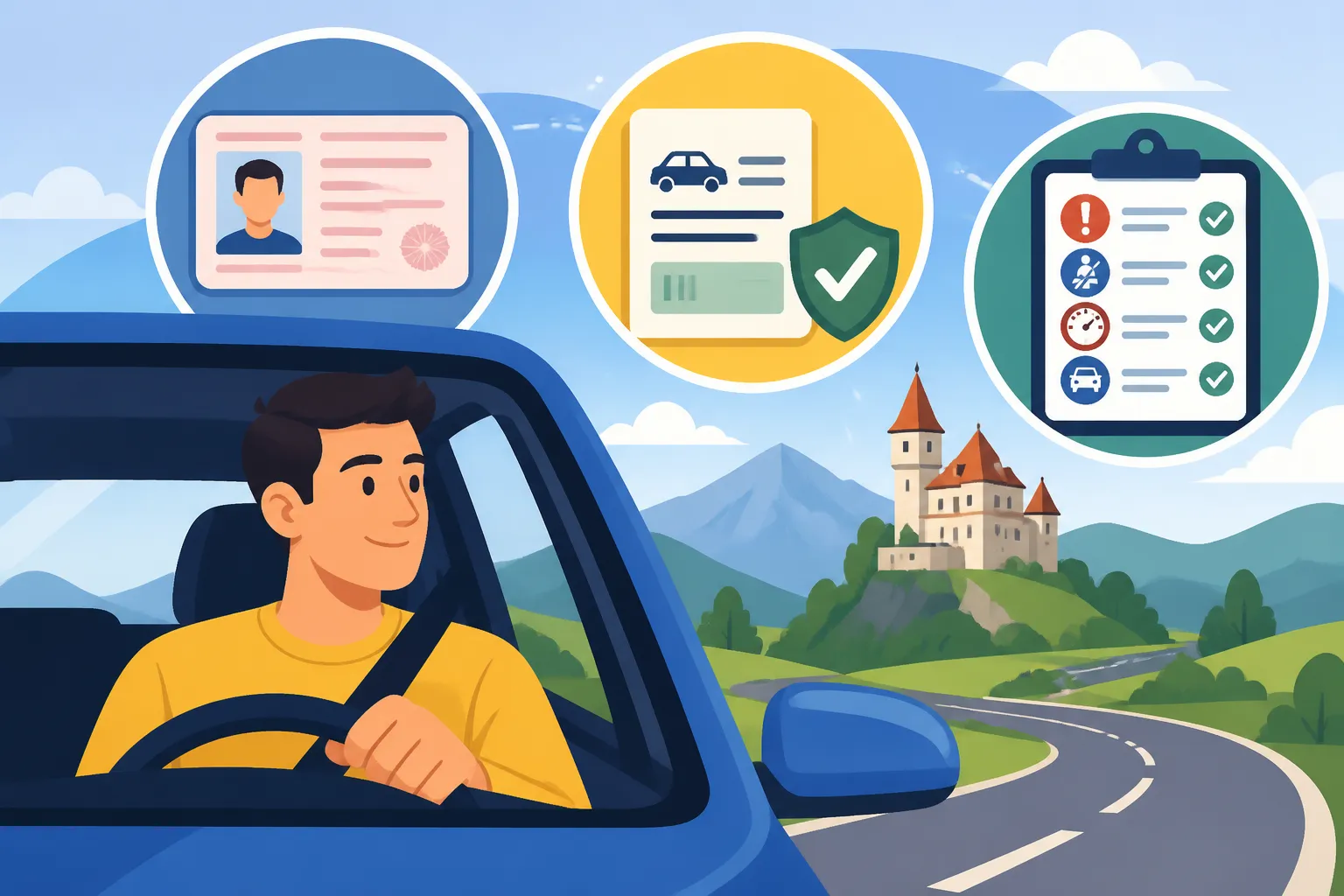
Getting stopped by the police is never fun, but it's even worse if you don't have the legally required items in your car. Romanian law mandates that you carry specific equipment and documents at all times when driving.
Here’s your checklist:
- Reflective Safety Vest: Mandatory for anyone exiting a stopped vehicle on the road shoulder or carriageway outside built-up areas, especially during emergencies. Keep it accessible, not buried in the boot.
- First-Aid Kit: A properly equipped and valid (check expiry dates) first-aid kit is required.
- Warning Triangle: Two warning triangles are mandatory to place behind your vehicle in case of a breakdown or accident.
- Fire Extinguisher: A small, approved fire extinguisher must be carried and properly secured.
- Spare Wheel or Puncture Repair Kit: While not strictly mandated by law, having one or the other is highly advisable for practical reasons.
- Driver's Licence: Your valid Romanian licence or an internationally recognised foreign licence.
- Vehicle Registration Certificate (Certificatul de Înmatriculare): This is the small card that proves your vehicle is registered.
- Vehicle Technical Inspection Certificate (ITP): Proof that your car passed its mandatory periodic technical inspection.
- Mandatory Car Insurance Policy (RCA): The green card or printed policy proof.
- Identity Document: Your national ID card or residence permit.
Failing to carry any of these items can result in fines during a police check. It's a pain to remember them all, but it saves a lot of hassle. My personal tip? Put the reflective vest under your seat or in the glove compartment – you don't want to be fumbling in the boot on a busy road.
Road Safety Tips and Common Driving Challenges
Driving in Romania, especially for newcomers, comes with its own set of challenges. Being aware of these can significantly improve your safety and reduce stress levels.
One of the most noticeable differences is the aggressive driving style prevalent in some areas, particularly in heavy traffic. Drivers might tailgate, cut you off, or make unexpected manoeuvres. Defensive driving is not just recommended, it's essential. Assume other drivers might not signal or might suddenly change lanes.
Road conditions are another significant factor. While major motorways and national roads are generally well-maintained, secondary roads and those in rural areas can vary greatly. Potholes are a common nemesis, especially after winter. Always keep an eye on the road surface, and be prepared to slow down or swerve to avoid hazards. GPS systems are helpful, but sometimes they guide you down unpaved or poorly maintained roads, so use common sense. Services like Airalo can be invaluable here, ensuring your GPS has a consistent signal to help you navigate efficiently and avoid getting truly lost on an unfamiliar rural track.
Animal crossings are a serious hazard in rural areas. Farmers often herd sheep, cows, or horses along or across roads, and stray dogs are unfortunately common, even on main routes. Always be vigilant, especially at dusk and dawn.
Finally, lack of clear signage or inconsistent road markings can sometimes be an issue, particularly in older parts of cities or less developed regions. Coupled with the general speed of traffic, this can make navigating tricky. Planning your route beforehand, even with a GPS, can help. Keep calm, focus on your surroundings, and don't be afraid to take it slow if you're unsure. The most important thing is to get to your destination safely.
Vehicle Ownership and Maintenance in Romania
Owning a car in Romania offers unparalleled freedom to explore this beautiful country. However, it also comes with responsibilities, from finding the right vehicle to ensuring it stays roadworthy and legally compliant. Understanding the local nuances of car buying, inspections, and insurance is crucial for a smooth experience.
Buying a New or Used Car in Romania
Deciding whether to buy a new or used car is a common dilemma, and Romania offers options for both. If you're opting for a new car, you'll typically visit authorised dealerships. Major international brands have a strong presence in Romania, offering a range of models, warranties, and financing options. The process is usually straightforward, involving a sales contract, payment, and then the dealership often assists with the initial registration process, which is a huge relief for expats.
Buying a used car can be more economical but also carries more risks. There are several avenues:
- Dealerships selling used cars: These can offer some peace of mind, often providing a limited warranty or having performed basic checks.
- Online platforms: Websites like Autovit.ro or Olx.ro are popular for private sales. This is where most Romanians find used cars.
- Private sellers: Found through word-of-mouth or classifieds.
When buying a used car from a private seller, due diligence is paramount. Always, always arrange for a pre-purchase inspection by an independent mechanic you trust. This can uncover hidden mechanical issues or past accident damage. Verify the car's history: check the mileage (odometer tampering is unfortunately a known issue), ensure the VIN matches all documents, and confirm there are no outstanding debts or liens on the vehicle at the local tax office (ANAF) or the Land Registry (Cartea Funciară – if it’s a very old car that had a lien). You should also check the vehicle's ITP history. The transfer of ownership involves a sales contract (contract de vânzare-cumpărare) signed by both parties, usually authenticated by a notary public, followed by the registration process with the SPCRPCIV and your local tax office. How to Buy a Used Car in Romania as a Foreigner provides comprehensive details on these steps.
Mandatory Vehicle Inspections (ITP)
The ITP (Inspecția Tehnică Periodică) is Romania's mandatory periodic technical inspection, similar to an MOT in the UK or TÜV in Germany. Its purpose is to ensure that vehicles on the road meet minimum safety and environmental standards. Driving without a valid ITP is illegal and will result in fines, potential confiscation of your registration certificate, and even immobilisation of your vehicle.
The frequency of ITP depends on the age and type of your vehicle:
- New cars: The first ITP is generally due after 3 years.
- Cars older than 3 years: ITP is required every 2 years.
- Cars older than 12 years: ITP is required annually.
- Commercial vehicles or taxis: More frequent inspections are required.
You can get your ITP done at any authorised service station (stație ITP). Look for signs indicating "ITP" or "Verificări Tehnice". It's advisable to schedule an appointment, especially if you need it done quickly. During the inspection, they will check lights, brakes, steering, suspension, exhaust emissions, and general vehicle condition. If your car passes, you'll receive a stamp on your vehicle's registration certificate and a sticker for your windshield. If it fails, you'll be given a list of defects that need to be rectified within a certain timeframe (usually 30 days), after which you'll need to undergo a re-inspection. Understanding What Is the ITP (Vehicle Inspection) and How Does It Work in Romania? will help you prepare.
Car Insurance (RCA) and Other Associated Costs
Car ownership in Romania comes with several recurring costs, the most significant of which are mandatory insurance and taxes.
Mandatory Civil Liability Insurance (RCA): As mentioned earlier, RCA is compulsory for all vehicles. It covers damages (material and bodily injury) that you might inflict on a third party in an accident where you are at fault. It does not cover damage to your own vehicle. The price of RCA can fluctuate significantly based on factors like your age (younger drivers often pay more), engine capacity, vehicle model, and your claims history (bonus-malus system). You can get quotes from various insurance companies (e.g., Allianz Țiriac, Omniasig, Groupama, Euroins, etc.) online or through brokers. It's worth shopping around as prices can vary considerably.
Beyond RCA, you might consider Casco insurance. This is comprehensive, optional insurance that covers damage to your own vehicle, regardless of fault, as well as theft, vandalism, fire, and natural disasters. While more expensive than RCA, many expats find it worthwhile for peace of mind, especially given varying road conditions and driving styles. The cost of Casco depends on the car's value, your chosen deductible, and the extent of coverage.
Other recurring costs include:
- Annual Vehicle Tax (Impozitul pe Mașină): This is a local tax paid to your local tax authority (Primărie). The amount depends on the engine capacity of your vehicle.
- Motorway Vignette (Rovinieta): Essential for driving on national roads and motorways. We'll dive into this more in the next section, but it's a critical annual or periodic cost.
- Fuel Costs: Petrol and diesel prices are comparable to other EU countries, fluctuating with global markets.
- Maintenance and Repairs: Regular servicing and unexpected repairs are part and parcel of car ownership. Labour costs at independent garages can be more affordable than in Western Europe, but parts prices are similar.
Understanding these costs is vital for budgeting, and can be related to our broader The Complete Guide to Cost of Living in Romania for Expats (2026).
Navigating Romanian Roads and Infrastructure
Once you're all set with your licence and a registered vehicle, it's time to hit the road. Romania's landscape is incredibly diverse, from bustling city centres to serene mountain passes, and its road infrastructure reflects this variety. Knowing how to navigate tolls, parking, and varying road conditions will make your driving experience much smoother.
Understanding the Motorway Vignette (Rovinieta)
The Rovinieta is Romania's electronic road tax, a mandatory payment for using national roads and motorways (autostrăzi). Unlike some countries where you pay at physical toll booths, Romania uses an electronic system where your licence plate is registered in a central database. There are no barriers or physical vignettes to display on your windshield anymore.
You must purchase a Rovinieta before driving on any road that requires it. If you're caught without a valid one, usually by automatic cameras or roadside checks, you'll face a hefty fine. And trust me, those cameras are everywhere. The fine is not just for being without one, but you also have to purchase the vignette on the spot.
You can buy a Rovinieta for different validity periods: 7 days, 30 days, 90 days, or 12 months. The cost varies based on the vehicle category (e.g., passenger car, commercial vehicle) and the duration.
Where to buy it:
- Online: The easiest way is through the official website, roviniete.ro, or authorised third-party websites. This is highly recommended for convenience.
- Petrol stations: Most major petrol stations (like OMV Petrom, Rompetrol, Lukoil) offer Rovinieta sales.
- Post offices (Poșta Română): You can also buy them here.
When purchasing, you'll need your vehicle's registration number (number plate) and the vehicle category. Always double-check that your licence plate number is entered correctly, as an error can still result in a fine. For a deeper dive into this, see Understanding the Motorway Vignette (Rovinieta) in Romania. It's one of those administrative tasks that seems small but can cause huge frustration if overlooked.
Parking Regulations and Solutions in Cities
Parking in Romanian cities, especially in larger ones like Bucharest, Cluj-Napoca, or Timișoara, can be a real challenge. Spaces are often limited, and regulations can be confusing.
In city centres, expect to pay for parking. Look for designated parking zones marked with signs, usually with a "P" symbol and information on tariffs. Many cities use electronic payment systems:
- SMS Parking: You send an SMS with your licence plate number to a specific short code (e.g., 7424, 7576) to pay for an hour or more. The system will usually confirm your payment via SMS.
- Mobile Apps: Apps like TPark, AmParcat, or sometimes local city-specific apps allow you to pay for parking directly from your smartphone, often with options to extend your parking session remotely. This is often the most convenient method.
- Parking Meters: In some areas, you might still find traditional parking meters where you pay with coins or card and display a ticket.
Beware of illegal parking. Parking on sidewalks, in front of garages, on yellow lines, or in areas designated for residents only will almost certainly result in a fine, and quite possibly, your car being towed away. Getting your car back from the impound lot (depozit auto) is a time-consuming, expensive, and frustrating ordeal, so it's best avoided. Residential parking permits might be available for those living in specific zones; inquire at your local town hall (primărie) if this applies to you.
Outside city centres and in smaller towns, parking might be easier and often free, but always look for signs and be respectful of private property and local access points.
Dealing with Road Conditions and Construction
Romania's roads are a mixed bag, and it's something you need to be prepared for. While there have been significant improvements in recent years, particularly on major arteries, you'll still encounter a variety of conditions.
- Motorways: Generally smooth and fast, but the network is still expanding, so don't expect to crisscross the entire country solely on motorways.
- National Roads: These form the backbone of the road network. Quality varies, but they are mostly well-maintained. Be prepared for single-lane stretches where overtaking can be tricky and slow-moving vehicles (tractors, horse-drawn carts) are common, especially in rural areas.
- County Roads (Drumuri Județene) and Local Roads (Drumuri Comunale): This is where you'll find the most variation. Some are perfectly fine, others are unpaved, full of potholes, or in various states of disrepair. Use caution, reduce speed, and be ready for unexpected obstacles.
Road construction is a constant feature of Romanian roads. You'll often encounter diversions, single-lane traffic, or temporary rough surfaces. Always obey construction zone signage and reduce your speed. It's frustrating, but it's part of the process of improving the infrastructure.
Driving in bad weather also presents challenges. Heavy rain can lead to slippery roads and reduced visibility. Fog, particularly in autumn and winter, can be dense, especially in low-lying areas or mountain passes. In winter, snow and ice are major concerns. Ensure your car is properly equipped with winter tires (mandatory between November 1st and March 31st if driving on roads covered with snow, ice, or frost, though many choose to put them on proactively), and drive cautiously. A good set of tires makes a world of difference.
Handling Accidents and Emergencies on Romanian Roads
No one wants to think about it, but accidents can happen. Knowing what to do in case of a mishap on Romanian roads can significantly reduce stress and help you navigate the process effectively. The rules are broadly similar to other European countries, but having a clear plan can make all the difference.
What to Do in Case of a Minor Accident
For minor accidents where there are no injuries and only material damage (often called "tampoane" or fender-benders), the process can be quite straightforward, provided both parties agree on fault.
- Safety First: If possible and safe to do so, move your vehicle to the side of the road to avoid obstructing traffic. Turn on your hazard lights and place your warning triangles (remember you need two!) behind your car to alert other drivers. Put on your reflective safety vest before exiting the vehicle.
- Check for Injuries: Even in minor accidents, quickly check yourself and any passengers for injuries. If anyone is hurt, even slightly, proceed immediately to the "Emergency Procedures" below.
- Exchange Information: With the other driver(s), exchange contact details (name, phone number), vehicle registration numbers, insurance company details, and driver's licence information. Take photos of the accident scene from various angles, including vehicle positions, damage, road markings, and any relevant surroundings.
- Complete an Accident Report: If both parties agree on the circumstances and fault, and there are no injuries, you can fill out a "Constatare Amiabilă" (Friendly Finding/European Accident Report). This form is typically provided by insurance companies and allows you to settle the claim directly with insurers without police involvement. Both drivers must sign it, and each keeps a copy. This document is then submitted to your respective insurance companies.
- Police Involvement (Optional for Minor Accidents): If there's disagreement on fault, if the other driver refuses to cooperate, or if you simply feel uncomfortable, you should call the police (112). They will come to the scene, document the accident, and establish fault, which will then serve as the basis for insurance claims.
Remember, honesty and clear communication are key in these situations. It's always a stressful moment, but a calm approach can help.
Emergency Procedures and Contacts
In more serious incidents involving injuries, significant damage, or if you're unsure how to proceed, immediately follow these steps:
- Call 112: This is Romania's universal emergency number, connecting you to ambulance, police, and fire services. Clearly state your location (be as specific as possible – nearest town, road number, kilometre marker if on a national road), the nature of the emergency, and if there are any injuries. Even if you don't speak perfect Romanian, they usually have English-speaking operators.
- Ensure Safety: If your vehicle is in a dangerous position, try to move it if safe. Otherwise, prioritise your safety and that of your passengers by moving away from traffic. Use hazard lights and warning triangles.
- Provide First Aid: If you have first aid knowledge, assist anyone injured within your capabilities. Do not move severely injured people unless they are in immediate danger.
- Do Not Admit Fault: While being cooperative, avoid admitting fault at the scene. Let the police and insurance investigators determine the official cause.
- Secure Evidence: Take photos and videos of everything: vehicles, road conditions, skid marks, signage, and any injuries. If there are witnesses, get their contact information.
The Romanian emergency services, particularly SMURD (Mobile Service for Emergency Resuscitation and Extrication), are highly professional and respond quickly to serious accidents. They will assess injuries, provide medical care, and transport victims to the nearest hospital if necessary. Don't hesitate to call 112.
Filing an Insurance Claim and Legal Aspects
Once the immediate aftermath of an accident is handled, the next step is dealing with your insurance company. This is where your RCA or Casco policy comes into play.
- Notify Your Insurer: You should inform your insurance company as soon as possible after the accident, typically within 24-48 hours. They will provide guidance on the next steps.
- Submit Documentation: You'll need to provide all relevant documents: the amiable accident report or police report, photos, copies of your ID, driver's licence, vehicle registration, and insurance policy.
- Vehicle Assessment: Your insurer will arrange for your vehicle to be assessed by an expert to determine the extent of the damage and the cost of repairs.
- Repair Process: If your claim is approved, your insurer will authorise repairs at an approved garage or provide compensation for the damages.
Navigating insurance claims can be intricate, especially if there are disputes. If you used your mandatory RCA and you were at fault, the other party’s damages will be covered by your policy. If the other party was at fault, their RCA should cover your damages. If you have Casco, it will cover your vehicle's damages regardless of fault, minus any deductible.
Legally, being involved in an accident, especially one with injuries, can have consequences. Driving under the influence of alcohol or drugs, or causing serious injury or death, will lead to criminal charges and severe penalties. Even minor accidents can lead to administrative fines. It’s important to cooperate fully with the authorities and your insurance company. If you find yourself in a complex legal situation, seeking advice from a Romanian lawyer specialising in traffic law is highly recommended. For those looking for more general health guidance for emergencies, Emergency Medical Care in Romania: What Every Expat Needs to Know can offer additional perspectives.
Specific Driving Scenarios and Practical Advice
Driving in Romania is rarely monotonous. The country's diverse geography and climate mean you'll encounter a range of driving conditions. Being prepared for these specific scenarios can make your journeys safer and more enjoyable.
Winter Driving and Mountain Roads
Romania experiences genuine winters, with snow, ice, and freezing temperatures common across much of the country, especially in the mountainous regions. Winter driving here requires a specific mindset and preparation.
- Winter Tires are Essential (and Mandatory): As mentioned, winter tires are legally required between November 1st and March 31st if you are driving on roads covered with snow, ice, or frost. However, it's highly recommended to fit them proactively as soon as temperatures consistently drop below 7°C (45°F), regardless of snow. Winter tires provide significantly better grip in cold, wet, snowy, and icy conditions.
- Snow Chains: If you plan on driving in serious mountain areas during heavy snowfall, carrying snow chains is a good idea, and sometimes even mandatory on certain mountain passes (check local signage). Know how to fit them before you need them.
- Prepare Your Vehicle: Ensure your car's battery is in good condition, check antifreeze levels, and ensure your wipers and defrosters are fully functional. Keep an ice scraper, small shovel, and a brush in your car.
- Adjust Your Driving: Drive defensively and at reduced speeds. Increase your following distance. Black ice is a real danger – clear, sunny days after a freeze can be deceiving. Avoid sudden braking or acceleration.
- Road Closures: Mountain roads, especially in the Carpathians (e.g., Transfăgărășan, Transalpina), are often closed during winter months due to heavy snow and avalanche risks. Always check road conditions before setting out, especially for longer journeys or trips into the mountains. Websites like CNAIR (Compania Națională de Administrare a Infrastructurii Rutiere) provide real-time road information.
Winter driving here is less about bravado and more about cautious preparation.
Driving in Major Cities vs. Rural Areas
The driving experience in Romania can swing wildly between its urban centres and its tranquil countryside.
-
Major Cities (Bucharest, Cluj-Napoca, Iași, Timișoara):
- Traffic Congestion: Expect heavy traffic, especially during peak hours. Rush hour in Bucharest can be notoriously slow.
- Aggressive Driving: Drivers can be impatient and assertive. Defensive driving is a must.
- Parking Challenges: Limited and often paid parking, as discussed.
- Public Transport: Major cities have relatively good public transport networks (How to Use the STB Travel Card and Public Transport in Bucharest). Consider using it for commuting to avoid parking and traffic headaches.
- Navigation: GPS is essential. Services like Airalo with robust data plans ensure you have live traffic updates and clear directions, which are indispensable in navigating complex city layouts.
- Potholes and Tram Tracks: Keep an eye out for these. Tram tracks can be particularly slippery when wet and dangerous for two-wheeled vehicles.
-
Rural Areas:
- Varying Road Quality: As highlighted earlier, roads can range from excellent to unpaved and potholed.
- Slow-Moving Vehicles: Horse-drawn carts, tractors, and livestock are common sights. Be patient and overtake safely where permitted.
- Pedestrians and Animals: Rural roads often lack sidewalks, meaning pedestrians walk along the road. Stray animals are also a frequent hazard. Drive cautiously, especially around villages.
- Limited Services: Petrol stations, mechanics, and medical facilities can be sparse in very remote areas. Ensure your car is in good condition and your tank is full before venturing too far off the beaten path.
- Scenic Routes: Despite the challenges, rural driving offers breathtaking scenery, from rolling hills to ancient villages and stunning natural landscapes. This is where a car truly comes into its own for exploration.
Public Transport Alternatives and When to Use Them
While having a car provides maximum flexibility, there are times when opting for public transport or other alternatives is simply more sensible, convenient, or cost-effective.
- Intra-City Travel: In large cities like Bucharest, public transport (metro, tram, bus, trolleybus) is often quicker and cheaper for commuting, especially if your destination has good public transport links and parking is expensive or non-existent. You won't have to worry about the stress of navigating dense traffic or finding a parking spot.
- Long-Distance Travel by Train or Bus: For inter-city travel, Romania's train network (CFR Călători) can be a relaxing alternative, especially for longer distances between major cities. While sometimes slow, it avoids driving fatigue. Buses and coaches (Autogări) also connect most towns and cities and can be very affordable. Consider Understanding Train Travel with Romanian Railways (CFR) in Romania for more information.
- Ride-Sharing and Taxis: Ride-sharing apps like Uber and Bolt are widely available in major Romanian cities and offer a convenient door-to-door service, particularly for evenings out or when you don't want to worry about parking or navigating. Taxis are also plentiful, but it's often safer to use reputable apps or call a known company rather than hailing one off the street.
Ultimately, balancing the convenience of your own vehicle with the practicality of public transport is key to a stress-free experience in Romania. Don't feel pressured to drive everywhere if there's a better alternative. The freedom of the car is fantastic for exploring the hidden gems, but sometimes, letting someone else do the driving is just what you need.
Disclaimer
The information provided in this guide is for general informational purposes only and does not constitute legal, financial, or medical advice. Regulations and procedures in Romania can change, and specific situations may require individual consultation with legal professionals, authorities, or specialists. While we strive to keep the information accurate and up-to-date, we recommend verifying all details with official Romanian institutions or professional advisors.