How to Exchange Your Foreign Driving Licence in Romania
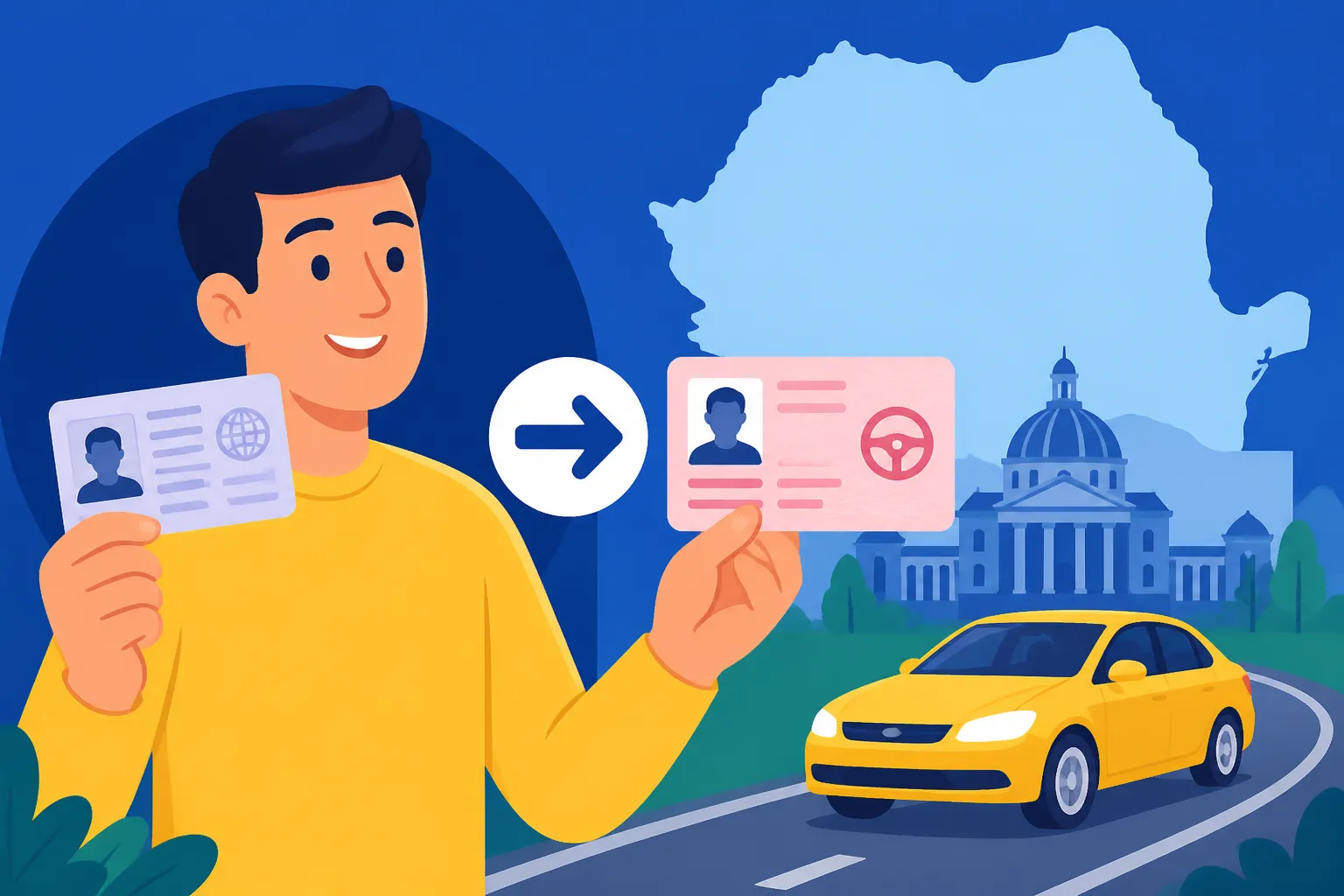
One of the first practical hurdles you’ll face as an expat settling into Romania, beyond navigating the residency permit maze and trying to pronounce “mulțumesc” correctly, is figuring out how to get behind the wheel legally. Driving here with a foreign licence can be a real head-scratcher, especially once you realize those initial tourist rules don't last forever. This guide is here to walk you through the often-confusing process of exchanging your foreign driving licence for a shiny new Romanian one, helping you avoid fines and bureaucratic headaches.
Understanding the Landscape of Driving in Romania for Foreigners
When you first arrive in Romania, it can feel like a breath of fresh air, especially if you’ve been bogged down by immigration paperwork. But driving, like many things here, has its own set of rules, and what applies to a short-term visitor is vastly different from what’s expected of a long-term resident. Getting this straight from the start can save you a world of trouble down the line.
Initial Period: Driving with Your Foreign Licence
Initially, most expats can drive in Romania using their existing foreign driving licence, but this grace period is finite and depends heavily on where your licence was issued. For those arriving from an EU or EEA country, the rules are generally quite straightforward. You can use your licence for as long as it's valid, provided you meet the age requirements for the equivalent Romanian category and it's not suspended or revoked in your home country. You might choose to exchange it for administrative reasons or simply when it expires, but it’s not typically mandatory right away.
However, if your licence hails from a non-EU/EEA country, things get a bit more complex. Generally, you’re permitted to drive on your foreign licence for a period of up to 90 days from the date you establish your residency in Romania, which is usually tied to your entry stamp or the start date of your residence permit. Beyond this initial 90-day window, your foreign licence is no longer valid for driving in Romania. It’s absolutely crucial to remember this timeframe, as continuing to drive on an invalid licence can lead to significant fines, confiscation of your vehicle, and even legal repercussions. For this initial period, especially for non-EU/EEA drivers, carrying an International Driving Permit (IDP) alongside your national licence is highly recommended, as it provides a translation and simplifies interactions with local authorities. Always make sure your IDP is issued by the same country as your driving licence.
Why Exchange? The Mandatory Step for Long-Term Residents
The simple answer to "why exchange?" is that it becomes mandatory once you become a legal resident of Romania and your initial grace period expires. For non-EU/EEA citizens, this means exchanging your licence within 90 days of obtaining your residence permit. Failure to do so will render your foreign licence invalid for use on Romanian roads. Imagine being pulled over for a routine check, only to find out your licence is effectively useless – it’s a scenario no one wants to face, especially when dealing with language barriers.
The Romanian authorities are quite strict on this. Driving without a valid licence is a serious offense, and they do not make exceptions for those who plead ignorance or claim to be stuck in bureaucratic limbo. This mandatory exchange ensures that all drivers on Romanian roads adhere to local regulations, have their details registered in the national system, and are deemed medically and psychologically fit to drive according to Romanian standards. It’s part of integrating into the local system, much like Registering Your Residence (Viză de Flotant) in Romania: The Complete Guide or sorting out your utilities. So, while it might seem like just another administrative task on an already long list, it's a vital one for anyone planning to stay in Romania for the long haul.
Eligibility Criteria for Exchanging Your Licence
Before you even start gathering documents, it's important to understand if you’re actually eligible to exchange your foreign driving licence in Romania. The process isn't a one-size-fits-all, and specific conditions must be met to avoid wasting time and effort. This section will clarify who can exchange their licence and highlight the distinctions between EU/EEA and non-EU/EEA licences.
Who Can Exchange Their Licence?
First and foremost, to be eligible for a licence exchange, you must be a legal resident of Romania. This means having a valid long-term residence permit (permis de ședere) issued by the General Inspectorate for Immigration (IGI). Simply being in the country on a tourist visa or a short-stay visa won't cut it. The authorities need to see that you have a legitimate, established presence here. You can learn more about this crucial first step by reading The Complete Guide to Romanian Residence Permits for Expats (2027). Without a proper residence permit, your application for a driving licence exchange will be rejected outright.
Beyond residency, you also need to meet the general age and health requirements that apply to Romanian drivers. This includes being of the minimum age for the vehicle category you wish to drive (e.g., 18 for Category B cars) and undergoing a mandatory medical examination to prove you are physically and mentally fit to drive. We’ll delve deeper into the medical evaluation later, but it’s a non-negotiable step. Your foreign licence itself must be valid, current, and issued by a recognized authority in your home country. If your licence is expired, suspended, or damaged, you'll likely need to resolve that with your home country's issuing authority before Romania will consider an exchange.
Licences from EU/EEA Countries vs. Non-EU/EEA Countries
The process for exchanging a driving licence varies significantly depending on whether your licence was issued by an EU/EEA member state or a non-EU/EEA country. This distinction is paramount and often dictates the complexity and duration of your exchange.
For those holding an EU/EEA driving licence, the process is generally quite simplified. You can drive on your existing licence until it expires or you choose to exchange it, but it’s not typically mandatory unless specified by local rules for certain circumstances. When you do decide to exchange it, it's often a direct swap, without the need for additional driving tests. You’ll still need to provide proof of residency, a medical certificate, and your original licence, but the bureaucratic hurdles are considerably lower. The underlying principle is mutual recognition within the European Union, which streamlines the process for citizens moving between member states.
However, if your driving licence is from a non-EU/EEA country, prepare for a more involved procedure. As mentioned, it becomes mandatory to exchange it within 90 days of obtaining your Romanian residence permit. The complexity then depends on whether Romania has a bilateral agreement with your home country for mutual recognition of driving licences. If such an agreement exists (for example, with countries like Turkey, Moldova, or Ukraine), the exchange process might be a direct swap, similar to EU licences, though still requiring more extensive documentation and checks. If there is no bilateral agreement, which is the case for many countries like the USA, Canada, Australia, or India, then you will likely be required to undergo both a theoretical (written) and a practical driving test in Romania. This is where many expats get caught off guard, expecting a simple exchange only to find themselves back in driving school. It's crucial to check the specific agreements between Romania and your country before you begin the process. A quick search on the DRPCIV (Direcția Regim Permise de Conducere și Înmatriculare a Vehiculelor) website or a visit to your local office can provide the most up-to-date information on bilateral agreements.
The Step-by-Step Process for Licence Exchange
Okay, so you've confirmed your eligibility, understand the general timeframe, and you're ready to tackle the process. This is where the real fun begins – gathering documents, navigating medical checks, and finally submitting your application. It can feel like a bureaucratic marathon, but breaking it down into manageable steps makes it less daunting.
Gathering Your Documents: The Paperwork Gauntlet
This is arguably the most critical and often the most frustrating part of the entire process. Romanian bureaucracy loves paperwork, and missing even one tiny document can send you back to square one. So, take a deep breath, grab a coffee, and let's go through the essential items you'll need to collect.
First, you'll definitely need your original foreign driving licence and a certified sworn translation of it into Romanian. Do not skimp on the translation; it must be done by a public notary authorized translator. You can usually find these translators near notary public offices or through online searches for "traducător autorizat." Next up is your Romanian identity document, which means your valid residence permit (permis de ședere) and your passport. Make sure both are current and have not expired. You will also need your CNP (Personal Numeric Code), which is essential for almost any administrative procedure in Romania. If you haven't sorted this out yet, our guide on How to Get Your CNP (Personal Numeric Code) for Healthcare Access in Romania can help.
You'll also need a proof of address (adeverință de domiciliu). This could be your rental contract registered with ANAF (the tax authority) or a utility bill in your name. Then, there's the application form, which you can usually download from the DRPCIV website or obtain directly at their office. Don’t forget two passport-sized photos (3×4 cm) – yes, even in this digital age, they often still ask for physical photos. Crucially, you’ll need a criminal record certificate (cazier judiciar) issued by the Romanian authorities. This can be obtained from any police station; you’ll need your ID and CNP for this. Finally, be prepared for the receipts of payment for the application fees (taxă permis), which are typically paid at CEC Bank or via online platforms linked to the public services. These fees are subject to change, so always check the latest amounts on the DRPCIV website or at the office.
The Medical and Psychological Evaluation
Before DRPCIV will even look at your application, you need to prove you're medically and psychologically fit to drive. This isn't just a quick chat with your GP; it's a specific set of examinations that must be conducted at a clinic authorized to issue what's known as the "fișa medicală pentru permis auto" (medical certificate for driving licence) and the "aviz psihologic" (psychological evaluation).
You'll need to visit a specialized medical centre, often referred to as a "clinică de medicina muncii" or "centru de expertiză medicală și psihologică," which is authorized by the Ministry of Health and the Ministry of Internal Affairs. These clinics typically have all the necessary specialists under one roof. The medical examination involves checks by an ophthalmologist (eyesight), an ENT specialist (hearing), a neurologist, an internal medicine doctor, and sometimes an orthopedist. They'll assess your general health, vision, hearing, and motor skills to ensure you don't have any conditions that would impair your ability to drive safely. Expect to have your blood pressure checked, urine tested, and possibly some basic coordination tests.
The psychological evaluation is a separate but equally important component. This typically involves a series of written tests and possibly some computer-based assessments designed to evaluate your cognitive functions, reaction time, attention span, and overall psychological stability. Don't worry, it's not meant to be a trick test, but rather to ensure you possess the mental faculties required for safe driving. Once you pass both, the clinic will issue you the comprehensive fișa medicală and aviz psihologic, which are usually valid for a limited period (e.g., 6 months). The costs for these evaluations can vary but usually range between 150-300 RON for the medical check and 100-200 RON for the psychological one. It's a bit of an investment, but it's a mandatory checkpoint in your journey to Driving in Romania: Licences, Registration and Rules for Expats (2027).
Submitting Your Application and Awaiting the New Licence
With all your documents meticulously gathered and your medical and psychological evaluations successfully completed, you’re finally ready for the moment of truth: submitting your application. This is done at the local DRPCIV (Direcția Regim Permise de Conducere și Înmatriculare a Vehiculelor) office in the county where you have your registered residence.
Before heading there, it's highly advisable to check if you can book an appointment online. Many DRPCIV offices, especially in larger cities like Bucharest or Cluj-Napoca, operate on an appointment system to manage queues. The DRPCIV website often has an online scheduling portal. If online booking isn't available or slots are too far out, be prepared for potentially long waiting times if you simply walk in. On the day of your appointment (or walk-in), bring all your original documents, including your foreign driving licence, residence permit, passport, the sworn translation, medical and psychological certificates, proof of address, criminal record, application form, and payment receipts. They will meticulously check each document.
During the submission, they will take your fingerprints and a photo for your new Romanian driving licence. This is usually where you'll be asked to surrender your original foreign driving licence. This can feel a bit unnerving, as it’s often a piece of identification you’ve held for years. In return, you will typically be issued a temporary driving permit (dovadă înlocuitoare a permisului de conducere), which is valid for a limited period, usually 15 or 30 days. This temporary permit allows you to legally drive while your new licence is being processed. The actual processing time for the new Romanian driving licence can vary significantly, from a few weeks to a couple of months, depending on the volume of applications and the specific county office. Once your new licence is ready, you'll be notified to pick it up in person, usually at the same DRPCIV office where you submitted your application. Remember, while you wait for your licence, an eSIM from a provider like Airalo can be incredibly useful to stay connected, check appointment updates, or navigate to the DRPCIV office without relying on Wi-Fi.
Special Considerations and Common Hurdles
Even with a clear step-by-step guide, the licence exchange process in Romania can throw a few curveballs. Expats often encounter specific situations or common frustrations that require a bit more insight. Knowing about these in advance can help you prepare and navigate them more smoothly.
The Driving Exam: When It's Required
For many non-EU/EEA citizens, the biggest hurdle and often the most unwelcome surprise is the requirement to take a full driving exam. As mentioned earlier, if Romania does not have a bilateral agreement with your home country for the mutual recognition of driving licences, you will be treated as if you are applying for a driving licence for the first time. This means you will need to pass both the theoretical (written) exam and the practical (road) test.
The theoretical exam, or "sala" as it's often called, covers Romanian traffic laws, road signs, and safe driving practices. This exam is usually conducted on a computer, and while there might be some resources in English, the official language is Romanian. Many expats find this particular challenge difficult due to the language barrier and the nuances of local traffic laws. You can find online platforms and apps that offer practice tests in English, but it's advisable to thoroughly study the Romanian Highway Code. If you pass the theory test, you then proceed to the practical exam. This involves driving with an examiner on a pre-determined route, demonstrating your ability to handle the vehicle safely and adhere to all traffic rules. You'll need to provide your own car for the practical test, usually an instructor's car, as it needs to be equipped with dual controls. This situation clearly adds significant cost and time, often requiring professional driving lessons.
Lost or Expired Licences and Other Issues
What happens if your foreign driving licence is lost or expired? This can add a layer of complexity to an already intricate process. If your foreign licence is lost, you'll first need to obtain a confirmation of its validity or a replacement from the issuing authority in your home country. Romania will not exchange a lost licence based solely on a police report; they need proof of the original document and its details. This can involve contacting your home country's embassy or consulate, which can be a time-consuming affair.
If your foreign licence has expired, the situation is even trickier. Romania generally only exchanges valid licences. You might need to renew your licence in your home country first, which could mean traveling back or managing the renewal remotely, then returning to Romania to initiate the exchange. This is why it's crucial to start the exchange process well before your foreign licence is due to expire, or before your 90-day residency window closes. Another common issue can be related to different categories of licences. If you have a licence for a motorcycle, car, and heavy vehicles, ensure all categories are clearly translated and recognized. Sometimes, certain categories might require additional proof or specific exams depending on Romanian regulations and your home country's standards.
Costs Involved in the Exchange Process
The financial aspect of exchanging your driving licence in Romania can quickly add up, so it’s wise to budget for these expenses. This isn't just a single fee; it's a collection of smaller costs for various services and documents.
First, the mandatory medical and psychological evaluations are significant. As mentioned, expect to pay around 150-300 RON for the medical certificate and 100-200 RON for the psychological one. These are upfront costs you'll incur before even reaching the DRPCIV office. Then there are the sworn translation fees for your foreign licence, which can range from 50-150 RON, depending on the translator and the complexity. The actual DRPCIV application fee for issuing the new licence is typically around 89 RON, paid at authorized banks or online. If you're required to take a driving exam, the costs escalate. Driving school fees for lessons and using an instructor's car for the practical test can easily run into hundreds or even thousands of RON, depending on how many lessons you need. There will also be separate fees for the theoretical and practical exams themselves. Finally, don't forget miscellaneous costs like passport photos, printing documents, and potentially transportation to various offices. While not exorbitant individually, these costs collectively represent a noticeable expense, so it’s important to factor them into your overall budget for living in Romania. Planning your move with a service like Sirelo can help you account for all these small but crucial expenses in your budget.
| Aspect | EU/EEA Licence Exchange | Non-EU/EEA Licence Exchange (with agreement) | Non-EU/EEA Licence Exchange (no agreement) |
|---|---|---|---|
| Mandatory? | No, can drive until expiry/optional exchange | Yes, within 90 days of residence permit | Yes, within 90 days of residence permit |
| Driving Exams Required? | No (direct exchange) | No (direct exchange) | Yes (both theory & practical tests) |
| Key Documents | Original licence, residence permit, medical/psychological certs, application, photos | Original licence, sworn translation, residence permit, medical/psychological certs, application, photos, criminal record | Original licence, sworn translation, residence permit, medical/psychological certs, application, photos, criminal record |
| Old Licence Returned? | Typically surrendered | Typically surrendered | Typically surrendered |
| Estimated Timeline | 2-4 weeks | 4-8 weeks | 2-4 months (including exam prep & scheduling) |
| Main Challenges | Minor bureaucracy, potential for slight delays | Sworn translations, criminal record, specific document formats | Language barrier for exams, finding driving schools, significant time & cost investment |
| Associated Costs (Approx.) | 250-500 RON | 400-800 RON | 1000-3000+ RON (including lessons & exam fees) |
Life After Exchange: Your New Romanian Driving Licence
Congratulations! You’ve navigated the bureaucratic labyrinth and emerged victorious with a brand-new Romanian driving licence. This isn't just a piece of plastic; it's a symbol of your successful integration into Romanian life and a key to independent mobility. But what exactly does this new licence mean for you?
Understanding Your New Licence
Your Romanian driving licence will typically be a credit-card sized plastic card, similar to those issued across the European Union. It will feature your photo, personal details (name, date of birth, CNP), and the categories of vehicles you are authorized to drive (e.g., B for cars, A for motorcycles). It will also indicate the date of issue and its expiry date. Standard Category B licences are generally valid for 10 years, though this can vary based on age or specific medical conditions. When it's nearing its expiry, you'll need to go through a renewal process, which will again involve updated medical and psychological certificates.
Having a Romanian licence simplifies many aspects of life here. It serves as an official form of ID, is universally recognized by local authorities, and makes interactions, like renting a car or dealing with traffic police, much smoother. You’re now officially part of the Romanian driving community, so understanding the ins and outs of Driving in Romania: Licences, Registration and Rules for Expats (2027) becomes even more pertinent. Keep your licence safe and always carry it with you when driving, along with your vehicle registration documents and insurance proof.
Driving Safely and Legally in Romania
Now that you hold a Romanian driving licence, it’s not just about what documents you have, but how you drive. Romania has specific traffic laws and cultural nuances on the road that might differ from your home country. For instance, drivers must always carry a first-aid kit, a reflective vest, and a fire extinguisher in their vehicle. These are not optional; they are mandatory by law and can result in fines if you're pulled over without them.
Speed limits are generally 50 km/h in urban areas, 90 km/h on national roads (outside towns), 100 km/h on expressways, and 130 km/h on motorways. Always pay attention to road signs, as these can vary and override general limits. Romania has a zero-tolerance policy for alcohol for new drivers (less than 1 year experience) and professional drivers, and a very low limit for others (0.00% blood alcohol for professional drivers, 0.08% for others which leads to criminal charges). Using your mobile phone while driving is strictly prohibited unless using a hands-free system. Always ensure your vehicle is properly insured, and if you plan on using motorways, don't forget to purchase a Understanding the Motorway Vignette (Rovinieta) in Romania. Observing these rules will not only keep you safe but also prevent unwanted encounters with law enforcement.
Resources and Helpful Tips for Expats
Even with all the information in the world, tackling bureaucracy in a foreign country can be tough. It's a journey, not a sprint, and having the right mindset and resources can make a huge difference.
Essential Resources and Contact Information
The primary official resource for all driving licence and vehicle registration matters is the Direcția Regim Permise de Conducere și Înmatriculare a Vehiculelor (DRPCIV). Their website (drpciv.ro) is the first place you should check for the most up-to-date information, required documents, fees, and appointment booking systems. While parts of the website may be available in English, it's often more reliable to use a translation tool or have a Romanian speaker help you navigate it.
Beyond the official channels, online expat forums and social media groups for foreigners in Romania are invaluable. Communities like "Expats in Bucharest" or similar groups for other cities are fantastic places to ask questions, share experiences, and get tips from others who have gone through the same process. You might even find recommendations for English-speaking driving schools or specific clinics for the medical examination. Additionally, keeping the contact details of your local DRPCIV office and, if applicable, your country's embassy or consulate in Romania handy can be very useful for specific queries or urgent situations. Just like with The Expat Guide to Setting Up Utilities in Romania, a bit of research and community support goes a long way.
Practical Advice for a Smoother Process
My biggest piece of advice, after years of navigating various administrative processes in Romania, is to be patient and persistent. Nothing here happens overnight, and you might encounter delays or seemingly illogical requests. Go prepared for these eventualities. Always arrive early for any appointments, and if you're doing a walk-in, aim to be there before opening hours to minimize waiting times.
Bring extra copies of everything, even documents they don't explicitly ask for. It's better to have too many papers than to be sent home for one missing copy. If your Romanian isn't fluent, consider bringing a Romanian-speaking friend or hiring a translator for the day you submit your application, especially if you anticipate needing to clarify complex details. This can significantly reduce stress and miscommunication. Double-check all requirements directly with the DRPCIV or an authorized translator before you start, as regulations can change. Finally, always remember to breathe. It’s frustrating, it’s a pain, but it’s part of the expat experience here. And once it's done, you'll have the freedom of the open road – a truly liberating feeling in Romania!
Disclaimer
The information provided in this guide is intended for general informational purposes only and does not constitute legal advice. While we strive to keep the information accurate and up-to-date, regulations and procedures in Romania can change frequently. It is highly recommended to consult official sources such as the Romanian General Inspectorate for Immigration (IGI), the Direcția Regim Permise de Conducere și Înmatriculare a Vehiculelor (DRPCIV), or a legal professional for the most current and personalized advice regarding your specific situation. We cannot be held responsible for any inaccuracies or outdated information.