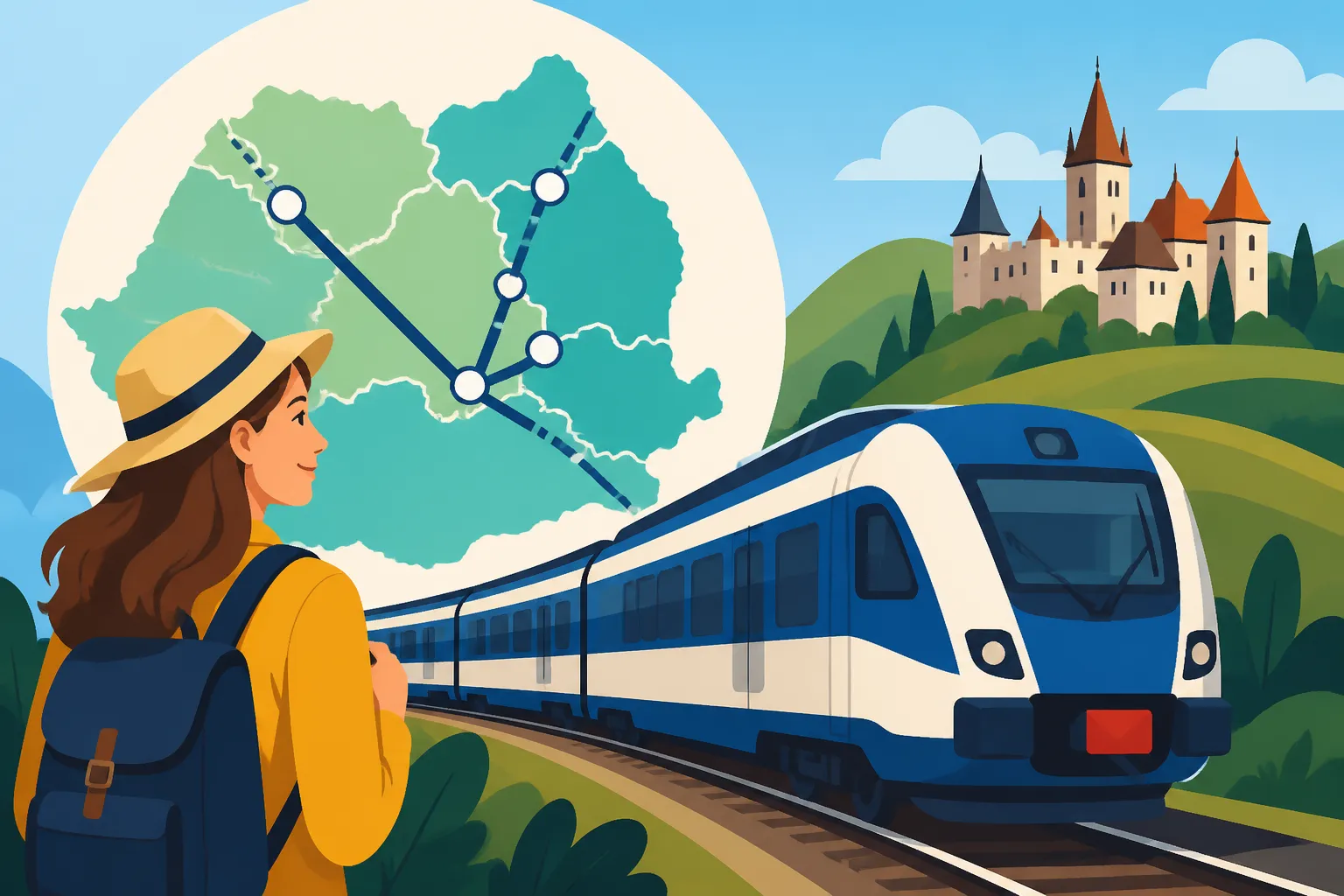
Understanding Train Travel with Romanian Railways (CFR) in Romania
Navigating Romania can feel like a grand adventure, but sometimes the sheer logistics of getting from A to B can be a real head-scratcher. While driving through picturesque landscapes has its undeniable charm, and buses are plentiful, there’s a certain timeless allure, and often, a practical benefit to exploring the country by train. If you’re looking to understand the ins and outs of Romanian Railways (CFR Călători) – from deciphering ticket classes to bracing for potential delays – this comprehensive guide is here to help you ride the rails like a seasoned expat.
The Romanian Railways System: An Overview
Ah, CFR. For many expats and even Romanians, the name conjures up a mix of nostalgia, frustration, and sometimes, a surprisingly comfortable journey. CFR, or Căile Ferate Române, is the state-owned railway company, and its passenger division, CFR Călători, is your primary means of intercity train travel across Romania. While not always the fastest option, it connects major cities, smaller towns, and some truly stunning rural areas, offering a unique perspective on the country.
A Brief History and Current State
Romania's railway network boasts a long and storied history, with some lines dating back to the late 19th century. This heritage is evident in many of the beautiful, grand old train stations you’ll encounter, like the iconic Gara de Nord in Bucharest or the station in Iași. However, this history also means that much of the infrastructure, and some of the rolling stock, is well-aged.
In recent decades, significant investments have been made in modernizing certain routes and upgrading trains, particularly on key corridors like the one connecting Bucharest to Brașov. Yet, large portions of the network still rely on older equipment and single tracks, which can contribute to the infamous delays that CFR is sometimes known for. Don't let this deter you, though. For specific routes, trains can be a highly efficient and relaxing way to travel, especially if you plan your journey realistically. The railway system also connects Romania to its neighbours, with international routes extending to cities like Budapest, Vienna, and Sofia, making it possible to arrive in Romania or depart for further European adventures by rail.
Key Routes and Hubs
The Romanian railway network is quite extensive, fanning out from the capital, Bucharest, like spokes on a wheel. Bucharest's Gara de Nord is the country's primary railway hub, a bustling station where almost all major lines converge. From here, you can reach virtually any significant city in Romania.
Major routes often travelled by expats and tourists include:
- Bucharest to Brașov: A popular choice, especially for those heading to the Transylvanian mountains or the Prahova Valley ski resorts. The scenery is lovely, and this route has seen some of the most significant upgrades in terms of track and train modernization.
- Bucharest to Cluj-Napoca: Connecting the capital to the vibrant heart of Transylvania, this is a longer journey but offers the convenience of direct travel.
- Bucharest to Timișoara: Linking the capital to the western cultural hub and often a gateway to Hungary or Serbia.
- Bucharest to Constanța: Perfect for summer trips to the Black Sea coast. Services are more frequent and often faster during peak season.
- Cluj-Napoca to Oradea/Arad: Essential routes for western Romania, connecting to the Hungarian border.
Beyond these major arteries, countless regional lines crisscross the country, allowing you to reach smaller, charming towns and villages that might be harder to access by other means. Always remember to check your specific route, as some smaller connections might have infrequent services or require changes.
Types of Trains and Classes
Understanding the different types of trains run by CFR Călători is crucial for managing your expectations regarding speed, comfort, and price. It’s not just "a train"; there are distinctions that significantly impact your journey.
Regional (REGIO – R)
These are the workhorses of the Romanian railway system, designed primarily for short to medium distances and stopping at almost every station along the route. Think of them as the local bus service of the rails.
- Speed: Expect these to be the slowest trains. They take their sweet time, making numerous stops, which can sometimes lead to unexpectedly long journey times, even for relatively short distances.
- Comfort: REGIO trains are generally older, with basic amenities. Seating is often functional, and air conditioning isn't a guarantee, especially in older carriages. They are less likely to have catering services or power outlets.
- Cost: They are the most affordable option, making them a budget-friendly choice for local travel.
- Experience: If you're not in a rush and want to see the authentic, slower pace of rural Romania, a REGIO train can be a wonderful, if sometimes rustic, experience. Just be prepared for a journey that emphasizes the "scenic" over the "express." They are often used by commuters and locals for daily travel.
InterRegio (IR)
InterRegio trains are designed for longer distances, connecting major cities and making fewer stops than their REGIO counterparts. These are generally your best bet for intercity travel within Romania.
- Speed: Faster than REGIO trains due to fewer stops, but still subject to track conditions and potential delays. They aim for a more direct route.
- Comfort: IR trains offer a noticeable step up in comfort. Many carriages have been modernized with air conditioning, more comfortable seating, and sometimes power outlets. Some even have a small bistro car or a trolley service. You'll find both 1st and 2nd class options.
- Cost: Moderately priced, they offer a good balance between cost and efficiency for most travellers.
- Experience: This is where most expats will find themselves for longer journeys. The ride can be quite pleasant, offering decent views and a relatively smooth journey, especially on modernized sections. It’s advisable to book seats in advance, particularly during peak travel times.
InterCity (IC) and EuroCity/EuroNight (EC/EN)
While the InterCity (IC) category within Romania has been largely phased out or renamed to InterRegio for domestic routes, historically, these represented the fastest and most premium domestic services. Today, similar high-speed services are generally found on international routes, specifically EuroCity (EC) and EuroNight (EN) trains.
- Speed: These are designed for international connections and are typically the fastest services, aiming for efficient cross-border travel.
- Comfort: EC/EN trains usually offer the highest level of comfort, akin to premium European standards. Expect modern carriages, comfortable seating, sometimes sleeper options (for EuroNight), and often dining cars.
- Cost: These are the most expensive tickets, reflecting their speed and higher comfort levels, especially for sleeper or premium class options.
- Experience: If you're travelling to or from a neighbouring country like Hungary (Budapest) or Austria (Vienna), these trains provide a comfortable and often direct link. They operate with fewer stops and higher priority on the tracks.
First Class vs. Second Class
Like many European railway systems, CFR Călători offers both first and second-class seating on InterRegio and international trains.
- Second Class (Clasa a 2-a): This is the standard offering and perfectly adequate for most travellers. Seating is typically 2+2 abreast, usually with fabric or faux-leather seats. On newer trains, you'll find comfortable, reclining seats, air conditioning, and sometimes individual power outlets. On older trains, it can be a bit more basic.
- First Class (Clasa 1): For a modest price increase, first class offers more spacious seating, often 2+1 abreast, providing more legroom and elbow room. The seats are usually more plush, and you're more likely to find working power outlets and quieter compartments. While not always a luxury experience, it can be a worthwhile upgrade for longer journeys, offering a bit more peace and quiet, especially if you're trying to get some work done on the go.
Here’s a quick overview:
| Train Type | Typical Speed | Stops | Comfort Level | Cost Level | Best For |
|---|---|---|---|---|---|
| REGIO (R) | Slowest | Many (local) | Basic, older | Lowest | Short distances, rural exploration, budget |
| INTERREGIO (IR) | Medium | Fewer (intercity) | Good, improving | Medium | Intercity travel, balancing speed & cost |
| INTERCITY (IC) | N/A (mostly IR) | N/A | N/A | N/A | (Domestic IC largely absorbed into IR) |
| EuroCity/Night (EC/EN) | Fastest | Fewest (international) | High, modern | Highest | International travel, overnight journeys |
Buying Tickets and Planning Your Journey
Getting your hands on a train ticket in Romania is generally straightforward, but knowing your options can save you time and hassle, especially during peak travel periods.
Online Purchase: The Digital Way
The easiest and often recommended way to buy train tickets for InterRegio and international routes is online through the official CFR Călători website. This platform allows you to:
- Check Schedules: Input your departure and arrival stations and desired date to see all available trains, including types, times, and journey durations.
- Select Seats: For most IR and international trains, you can select your preferred seat from a digital carriage map, which is great if you want a window seat, need to be near an exit, or are travelling with a group.
- Pay Online: Payments are typically made securely via credit or debit card.
- Receive E-Ticket: You'll receive an e-ticket via email, which you can either print at home or, more conveniently, simply display on your smartphone to the conductor. This is a game-changer for avoiding queues at the station.
I highly recommend booking online, especially if you’re travelling on a popular route or during holidays. It removes the stress of language barriers at ticket counters and guarantees you a seat. For checking real-time train status, delays, or even just general connectivity for planning your trip, having a local SIM or eSIM from a provider like Airalo can be incredibly useful to ensure you’re always connected.
At the Station: The Traditional Method
While online booking is convenient, sometimes you need to buy a ticket at the station, perhaps for a spontaneous trip or a regional (REGIO) train where online booking might be less common or necessary.
- Ticket Offices (Casa de Bilete): All major and most minor stations have ticket offices. Look for "Casa de Bilete" signs. Be aware that queues can be long, especially at Gara de Nord in Bucharest during rush hour or public holidays. Language can sometimes be a barrier, though in major cities, staff often speak some English. It helps to have your destination, preferred time, and number of passengers written down.
- Ticket Vending Machines: Some larger stations are equipped with automated ticket machines. These often have English language options and can be a quicker alternative to the ticket office, especially for immediate departures.
- Onboard Purchase: For REGIO trains, and sometimes in situations where the ticket office is closed or you board at an unstaffed station, you can often buy a ticket directly from the conductor. However, be aware that you might pay a small surcharge for this, and it’s generally not recommended for InterRegio or international trains where you are expected to have a ticket and reservation beforehand. If you board an IR train without a ticket, you will be issued a fine on top of the ticket price.
Planning Your Journey
Preparation is key, especially when relying on public transport in a new country.
- Book in Advance: For InterRegio and international trains, especially during weekends, public holidays (like Easter or Christmas), or summer months, booking a few days or even weeks in advance is highly advisable to secure your seat and preferred time.
- Check for Delays: Romanian trains are, unfortunately, famous for delays. Before heading to the station, always check the CFR Călători website or a reliable third-party app for real-time departure and arrival information. A delay of 15-30 minutes is common; longer ones can happen.
- Consider Peak Times: Weekends, Friday afternoons, and Monday mornings are typically busier. If your schedule is flexible, try to travel mid-week during off-peak hours for a more relaxed experience.
Navigating Stations and Onboard Experience
Once you have your ticket, understanding how to navigate Romanian train stations and what to expect onboard will make your journey much smoother.
Major Stations vs. Smaller Stops
Romania’s train stations vary wildly, from the grand, bustling hubs to quaint, almost deserted rural stops.
- Major Stations (e.g., Gara de Nord, Bucharest): These are usually well-equipped with amenities. You’ll find electronic departure/arrival boards (though sometimes only in Romanian, so look for "Plecare" for departures and "Sosire" for arrivals), multiple platforms, waiting areas, restrooms (sometimes requiring a small fee), kiosks, small shops, and sometimes restaurants or cafes. Navigating can feel a bit chaotic during peak times, but follow the signs for your train number and platform. Pay attention to the digital displays for platform changes, which can happen last-minute.
- Smaller Stations: Expect much less. Often, there might be just one or two platforms, a small waiting room, and potentially no staff present outside of train arrival times. Amenities might be non-existent, so make sure you have everything you need before arriving.
A word on platforms: in Romanian, platform is "peron." Always double-check your train number and destination, as sometimes multiple trains can depart from the same track within a short timeframe.
What to Expect Onboard
The onboard experience can also vary depending on the age of the train and the class you’re in.
- Seating: In second class, it's typically an open saloon car with rows of seats, 2+2 facing each other or arranged aircraft-style. First class usually offers more space and sometimes individual seating. Seat reservations are generally mandatory for InterRegio and international trains, so your seat number will be on your ticket.
- Luggage: There are overhead racks for smaller bags and space between seats or at the end of carriages for larger suitcases. Be mindful of space, especially if the train is crowded.
- Restrooms (Toaletă): These are available on all InterRegio and international trains. Cleanliness levels can vary greatly, from surprisingly tidy to quite basic. It's always a good idea to carry your own hand sanitizer.
- Catering: Don't expect a full-service dining car on most domestic routes. Some newer InterRegio trains might have a small bistro section or a trolley service selling snacks, coffee, and drinks. However, it's always wise to bring your own water, snacks, and any specific food you might want, especially on longer journeys.
- Power Outlets: More modern InterRegio trains, particularly in first class, often have working power outlets (European two-pin type). On older trains, they might be rare or non-functional. Don't rely solely on them for charging devices; a portable power bank is a smart addition to your travel kit.
- The Vibe: Train travel in Romania offers a unique glimpse into local life. You'll encounter families, students, and commuters. Romanians are generally friendly and helpful, so if you have a question, don't hesitate to ask a fellow passenger, even with a language barrier – gestures and a few Romanian words can go a long way. The scenery, especially through the Carpathian mountains, is often breathtaking.
Pros and Cons of Train Travel in Romania
Like any mode of transport, train travel in Romania has its advantages and disadvantages, especially for expats used to different systems.
The Upsides of Rail Travel
- Scenic Routes: This is arguably the biggest draw. Many train lines wind through stunning landscapes, from the dramatic gorges of the Carpathian Mountains to the rolling hills and picturesque villages of Transylvania and Moldova. It's a fantastic way to see the country without the stress of driving. Imagine leaning back, sipping a coffee (or a smuggled homemade brandy), and watching the world go by.
- Cost-Effective: For many routes, especially longer distances, train tickets can be more affordable than flying (when factoring in airport transfers) or even bus travel, particularly if you book in advance. Compared to fuel costs and tolls if you were driving, it's often a budget-friendly choice.
- Comfort and Relaxation: Unlike driving or being crammed on a bus, trains offer more space to move around, stretch your legs, and simply relax. You can read, work, or just enjoy the journey. First class provides an even greater degree of comfort.
- Environmental Impact: For the eco-conscious traveller, trains are generally a more environmentally friendly option compared to cars or planes, contributing to a lower carbon footprint for your travels.
- Direct City-Centre Access: Train stations are almost always located in the heart of cities, meaning you arrive directly where you want to be, often within walking distance or a short taxi/tram ride to your accommodation. This saves time and money on transfers compared to airports.
- Less Stressful: No traffic jams, no navigating unfamiliar roads, no parking hassles. Once you're on the train, your job is simply to enjoy the ride. For those needing reliable internet for checking schedules or staying in touch, consider an eSIM for Romania from providers like Airalo to avoid connectivity worries.
The Downsides and Challenges
- Delays are Common: Let’s not sugarcoat it: CFR Călători is famous for delays. Track modernization is ongoing, but much of the network is old. Technical issues, weather, or even waiting for connecting trains can cause significant delays. Always factor in extra time, especially if you have tight connections or appointments.
- Varying Comfort Levels: While some InterRegio trains are modern and comfortable, others can be quite old, with less reliable air conditioning, worn seats, and less-than-pristine restrooms. It’s a bit of a lottery sometimes.
- Speed Limitations: Compared to high-speed rail networks in Western Europe, Romanian trains are generally slower. Don’t expect to zip across the country at lightning speed. For some very long routes, taking the train can consume a significant portion of your day.
- Limited Amenities: As mentioned, full dining cars are rare on domestic routes, and onboard Wi-Fi is even rarer. You'll need to be self-sufficient with snacks, drinks, and entertainment.
- Language Barriers: While staff at major stations might speak English, at smaller stations or with some conductors, you might encounter only Romanian speakers. Having a translation app or a few key phrases handy can be very helpful.
- Booking Quirks: While online booking is good, sometimes international tickets or specific types of reservations can still be tricky and might require a visit to a larger station ticket office.
Tips for a Smooth Train Journey
To ensure your train travel experience in Romania is as pleasant and stress-free as possible, here are some insider tips from someone who's spent a fair bit of time on Romanian rails.
Prepare for the Journey
- Bring Snacks and Water: This is my number one tip. While some trains might have a trolley, it's unreliable. Pack enough water, snacks, and maybe even a sandwich for longer trips. You’ll thank yourself when hunger strikes between stations.
- Charge Your Devices: As power outlets can be hit or miss, ensure your phone, tablet, and e-reader are fully charged. A portable power bank is also a lifesaver.
- Entertainment: Books, podcasts, downloaded movies – anything to pass the time. The scenery is beautiful, but a long journey needs variety.
- Download Offline Maps/Information: Your phone signal might drop in tunnels or remote areas. Having offline maps of your destination city and a screenshot of your train schedule can be invaluable.
- Flexibility is Key: Embrace the journey. If you go into it expecting bullet trains and military precision, you'll likely be disappointed. If you see it as an experience, a slow way to appreciate the country, you'll be much happier. A delayed train is a chance to read more or watch more scenery!
Onboard Essentials
- Valid Ticket and ID: Always have your ticket (printed or on your phone) and a form of ID (passport or national ID card) readily available for the conductor. They check frequently.
- Small Bills/Coins: If you need to use the restroom at the station or buy something from a kiosk, having small denominations of Lei can be very useful.
- Hand Sanitizer and Tissues: For those variable restroom situations, these are always good to have.
- Consider a Window Seat: Requesting a window seat online or at the ticket counter offers the best views, especially on scenic routes like Bucharest to Brașov.
Staying Connected and Informed
- Reliable Mobile Data: As mentioned, a local SIM card or an eSIM from a provider like Airalo is incredibly helpful. This allows you to check for real-time delays on the CFR Călători website, use translation apps, and stay in touch. Signal coverage can vary in rural areas, but generally, major routes have decent coverage.
- Use the CFR Website/App: Get familiar with the CFR Călători website (www.cfrcalatori.ro) or their mobile app for checking schedules and real-time train status. While not always perfectly accurate, it's the best official source for delay information.
- Ask for Help: Don't be shy! If you're lost at a station or unsure about something, ask a fellow passenger or station staff. Romanians are generally quite willing to help, even if there's a language barrier.
General Travel Advice
- Secure Your Belongings: While generally safe, always keep an eye on your luggage, especially at busy stations or when getting on and off the train.
- Travel Insurance: For any kind of travel, having robust travel insurance is always a good idea. This can cover anything from lost luggage to medical emergencies. If you're planning a big move, a service like Sirelo can help you find reliable moving companies who can also advise on the logistics of getting yourself and your belongings to Romania efficiently, which might include coordinating with train travel for initial trips.
- Understand Public Holidays: Romania observes several public holidays. During these times, trains can be incredibly crowded, and booking well in advance is essential. Expect potential delays due to increased traffic on the rails.
By keeping these tips in mind, you'll be well-prepared to embark on your Romanian train adventures. It might not always be the fastest ride, but it's an authentic and often very rewarding way to experience the heart of Romania. Enjoy the journey!
Disclaimer
The information provided in this guide is intended for general informational purposes only and is subject to change. While we strive to keep the content up-to-date and accurate, regulations, services, and operational details of Romanian Railways (CFR Călători) can evolve. Readers are strongly advised to consult official CFR Călători sources and, if necessary, seek professional advice for specific travel arrangements or legal and administrative matters related to residing in Romania. We cannot be held responsible for any inaccuracies or outdated information.