Can I Drive in Romania with a Foreign Licence?
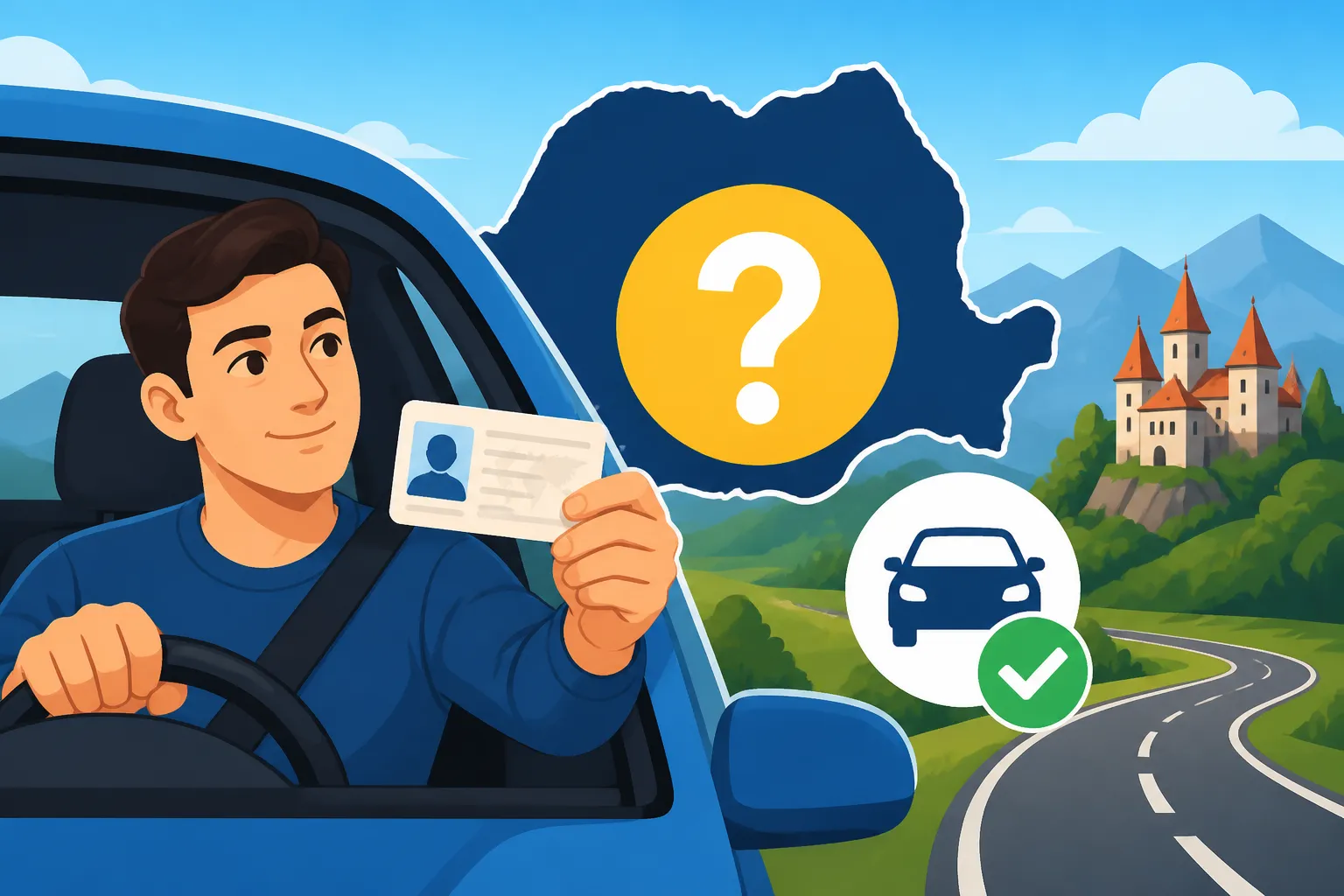
Moving to or just visiting a new country like Romania can be incredibly exciting, but the practicalities, especially something as seemingly simple as driving, often bring a wave of questions and anxiety. You’re probably wondering if your existing driver's license will cut it on Romania's roads, and you wouldn't be alone in feeling a bit lost in the bureaucratic labyrinth. This comprehensive guide is here to untangle the rules and give you a clear roadmap for driving legally and confidently with your foreign license in Romania.
The Initial Grace Period: Driving on Your Existing Foreign Licence
One of the first things you need to understand is that Romania offers a grace period, but its length and conditions vary significantly depending on where your current driving license was issued. This distinction is crucial and can save you a lot of hassle, or unfortunately, cause it if you're not prepared.
EU/EEA Licences: Seamless Transition
If you're from an EU or EEA country, consider yourself lucky! Your journey is relatively smooth. You can legally drive in Romania using your valid EU/EEA driving license without needing to exchange it, even if you become a resident. This privilege extends throughout your entire stay, provided your license remains valid. It's truly one of the perks of EU integration that simplifies life for expats.
However, while you’re not required to exchange it, some expats still choose to do so. Why? Primarily for administrative ease. Having a local Romanian license can sometimes streamline interactions with local authorities, insurance companies, or even when proving your identity. For instance, if your original license expires while you're living here, you would typically renew it in Romania, which would then result in a Romanian-issued license anyway. It’s a personal choice, but knowing you have the flexibility to just keep your original license is a comfort many appreciate.
Non-EU/EEA Licences: The 90-Day Window and Beyond
Now, for those of us coming from outside the European Union or European Economic Area, the rules are a bit different, and frankly, a bit more stringent. If you hold a driving license issued by a non-EU/EEA country, you are generally permitted to drive in Romania for a period of up to 90 days from your date of entry into the country. This 90-day period aligns with the standard tourist visa duration for many nationalities within the Schengen Area, of which Romania is now a part.
Crucially, this 90-day clock resets if you leave the Schengen Area and re-enter. However, if you're planning to become a resident, the 90-day period applies from the moment you establish your residency in Romania, regardless of when your passport was stamped. So, if you move here and apply for a residence permit, you have 90 days from the date your residence permit is issued to use your foreign license. After this period, you absolutely must exchange it for a Romanian one, or if exchange isn't possible, pass the Romanian driving test.
This is where the International Driving Permit (IDP) often comes into play. An IDP is essentially a multi-language translation of your original driving license. It is not a standalone license; it must always be accompanied by your valid foreign driving license. While it’s not legally mandatory for all non-EU/EEA licenses during the initial 90-day period in Romania, it is highly, highly recommended. Why? Because the Romanian traffic police might not be familiar with the format of your country's license, and an IDP can prevent misunderstandings and potential fines. Always secure your IDP in your home country before you travel to Romania, as you cannot obtain one here. Many expats have been caught off guard because they assumed their non-English license would be understood. Don't be one of them! Make sure you’re prepared by getting your IDP sorted.
Imagine Sarah from the USA moves to Bucharest for a new job. She arrives, gets her residence permit process underway, and starts driving her rental car using her valid US license and IDP. She knows she has 90 days from her residency date to initiate the exchange process. If she waits longer, she risks driving illegally, which can lead to hefty fines and even vehicle impoundment.
Exchanging Your Foreign Licence for a Romanian One
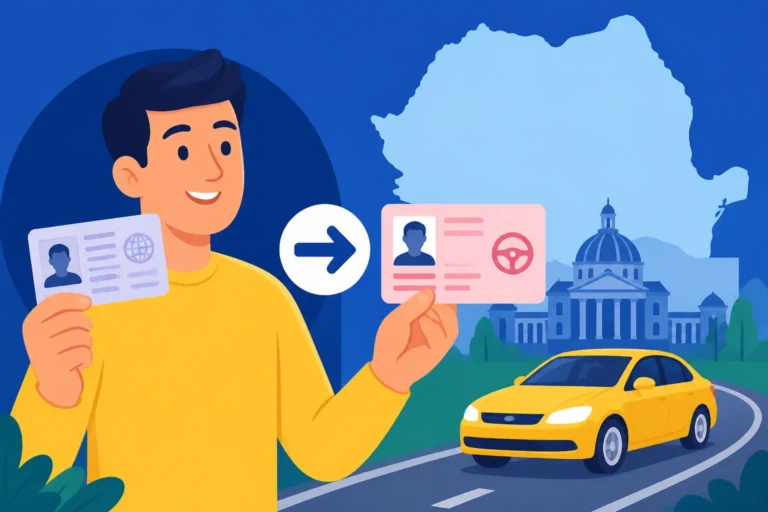
Once that initial grace period for non-EU/EEA licenses is up – or if you, as an EU/EEA citizen, simply prefer a local license – you'll need to navigate the exchange process. This can feel like a bureaucratic marathon, but with the right information, it's certainly achievable.
Who Needs to Exchange and When?
As we covered, non-EU/EEA citizens who establish residency in Romania must exchange their foreign license within 90 days of obtaining their residence permit. If your country of origin has a bilateral agreement with Romania for driver's license exchange, the process is generally simpler. If not, brace yourself – you might be looking at a full Romanian driving test.
For EU/EEA citizens, the exchange is optional unless your license expires while you are a resident in Romania, or if you commit serious traffic offenses that result in its suspension or revocation. In these cases, you would apply for a Romanian license, which effectively acts as an exchange or replacement.
The key differentiator here is residency. Tourists don't usually exchange their licenses; they adhere to the 90-day rule. However, if you are planning on staying long-term and obtain a residence permit – whether it's for work, study, or family reunification – then you fall under the resident rules, and that's when the 90-day count for exchangeable licenses begins. Many expats find that getting their residence permit is the biggest hurdle, and once that's sorted, the license exchange becomes the next administrative mountain to climb. You'll definitely want to have your documents for residence and proof of address like those discussed in "Registering Your Residence (Viză de Flotant) in Romania: The Complete Guide" firmly in hand.
The Exchange Process: Step-by-Step
The exchange process happens at the Direcția Regim Permise de Conducere și Înmatriculare a Vehiculelor (DRPCIV), which is the Public Community Service for Driving Licenses and Vehicle Registration. It's the central authority for all things related to driving documents.
Here's a general overview of the documents you'll typically need and the steps involved. Remember, bureaucracy can be a moving target, so always check the latest requirements on the DRPCIV website or at your local office.
- Application Form: Obtain and fill out the specific application form for exchanging a foreign driving license.
- Valid ID & Residence Permit: Your original passport or national ID card, along with your Romanian residence permit (Permis de Ședere). Photocopies are often required as well.
- Original Foreign Driving Licence: This will be surrendered. Yes, you read that right. Your original license will typically be kept by the Romanian authorities or sent back to your home country's issuing authority. Make sure to take copies for your records before you hand it over!
- Proof of Address: A utility bill in your name, a rental contract, or a document from the local city hall confirming your domicile. This is where topics like "The Expat Guide to Setting Up Utilities in Romania" or "How to Get Proof of Address and Residence Documents in Romania" become super relevant.
- Medical Certificate: You'll need to undergo a medical examination at an authorized clinic in Romania. This involves various checks, including vision, hearing, neurological, and psychological assessments, to ensure you are medically fit to drive. These clinics are separate from general practitioners and specialize in occupational health or driving fitness.
- Psychological Evaluation: This is usually part of the medical certificate process but is a distinct component, assessing your psychological aptitude for driving.
- Tax Receipt for Fees: There are administrative fees involved, which must be paid at a specified bank or post office, or sometimes directly at the DRPCIV counter, depending on the current regulations.
- Consent Form: A declaration allowing Romanian authorities to verify your driving license with the issuing authority in your home country.
Required Documents for Driving Licence Exchange
| Document Category | Specific Requirements | Notes |
|---|---|---|
| Identification | Valid Passport/National ID & Residence Permit (Permis de Ședere) | Originals and photocopies required. Ensure your residence permit is current. |
| Current Driving Licence | Original Foreign Driving Licence | Will be surrendered. Make sure it's valid and undamaged. An IDP is NOT a substitute. |
| Proof of Residency/Address | Utility bill, rental contract, or domicile certificate | Must be in your name and recent. This confirms your registered address in Romania. |
| Medical Fitness | Medical Certificate from an authorized clinic | Covers vision, hearing, neurological, and often a psychological evaluation. |
| Application & Consent | Completed DRPCIV application form, consent for verification | Forms usually available at DRPCIV or their website. The consent form allows cross-checking your license's authenticity. |
| Financial | Proof of paid administrative fees | Fees for the exchange process and possibly for the medical/psychological evaluations. |
| Personal Numeric Code | CNP (Cod Numeric Personal) | Essential for most official procedures in Romania. If you don't have one, you'll need to obtain it, often through your residence permit application process. See "How to Get Your CNP (Personal Numeric Code) for Healthcare Access in Romania" for details on obtaining this crucial number. |
Once you submit all documents, the DRPCIV will initiate a verification process with the issuing authority in your home country. This can take time – anywhere from a few weeks to several months, depending on the responsiveness of the foreign authority. During this waiting period, you might be issued a temporary driving certificate, but this isn't always guaranteed, so clarify this at the DRPCIV office. Patience is truly a virtue here.
What Happens If Your Licence Isn't Exchangeable? (Testing)
Not all foreign licenses are eligible for direct exchange. If your license was issued by a country that does not have a bilateral agreement with Romania regarding driver's license recognition, you will likely be required to undertake the full Romanian driving examination process. This means:
- Theory Test: A computer-based test on Romanian traffic laws and regulations. The test is in Romanian, but you can usually request an authorized translator (at your own cost) or sometimes take it in English if available. However, relying on an English option isn't always guaranteed, and learning the key terminology in Romanian will certainly help.
- Practical Driving Test: An on-road driving test with an examiner. This tests your practical driving skills and adherence to Romanian road rules. Again, a translator might be necessary if you don't speak Romanian fluently, particularly for understanding the examiner's instructions.
This scenario can be quite daunting, especially for those who haven't taken a driving test in years. It’s not just about knowing the rules but understanding them in a new language and applying them to local driving conditions, which can be quite unique. You’ll want to be well-versed in general Romanian driving laws, perhaps by looking at resources related to "Driving in Romania: Licences, Registration and Rules for Expats". The good news is that there are many driving schools (școli de șoferi) in Romania that offer courses in English, specifically catering to expats preparing for the tests. Some people even prefer taking a few lessons even if their license is exchangeable, just to get used to the local nuances.
Important Considerations for Driving in Romania
Driving in Romania isn't just about the license; it's about understanding the entire ecosystem of road rules, vehicle requirements, and cultural nuances.
Insurance, Vehicle Registration, and Road Rules
First and foremost, vehicle insurance is mandatory. You'll need an R.C.A. (Răspundere Civilă Auto), which is third-party liability insurance. Without it, you cannot legally drive. If you purchase a car locally, you'll need to sort out its registration with Romanian plates, a process detailed in resources like "How to Register a Vehicle and Get Romanian Plates". If you're importing your own car, there are additional steps involved in re-registering it in Romania. This can be complex, and often a specialist company or a dedicated friend is needed to help with the paperwork at the DRPCIV and tax authorities.
Beyond insurance, you need to be aware of core Romanian road rules:
- Speed Limits: Generally 50 km/h in urban areas, 90 km/h on national roads, 100 km/h on express roads, and 130 km/h on motorways. Always watch for signs, as these can change.
- Headlights: Mandatory to use dipped headlights (faza scurtă) at all times outside urban areas, even during the day.
- Seatbelts: Mandatory for all occupants.
- Alcohol Limit: Romania has a zero-tolerance policy for alcohol while driving. Any detectable amount will result in serious penalties, including license suspension and potential criminal charges. Do not drink and drive, ever.
- Required Equipment: All vehicles must carry a first-aid kit, a fire extinguisher, and at least two reflective warning triangles. You should also have a reflective vest in case you need to stop on the roadside.
- Rovinietă: If you plan to drive on national roads and motorways, you must purchase a road tax vignette called a rovinietă. This can be bought online, at petrol stations, or at post offices. Failing to have one will result in hefty fines. You can learn more about this in "Do I Need a Motorway Vignette (Rovinieta) to Drive in Romania?".
Dealing with Traffic Police and Emergencies
Hopefully, you'll never have to deal with a traffic stop, but it's wise to be prepared. If you are pulled over, stay calm and follow instructions. You'll need to present your driving license, vehicle registration documents (talonul), proof of R.C.A. insurance, and your ID or passport. A valid IDP (if applicable) should also be ready.
Language can be a barrier. While some police officers, especially in larger cities, might speak English, it's not a given. Having a translation app on your phone can be a lifesaver. Ensure your phone has good data coverage, perhaps with an eSIM from a provider like Airalo, so you're never caught without navigation or communication capabilities.
For emergencies on the road, remember the universal European emergency number: 112. This number connects you to police, ambulance (SMURD), and fire services. If you're involved in an accident, even a minor one, it's advisable to call 112, especially if there are injuries, significant damage, or disputes. Understanding the emergency services available, including SMURD, is crucial for any expat, as highlighted in "Understanding Emergency Numbers (112) and the SMURD Service in Romania".
Navigating Romanian Roads and Driving Culture
Driving in Romania is… an experience. Road conditions can vary dramatically. While major motorways are generally good, secondary roads, especially in rural areas, can be poorly maintained, narrow, and sometimes riddled with potholes. Be prepared for unexpected hazards like horse-drawn carts, stray animals, or pedestrians on the roadside, particularly outside urban centers.
Romanian driving culture can be quite assertive. Drivers often overtake in seemingly impossible situations, use their horn frequently, and might not always signal. Defensive driving is absolutely essential. Don't assume other drivers will adhere strictly to the rules, and always be ready to react. Parking in cities, especially Bucharest, Cluj-Napoca, and Iași, can be a nightmare. Be mindful of parking regulations, as illegal parking is swiftly penalized.
It takes time to get used to the pace and style. Don't let it overwhelm you, but approach it with a healthy dose of caution and a willingness to adapt. What might seem chaotic at first will eventually become more familiar. Remember that moving to a new country like Romania involves many administrative steps, and sometimes a bit of extra help can make all the difference. For those planning a bigger move, companies like Sirelo, which specialize in international relocations, can assist in making sure your vehicle and other belongings arrive safely and that you have less to worry about than just the driving license itself!
Ultimately, driving in Romania with a foreign license is manageable, but it demands diligence and preparation. By understanding the rules for your specific license, preparing for the exchange process, and familiarizing yourself with local driving conditions, you can confidently navigate Romania's roads.
Disclaimer
The information provided in this guide is intended for general informational purposes only and does not constitute legal advice. While we strive to keep the information up-to-date and accurate, laws and procedures in Romania can change frequently. It is always recommended to consult with the official authorities (such as DRPCIV or the General Inspectorate for Immigration) or a legal professional for the most current and specific advice pertaining to your individual situation.