How to Set Up Water, Heating and Gas in Romania
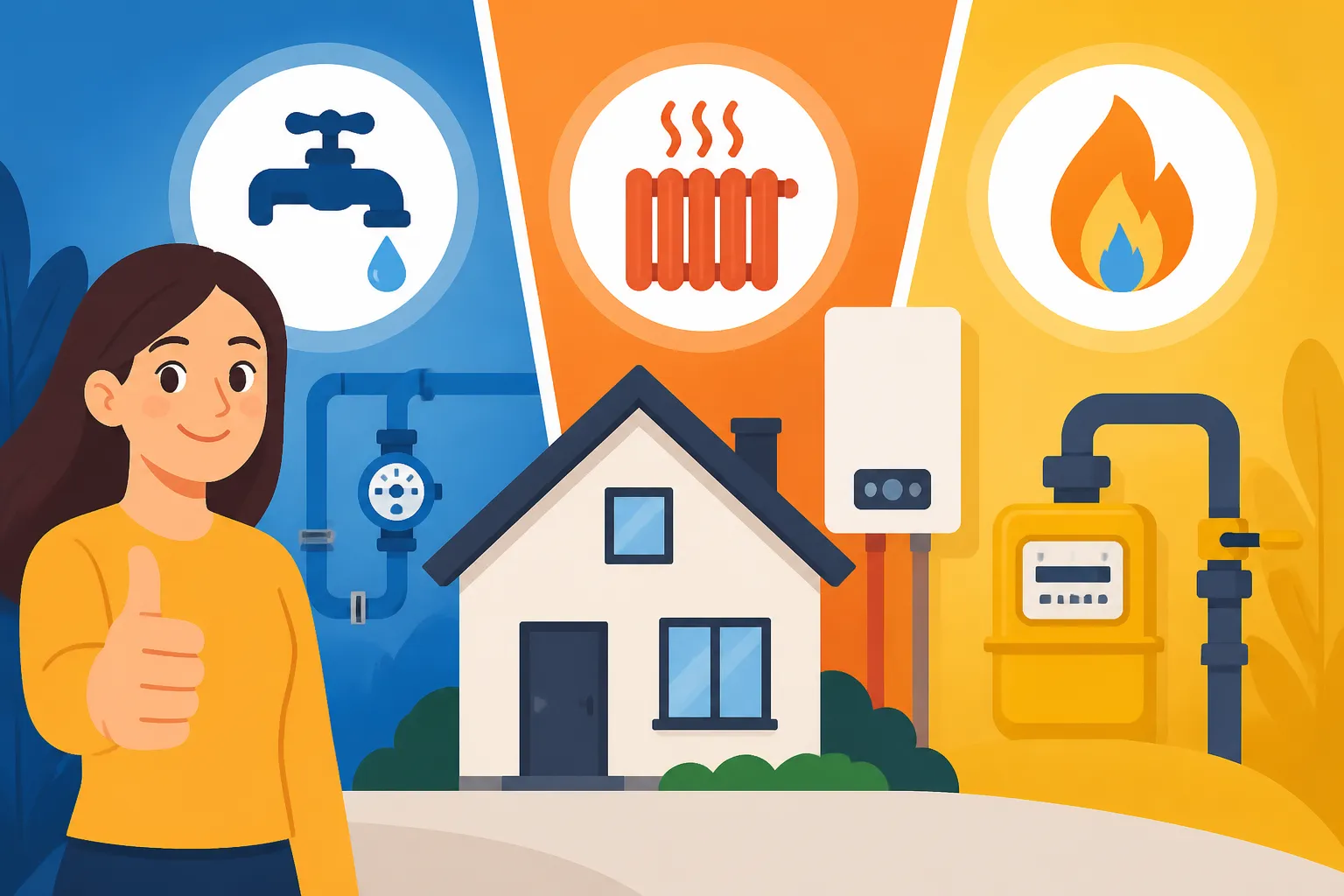
Alright, my fellow expat adventurer! So, you've found your little slice of heaven (or at least, a roof over your head) here in Romania. Congratulations! Now comes the slightly less glamorous, but equally essential, task of getting your utilities sorted. Trust me, it can feel like a labyrinth designed by ancient Dacians specifically to confuse foreigners, but don't despair. I've been there, wrestled with the bureaucracy, and emerged (mostly) unscathed. This guide is going to walk you through the ins and outs of setting up your water, heating, and gas, so you can stop living by candlelight and enjoy a nice hot shower.
Navigating Romania's Water Supply System
Water is, of course, a fundamental necessity, and thankfully, getting it connected is usually one of the less complicated utility hurdles in Romania. Still, there are a few nuances that can trip up even the most seasoned expat.
Understanding Your Water Provider and Bills
First off, water services in Romania are typically managed by local or regional companies, meaning your provider will depend entirely on where you live. If you're in Bucharest, you're most likely dealing with Apa Nova. In Cluj-Napoca, it's Compania de Apă Someș, and so on. These aren't national behemoths, but rather regional monopolies, so you won't have a choice in who supplies your water. Your landlord or real estate agent should be able to tell you exactly which company services your address.
When it comes to billing, this is where things can get a little interesting. For apartments, water bills often come with the dreaded întreținere, or building maintenance fees. This communal bill covers shared services, and sometimes, individual water consumption is calculated and included here, especially in older blocks without individual meters. If you have your own water meter (which is increasingly common in newer buildings and renovated apartments), you'll either receive a separate bill from the water company or, more commonly, you'll need to read your meter yourself and submit the indices monthly or bi-monthly. The key is to understand whether you're paying for estimated usage or actual consumption, and if it’s via the building association or directly.
Setting Up a New Water Contract
If you're moving into a newly built home or an apartment where the previous tenant disconnected the service, you'll need to set up a new water contract in your name. For this, you'll typically need your ID (passport and residence permit), your rental contract or proof of ownership, and sometimes a cadastral excerpt if you've purchased the property. The process usually involves a visit to the local water company's customer service office. Be prepared for a bit of a wait and possibly a language barrier, so bringing a Romanian-speaking friend or relying on a good translation app can make a huge difference.
A crucial step here, especially if you're taking over from a previous tenant or owner, is to ensure there are no outstanding debts associated with the property. Always ask your landlord for a zero-balance statement (fișa de imobil) from the building association or a final bill from the water company, clearly showing the last meter reading and that all previous bills have been paid. You absolutely do not want to inherit someone else's unpaid water bill. Once the contract is in your name, remember to read your water meter on the first day of each month and submit the indices online, via phone, or at a payment point, to ensure you're only paying for what you actually use. For more details on what documents you might need for various registrations, you might find our guide on How to Get Your CNP (Personal Numeric Code) for Healthcare Access in Romania helpful, as many official processes require similar identification.
Water Quality and Usage Tips
The good news is that tap water in most Romanian cities is generally considered safe to drink. The water companies adhere to EU standards, and it undergoes treatment. However, many locals still prefer to filter their tap water or buy bottled water for drinking. This often comes down to taste preference, or concerns about older building pipes, rather than a severe health risk. If you have concerns, a simple faucet filter or a water filter pitcher can give you peace of mind.
You might also notice varying water pressure, particularly in older apartment buildings or during peak usage times. Don't be surprised if your shower pressure fluctuates a bit throughout the day. If you encounter a persistent issue, your building administrator or landlord is the first point of contact, as it could be a building-wide problem rather than an individual apartment issue. Being mindful of your water usage is also a good habit, not just for the environment, but for your wallet too, as costs can add up, especially if you're in an apartment with higher shared fees.
Decoding Romania's Heating Systems
Heating in Romania is probably the utility that causes the most confusion and frustration for expats. The system is a patchwork of old centralized grids and newer, individual solutions, each with its own quirks and costs.
Centralised Building Heating (RADET/Termoenergetica)
In many older apartment blocks, especially in cities like Bucharest, you'll encounter a centralized heating system. This means your building, or even an entire district, is connected to a large, municipal heat plant (historically known as RADET, now Termoenergetica in Bucharest, for example). This system provides both heating for radiators and hot water to your apartment. The biggest 'pro' of this system is that you don't have to worry about maintaining your own boiler.
However, the 'cons' are significant and often a source of expat lament. You have very little control over when the heating turns on or off, as it's dictated by external temperatures and municipal decisions. This means you can have chilly days in October before the system kicks in, or sweltering spring days after it's been shut off. Bills are typically calculated based on the size of your apartment and a general building consumption, not individual usage, which can feel unfair if you're a conscious user. If the building's insulation is poor, you might be paying a lot for heat that escapes quickly. These costs are almost always included in your întreținere bill, making it difficult to discern your exact heating expense. This is why Understanding Building Maintenance Fees (Întreținere) for Apartments in Romania is so crucial.
Individual Apartment Heating (Centrală Termică)
By far the most popular and desirable heating solution in Romania today, especially in new constructions and thoroughly renovated older apartments, is the individual gas-fired combi boiler, or centrală termică. This system allows you to control your heating and hot water completely. You decide when it turns on, what temperature you want, and for how long. The boiler typically heats water on demand for both your radiators and your taps.
The advantages are clear: comfort, efficiency (you only heat what you use), and direct control over your costs. The downside, if you're buying a property, is the upfront cost of installation if it's not already present. You'll also be responsible for regular maintenance and safety checks (verificare and revizie, which we'll discuss under Gas). This system relies on a gas connection, which means you'll need a gas contract in your name. If you're renting, your landlord will typically ensure the boiler is functional and properly serviced before you move in, but it's always good to confirm.
Alternative Heating Solutions
While gas boilers are dominant for individual heating, especially in urban areas, there are other options depending on your location and preference. Electric heating, whether through portable heaters or integrated electric radiators, is an option but can be significantly more expensive in Romania due to electricity costs. Some modern apartments might have air conditioning units that also offer heating functionality, which can be efficient for milder temperatures but might struggle in the depths of winter.
In more rural settings, especially in traditional houses, wood-burning stoves or fireplaces are still common, offering a rustic charm and often a cheaper heating solution if you have access to firewood. However, these require more manual effort, storage for wood, and regular chimney cleaning. When evaluating properties, always ask about the heating system, its age, and its last service date, as this will heavily impact your comfort and monthly expenses. Considering the general Cost of Living in Romania for Expats, heating costs are a significant factor to budget for.
Connecting to Romania's Gas Network
If your apartment has individual heating or a gas stove, you’ll definitely be dealing with the gas network. This is another area that can be a bit tricky, mostly due to safety regulations and the separation of services.
Identifying Your Gas Provider and Contract
Unlike water, where there's usually just one local provider, gas involves two main types of companies: distributors and suppliers. The distributor (like Distrigaz Sud Retele or Delgaz Grid, depending on your region) owns and maintains the physical gas pipes and infrastructure. The supplier (such as Engie or E.ON) is the company you actually buy the gas from. You usually have a choice of supplier, but the distributor is fixed by your location. Your contract will be with a supplier, but they will coordinate with the distributor.
When you take over a property, you'll need to know the cod client (customer code) or cod loc de consum (consumption point code) from the previous tenant or owner. This unique identifier links the gas installation to a customer and is crucial for transferring or activating a contract. Your landlord or real estate agent should provide this to you.
Activating or Transferring a Gas Contract
To get gas service in your name, you'll generally need your ID, your rental agreement or ownership deed, and a valid gas installation certificate (verificare or revizie tehnică). This last point is vital: gas installations in Romania require periodic safety checks. A verificare (verification) is needed every 2 years, and a more thorough revizie (revision) every 10 years. If these are expired, you won't be able to get gas connected or transferred until a certified technician performs the necessary checks and issues a new certificate. This often involves a small fee paid to the technician.
You'll need to contact your chosen gas supplier (e.g., Engie or E.ON) to initiate the contract transfer or activation. This can often be done online through their customer portals, but sometimes a visit to their physical office is required, especially for initial setup. Once the contract is active, much like water, you'll need to submit monthly meter readings. Many companies offer apps or online portals for this, or you can call a dedicated number. Ensure you receive confirmation that your contract is active, as delays can occur. For navigating other utility setups, our comprehensive guide How to Set Up Electricity in Your Romanian Home provides similar step-by-step advice.
Gas Safety and Emergency Procedures
Gas safety is paramount, and Romania has strict regulations for good reason. If you have a gas boiler or stove, it is highly recommended to install a carbon monoxide detector, especially if you're unfamiliar with the equipment or the local air quality standards for heating devices. Ensure your landlord provides you with a copy of the latest verificare or revizie for the gas installation and the boiler itself.
In case you ever suspect a gas leak (you'll typically smell a distinct sulfur-like odor), immediately open windows, evacuate the premises, and call the emergency number 112. Do not use light switches, mobile phones, or anything that could create a spark. It's better to be overly cautious than to take risks with gas. Remember that the periodic safety checks are not just bureaucracy; they're essential for your safety and are legally mandated.
General Tips for Utility Management in Romania
Beyond the specifics of each utility, there are broader strategies that will make your life easier when managing your bills here.
Dealing with Bills and Payments
Utility bills in Romania traditionally arrived in your mailbox, but increasingly, companies are moving towards online portals and email billing. Many providers offer dedicated apps where you can view your consumption, submit meter readings, and pay bills. It's a good idea to register for an online account with each provider as soon as your contract is active. This gives you much more control and transparency.
Payment methods are quite varied. You can often pay directly through your online banking (make sure to include the correct cod client or cod loc de consum). Many expats use online payment platforms like Ghișeul.ro (a government portal for various payments) or even dedicated payment terminals found in supermarkets or at Posta Romana branches. Don't forget the întreținere bill from your building association, which often bundles water, heating (if centralized), garbage collection, and other shared costs. This bill is usually paid to the building administrator, often in cash or via bank transfer, so ask your landlord how it’s typically handled in your building. While you are sorting this out, remember that a seamless connection from a brand like Airalo can help you stay online and on top of these tasks, even before your home internet is set up.
Language Barriers and Assistance
Let's be realistic: while many Romanians, especially younger generations in big cities, speak English, you can't always count on customer service representatives speaking fluently. Be patient. If you're struggling, politely ask if there's an English-speaking colleague, or if you can call back. Sometimes, having a Romanian friend or your landlord make the call for you is the easiest solution.
Translation apps on your phone can be a lifesaver when deciphering bills or online forms. Don't be afraid to use them. The most important thing is to clearly understand what you're signing and what you're paying for. If you don't understand, don't sign. Our internal guide on Navigating the Romanian Healthcare System: An Expat's Roadmap (2027) also touches on language challenges in a different context, but the coping mechanisms are broadly similar.
Essential Documents and Record Keeping
When dealing with Romanian bureaucracy, whether for utilities, residence permits, or buying property, meticulous record-keeping is your best friend. Keep physical copies of all your utility contracts, activation forms, and any correspondence you receive. It's also wise to keep digital scans of everything. When you make payments, retain the receipts. If you pay online, screenshot the confirmation.
This might seem overkill, but having proof of payment or proof that a contract is in your name can save you immense headaches down the line if there's ever a dispute or a clerical error. Think of it as building your own personal arsenal of proof, should you ever need it. When you're busy coordinating a move with services like Sirelo, it's easy to let paperwork pile up, but for utilities, this is one area where being organized really pays off.
Common Pitfalls and How to Avoid Them
Even with the best intentions, things can go sideways. Knowing the common traps can help you sidestep them.
Inheriting Previous Debts
This is, without a doubt, the biggest utility nightmare for new tenants or homeowners in Romania. It's incredibly common for previous tenants to leave unpaid utility bills. If you don't ensure these are cleared before you sign a contract or move in, you could find yourself liable for their debts, or worse, facing disconnection.
The Golden Rule: Always insist on proof of zero debt from the landlord or previous tenant. For communal bills like întreținere (which often includes water and centralized heating), this means a fișa de imobil from the building association, explicitly stating no outstanding balances. For gas and electricity, request final bills with zero balance or proof of payment up to your move-in date. Make these conditions part of your rental contract. If a landlord refuses, consider it a massive red flag. Remember, once a utility is registered in your name, any new debt is yours, but old, unpaid debts tied to the consumption point (the address itself) can still cause issues, sometimes leading to service interruption until they are settled.
Communication Challenges and Delays
Things move at their own pace in Romania, and utility companies are no exception. Don't expect instant connections or immediate resolutions to problems. Be prepared for multiple phone calls, sometimes to different departments, to get a single issue sorted. What seems like a straightforward request can take days or even weeks.
My advice? Patience, persistence, and politeness. Get names of the people you speak with, note down dates and times of calls. If you promise to send documents, send them promptly, and always ask for a confirmation of receipt. If an online platform is available, use it, as it often provides a digital trail. Remember that for urgent needs, especially internet connection, a local eSIM from Airalo can bridge the gap while you wait for your home internet to be installed.
Understanding Complex Romanian Regulations
Utility regulations can be dense, even for Romanians. The separation of gas distributors and suppliers, the various types of heating systems, and the nuances of communal versus individual billing can be overwhelming. Don't be afraid to ask for clarification, even if you feel you're asking "stupid" questions. It's better to ask ten times than to make a costly mistake.
Leverage your network: ask other expats in local Facebook groups, ask your landlord, ask your real estate agent. While they might not be experts, they often have practical experience navigating the system. Understanding your tenancy rights through documents like your How to Sign a Rental Contract (Contract de Închiriere) in Romania can also empower you to demand certain conditions from your landlord regarding utilities.
Setting Up Utilities in Rural vs. Urban Areas
The experience of getting utilities connected can vary quite dramatically depending on whether you're settling in a bustling city or a serene village.
Urban Convenience and Challenges
In major cities like Bucharest, Cluj-Napoca, or Timișoara, you generally benefit from a well-established infrastructure. Water, gas, and electricity grids are usually readily available, and there are more customer service points and online options for managing your accounts. Mobile and internet providers also offer a wider array of choices and faster connections in urban areas. Setting up your How to Set Up Home Internet and TV in Romania will definitely be easier in a city.
However, urban living often comes with its own set of challenges, particularly when it comes to heating. The prevalence of old centralized heating systems (especially in Bucharest) means less individual control and potentially higher, less transparent bills. You'll also be dealing with larger utility companies, which can sometimes feel more impersonal. The sheer volume of customers can also mean longer wait times for service calls or installations.
Rural Realities and Self-Sufficiency
Moving to a charming Romanian village offers a different utility landscape altogether. While some larger villages might have access to municipal water and gas, it's not uncommon for homes to rely on private wells for water and septic tanks for wastewater. Heating often involves wood-burning stoves or fireplaces, sometimes supplemented by gas cylinders for cooking, if a natural gas connection isn't available.
Setting up utilities in a rural area often means dealing with smaller, sometimes less digitized, local providers. You might rely more heavily on local contacts and word-of-mouth for service recommendations or assistance with installations. While this can sometimes be slower, the advantage is often a more personalized service. You might have less choice in providers, but you could also find a simpler, more direct approach to getting things done, often with the invaluable help of neighbors or the local primărie (town hall). The beauty of rural life often lies in its self-sufficiency, which extends to how homes manage their water and heating.
Centralized vs. Individual Heating Systems in Romania
| Feature | Centralized Building Heating (RADET/Termoenergetica) | Individual Apartment Heating (Centrală Termică) |
|---|---|---|
| Control | Limited. On/off dates dictated by municipality/external temperatures. No individual thermostat. | Full control. You decide when to heat, to what temperature. Individual thermostat. |
| Source | Large municipal heat plant supplies entire building/district. | Gas-fired combi boiler within your apartment. |
| Hot Water | Supplied centrally, often with fluctuations. | On-demand from your boiler, consistent. |
| Billing | Included in întreținere (building maintenance fees), based on apartment size. Less transparent. | Separate gas bill, based on actual consumption from your meter. More transparent. |
| Efficiency | Can be inefficient due to old infrastructure, building insulation, shared losses. | Generally more efficient as you only heat your own space. |
| Maintenance | Handled by building association/municipal provider. | Your responsibility; requires periodic verificare (2 yrs) and revizie (10 yrs). |
| Upfront Cost | None for tenant. | Significant if installing new boiler; none if already present (for tenant). |
| Availability | Common in older city apartment blocks. | Standard in new builds and renovated apartments; requires gas connection. |
Disclaimer
The information provided in this guide is intended for general informational purposes only and does not constitute legal, financial, or professional advice. While we strive to ensure accuracy and timeliness, utility regulations, pricing, and procedures in Romania can change. It is always recommended to consult with the relevant service providers, legal professionals, or local authorities for the most current and specific information pertaining to your individual situation. The author and publisher are not responsible for any actions taken or not taken based on the information presented herein.