How Do I Enrol My Child in School in Romania?
One of the biggest anxieties for any expat family contemplating a move to Romania is undoubtedly the school situation. Beyond finding a new home and navigating local bureaucracy, ensuring your children have a smooth educational transition is paramount. It’s a labyrinth, I know, from personal experience. This guide aims to demystify the process, walking you through the various options and the practical steps to successfully enrol your child in a Romanian school.
Understanding Your Options: Public, Private, and International Schools
When you first start looking at schools in Romania, it can feel like you’re trying to decode a secret language. The systems are different, the expectations might be unfamiliar, and the sheer volume of choices, or sometimes the lack thereof, can be overwhelming. Let’s break down the main categories so you can figure out what might be the best fit for your family.
The Romanian Public School System (State Schools)
Ah, the public system. It’s the backbone of education for most Romanian children, and for good reason: it’s generally free of tuition. However, for expat families, it comes with a significant set of challenges and some real benefits too. The structure is quite traditional, typically starting with grădiniță (kindergarten, often from age 3), then școala primară (primary school, grades 0-4), gimnaziu (middle school, grades 5-8), and finally liceu (high school, grades 9-12).
The most immediate hurdle for many expat children, especially those without prior exposure, is the language. Instruction in public schools is almost exclusively in Romanian. While children are incredibly adaptable and can pick up languages at an astonishing pace, dropping them into a fully Romanian-speaking environment, especially if they’re older, can be a steep learning curve. Imagine trying to learn math or history in a language you barely understand – it’s a big ask for little ones already dealing with the culture shock of a new country. Some schools in larger cities like Bucharest or Cluj-Napoca might have special classes or support for foreign students, but this isn't universally guaranteed, and you'll need to enquire directly with the specific institution.
Despite the language barrier, public schools offer a truly immersive experience. Your child will become fluent in Romanian quickly, gain a deep understanding of Romanian culture and society, and make friends with local children. The curriculum is generally rigorous, especially in subjects like mathematics and sciences. While tuition is free, be prepared for other costs, such as textbooks, supplies, extracurricular activities, and contributions to school funds, which are common practice. Navigating the initial enrollment with the local school inspectorate and then the individual school can be a bureaucratic headache, often requiring patience and multiple visits. For information on younger children, you might want to look into Understanding Kindergarten (Grădiniță) Enrolment in Romania.
Private Romanian Schools
If the public system feels a bit too daunting due to the language or class sizes, but you still want your child to integrate into the local culture and language, private Romanian schools could be a fantastic middle-ground. These schools typically follow the national curriculum but often offer enhanced facilities, smaller class sizes, and sometimes innovative teaching methods. They often have a slightly more structured approach to welcoming international students, although Romanian remains the primary language of instruction.
You'll find private schools in most major cities, and they cater to a range of budgets. The fees vary significantly depending on the school's reputation, facilities, and location. While still following the national curriculum, some private schools might offer additional language classes, like English or German, as part of their standard program, making the transition a bit smoother for children already familiar with those languages. The application process is generally more streamlined than public schools, involving direct communication with the school administration, interviews, and sometimes entrance exams. This option can provide a softer landing for expat children, allowing them to adapt to Romanian academic life within a more supportive framework.
International Schools: The English-Speaking Haven
For many expat families, especially those on shorter assignments or with older children, international schools are the go-to solution. These schools usually offer curricula like the International Baccalaureate (IB), British, American, or German systems, taught entirely in English or other major international languages. They are designed for a globally mobile student body, providing continuity of education across different countries.
The major advantage here is the language of instruction. If your child is used to an English-speaking environment, an international school will feel instantly familiar, allowing them to focus on their studies and make friends without the added stress of a new language. These schools also often boast excellent facilities, a wide range of extracurricular activities, and a diverse student body, fostering a multicultural environment where expat children often feel right at home. They also frequently have dedicated support staff for new arrivals, helping with everything from academic integration to pastoral care.
However, this comfort comes at a price. International schools are significantly more expensive than their public or private Romanian counterparts, with tuition fees often comparable to those in Western Europe or North America. You can get a sense of these costs by checking out Understanding International Schools and Their Costs in Romania. In Bucharest, for instance, you have well-known institutions like the American International School of Bucharest (AISB), British School of Bucharest (BSB), and the International School of Bucharest (ISB), among others. Cluj-Napoca also has options like Transylvania College. These schools typically have their own admissions process, which can involve applications, interviews, and entrance assessments, often conducted online if you’re applying from abroad. It's a premium option, but for many, the peace of mind it offers is invaluable.
When you're dealing with the logistical headaches of moving countries, like figuring out how to get all your belongings safely to Romania, services like Sirelo can be a real lifesaver. Taking care of the heavy lifting of relocation allows you to put more energy into important tasks like school applications.
The Nitty-Gritty: Required Documents and Application Process
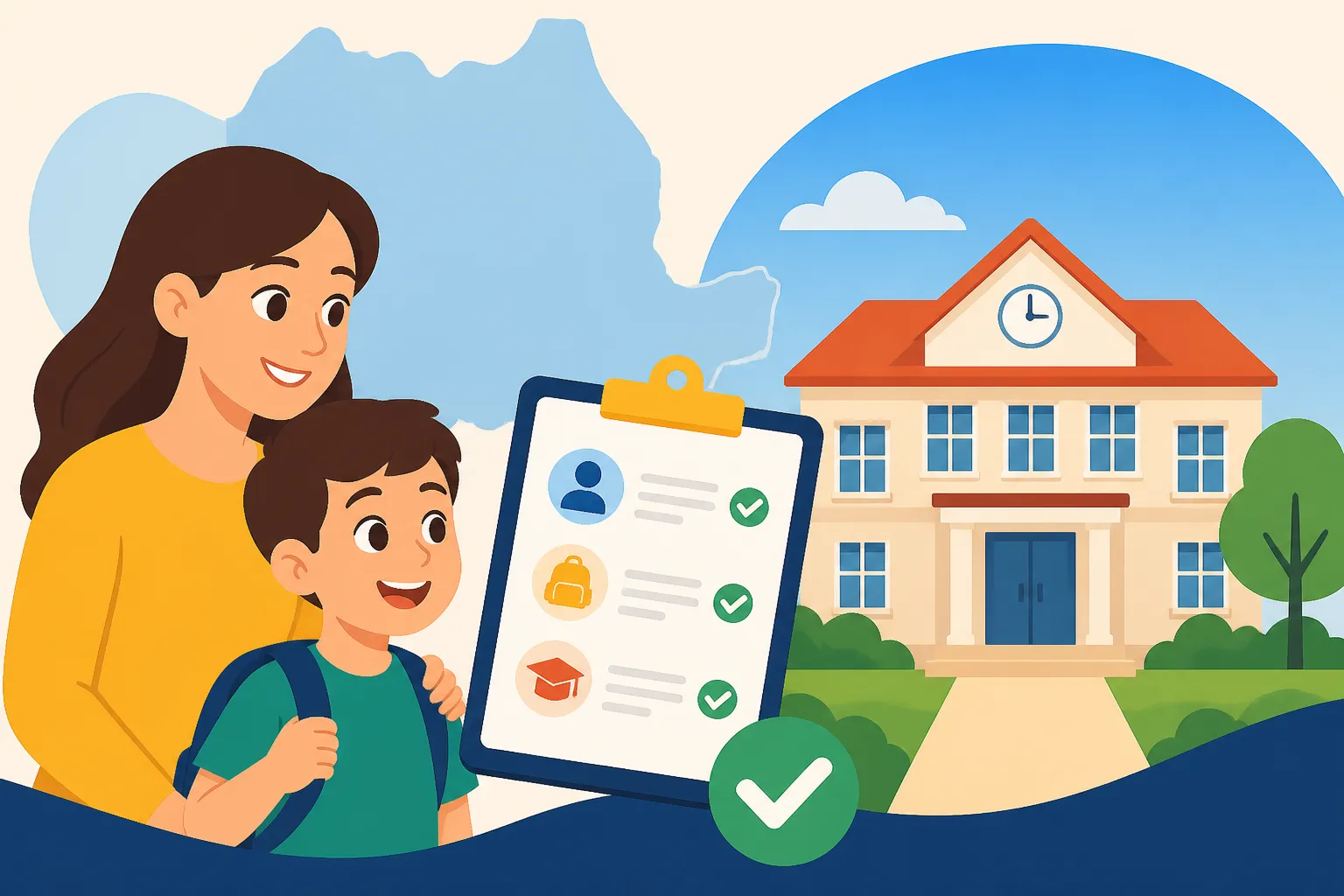
So, you’ve decided which type of school might be best. Now comes the part that often causes the most head-scratching: the paperwork. Romania, like many countries, loves its documents, and getting everything in order can feel like a quest. But don’t despair; with a clear checklist and some patience, it’s entirely manageable.
Gathering Your Paperwork: A Bureaucratic Marathon
Prepare for a document collection expedition. It’s not just about what you need, but how it needs to be presented. Most documents originating outside Romania will need to be apostilled (if your home country is part of the Hague Apostille Convention) or legalised, and then officially translated into Romanian by a certified translator. Following that, they may need notarisation by a public notary in Romania. Yes, it’s a multi-step process for almost every piece of paper.
Here’s a general list of what you’ll likely need:
- Child’s Birth Certificate: Original, apostilled/legalised, translated, and notarised.
- Child’s Passport: And copies of all relevant pages.
- Parent/Guardian Passports/IDs: And copies.
- Residence Permit for Romania: Your child’s and your own. This is absolutely critical. For more on getting this sorted, refer to The Complete Guide to Romanian Residence Permits for Expats (2027). Without it, or at least proof of application, school enrollment can be extremely difficult.
- Medical Certificate (Fișa Medicală): This is a specific form issued by a Romanian family doctor (Medic de Familie) or a private clinic, confirming your child is fit for school and has the necessary vaccinations. You'll need to register with a family doctor first, so checking out The Expat Guide to Finding a Family Doctor (Medic de Familie) in Romania is a good early step. This is often one of the last documents you can get, as it requires the child to be in Romania.
- Previous School Records/Transcripts: Especially important for older children. These will need the same apostille/legalisation, translation, and notarisation process. For children entering high school, the recognition of previous studies might involve the Romanian Ministry of Education or specific county school inspectorates, which is a process known as echivalarea studiilor.
- Proof of Address (Dovada de Adresă): A rental contract (registered with ANAF) or a property deed in your name. Learn more about securing this with How to Get Proof of Address and Residence Documents in Romania.
- CNP (Personal Numeric Code): Your child's Romanian Personal Numeric Code is essential for almost any administrative task in Romania, including school enrollment. This is usually obtained as part of your residence permit application, or you can find more details in How to Get Your CNP (Personal Numeric Code) for Healthcare Access in Romania.
This list isn't exhaustive, and requirements can vary by school and county, so always double-check with your chosen institution directly. The key is to start early and be meticulously organised.
Navigating the Enrollment Steps
Once your documents are gathered (or at least in progress), it’s time to tackle the application itself.
-
For Public Schools:
- Contact Your Local School Inspectorate (Inspectoratul Școlar Județean): This is usually the first stop. They can inform you about available places in schools in your designated catchment area (based on your registered address) and specific county-level requirements. They also handle the echivalarea studiilor for children coming from foreign systems.
- Visit the School: Once you have an idea of which schools might have places, visit them. Meet the director if possible, and get a feel for the environment. Some schools might want to interview your child or assess their Romanian language proficiency.
- Submit Documents: Officially submit your comprehensive dossier of documents. There will be specific enrollment periods, so inquire about these well in advance. Sometimes, if you're enrolling mid-year, the process might be more flexible but can also depend on space availability.
-
For Private and International Schools:
- Direct Application: These schools have their own, often more straightforward, application procedures. You’ll typically fill out an online form, submit scanned copies of documents, and pay an application fee.
- Assessments/Interviews: Most will require your child to undergo some form of assessment (academic, language, or both) and an interview. This is to ensure they can cope with the curriculum and to gauge their personality. These can often be done remotely if you're still abroad.
- Offer and Enrollment: If an offer is extended, you’ll typically pay a non-refundable deposit to secure the place and then complete the full enrollment package with the required documentation. The school will guide you through this.
It's a good idea to start this process months before your desired enrollment date, especially for popular international schools which can have long waiting lists. Being proactive and persistent pays off. When dealing with calls and online forms for various schools, having reliable internet and phone access is crucial. An eSIM from Airalo can keep you connected from day one without needing to hunt down local SIM cards immediately.
| Feature | Public Romanian Schools | Private Romanian Schools | International Schools |
|---|---|---|---|
| Tuition Cost | Free (but expect contributions for supplies, funds, etc.) | Varies widely, generally moderate to high | Very high, premium pricing |
| Language of Inst. | Exclusively Romanian | Primarily Romanian, some with enhanced foreign language | Primarily English (or other major int. language) |
| Curriculum | Romanian National Curriculum | Romanian National Curriculum, often enhanced | IB, British, American, German, etc. |
| Class Size | Can be large (25-30+ students) | Generally smaller | Often smaller, but varies |
| Expat Integration | High language barrier, deep cultural immersion | Moderate language barrier, good cultural exposure | Low language barrier, expat community, multicultural |
| Admissions | Catchment area based, local inspectorate, documents | Direct application, interviews, sometimes exams | Direct application, interviews, entrance assessments |
| Facilities | Varies, can be basic to modern | Generally good to excellent | Excellent, state-of-the-art |
| Support for Expats | Limited, relies on individual teachers/schools | Some, varies by school | Dedicated services for international students/families |
Settling In: Supporting Your Child's Transition
Getting your child enrolled is a huge step, but the journey doesn't end there. The transition to a new country and a new school can be tough, even for the most resilient kids. As a parent, your role in supporting their emotional and academic adjustment is critical.
Overcoming Language and Cultural Barriers
For children entering a Romanian-speaking environment, the initial weeks or months can be frustrating. They might feel isolated, misunderstand instructions, or struggle to make friends. Patience is key.
- Language Lessons: Consider enrolling your child in intensive Romanian language classes before or alongside school. Even a few private lessons can make a world of difference. For parents, learning some basic Romanian will also help you navigate school communications and show your child you're in this together. Check out Learning Romanian: A Complete Guide to Language Courses and Levels for resources.
- Patience and Empathy: Validate their feelings. It's hard to be the "new kid," even harder when you don't fully understand what's going on. Remind them of their progress and celebrate small victories.
- Cultural Differences: Teaching styles, classroom dynamics, and social norms in Romanian schools might differ from what your child is used to. For instance, the system can be more formal, with a strong emphasis on rote learning in some areas. Prepare your child for these differences and help them understand what’s expected. Don't be afraid to gently ask teachers for clarification on cultural practices if something feels confusing.
Integrating into the School Community
Helping your child feel connected to their new school and peers will significantly ease their transition.
- Extracurricular Activities: Encourage participation in sports, art clubs, music lessons, or other after-school activities offered by the school or in the local community. This is often where children make their closest friends and build confidence outside of academics.
- Parental Involvement: Attend school events, parent-teacher conferences, and volunteer if opportunities arise. This not only shows your child you’re invested but also allows you to connect with other parents, potentially building a support network for both you and your child.
- Expat Communities: Many cities in Romania, especially Bucharest and Cluj-Napoca, have active expat communities and parent groups. Connecting with other expat parents who have gone through similar experiences can provide invaluable advice, emotional support, and even playdates for your children. These informal networks can often offer insights that formal institutions can't.
- Home Environment: Create a stable and supportive home environment. Keep routines consistent where possible, and ensure your child has a quiet space for homework and downtime. Transitioning to a new country and school is a monumental change, and a secure home base makes a huge difference.
Remember, every child adapts at their own pace. Some will thrive almost immediately, while others will need more time and support. The most important thing is to keep the lines of communication open, listen to their concerns, and celebrate their resilience. Moving to Romania is a big adventure, and navigating the school system is just one part of it. If you're managing other aspects of your relocation, such as financial planning or other administrative tasks, remember that a comprehensive resource like The Complete Guide to Moving to Romania: Your First 90 Days (2027) can also provide general support.
Disclaimer
The information provided in this guide is intended for general informational purposes only and does not constitute legal or professional advice. While we strive to keep the information up-to-date and accurate, regulations and procedures in Romania can change frequently. Expats are strongly advised to consult with relevant Romanian authorities, school administrations, legal professionals, or immigration specialists for advice tailored to their specific situation. We cannot be held responsible for any inaccuracies or omissions.