How Do I Get a Prescription Renewed Online in Romania?
Oh, the joy of needing a prescription renewed when you're an expat in a new country! It's one of those seemingly simple tasks back home that can suddenly feel like navigating a labyrinth in Romania. Between the language barriers, understanding how the public and private systems actually interact, and just figuring out who to talk to, getting your regular medications can become a source of genuine anxiety. But take a deep breath; you're not alone in feeling this way. This guide is here to demystify the process, helping you understand how to get your prescriptions renewed with as little fuss as possible, leveraging online and remote options available here in Romania.
Understanding the Landscape of Prescription Renewal in Romania
Before we dive into the nitty-gritty of online renewals, it’s crucial to understand the foundation of how prescriptions generally work here. It's not always as straightforward as it might be in your home country, and knowing the underlying system will save you a lot of headaches.
The Traditional Process vs. Modern Solutions
For many years, and still commonly in some areas, renewing a prescription in Romania meant a physical visit to your doctor. You'd sit in the waiting room, explain your need, receive a paper prescription (often with the doctor's stamp and signature scrawled in Romanian that you hoped the pharmacist could decipher!), and then take it to the pharmacy. This traditional, very in-person approach is one of the first hurdles many expats encounter. The waiting times, the need to take time off work, and the sheer logistical effort can be draining, especially if you're managing a chronic condition that requires frequent renewals.
However, Romania has made significant strides in modernizing its healthcare infrastructure, most notably with the introduction of the electronic prescription system. This has been a game-changer, moving away from purely paper-based systems. While it doesn't always mean you can renew your prescription with a few clicks from your sofa, it does mean that once your doctor has issued it, the process of picking up your medication at the pharmacy is much smoother and entirely digital. The critical distinction is that the "online renewal" largely pertains to the doctor's side of issuing it and the pharmacy's side of receiving it, rather than a patient-initiated online request system in the way you might find in some Western countries.
The Role of Your Family Doctor Medic de Familie
Your family doctor, or medic de familie, is undoubtedly the linchpin of primary healthcare in Romania, and this holds especially true for prescription renewals. Think of them as your primary gatekeeper. They are responsible for your general health, maintaining your medical records, and authorizing repeat prescriptions for chronic conditions. When you first arrive in Romania, one of the most important administrative tasks you'll undertake for your health is to The Expat Guide to Finding a Family Doctor (Medic de Familie) in Romania.
Why are they so important? Well, they hold your medical history. They know what medications you're on, why you're taking them, and if any changes are necessary. This continuity of care is vital for safe and effective medication management. For regular, ongoing prescriptions, your family doctor will almost always be the one to issue the renewal. Without one, getting routine medications can become a complex and often more expensive affair, usually requiring visits to private clinics for individual consultations. The challenge for expats often lies in finding a family doctor who is accustomed to working with foreigners, potentially speaks English, and is open to using more modern, remote communication methods.
Navigating Online and Remote Renewal Options
While Romania doesn't yet have a fully centralized, patient-facing online portal for prescription renewals that bypasses doctor interaction, there are indeed ways to streamline the process and minimize physical visits, especially if you have an established relationship with a healthcare provider.
Direct Communication with Your Family Doctor
This is often your first and most effective avenue for a "remote" renewal. Many family doctors, particularly those in larger cities like Bucharest or Cluj-Napoca, and those with more modern practices, have adopted various methods for remote communication with their patients. It's less about a dedicated "online renewal system" and more about direct digital communication.
Here's how it often plays out:
- Initial Contact: Once you've established a relationship with your family doctor, ask them about their preferred method for prescription renewals without an in-person visit. Many doctors are now comfortable receiving requests via phone call, SMS, or even email. Some might even use popular messaging apps like WhatsApp if that's how they communicate with patients generally.
- Information Exchange: When you contact them, be prepared to provide all necessary details. This typically includes your full name, your Cod Numeric Personal (CNP) – which is essential for accessing the public health system, the exact name and dosage of the medication you need, and ideally, the date of your last prescription. Being clear and concise helps them process your request quickly.
- Doctor's Review and Issuance: Your doctor will review your request against your medical history. If everything is in order and they don't deem an in-person check-up necessary (perhaps you had one recently, or your condition is stable), they will issue an electronic prescription (rețeta electronică). This system is designed to streamline the process at the pharmacy end.
- Receiving the Electronic Prescription Details: Once issued, the doctor or their assistant will usually send you the unique series and number of your electronic prescription via SMS or email. Sometimes, they might ask you to come and pick up a printed version if that's their office policy, but the core prescription is still electronic in the national system.
It's important to be aware that while the public system covers the cost of the actual medication (fully or partially, depending on the drug and your insurance status), some doctors might charge a small administrative fee for remote services not involving a physical consultation, especially if you are not fully covered by the national health insurance fund. If you're contributing to How Romania's Health Insurance House (CNAS) Works: A Full Overview then typically, these services fall under your general practitioner's remit without extra charge, but it's always good to clarify.
Utilizing Private Clinic Online Platforms/Telemedicine
Romania boasts a robust private healthcare sector with large networks like Regina Maria, MedLife, and Centrul Medical Unirea (CMU). These providers often have sophisticated online patient platforms and dedicated mobile apps. If you predominantly use private healthcare and have a doctor within one of these networks, you might find more "online" functionality.
- Existing Patient Portals: If you're registered with a private clinic and have a designated doctor there, their online portal or app might allow you to send direct messages to your doctor or request prescription renewals. However, even here, it’s rarely an instant click-and-receive system. The doctor will still review your request and often requires a recent consultation history. For certain chronic conditions, after an initial in-person assessment, some private doctors are willing to issue electronic renewals based on remote communication.
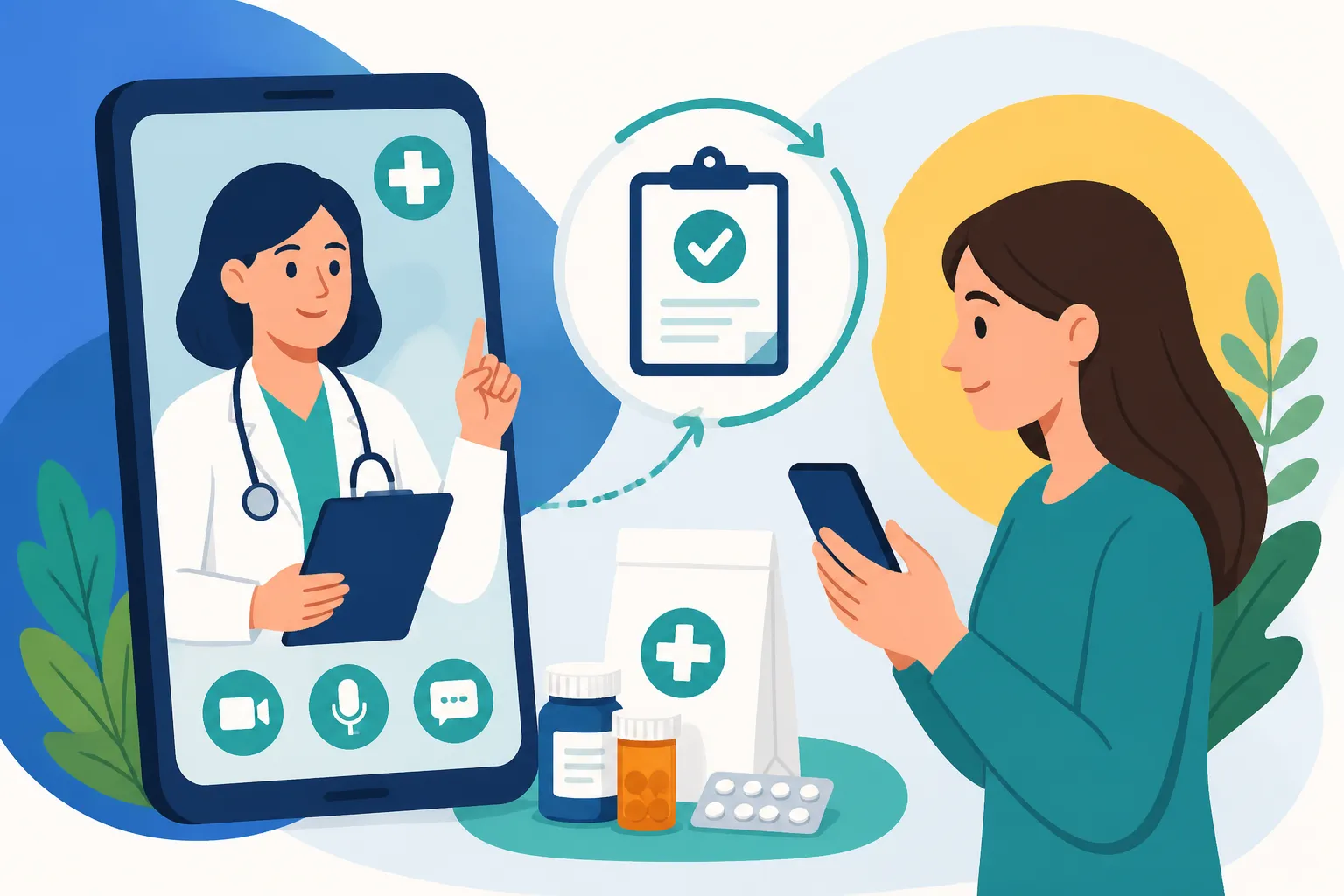
- Telemedicine Consultations: Some private clinics offer telemedicine consultations for a fee. For a routine renewal of a known medication, a brief video or phone consultation might be sufficient for the doctor to assess your stable condition and issue a new prescription. This can be a very convenient option, especially if you haven't yet registered with a family doctor in the public system, or if your family doctor is less digitally inclined. Bear in mind that these consultations come with a cost, and while they can be immensely helpful, they are not typically covered by your standard public health insurance contributions. If you have private health insurance or a subscription plan with one of these networks, always check if telemedicine consultations are included. For general travel insurance like SafetyWing, which primarily focuses on unforeseen medical emergencies, routine telemedicine for prescription renewals would typically fall outside its scope, so expect to pay out of pocket.
The Electronic Prescription System Rețeta Electronică
It's vital to clarify that the "electronic prescription" in Romania (Understanding the Electronic Prescription (Rețeta Electronică) System in Romania) isn't about you initiating the renewal online, but about how the doctor issues the prescription and how the pharmacy receives it. Once your doctor has decided to renew your medication, they will enter it into the national electronic prescription system.
This system generates a unique identifier (a series and number, sometimes along with a barcode). When you go to the pharmacy, instead of handing over a paper slip, you simply provide this code. The pharmacist enters it into their system, retrieves the prescription, and dispenses the medication. This significantly reduces errors, prevents fraud, and streamlines the process at the pharmacy end. It also means you no longer have to worry about losing a fragile piece of paper! While it makes picking up medication far more efficient, the initial step of getting the doctor to issue the renewal still requires interaction, often remote but sometimes in-person.
Practical Steps and What to Expect
Now that you understand the different avenues, let's walk through the practical steps to getting your prescription renewed remotely or online.
Before You Reach Out
Preparation is key to a smooth process. Having everything in order before you contact your doctor or a clinic will save you time and frustration.
- Verify Your CASS Contributions: If you plan to use the public health system and benefit from subsidized medications, ensure your health insurance contributions (CASS) are up to date. You can check this through your employment records or by contacting the local CNAS (Casa Națională de Asigurări de Sănătate) office. If you're self-employed, make sure your How to Register for Public Health Insurance (CASS) as a Foreigner in Romania payments are current.
- Have Your CNP Ready: Your Cod Numeric Personal (CNP) is your national identification number and is absolutely crucial for any interaction with the Romanian public health system, including electronic prescriptions. Without it, doctors and pharmacists cannot access your records or issue/dispense subsidized medications.
- Exact Medication Details: Know the precise name of your medication, its strength (e.g., 50mg), and dosage (e.g., once daily). If possible, have the original packaging or a photo of a previous prescription. This eliminates any ambiguity and speeds up the process.
- Last Prescription Information: Knowing when your last prescription was issued and for how long (e.g., "I need a renewal for my blood pressure medication, last filled two months ago for three months") helps the doctor understand your timeline.
- Language Preparedness: If your doctor doesn't speak English, be prepared. Have a translation app handy, write down your request in simple Romanian phrases, or if possible, ask a Romanian-speaking friend to assist you with the call.
The Renewal Process: Step-by-Step
Let’s outline the typical flow for renewing a prescription with your family doctor using remote means:
- Contact Your Family Doctor: Call or message your medic de familie during their office hours. Clearly state your name and CNP, and explain that you need to renew a regular prescription for an ongoing condition.
- Provide Necessary Details: Be ready to give them the exact medication name, strength, dosage, and when you last received it. They might ask a few questions about your current health to ensure no changes are needed.
- Doctor Reviews and Issues Electronic Prescription: If they agree to a remote renewal, they will create an electronic prescription in the national system.
- Receive Prescription Details: The doctor or assistant will then communicate the unique series and number (or barcode details) of your electronic prescription to you, usually via text message or email. Keep this safe!
- Go to the Pharmacy: With your electronic prescription code in hand, visit any pharmacy. You don't necessarily need the one closest to your doctor.
- Pick Up Medication: Present the code to the pharmacist. They will access the electronic prescription, verify your identity (sometimes by asking for your ID card or just your CNP), and dispense your medication. You will pay the co-pay or full price, depending on the medication's category and your insurance coverage.
Here's a quick comparison of the common renewal methods:
| Feature | Direct Doctor Communication (Remote) | Private Clinic Telemedicine | In-Person Doctor Visit |
|---|---|---|---|
| Initiation | Patient contacts doctor directly | Patient books virtual appointment | Patient visits doctor's office |
| Doctor Interaction | Phone, SMS, Email, Messaging Apps | Video/Audio Call | Face-to-face |
| Cost | Usually covered by CASS; small admin fee possible if not | Private consultation fee applies | Covered by CASS; private fee if in private clinic |
| Convenience | High, if doctor is responsive | High, flexible scheduling | Low, requires travel & waiting |
| Prescription Type | Electronic | Electronic | Electronic or Paper (rarely) |
| Best For | Stable, chronic medications; established doctor relationship | Quick consultations; no family doctor; specific needs | New conditions; complex cases; annual check-ups |
When Online Renewal Isn't Possible and What to Do
While remote renewal is increasingly common, there are still situations where it's not feasible or permitted:
- Specific Medications: Controlled substances, certain strong painkillers, or very new medications often require an in-person assessment due to legal regulations and monitoring requirements. Your doctor will inform you if this is the case.
- Doctor Requires a Check-up: If it's been a long time since your last physical examination, or if your doctor has concerns about your condition, they might insist on an in-person visit. This is for your own safety and good medical practice. Don't be offended; it means they're doing their job properly.
- Lack of an Established Doctor: If you're new to Romania and haven't yet How to Choose and Register with a Family Doctor (Medic de Familie) in Romania, or if your usual doctor is unavailable, you might need to seek help from a private clinic or an urgent care center (camera de gardă or UPU in a hospital). For a non-emergency but urgent need for medication, a private clinic consultation is often the fastest route. In an actual Emergency Medical Care in Romania: What Every Expat Needs to Know, the attending doctor will be able to issue any necessary prescriptions.
- Technical Glitches/Communication Issues: Sometimes, technology fails, or there's a misunderstanding. In these cases, a follow-up call, or a physical visit might become unavoidable. Try to remain patient and polite.
If you find yourself in a bind where your usual remote options are exhausted, and you need a prescription, always consider a private clinic consultation as a reliable backup. Even if your travel insurance, like SafetyWing, is mainly for emergencies, a consultation that leads to a necessary prescription for an acute issue might be covered, so always check your policy details.
Tips for a Smoother Experience
Navigating healthcare systems as an expat can be tricky, but a few proactive steps can make your prescription renewal process in Romania much less stressful.
Building a Relationship with Your Doctor
This cannot be stressed enough. Having a consistent family doctor who knows your medical history is invaluable. They are more likely to accommodate remote renewal requests if they have an established understanding of your health. Make an effort to attend regular check-ups, communicate clearly, and be respectful of their time and procedures. This mutual trust will lead to a much smoother experience when you need ongoing medication. If you're unsure where to start, many expats find that finding an English-speaking doctor, especially in larger cities, significantly improves communication and overall experience.
Understanding Pharmacy Operations
Pharmacies (farmacii) in Romania are generally well-stocked and staffed by knowledgeable pharmacists. However, knowing a few things can help:
- Opening Hours: While many pharmacies in major cities offer extended hours or even 24/7 service, those in smaller towns or residential areas might have more limited schedules. It’s a good idea to know the hours of your local pharmacy. You can often find a 24-hour pharmacy by looking for signs that say "Non-Stop."
- Medication Availability: Not every pharmacy will have every medication in stock. If you have a less common prescription, it might be worth calling ahead to confirm availability.
- Electronic Prescription Usage: Remember, once you have the electronic prescription code, you can use it at virtually any pharmacy in the country. This flexibility is a huge advantage. Understanding the Romanian Pharmacy (Farmacie) System and Opening Hours will give you more detailed insights.
- Cost and Subsidies: Some medications are fully subsidized, some partially, and some not at all by the public health system. Your pharmacist will tell you the cost based on your electronic prescription and CNP.
Preparing for the Unexpected
Life as an expat, or just life in general, can throw curveballs. Being prepared for unexpected situations regarding your medication can save you a lot of stress:
- Medication Buffer: Always try to have a small buffer of your essential medications, especially before holidays, long weekends, or if you plan to travel. This way, if there's a delay in renewal, you won't run out.
- Keep Records: Maintain a personal record of your medications, dosages, and past prescription dates. This is invaluable if you need to switch doctors or if there's an issue with your records. Having a copy of your last prescription, even a photo on your phone, can be very helpful.
- Travel Insurance: If you're traveling outside of Romania, ensure you have comprehensive travel health insurance. While your Romanian health insurance might offer some coverage within the EU via the EHIC, for non-EU travel or more robust coverage, a dedicated policy is wise. Providers like SafetyWing offer expat and travel medical insurance that can be crucial for unforeseen medical events while abroad, even if they don't directly handle the nuances of routine prescription renewals back in Romania. It’s always good practice to understand all your Health Insurance in Romania: Mandatory, Private and Travel Options Explained options.
Getting your prescription renewed online in Romania primarily hinges on effective communication with your doctor and understanding the electronic prescription system. It's less about a patient-initiated web portal and more about leveraging direct digital communication channels with your healthcare provider. With a bit of preparation and a good relationship with your medic de familie, you can navigate this process with relative ease.
Disclaimer
Please remember that this guide provides general information and anecdotal advice based on expat experiences in Romania. Healthcare regulations and practices can change, and individual situations vary greatly. This content should not be considered legal, medical, or professional advice. Always consult with a qualified medical professional or relevant administrative authorities for personalized guidance regarding your specific health needs and administrative procedures in Romania.