Can EU Pensioners Use Romanian Public Healthcare?
Many EU retirees arrive in Romania dreaming of a peaceful life in the Carpathian foothills or a vibrant retirement in Bucharest, only to hit a wall of administrative confusion regarding their medical rights. This guide provides a meticulous roadmap for EU pensioners to navigate the Romanian public healthcare system, specifically detailing how to use the S1 form to secure full medical coverage without paying local taxes.
Understanding Your Healthcare Rights as an EU Retiree
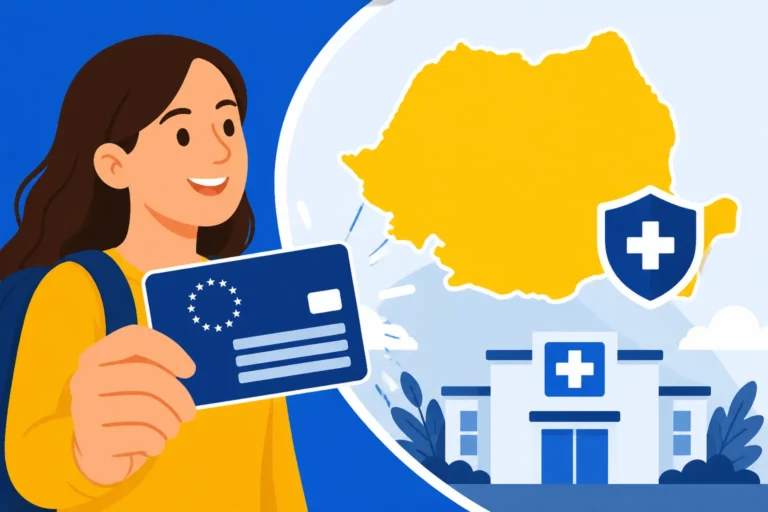
As an EU citizen who has reached retirement age and receives a state pension from your home country, you are entitled to the same healthcare benefits as a local Romanian citizen. This is governed by EU Social Security Coordination rules, which ensure that you do not lose your healthcare rights when moving across borders. However, the transition is not automatic. Many foreigners mistakenly believe that their European Health Insurance Card (EHIC) is sufficient for long-term residency. In reality, the EHIC is designed for temporary stays and emergencies. For a permanent move, you must transition into the local system.
The most common frustration I see among fellow expats is the assumption that because they are "in the EU," the computers at the local hospital will just know who they are. Unfortunately, the Romanian system is still heavily dependent on physical documentation and manual registration. You will need to prove that your home country remains responsible for your healthcare costs. This is where the S1 form becomes the most important piece of paper in your life. Without it, you might be asked to pay the local health contribution (CASS) out of your own pocket, which is an unnecessary expense for an EU pensioner.
While you are waiting for these documents to be processed, which can sometimes take weeks or even months due to the glacial pace of cross-border communication between social security offices, it is often wise to have a backup. Options like SafetyWing can provide a crucial safety net during this administrative gap, ensuring you are covered for unexpected medical issues while the Romanian authorities process your S1.
The Role of the S1 Form in Romania
The S1 form (formerly the E121) is a document issued by the health insurance authority in the country where you worked and earned your pension. It essentially tells the Romanian authorities: "This person is our pensioner; please give them full healthcare access, and we will reimburse you for the costs." It is a vital bridge between your home system and the Romanian Health Insurance House (CNAS).
If you are moving from Germany, you would request this from your Krankenkasse; if from France, from your CPAM. Once you have this form, you are no longer a "tourist" in the eyes of the medical system. You become a fully insured resident. Many retirees struggle because they arrived without this form, thinking they could "sort it out later." Sorting it out from within Romania involves expensive international phone calls and significant stress. Always secure your S1 before you pack your last box.
Why You Are Exempt from CASS Contributions
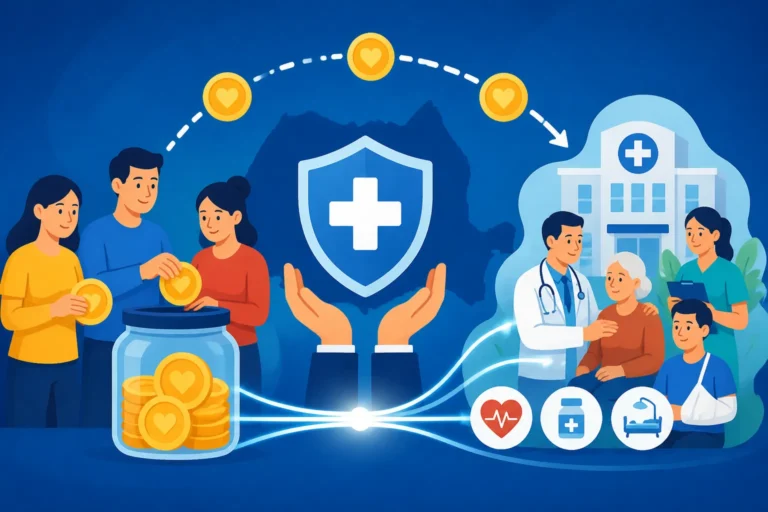
In Romania, healthcare is funded through a tax called CASS. Most working residents and self-employed individuals must pay this to remain covered. However, as an EU pensioner with an S1, you are exempt from this. This is a major financial benefit of retiring here. By registering your S1, you effectively gain access to the system for free, as your home country handles the backend payments.
To understand the broader context of how this money flows and what it pays for, you might want to look into Understanding How CASS Contributions Fund Healthcare in Romania. It provides a deeper look at the national budget for health and why the system operates the way it does. Understanding this can help manage your expectations when you see the state of some public clinics.
The Step-by-Step Registration Process with CNAS
Registering with the Romanian authorities is a multi-layered process that requires patience and a very specific order of operations. You cannot simply walk into a doctor’s office with your Swedish or Italian passport and expect a free check-up. The Romanian bureaucracy needs to "onboard" you into their digital system, which starts at the county level.
Each county in Romania has its own branch of the national health insurance body, known as a CAS (Casa de Asigurări de Sănătate). If you live in the capital, you will deal with CASMB (Bucharest). If you are in the heart of Transylvania, it will be CAS Cluj. Each office has slightly different opening hours and potentially different levels of English-speaking staff, so bringing a local friend or a translator is highly recommended for your first visit.
Obtaining Your Residence Documents First
Before you can even talk to the health insurance office, you must be a legal resident. For EU citizens, this means obtaining a Certificat de Înregistrare from the General Inspectorate for Immigration (IGI). This document contains your CNP (Cod Numeric Personal), which is the unique 13-digit number that identifies you in every Romanian government database.
You cannot access public healthcare without this number. It is the "key" to the system. For a detailed breakdown of how to navigate the immigration office and secure this code, read our guide on How to Get Your CNP (Personal Numeric Code) for Healthcare Access in Romania. Once you have your residency certificate and your CNP, you can proceed to the health insurance registration.
Registering the S1 at the County Health Insurance House
With your S1 form and your residency certificate in hand, your next stop is the CAS office in your county. You will need to submit a file (the infamous dosar) containing:
- A copy of your S1 form (keep the original!).
- A copy of your Romanian residency certificate (showing your CNP).
- A copy of your passport.
- A formal application (cerere) which you usually find at the office or on their website.
Once processed, the CAS will issue you a document confirming you are insured in the Romanian system. This registration is what allows you to then find a family doctor. If you move from one city to another, say from Bucharest to Brasov, you may need to update your records at the new local CAS office. During these transition periods, having a plan like SafetyWing can be very helpful to ensure you aren't left without options if you need a doctor before the new local office has finalized your file.
Finding and Registering with a Family Doctor
The "Medic de Familie" is the gatekeeper of the Romanian healthcare system. You cannot see a specialist, get a subsidized prescription, or have a non-emergency hospital stay without a referral from your family doctor. As an EU pensioner, you have the right to choose any family doctor who has a contract with the CAS.
In larger cities, finding an English-speaking doctor is relatively easy, but in smaller villages, it can be a challenge. You should interview a few doctors before signing up. Ask them about their experience with the S1 system, as some rural doctors might not be familiar with the paperwork for foreigners. For more advice on this, check out The Expat Guide to Finding a Family Doctor (Medic de Familie) in Romania. Once the doctor accepts you, they will add you to their list, and you are officially "in."
What to Expect from the Public System as a Retiree
Now that you are registered, what does "healthcare" actually look like in Romania? The quality of care can be excellent, as Romanian doctors are highly trained, but the infrastructure often lags behind Western European standards. You should prepare yourself for a system that is often overcrowded and underfunded, yet remarkably resilient.
One of the first things you will notice is the importance of the referral system. If you have a chronic condition, like heart disease or diabetes, your family doctor will give you a "Bilet de Trimitere" (referral) to see a specialist. Without this, you will have to pay the full private price for the consultation.
Services and Prescription Coverage
As an insured pensioner, most of your basic medical needs are covered. This includes:
- Routine check-ups and preventative care with your family doctor.
- Consultations with specialists (with a referral).
- In-patient hospital treatment in public hospitals.
- Subsidized or free medications for chronic illnesses.
The prescription system is particularly important for retirees. Romania uses a list of compensated medicines (lista de medicamente compensate). Depending on the category of your illness, the government might pay 50%, 90%, or even 100% of the cost. For a full explanation of how to navigate the local chemist, see our guide on Prescription Medications and Pharmacies in Romania: The Complete Guide.
The Electronic Health Card Reality
In theory, every insured person in Romania receives a "Card de Sănătate" (Electronic Health Card). In practice, as an expat, it might take a long time—sometimes years—for this card to be issued and mailed to you. Don't panic. While you wait for the physical card, your CAS registration and your CNP are sufficient to prove you are insured. Your family doctor can check your status in the national database. To understand what to do if your card is delayed, read Understanding the Electronic Health Card (Cardul de Sănătate) in Romania.
Comparing Public Coverage with Private Supplements
Many EU retirees find that while the public system is great for major surgeries or chronic illness management, the day-to-day experience can be frustrating due to long wait times. This is why a hybrid approach is very popular among the expat community.
| Feature | Romanian Public System (CNAS/S1) | Private Medical Subscription (Abonament) |
|---|---|---|
| Cost for EU Pensioners | Free (covered by home country) | 20 – 100 EUR per month |
| Wait Times | Can be weeks or months for non-emergencies | Usually days or even same-day |
| Specialist Access | Requires referral from Family Doctor | Often direct access |
| Facilities | Often older buildings, shared rooms | Modern, hotel-like clinics |
| Emergency Care | Best for serious trauma (SMURD/112) | Limited emergency facilities |
If you have the budget, supplementing your public coverage with a private subscription from providers like Regina Maria or MedLife can significantly improve your quality of life. These "abonamente" cover routine blood tests and specialist visits in modern clinics with English-speaking staff. However, they do not usually cover major surgeries or expensive medications, which is why keeping your S1 registration active is essential.
For those who travel back home frequently or visit other countries, SafetyWing offers a flexible solution that covers you internationally, something the local Romanian private subscriptions rarely do. This is especially useful for retirees who spend their summers in Romania but winters in warmer climates or back in their home country.
Navigating Emergencies and Specialized Care
In a true medical emergency, the public system is actually where you want to be. Romania has a highly efficient emergency response service called SMURD. If you dial 112, you will be taken to a public emergency hospital. In these life-or-death situations, your insurance status is secondary; they will treat you first and ask for papers later. For more on this, see Emergency Medical Care in Romania: What Every Expat Needs to Know.
Using Your EHIC as a Backup
Even though you are a resident, you should keep your EHIC (or the version issued by your home country) updated. If you travel from Romania to another EU country, your Romanian coverage doesn't necessarily follow you in the same way. You are still technically insured by your home country. For a clearer understanding of how these cards overlap, read How to Use Your EHIC (Cardul European) in Romania as an EU Citizen.
Practical Tips for the CAS Visit
When you finally go to the CAS office to register your S1, here are some "veteran" tips:
- Go Early: Most CAS offices have a ticket system. If you arrive at 10 AM, you might be number 200. Arrive 30 minutes before they open.
- Check the Website: CASMB and other offices often post which "counters" (ghișee) handle S1 forms specifically.
- The "Dosar cu Șină": Romanians have a historical love for a specific type of thin cardboard folder with a metal rail. While no longer strictly mandatory, having your documents neatly organized in one often wins you points with the clerk.
- Confirm the Validity: Most S1 registrations in Romania need to be renewed every 1-2 years, depending on the rules of your home country and the local CAS. Mark the expiry date in your calendar.
Before you fully commit to the public route, it is worth weighing the pros and cons of both systems. Our analysis on Public vs Private Healthcare in Romania: Which Should Expats Choose? can help you decide if the state system alone is enough for your specific health needs.
If you are just starting your move, you might be overwhelmed by all the different registration requirements. We have a comprehensive guide on How to Register for Public Health Insurance (CASS) as a Foreigner in Romania that covers the process for workers and students, which can be a helpful comparison to the pensioner route.
The administrative burden of moving to Romania is high, but for an EU pensioner, the rewards are significant. You get to live in a beautiful, affordable country while maintaining the high-level healthcare rights you earned through a lifetime of work. By following the S1 process carefully and supplementing it with private options where necessary, you can ensure your retirement years in Romania are healthy and stress-free.
Disclaimer
This guide is for informational purposes only and does not constitute legal or professional medical advice. Healthcare regulations in Romania and EU social security coordination rules are subject to change. Always verify current requirements with the National Health Insurance House (CNAS) or your home country's health authority before making relocation decisions.