Understanding the Electronic Health Card (Cardul de Sănătate) in Romania
Moving to Romania involves a steep learning curve, but few things are as frustrating as realizing you are legally entitled to public healthcare yet cannot access it because you lack a specific piece of plastic. This guide demystifies the Romanian Electronic Health Card, showing you how to obtain it, what to do while waiting, and how to navigate the system effectively.
What is the Cardul de Sănătate and Why Does It Matter
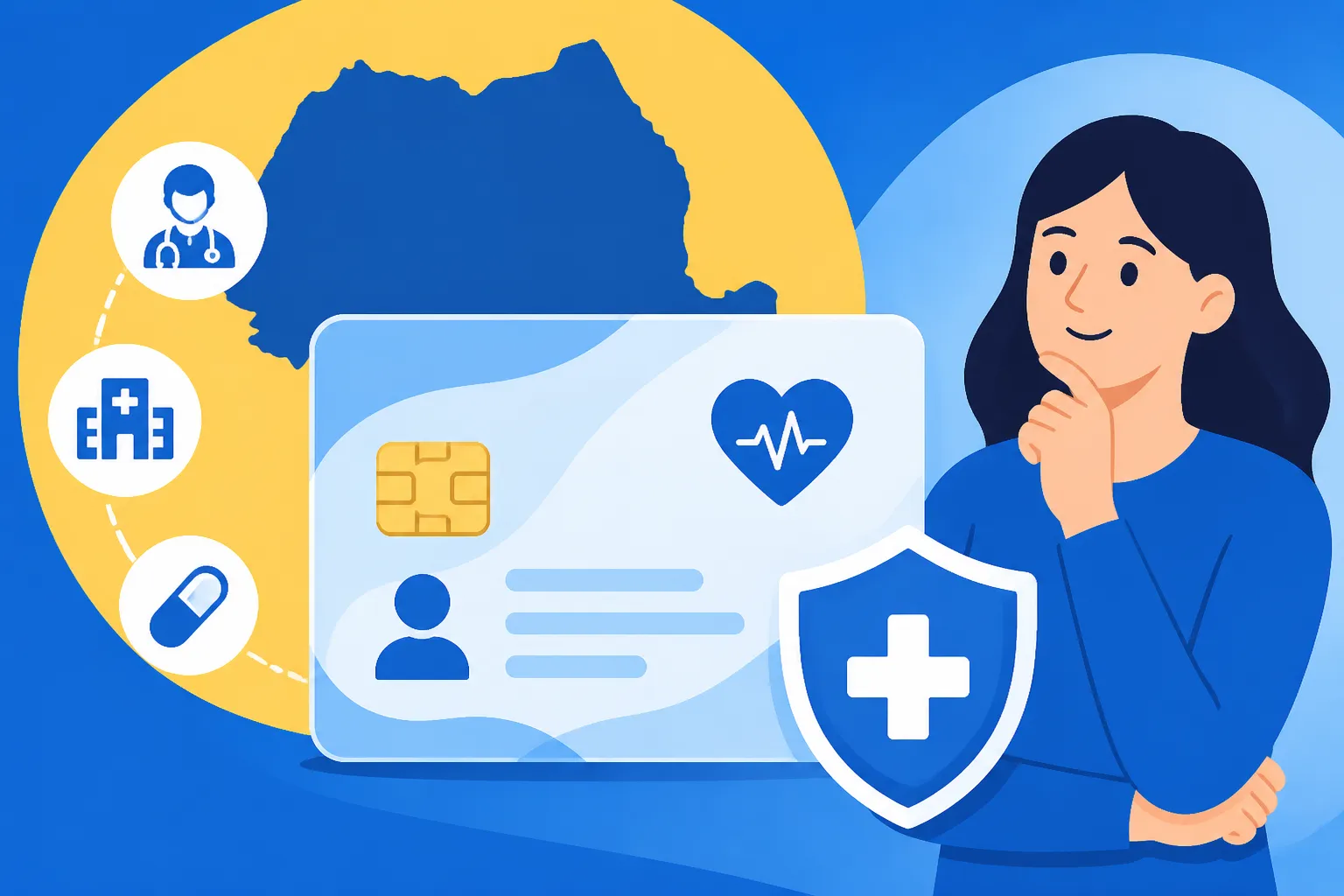
If you have spent more than a few weeks in Romania, you have likely heard the term "Cardul Național de Asigurări de Sănătate." For the locals, it is a routine part of life, but for us expats, it can feel like a mythical artifact. Essentially, this card is a smart-chip-enabled document that proves you are an insured person within the Romanian public health system (CNAS). It is not just an ID; it is a key that unlocks the ability for doctors and pharmacists to log your consultations and prescriptions into the national database.
Without this card, or a valid legal substitute, the public healthcare system essentially treats you as an uninsured visitor. This means that even if you are paying your monthly contributions through your salary, a state-funded hospital or a local pharmacy might refuse to provide services at the subsidized rate. I remember the first time I tried to pick up a simple antibiotic at a local farmacie. I had my residency permit and my contract, but because I hadn't activated my health card, the pharmacist just shrugged and told me I’d have to pay the full, non-subsidized price. It’s these small administrative hurdles that make Navigating the Romanian Healthcare System: An Expat's Roadmap (2027) so essential for anyone planning a long-term stay.
The card essentially functions as a digital signature. Every time you visit a specialist or get a check-up, you must insert the card into a reader and enter your 4-digit PIN. This action "validates" the medical service, allowing the doctor to get reimbursed by the state. Without that validation, the system doesn't "see" the appointment. This is why you will see signs in every clinic saying "Nu uitați cardul de sănătate!" (Don’t forget your health card!).
The Journey to Receiving Your Health Card
The process of getting your hands on this card is rarely straightforward for a foreigner. In theory, once you are registered with the tax authorities and start paying your health contributions (CASS), the system should automatically trigger the issuance of a card. However, "automatic" in Romania often requires a fair bit of manual oversight. You first need to ensure you have your residency paperwork in order, which includes How to Get Your CNP (Personal Numeric Code) for Healthcare Access in Romania. Your CNP is the foundation of your medical identity here.
Eligibility and the CASS Contribution
To be eligible for the card, you must be a taxpayer in the Romanian system. This usually happens through one of three routes: you are employed by a Romanian company, you are a freelancer registered as a PFA, or you are paying voluntary contributions. If you are a digital nomad or waiting for your work permit to be processed, you might find yourself in a coverage gap. During these "in-between" times, many expats rely on SafetyWing to provide a safety net while the local bureaucracy grinds forward.
The card is usually issued only after the first three months of contributions have been recorded. This means there is an inherent waiting period for every new arrival. If you are an EU citizen, you might use your EHIC for emergencies, but for routine care, the state card is the goal. Understanding How Romania's Health Insurance House (CNAS) Works: A Full Overview is crucial because it is this entity that actually manufactures and distributes the cards.
The Automatic vs Manual Issuance Process
Once the CNAS system recognizes you as a "stable" contributor, a card is printed and sent via Poșta Română (the Romanian Post) to the address listed on your residency permit. This is where many expats run into trouble. If your name is not clearly marked on your apartment building's mailbox, or if the postman visits while you are at work, the card often gets returned to the regional health house office (CASMB in Bucharest, or the respective county CAS elsewhere).
If you’ve been paying into the system for over six months and still haven't seen a card, it is time to stop waiting for the mail. You will likely need to visit the local CAS office in person. Be prepared for a very "classic" Romanian administrative experience: long queues, specific opening hours, and a high probability that the staff will speak limited English. It helps to have a friend help you with How to Register for Public Health Insurance (CASS) as a Foreigner in Romania to ensure your file hasn't been flagged for a missing document or an incorrect address.
Navigating the Bureaucratic Limbo: What if it Never Arrives
It is a common scenario: you are working, you are paying taxes, but your health card is nowhere to be found. This state of "limbo" is perhaps the most stressful part of the Romanian medical experience. You don't want to avoid the doctor because you're afraid of the bill, but you also don't have the "magic" plastic card to make the visit free. This is exactly why knowing What Happens If I Get Sick Before My CASS Registration Is Complete? is so important.
The Dreaded Pending Status
When you check your status on the CNAS website (there is a portal where you can enter your CNP to see if a card has been issued), you might see that your card is "in work" or "distributed." If it says distributed but you don't have it, it is sitting in a drawer at a government office. The reality is that the Romanian state has, at various times, faced shortages of the raw materials needed to print the cards. There have been years where no new cards were issued at all, and everyone lived on paper certificates.
During these periods of delay, you are still covered, but you have to prove it differently. This is where the "Adeverință de Înlocuire a Cardului de Sănătate" comes in. This paper certificate is functionally identical to the card but only lasts for three months (or sometimes until the card is actually issued). To get this, you usually have to visit your regional CAS office with your ID and proof of insurance (like a recent payslip or a certificate from your employer).
Securing a Temporary Health Certificate
If you have a chronic condition or need regular prescriptions, you cannot afford to wait months for the post. I highly recommend going to the CAS office and requesting a certificate of insurance status. This document will be accepted by your Medic de Familie (Family Doctor) to register you in their database.
While you are navigating this, keep a copy of your SafetyWing policy handy. Even if you are "in the system," the public hospitals can be overwhelming and slow. Having private back-up allows you to bypass the need for the card entirely if you choose to visit a private clinic like Regina Maria or MedLife while your public paperwork is being sorted out.
Using the Card in Practice: PINs, Doctors, and Pharmacies
Once you finally have the card in your hand, the first thing you must do is activate it. This happens at your first medical appointment. The doctor will insert the card into the reader, and the system will ask you to set a 4-digit PIN. Do not use "0000" or "1234," as the system sometimes rejects these for being too simple. Once the PIN is set, that is your permanent code for all future transactions.
The Role of the Medic de Familie
Your health card is essentially a tether between you and your primary care provider. In Romania, you cannot simply go to a specialist in the public system for free; you need a referral (bilet de trimitere). To get that referral, your doctor must scan your card. This is part of the broader effort to digitize records, which you can read about in Understanding the Electronic Prescription (Rețeta Electronică) System in Romania.
Every time you visit your doctor, they will "upload" the consultation to the system using your card. If the card reader is down—which happens more often than we’d like—the doctor may have to ask you to come back later or wait for the system to reboot. It is a quirky, sometimes infuriating part of life here, but "sistemul nu merge" (the system isn't working) is a phrase you will hear often.
Dealing with Pharmacies
When you take a prescription to the pharmacy, the pharmacist will also ask for your card. They insert it, you type your PIN, and the system confirms that the prescription is valid and that you are indeed the person it was issued to. This prevents fraud and ensures that the state is only paying for medications for people who are actually contributing to the fund. If you forget your card, the pharmacy cannot process a subsidized prescription. You will either have to go home and get it or pay the full market price for the medicine.
| Document Type | Validity Period | Primary Use Case |
|---|---|---|
| Electronic Health Card | Permanent (standard) | Routine visits, prescriptions, hospital stays |
| Temporary Certificate | 3 months / variable | While waiting for card issuance or if card is lost |
| EHIC (European Card) | Per the issuing country | EU citizens for emergency/unplanned care only |
| Employer Certificate | Monthly | Proving insurance status to the CAS office |
Common Pitfalls and Troubleshooting for Expats
The Romanian system is built on specific rules that aren't always communicated in English. One major pitfall is the "activation" process. If you receive your card but don't use it for a year, it might remain inactive. Another issue is the expiration date printed on the card. Many of the original cards issued years ago have "expired" dates on the plastic, but the government has legally extended their validity multiple times through emergency ordinances. Don't throw your card away just because the date says 2024!
Lost, Stolen, or Damaged Cards
If you lose your card, the process of getting a replacement is, predictably, a bit of a marathon. You must publish a notice in a local newspaper declaring the card lost (yes, this is still a requirement), pay a small fee at the CAS office, and apply for a duplicate. While waiting for the duplicate, you will be issued the paper certificate mentioned earlier. It is much easier to just keep the card in a safe place.
If your card is damaged and the chip won't read, you’ll have to go through a similar replacement process. Always check the chip before leaving the doctor's office if they tell you "it didn't work"—sometimes it's just a dirty reader, and a quick wipe with a cloth saves you a trip to the government office. For those who find this level of bureaucracy too much to handle, looking into Is a Private Medical Subscription (Abonament) Worth It in Romania? is a great way to ensure you have a "low-stress" alternative.
Handling System Downtime
It is a well-known secret among expats and locals alike that the CNAS servers (the SIUI system) frequently crash. When this happens, the entire country's ability to use the health card stops. Doctors cannot validate visits, and pharmacies cannot dispense "compensated" meds.
If you find yourself at the doctor during a crash, remain calm. Usually, they will see you and "record" the visit offline, asking you to come back another day just to scan the card, or they might wait for the system to come back up. Having a secondary insurance like SafetyWing is incredibly helpful here; if the public system is paralyzed by a technical glitch and you have an urgent (but not 112-level) need, you can just head to a private clinic and file a claim later.
Comparing Public Coverage and Private Alternatives
While the Cardul de Sănătate is your ticket to the public system, it is important to be realistic about what that system offers. Public hospitals in Romania are staffed by excellent doctors, but the facilities can be dated, and the wait times for non-emergencies are long. Many expats choose to use the public system for major issues (like surgeries or chronic care) while using private clinics for day-to-day needs.
Limitations of the National Health Card
The public card covers most things, but it doesn't cover everything. For example, dental care is only minimally covered, and many high-end diagnostic tests have long waiting lists. You might have the card, but the clinic might tell you "the funds for this month are exhausted." This is a common phrase (s-au terminat fondurile) which means the state has already allocated its budget for that specific clinic for the month.
Why Supplementary Insurance Makes Sense
Because of these gaps, relying solely on the state card can be risky. Combining your public coverage with a global product like SafetyWing or a local private "abonament" gives you the best of both worlds. You get the high-end, English-speaking service of the private sector for your coughs and colds, but you maintain your Public vs Private Healthcare in Romania: Which Should Expats Choose? balance by having the state card for emergencies and high-cost hospitalizations.
In the end, the Cardul de Sănătate is a badge of residency. It signifies that you are part of the Romanian social fabric, contributing to the collective well-being of the country. It takes patience to get it, and even more patience to use it, but once you understand the rhythm of the bureaucracy, it becomes just another part of your life as a successful expat in Romania.
Disclaimer
The information provided in this guide is for informational purposes only and does not constitute legal or medical advice. Healthcare regulations and bureaucratic processes in Romania are subject to frequent change. Always consult with the official National Health Insurance House (CNAS) or a qualified legal professional for the most up-to-date requirements regarding your specific situation.