Are Private Clinics in Romania Worth the Cost?
You have probably heard the horror stories about Romanian state hospitals—the dimly lit corridors, the long queues of elderly patients, and the confusing dance of trying to find a doctor who speaks English while navigating a maze of bureaucratic paperwork. Deciding whether to spend your hard-earned money at a private clinic or stick with the public system is a major dilemma. This guide explains the true value, costs, and limitations of private healthcare in Romania to help you decide if it is truly worth the investment for your specific situation.
The Reality of the Romanian Healthcare Landscape: Public vs. Private
When you first arrive in Romania, the healthcare system can feel like a contradiction. On one hand, Romania produces some of the most talented doctors in Europe; on the other, the public infrastructure often looks like it hasn’t been updated since the 1980s. To understand if private clinics are worth it, you first have to understand what they are competing against. The public system is managed by the National Health Insurance House, and you can learn more about this in our guide on How Romania's Health Insurance House (CNAS) Works: A Full Overview.
In the public system, once you are registered and paying your monthly contributions (CASS), most basic services are free. However, "free" comes with a cost of time and comfort. If you need a simple ultrasound, you might be told the "ceiling" for the month has been reached and you must wait six weeks for an appointment. For an expat who is working a high-pressure job or trying to settle a family, that kind of delay is often unacceptable. This is where private clinics like Regina Maria, MedLife, or Sanador come into play. These networks operate more like high-end hotels than hospitals. You are greeted by receptionists who usually speak excellent English, and you can book appointments through a slick smartphone app.
The emotional toll of the public system shouldn't be underestimated. In many state facilities, the lack of "hospitality" can be jarring. You are often expected to bring your own pajamas, towels, and sometimes even basic medical supplies. In contrast, a private clinic provides a sanitized, modern, and predictable environment. For many, the peace of mind that comes with knowing exactly when you will see a doctor and being able to communicate your symptoms clearly is the primary reason to choose private care. You can find more detail on these choices in our article on Public vs Private Healthcare in Romania: Which Should Expats Choose?.
Comparing the Actual Costs: Consultations, Tests, and Subscriptions
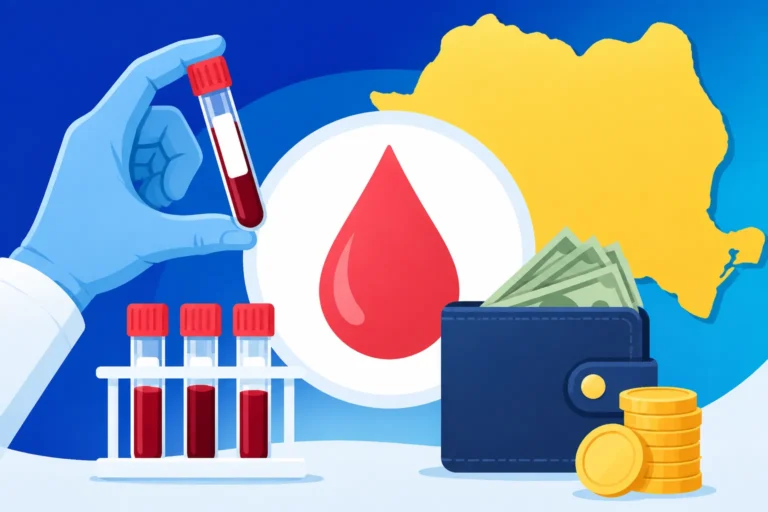
One of the biggest surprises for expats is that private healthcare in Romania is remarkably affordable compared to Western Europe or North America, yet it can still feel like a significant monthly expense if you are paying out of pocket for everything. Most private clinics operate on two financial models: the "pay-as-you-go" system and the "abonament" (subscription) system.
A standard consultation with a specialist—such as a dermatologist or a cardiologist—at a top-tier private clinic in Bucharest or Cluj-Napoca usually costs between 250 and 500 RON (approximately €50 to €100). If you are a digital nomad or someone who hasn't yet secured residency, you might be relying on international coverage. In these transitional phases, having a flexible plan from a provider like SafetyWing can be a lifesaver, as it allows you to access these private facilities without worrying about the immediate hit to your bank account while you wait for your local papers to clear.
The "abonament" is a uniquely Romanian medical product. Most employers include a basic medical subscription as a job benefit. These subscriptions usually cover unlimited "general medicine" visits and basic blood tests, while offering discounts on more complex procedures. If your employer doesn't provide one, you can purchase an individual subscription for roughly 100 to 300 RON per month. We’ve analyzed whether this is a good deal in our post: Is a Private Medical Subscription (Abonament) worth it in Romania?.
| Service Type | Public System (with CASS) | Private Clinic (Out of Pocket) | Private Clinic (with Abonament) |
|---|---|---|---|
| GP Consultation | Free (with long wait) | 200 – 300 RON | Usually Free |
| Specialist Visit | Free (requires referral) | 250 – 500 RON | Free or 20% – 50% Discount |
| Basic Blood Work | Free (monthly quotas apply) | 150 – 400 RON | Usually Free |
| MRI / CT Scan | Free (3-6 month wait) | 800 – 2,500 RON | 10% – 30% Discount |
| English Speaking | Hit or Miss | Guaranteed | Guaranteed |
For those trying to budget their move, understanding the full scope of these numbers is vital. You can find a more granular look at these prices in our article on The Cost of Healthcare in Romania: A Complete Breakdown for Foreigners (2026).
The Expat Experience: Why "Worth It" Often Means "Convenient"
For most foreigners living in Romania, the decision to go private isn't just about the quality of the medicine; it’s about the quality of the communication. Navigating the state system requires a high level of Romanian language proficiency or a very patient local friend to help you. Private clinics have built their entire business model around efficiency and accessibility. When you use the apps for major networks, you can often see the doctor’s credentials, read reviews, and—most importantly—see which languages they speak.
This level of transparency is a huge relief when you are feeling vulnerable or ill. Being able to explain a complex pain in English and knowing the doctor understands the nuances of your description is worth a few hundred Lei. Furthermore, private clinics tend to be clustered in expat-friendly neighborhoods. In Bucharest, for example, you’ll find a high density of modern clinics in the northern sectors like Floreasca, Aviatorilor, and Pipera. For someone living in these areas, the convenience of walking to a high-end facility beats trekking across the city to a state hospital. If you are specifically looking for care in the capital, check out our list of recommendations on Where Can I Find an English-Speaking Family Doctor in Bucharest?.
For many nomads who move frequently, the local "abonament" might not make sense if you only plan to stay for six months. In these cases, using private clinics on a "pay-as-you-go" basis while maintaining a global policy like SafetyWing is often the most pragmatic approach. It gives you the freedom to pick the best specialist in the city without being tied to a specific local network's subscription plan. This is a common strategy for those who are still figuring out How to Find an English-Speaking Doctor in Romania and don't want to commit to one brand immediately.
The Critical Limit: When Private Clinics Are Not Enough
It is a common misconception among expats that a private medical subscription is a replacement for the public system. It is not. This is perhaps the most important realization you can have about healthcare in Romania. While private clinics are fantastic for "cold" medicine—check-ups, chronic condition management, dermatology, and minor ENT issues—they have significant limitations when it comes to major trauma and emergencies.
In Romania, if you are in a serious car accident or suffer a major cardiac event, the ambulance (SMURD) will almost certainly take you to a state emergency hospital. These facilities, like Spitalul Floreasca in Bucharest, are the only ones equipped with the specialized trauma teams and intensive care units required for life-saving interventions. Even the most expensive private networks often transfer their "complex cases" to the state system if things get too risky or require resources the private clinic doesn't have.
Understanding this hierarchy is essential for your safety. You should always ensure you are registered for the public system, even if you never intend to use it for a standard check-up. We explain how to do this in our guide on Registering for Public Health Insurance (CASS) in Romania (2027). Knowing the Emergency Medical Care in Romania: What Every Expat Needs to Know can literally be the difference between life and death. You should also familiarize yourself with the Understanding Emergency Numbers (112) and the SMURD Service in Romania so you aren't caught off guard in a crisis.
Final Verdict: Is the Cost Justified?
So, are private clinics in Romania worth the cost? For 90% of expats, the answer is a resounding yes. If you can afford the 300 RON for a specialist visit or if your company provides a subscription, the time saved and the reduction in stress are immeasurable. The ability to book an appointment for tomorrow morning, speak in English, and receive your results via email within hours is a luxury that feels like a necessity when you are living in a foreign country.
However, the private system should be viewed as a "comfort layer" on top of the essential public system. Think of the private clinic as your go-to for daily health and the public system as your ultimate safety net for catastrophic events. By combining a private subscription (or a flexible plan like SafetyWing) with your mandatory CASS contributions, you create a robust healthcare strategy that covers all bases. You can explore more about these specific providers in our review of Understanding Private Clinics and Medical Networks (Regina Maria, MedLife) in Romania.
Ultimately, your health is the one area where you shouldn't try to cut corners in Romania. The costs are low enough compared to global standards that the "premium" you pay for private care offers some of the best value for money you will find in the country.
Disclaimer
The information provided in this guide is for informational and educational purposes only and does not constitute professional medical or legal advice. Healthcare regulations, costs, and system structures in Romania can change frequently. Always consult with a qualified medical professional or a legal expert regarding your specific health needs and insurance requirements. The author and publisher are not responsible for any actions taken based on the content of this article.