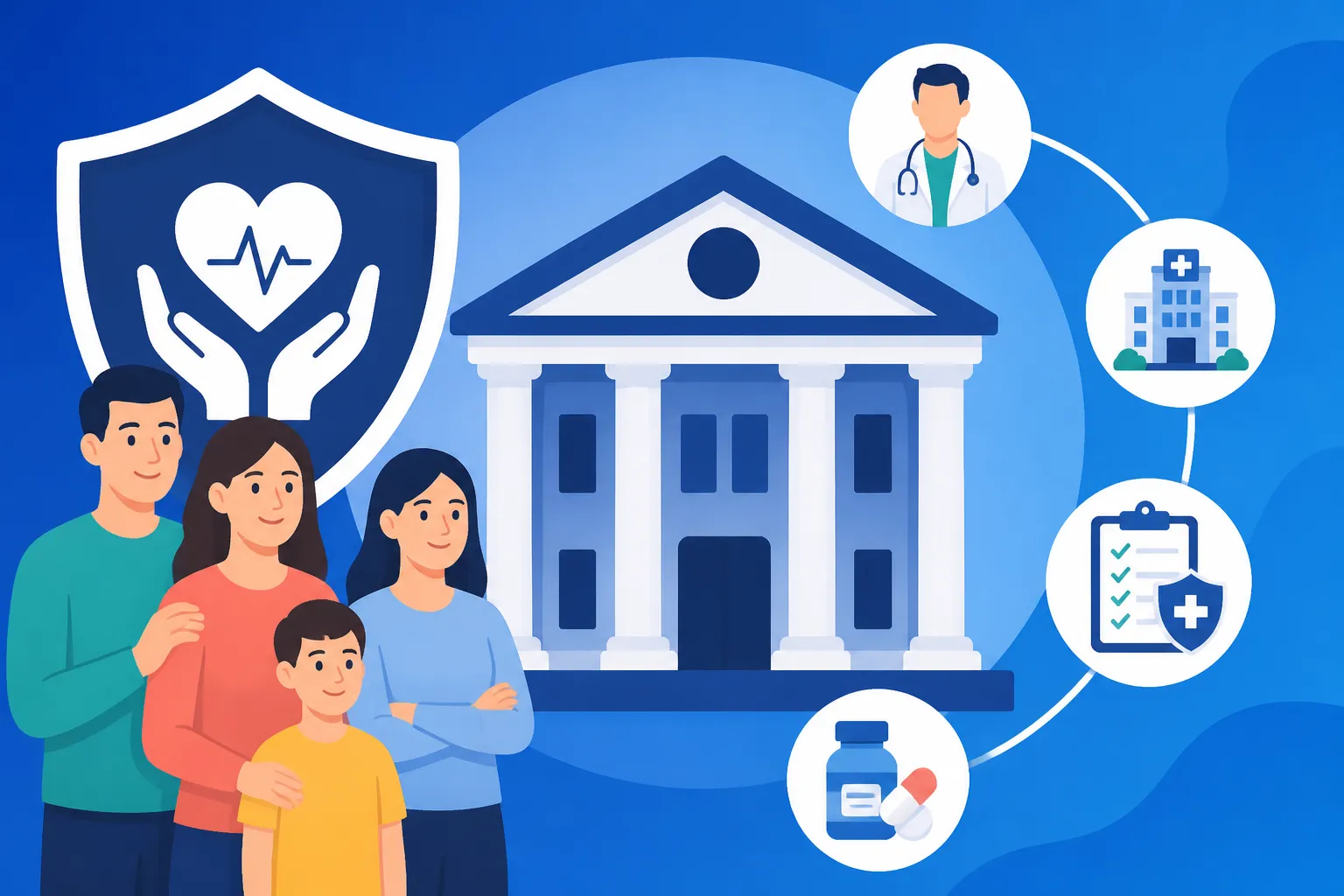
How Romania’s Health Insurance House (CNAS) Works: A Full Overview
Navigating the bureaucratic labyrinth of a new country is often the most exhausting part of the expat journey, and in Romania, nothing illustrates this better than the healthcare system. You arrive with dreams of Carpathian hikes and Bucharest nights, only to find yourself buried under acronyms like CNAS, CASS, and ANAF. This guide is designed to deconstruct how the National Health Insurance House actually functions so you can stop worrying about the paperwork and start accessing the care you deserve.
What is CNAS? Understanding the National Health Insurance House
When you first land in Romania, you will hear people talking about "The House." They aren't talking about a trendy club in Old Town; they are referring to the Casa Națională de Asigurări de Sănătate (CNAS). This is the apex body that manages the National Social Health Insurance Fund. Think of it as the massive reservoir that collects monthly contributions from millions of workers and redistributes those funds to hospitals, clinics, and pharmacies. As an expat, understanding CNAS is the difference between paying 500 Euro out of pocket for a standard MRI and getting it for free.
The system is decentralized, which is where many foreigners get tripped up. While CNAS sits at the top in Bucharest, your daily interactions will be with the local branches, known as the Casa de Asigurări de Sănătate (CAS). If you live in the capital, you will deal with CASMB (Bucharest Municipality). If you are in Cluj, it is CAS Cluj. Each of these regional offices has its own quirks, its own lines, and its own interpretation of which stamp goes on which document. I remember spending three hours at the Bucharest office only to be told my passport copy was too blurry—this is the reality of the administrative hurdle you are facing.
The philosophy of the Romanian system is one of universal solidarity. In theory, everyone contributes a percentage of their income so that everyone has access to a broad "package" of medical services. For an expat, this means that once you are "in the system," you are treated legally the same as a Romanian citizen. However, getting into that system requires more than just a pulse; it requires a residency permit, a personal numeric code (CNP), and proof that the tax authorities have seen your contributions.
Who is Eligible? The Tiers of Coverage in Romania
The first question every expat asks is, "Do I have to pay for this?" The answer depends entirely on your legal status. If you are employed by a Romanian company, your employer is legally mandated to deduct the health insurance contribution (CASS) from your gross salary. This is the smoothest path. You are automatically insured the moment your labor contract is registered in the ReviSal system. You don't need to visit a dusty office; your HR department does the heavy lifting, and you simply enjoy the benefits of How to Access Healthcare on a Work Visa in Romania.
For the digital nomads and freelancers among us, the path is a bit more winding. If you are operating as a PFA (Persoană Fizică Autorizată), you are responsible for your own contributions. In 2026, the rules around these payments have become more stringent, often tied to the number of minimum wages you earn annually. You have to file a "Declarația Unică" (Single Tax Return) with the tax office (ANAF). Only after this filing is processed does the health insurance house recognize you as an insured person. This lag time is a notorious trap for newcomers who think they are covered the moment they sign a contract.
Then there is the category of "non-working" residents. Perhaps you are here on a family reunification visa or as a retiree. You can still access CNAS by paying a voluntary contribution. This is usually calculated as 10% of six national minimum gross wages. It gives you a full year of coverage. However, if you are just visiting or have just arrived and haven't secured your residency permit yet, you are essentially invisible to the public system. During these bridge periods, many of us rely on a solution like SafetyWing to ensure we aren't bankrupted by a sudden appendicitis while waiting for the Romanian bureaucracy to turn its gears.
Registering for Public Health Insurance (CASS)
To even speak to someone at the health insurance house, you need your CNP (Cod Numeric Personal). This is the 13-digit number found on your residency permit. Without it, you do not exist in the state’s digital architecture. If you are a non-EU citizen, the process of Getting Your CNP (Personal Numeric Code) for Healthcare Access in Romania is your very first priority. Once you have that plastic card in your hand, you can finally begin the process of proving your insured status.
The most common document you will need is the "Adeverință de Asigurat" (Certificate of Insured). Even though the system is supposed to be digital, many doctors still ask for this paper to prove you are up to date with your payments. To get this, you usually need to visit your local CAS office with your residency permit and a copy of your labor contract or your latest ANAF tax receipt. Pro tip: always bring a folder with original documents and at least two copies of everything. The "Dosar cu Șină" (the infamous rail folder) is a cultural icon in Romania for a reason—it is the only way to keep your sanity when moving between counters.
If you are a freelancer or self-employed, your interaction is primarily with ANAF, not CNAS. You pay your taxes to the state budget, and then ANAF sends a data feed to the health insurance house. Occasionally, this data feed fails. Resolving this required a trip to the local CAS with my stamped tax returns to manually "unlock" my status. It is frustrating, but it is a rite of passage for every long-term expat.
The Role of the Family Doctor (Medic de Familie)
In the Romanian system, the Family Doctor is the gatekeeper. You cannot simply walk into a public hospital for a non-emergency skin rash or a persistent cough and expect to be seen for free. The CNAS system is built on the "referral model." This means your first point of clinical contact must always be your registered family doctor. They are the ones who issue the "Bilet de Trimitere" (referral slip) which allows you to see a specialist or get lab work done without paying a Leu.
Finding an English-speaking doctor can be a challenge, especially outside of major hubs like Bucharest, Cluj, or Timișoara. You can find guidance on How to Find an English-Speaking Doctor in Romania through various expat forums, but the registration process is the same for everyone. You need to visit the doctor's cabinet, provide your residency permit and proof of insurance, and sign a registration form. Once you are on their list, you must stay with them for at least six months before you are allowed to switch to a different physician.
The family doctor does more than just prescribe antibiotics. They are the ones who manage your "Electronic Health Record" and issue the digital prescriptions that you take to the pharmacy. If you have a chronic condition, they are your lifeline to subsidized medication. Without a family doctor, you are essentially forced to use private clinics for everything, which can quickly drain your savings. Even if you have a private subscription at a place like Regina Maria, having a public family doctor is vital for things like official sick leave certificates or subsidized vaccinations.
The Electronic Health Card (Cardul Național de Sănătate)
Once you have been in the system for a few months, you will likely receive a small plastic card in the mail. This is the "Cardul de Sănătate." It contains a chip that stores your insurance status and basic medical data. Every time you visit a doctor or a pharmacy under the public system, you must "swipe" this card and enter a 4-digit PIN. This is how the provider proves to CNAS that a service was actually rendered so they can be reimbursed.
The problem for many expats is that these cards can take months, sometimes a year, to be issued. They are mailed to the address listed on your residency permit. If you have moved apartments and haven't updated your address with the immigration office (IGI), your card is likely sitting in a dusty pile at a post office or has been returned to the CAS headquarters. While you wait for the card to arrive, you can request a "certificate in lieu of the card" from your local CAS office. This paper is valid for three months and serves as your golden ticket to medical services.
Activating the card is the next hurdle. The first time you use it at a doctor’s office, they will ask you to set a custom PIN. Do not forget this number. If you block the card by entering the wrong PIN three times, you have to go back to the CAS office to have it reset. It is a modern system built on a legacy of manual checks, which means the "digital" part often feels quite analog. For those who are just arriving and don't yet have this card, having secondary coverage through SafetyWing is a massive relief, as it handles the "pre-card" gap where the public system might still be processing your existence.
What is Covered (and What Isn't) Under CNAS
The "Basic Package" of the Romanian health system is surprisingly comprehensive, provided you follow the rules. It covers primary care, specialized outpatient care, hospital stays, and emergency dental work. If you are hospitalized in a public facility, your surgery, medication, and food are covered 100%. However, "covered" doesn't always mean "available." Romania's public hospitals often face shortages of specific supplies, and you might find yourself asked to buy your own bandages or specific medications from the pharmacy downstairs.
Prescription drugs are categorized by lists (List A, B, C). Some are 100% "compensated" (free), while others are 50% or 90% covered. Your family doctor will issue a Understanding the Electronic Prescription (Rețeta Electronică) system in Romania document. You take this to any pharmacy that has a contract with CNAS (look for the "Casa de Asigurări" sticker on the door). The pharmacist scans the barcode, you swipe your health card, and you pay only the remaining balance.
What is generally NOT covered includes high-end dental work (implants, cosmetic crowns), certain elective surgeries, and premium medical supplies. Furthermore, the "waiting list" is a factor. If you need a non-urgent MRI, the public clinic might tell you the "funds are exhausted" for the current month and to come back on the 1st of next month. This is why many expats choose a hybrid approach, using the public system for emergencies and major surgeries while maintaining a private subscription for day-to-day specialist visits and faster diagnostics.
Navigating the Public vs. Private Divide
Romania has one of the fastest-growing private healthcare sectors in Europe. Names like Regina Maria, MedLife, and Sanador are ubiquitous. Most expats prefer these clinics because the facilities are modern, the doctors almost always speak English, and the appointment system is efficient. However, it is a common misconception that these are entirely separate from CNAS. In reality, many private clinics have contracts with the state. This means you can often see a private specialist for free if you bring a referral from your public family doctor.
When deciding between systems, look at the table below to see how they stack up in the real world:
| Feature | Public System (CNAS) | Private Clinics (Subscriptions) |
|---|---|---|
| Cost | 10% of salary (CASS) | 20 – 100 EUR / month |
| Wait Times | Weeks to months for specialists | Usually 1-5 days |
| Language | Primarily Romanian | High English proficiency |
| Surgery | High capacity, older facilities | Limited complexity, modern rooms |
| Emergency | Best for trauma and heart attacks | Often redirected to public hospitals |
| Prescriptions | Subsidized / Compensated | Full price unless they have CNAS contract |
If you are looking for a deep dive into the costs, I highly recommend checking out The Cost of Healthcare in Romania: A Complete Breakdown for Foreigners (2026). It will help you budget for those "hidden" costs like laboratory fees that aren't fully covered. For many of us, the ideal setup is: Public Insurance (Mandatory) + Private Subscription (for speed) + International Travel/Expedite Insurance like SafetyWing (for peace of mind during the transition or when traveling outside Romania).
Common Challenges and Troubleshooting for Expats
The biggest challenge is, without a doubt, the language barrier. The staff at the CAS offices are rarely required to speak English. If you show up alone, you will likely be met with a rapid-fire sequence of Romanian bureaucratic terms. My advice? Bring a Romanian friend or hire a local consultant for your first registration. It will save you three return trips. Also, keep in mind that the offices usually have very specific "Program cu Publicul" (hours for the public), which are often only in the mornings, four days a week.
Another common issue is the "Lack of Continuity." If you change jobs, there might be a one-month gap where your old employer has stopped payments but the new one hasn't started. During this month, you are technically uninsured. If you end up in the ER, you might be handed a bill. You can resolve this by paying a voluntary contribution for that month, but the paperwork is a nightmare. Always keep your "Fluturaș de Salariu" (payslip) as proof that you have been paying into the system, just in case the digital database hasn't updated.
Finally, keep an eye on your "Patient Dossier." Romania has been trying to digitize medical records through a platform called DES (Dosarul Electronic de Sănătate). While adoption is slow, it is worth asking your doctor How to Set Up Your Account on the Patient Dossier Platform in Romania. Having your medical history, allergies, and past prescriptions in a centralized digital format can be a lifesaver if you ever need to be treated in a different city or by a new specialist who doesn't know your history.
The Importance of Being Proactive
The Romanian healthcare system is not going to chase you down to make sure you are covered. It is a reactive system. If you don't register, if you don't find a family doctor, and if you don't track down your health card, you will find yourself in a very stressful situation the moment a medical need arises. Expats often wait until they have a 40-degree fever to start looking for a doctor, only to realize they aren't properly registered in the CNAS database. Do not be that person.
Spend your first month in Romania getting your residency permit and your CNP. Spend your second month finding a family doctor and confirming your insurance status. If you are an EU citizen, make sure you know How to Use Your EHIC (Cardul European) in Romania as an EU Citizen for the short term, but remember that the EHIC is not a replacement for long-term residency insurance.
Living in Romania is a beautiful, rewarding experience, but it requires a certain level of "administrative stamina." Once you understand that CNAS is just a giant machine fueled by stamps and patience, you can navigate it with confidence. You'll find that many of the doctors in the public system are incredibly skilled and dedicated, often working with limited resources to provide excellent care. By securing your spot in the system, you aren't just following the law—you're ensuring that you have the same safety net as your Romanian neighbors.
Summary Checklist for New Expats
To make this manageable, here is the "Veteran Expat" order of operations:
- Obtain your Residency Permit (Permis de Ședere) and your CNP.
- If employed, confirm with HR that your CASS is being paid. If self-employed, file your Declarația Unică with ANAF.
- Find a local Family Doctor (Medic de Familie) and register with them.
- Request an "Adeverință de Asigurat" from the CAS office to have as a backup.
- Watch your mailbox for the "Cardul de Sănătate." If it doesn't arrive in 6 months, go to the CAS office to investigate.
- Keep a secondary insurance policy like SafetyWing active until you have verified that your public "swipe card" is functioning and your family doctor has your file.
By following these steps, the "House" of Health Insurance won't feel like a haunted mansion, but rather a functional part of your new life in the Balkans. It takes effort, and yes, you will probably have to wait in at least one poorly ventilated hallway, but the peace of mind knowing you are covered is worth every minute of the wait.
Medical Emergency Basics
If the worst happens and you have a true emergency, dial 112. Do not worry about your insurance status in that moment. Romanian law requires that all emergency cases be stabilized and treated regardless of insurance. Whether you are a tourist, an expat waiting for a permit, or a fully insured resident, the SMURD or Ambulance service will respond. However, once the emergency is over, the hospital will check your CNAS status. This is where your preparation pays off—if you are in the system, the life-saving care you received remains free of charge. If not, the bills can be substantial.
For those living in smaller towns, the Understanding the Role of the Policlinică in Romania is also vital. These are multi-specialty clinics that often serve as the bridge between your family doctor and a major hospital. They are usually the best places to get routine blood work or see a specialist like an ophthalmologist or a neurologist under the CNAS umbrella. Knowing where your nearest policlinică is located can save you a lot of time when your family doctor gives you that first referral slip.
Disclaimer
The information provided in this guide is for educational and informational purposes only and does not constitute legal or professional medical advice. Healthcare regulations and tax requirements in Romania are subject to frequent change. Always consult with the official National Health Insurance House (CNAS), the Romanian Tax Authority (ANAF), or a qualified legal professional to confirm your specific insurance status and obligations. Individual circumstances, such as visa type and employment status, can significantly affect your eligibility and coverage.