What Is the Emergency Phone Number in Romania?
Standing on a cobblestone street in Brașov or in the middle of a bustling sector in Bucharest, the last thing you want to feel is the paralyzing confusion of not knowing who to call when a crisis strikes. Whether it is a medical collapse, a kitchen fire, or a road accident, knowing the right digits to dial and what happens after you press call is a literal lifesaver. This guide provides the definitive breakdown of how to navigate emergency services in Romania, ensuring you are never left helpless in a foreign language.
The Universal Emergency Number in Romania: 112
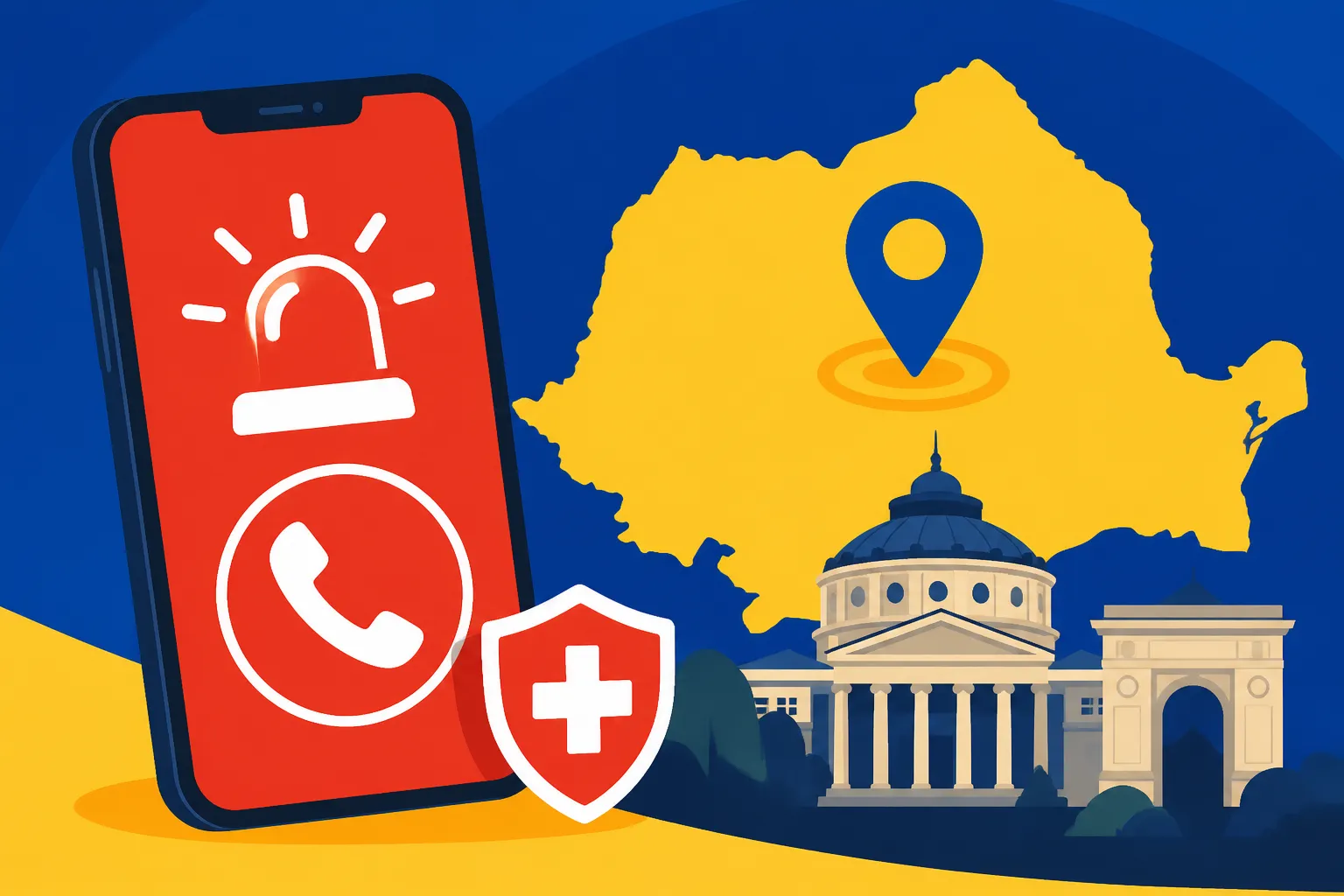
If you find yourself in any life-threatening situation, the only number you need to memorize is 112. This is the single, pan-European emergency number that has been fully integrated into the Romanian infrastructure for years. It is managed by the Special Telecommunications Service (STS), and it acts as a centralized dispatch system that routes your call to the police, the fire department (Pompierii), or medical emergency teams. When you dial 112, you are not calling a specific doctor or a local police station; you are reaching a professional operator who is trained to triage your situation and decide which specialized unit needs to be deployed to your location.
One of the most common anxieties for foreigners is whether their phone will actually connect. In Romania, 112 calls are free of charge from any device—whether it is a local prepaid SIM, a contract-based line, or a foreign roaming number. Even more critical is the fact that you can call 112 even if your phone is locked or if you have no credit on your SIM card. The system is designed to grab any available signal from any network provider in the vicinity to ensure the call goes through. If you are hiking in the Carpathians and your own provider has no signal, your phone will piggyback off another network specifically to facilitate that emergency call.
Once you dial, the operator will immediately see your approximate location through a system called Advanced Mobile Location (AML). However, this is not always pinpoint accurate, especially in the dense "bloc" neighborhoods of Romanian cities where multiple apartment buildings are clustered together. You must be prepared to give your specific address, including the block number (bloc), entrance (scară), and apartment number (apartament). In Romania, the street address alone is often not enough for an ambulance to find you quickly. For those who travel frequently, having a reliable travel insurance policy like SafetyWing can provide an extra layer of security, especially when you are still figuring out the local geography and medical landscape.
Navigating the Language Barrier During an Emergency Call
The biggest hurdle for most expats is the fear that the operator won't understand them. While Romanian law requires 112 operators to have basic English skills, the reality on the ground can be hit-or-miss depending on the shift and the region. In major hubs like Bucharest, Cluj-Napoca, or Timișoara, you are very likely to find an English-speaking operator quickly. In more rural areas, the level of English might be lower. If you find yourself struggling to communicate, the most important thing is to stay calm and use short, clear sentences. State your location first, then the nature of the emergency.
I always recommend that new arrivals keep a "cheat sheet" on their fridge or saved in their phone notes. This should include your full Romanian address and a few key phrases. For a medical emergency, you would say "Urgență medicală." For a fire, it is "Incendiu." If you are reporting a crime, "Poliția." Being able to use these three words can drastically reduce the time it takes for the operator to route your call to the correct department. Even if you cannot hold a full conversation, those keywords allow the dispatcher to send the right type of help while they look for a translator or an English-speaking colleague.
While the emergency operators handle the immediate dispatch, many expats find that having a secondary support system is vital. For instance, using SafetyWing can be helpful for those who need access to private medical support after the initial emergency has been stabilized by public services. During the actual 112 call, however, do not hang up until the operator tells you to do so. They may need to keep you on the line to provide life-saving instructions, such as how to perform CPR or how to manage a wound until the SMURD or ambulance teams arrive at your door.
Understanding the Response Services: SMURD vs. Ambulanță
A unique aspect of the Romanian system that often confuses foreigners is the presence of two different medical response entities. You will see red vans and white vans, and it is helpful to know who is who. The red vehicles belong to SMURD (Serviciul Mobil de Urgență, Reanimare și Descarcerare). This is a specialized emergency rescue service that is technically part of the Fire Department. They handle the most critical, life-threatening cases, such as major accidents, heart attacks, or situations where someone is trapped. They are often staffed by highly trained doctors and paramedics and are known for their rapid response times and advanced equipment. You can learn more about how these services are integrated by reading about Understanding Emergency Numbers (112) and the SMURD Service in Romania.
The white vans are the standard public ambulances (Serviciul de Ambulanță). These handle a broader range of medical issues. While they also respond to emergencies, they are frequently used for transporting patients or responding to urgent but non-life-threatening calls. When you call 112, the dispatcher decides which service to send based on your description. This is why being accurate about the patient's condition is vital. If you minimize the symptoms, they might send a standard ambulance that could take longer to arrive; if you exaggerate, you might be taking a SMURD team away from someone in a true life-and-death struggle.
For any expat, it is essential to understand that Emergency Medical Care in Romania: What Every Expat Needs to Know involves navigating these public services first. In a true emergency, you do not call a private clinic like Regina Maria or MedLife. Those private providers are excellent for consultations and scheduled procedures, but they do not operate the primary 112 emergency response infrastructure. Once you are stabilized in a public Understanding Hospital Care at a Romanian Spital, you can then discuss being transferred to a private facility if your insurance, such as SafetyWing, covers such transitions and if your condition allows for it.
| Service Name | Vehicle Color | Primary Focus | Staffing |
|---|---|---|---|
| SMURD | Red | Life-threatening emergencies, trauma, rescue | Doctors, specialized paramedics |
| Ambulanță (SAJ) | White | Urgent medical issues, transport, general emergencies | Doctors, nurses, ambulance drivers |
| Pompierii | Red (Trucks) | Fire, chemical leaks, structural collapse | Firefighters, rescue specialists |
| Poliția | Blue/White | Crime, traffic accidents, public order | Police officers |
Logistics and Legalities of Emergency Care for Expats
One of the most frequent questions I get from the expat community is: "Will I be charged for the ambulance?" In Romania, emergency medical assistance provided through 112 and the subsequent stabilization in a public hospital's emergency room (Unitatea de Primiri Urgențe – UPU) is generally free at the point of service for everyone, regardless of whether you have insurance or a CNP. The state prioritizes life-saving care above administrative checks. This is a relief for many who are still in the process of Registering for Public Health Insurance (CASS) in Romania (2027).
However, once the immediate "emergency" phase is over and you are admitted to a hospital ward for long-term recovery, the administrative side kicks in. If you are an EU citizen with an EHIC card, or if you are already contributing to the Romanian system, your costs will be covered. If you are a non-EU citizen without local insurance, you might be presented with a bill for the duration of your stay after you have been stabilized. This is why having a plan for What Happens If I Get Sick Before My CASS Registration Is Complete? is so important. Many digital nomads and new arrivals rely on SafetyWing during this transition period to avoid massive out-of-pocket expenses for hospital stays that follow an emergency.
When the medical team arrives, they will ask for identification. If you can, have your passport or your Romanian residency permit (permis de ședere) ready. They will look for your How to Get Your CNP (Personal Numeric Code) for Healthcare Access in Romania to log you into the national health system. If you don't have it yet, don't panic; they will still treat you. They will simply register you as an "unidentified" or "uninsured" patient and sort out the paperwork later. It is also helpful to know the What Is the Difference Between a Policlinică and a Spital in Romania? so you don't accidentally show up at a small outpatient clinic for a major emergency.
Practical Steps to Take During a Romanian Medical Crisis
In the heat of the moment, even the most composed person can forget basic details. If you are calling for someone else, try to find out if they have any chronic conditions or allergies. In Romania, medical history is often stored on an electronic health card, but in an emergency, the doctors need verbal information. If you are an expat with a complex medical history, it is a very good idea to have a translated summary of your conditions in your wallet. This helps the 112 responders and the UPU doctors significantly.
After the call is made and help is on the way, make sure someone is standing outside the building or at the main gate of the complex to wave the ambulance down. Romanian street numbering and block entrances can be notoriously difficult to navigate, even for locals. A person standing on the sidewalk with a flashlight or wearing a bright jacket can save the paramedics three to five minutes of searching for the right entrance. This small action is often the difference between a successful intervention and a tragic delay.
Finally, keep in mind that The Complete Guide to Healthcare in Romania for Expats (2027) is a complex ecosystem. While 112 is the gateway, your long-term health depends on how you integrate into the system. Understanding How Romania's Health Insurance House (CNAS) Works: A Full Overview will help you navigate the follow-up care that inevitably comes after an emergency. Whether it's getting a referral for a specialist or obtaining prescription medication, the emergency call is just the first step in a longer journey of recovery within the Romanian medical system.
Disclaimer
The information provided in this guide is for general informational purposes only and does not constitute legal or professional medical advice. Emergency protocols and contact procedures in Romania may change. Always follow the instructions provided by local authorities and 112 operators. While we strive to keep this information up to date for 2026, individual experiences with emergency services can vary based on location and specific circumstances. SafetyWing and other mentioned services are suggestions for supplemental coverage and should be evaluated based on your personal needs and residency status.