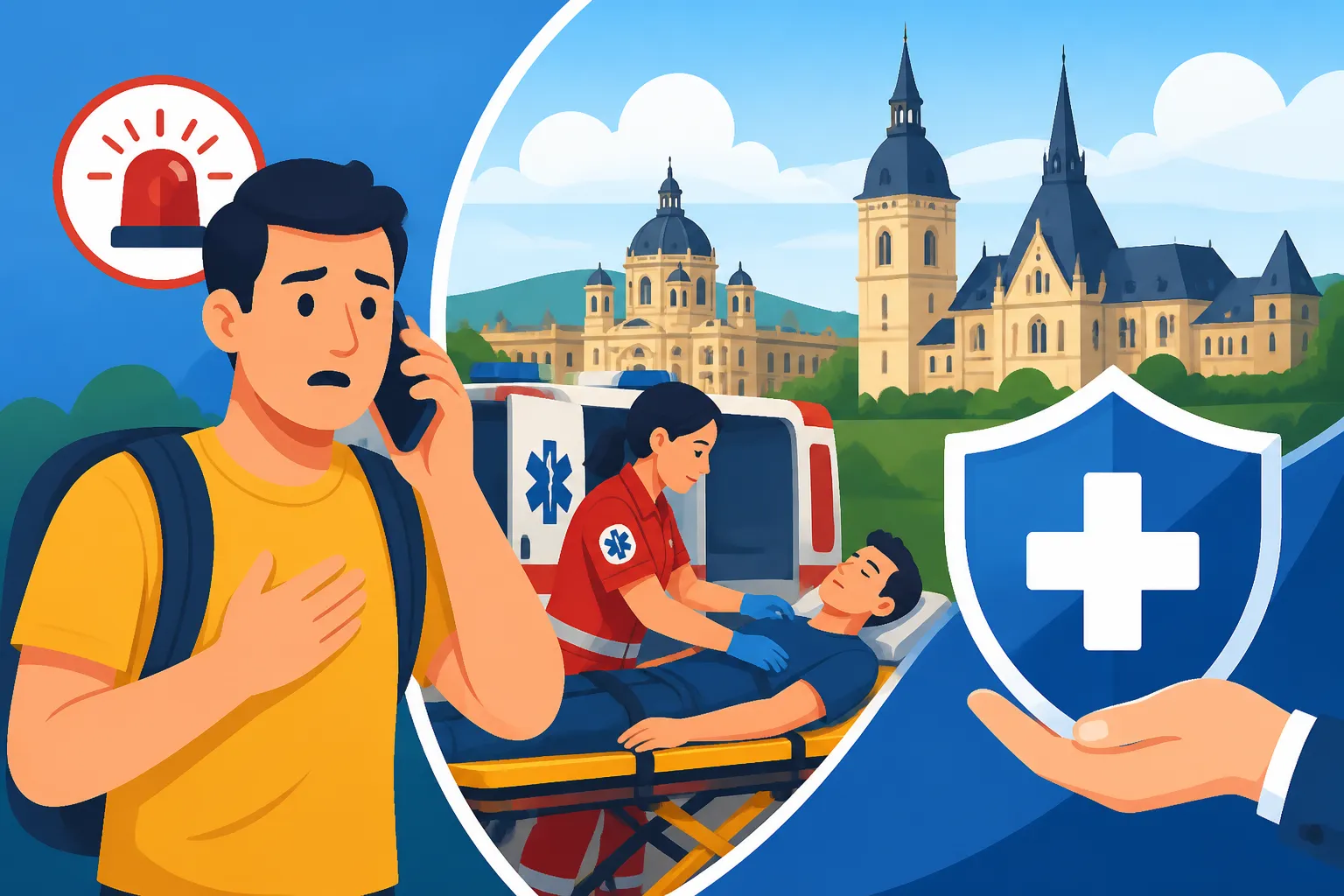
How to Handle a Medical Emergency Abroad with Romanian Insurance
Getting sick or injured while traveling is stressful enough, but when you are an expat living in Romania, the confusion over whether your local insurance covers you across borders adds a whole new layer of anxiety. This guide provides a comprehensive roadmap for using your Romanian public health coverage and private supplements to handle medical emergencies anywhere in the world.
Understanding the Basics of Romanian Health Insurance for Travel
If you have spent any time navigating the administrative labyrinth of Bucharest or Cluj, you already know that Registering for Public Health Insurance (CASS) in Romania (2027) is the foundation of your medical safety net. As a resident, you are likely paying into the National Health Insurance House (CNAS). The most important thing to realize is that while your CASS contributions provide excellent coverage within Romanian borders, that coverage does not automatically translate into a "get out of jail free" card at a hospital in France or a clinic in Japan.
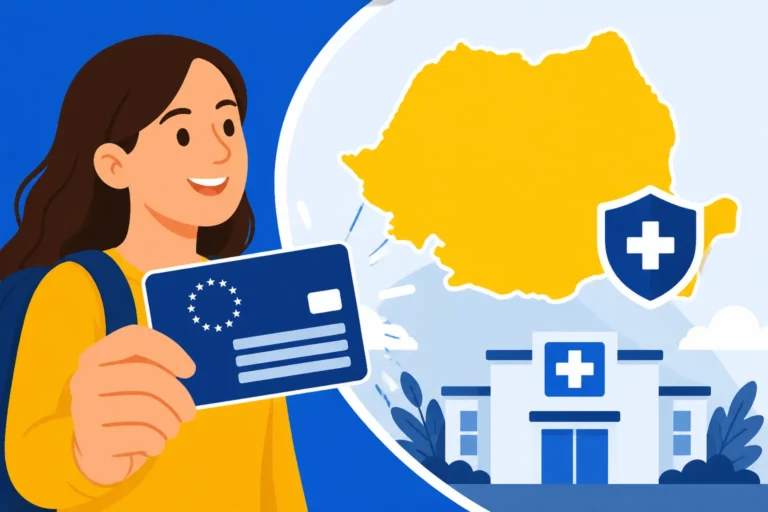
The Romanian public system is designed primarily for domestic use. However, because Romania is an EU member state, your public insurance grants you access to the European Health Insurance Card (EHIC), known locally as the Cardul European de Asigurări Sociale de Sănătate. This card is your primary tool for emergencies within the European Economic Area (EEA) and Switzerland. Without this physical card in your hand, a hospital in Berlin will treat you as a private patient, and you will be facing a massive bill that you'll have to fight to reimburse later.
It is also vital to distinguish between "emergency" and "planned treatment." Your Romanian insurance is designed to cover "unforeseen" medical needs while abroad. This means if you have a sudden appendicitis attack while visiting Rome, you are covered. If you travel to Rome specifically to see a specialist for a pre-existing condition without prior authorization, your Romanian insurance will likely leave you footing the entire bill. Understanding this distinction is the first step in Navigating the Romanian Healthcare System: An Expat's Roadmap (2027) when your life takes you beyond the Carpathian Mountains.
The European Health Insurance Card (EHIC) Explained
For any expat living in Romania, the EHIC is an essential travel document. It proves that you are covered by a social security scheme in an EU country. When you present this card at a public hospital in another EU state, you are entitled to receive treatment under the same conditions and at the same cost as a local insured person. In some countries, this means the treatment is free; in others, you might pay a small co-payment that is non-reimbursable.
The card is not a substitute for travel insurance. It does not cover private healthcare or costs such as a return flight to Romania or lost/stolen property. Relying solely on the EHIC is a gamble for expats. While it covers the basics, the public systems in some popular holiday destinations can be overwhelmed. This is where a supplement like SafetyWing can be a lifesaver, filling the gaps that the public card leaves wide open, such as medical evacuation or private room stays.
Mandatory CASS and International Validity
Your mandatory health insurance (CASS) is what funds your right to the EHIC. If you are employed by a Romanian company, your employer handles these payments. If you are a freelancer, you should be familiar with Understanding Health Coverage for the Self-Employed (PFA) in Romania. Regardless of how you pay, your status must be "active" in the CNAS database for your international rights to be valid.
If there is a break in your contributions—perhaps you switched jobs or forgot to file your single tax return—your EHIC card effectively becomes a piece of useless plastic. Before any trip, it is worth checking your status with your local health house (CASMB in Bucharest, for example) to ensure you won't face a nightmare scenario where a foreign hospital calls Romania only to be told you aren't actually insured.
Limitations of the Public System Abroad
The most significant limitation of the Romanian public insurance abroad is the "state-only" rule. Your EHIC is generally only accepted at public hospitals or providers that have a contract with that country’s national health service. In many tourist areas, the nearest clinic is often private. If you are rushed there in an emergency, they may refuse the EHIC entirely.
Furthermore, the Romanian public system is notoriously slow with reimbursements. If you end up in a situation where you have to pay upfront and then "claim back" from the Romanian Health House, be prepared for a months-long saga involving translated documents and endless trips to a crowded office. This is why most veteran expats carry a private policy like SafetyWing alongside their EHIC, ensuring they have a 24/7 helpline to call when things go sideways.
How to Get Your European Health Insurance Card in Romania
The process of obtaining your EHIC in Romania is a classic example of Romanian bureaucracy—it is straightforward on paper but requires patience in practice. As an expat, you are entitled to this card as long as you have a valid residency permit and are actively paying your health contributions. You cannot simply download it; it is a physical card that must be mailed to your registered residence.
I remember the first time I applied for mine; I expected an online portal that would work instantly. While there are digital improvements, the system still heavily relies on your CNP (Personal Numeric Code) for Healthcare Access in Romania. You need this code to even begin the application. The card is free, which is a rare win in the world of administrative fees, and it is typically valid for two years.
Do not wait until the week before your flight to Greece to apply. The official processing time is about seven working days, but in the world of Romanian administration, "seven days" can easily turn into three weeks if there is a printing backlog or a holiday. Plan ahead and ensure your card arrives while you are still in the country to receive the mail.
Eligibility Requirements for Expats
To be eligible, you must be a "person insured" within the Romanian system. This includes employees, PFAs, and those who pay the voluntary contribution. Non-EU expats on a work visa have the same rights as EU citizens in this regard, provided their residency is legal and their taxes are paid. You will need to show that you have been covered for at least six months in most cases, though there are exceptions for new employees.
If you are a student, you are also eligible, but you may need to provide proof of enrollment from your university. For those who are Registering Family Members for Health Insurance in Romania, remember that each family member, including children, needs their own individual EHIC. The cards are not issued per family; they are tied to each person’s specific CNP.
The Application Process Step-by-Step
The most common way to apply is to visit the local CAS (Casa de Asigurări de Sănătate) office in your city. In Bucharest, this is often a test of endurance. You will need a copy of your ID (residency permit), a written application form (Cerere), and sometimes proof of your last health insurance payment if the system isn't updated.
Fortunately, many CAS offices now allow you to send these documents via email. You scan your ID and the completed application form and send it to the designated address. They will then process it and send the card via the Romanian Post. If you are in a rush, you can request a "Certificate of Replacement" (Certificat Înlocuitor), which is a paper document that serves the same purpose as the card but is valid for only 60 days. This is your "emergency" option if your trip is tomorrow.
Validating Your Card Before You Leave
Once the card arrives, check the details carefully. Your name must match your residency permit exactly. If there is a typo, a foreign hospital might reject it. Also, check the expiration date. It is a common mistake to travel with an expired card, thinking that because you are still paying CASS in Romania, the card "renews" itself. It does not.
If you lose your card while abroad, you must contact the Romanian CAS office that issued it and ask them to fax or email a temporary replacement certificate to the hospital where you are being treated. This is why it’s a good idea to keep a digital scan of your card and the contact details of your local CAS office on your phone.
Using Your Romanian Insurance for Emergencies in the EU
When you find yourself in an EU hospital, the first thing you should do after stabilizing is present your EHIC. Do not wait until the bill is generated. The hospital needs to register you as an EHIC patient from the start. If you don't, they may process you as a private patient, and switching the billing status later is an administrative nightmare that few hospital clerks are willing to undertake.
In some countries, like Germany or France, you may still be asked to pay a "daily fee" or a percentage of the costs. This is normal. The EHIC ensures you pay what a local pays. In Romania, Public vs Private Healthcare in Romania: Which Should Expats Choose? is a common debate, but abroad, the EHIC strictly keeps you in the public lane. If the hospital is a shiny private facility, your EHIC is essentially just a piece of plastic.
It is also important to note that the EHIC does not cover rescue services. If you are skiing in the Alps and need a helicopter rescue, the Romanian public insurance will not pay for that. This is a crucial detail that many travelers overlook. For high-risk activities, having a policy like SafetyWing is not just a luxury; it is a financial necessity.
What is Covered vs. What is Not
| Service Type | EHIC Coverage | Private Insurance (e.g., SafetyWing) |
|---|---|---|
| Emergency Room Visit (Public) | Yes | Yes (Reimbursable) |
| Surgery (Life-saving) | Yes | Yes |
| Private Hospital Room | No | Often Yes |
| Mountain Rescue/Helicopter | No | Yes |
| Repatriation to Romania | No | Yes |
| Prescription Drugs | Partial (Local rates) | Yes |
As the table shows, the EHIC is great for the "medical" part of an emergency but terrible for the "logistics" part. If you are incapacitated and need to be flown back to Bucharest with a medical escort, your Romanian insurance will offer zero help. Private insurance covers the gap between "not dying" and "getting home comfortably."
The "State-Run Facility" Rule
This is the golden rule of using Romanian insurance abroad: you must find a provider that is part of the national health scheme of the country you are in. In places like Spain or Greece, public clinics (Centros de Salud) are quite common, but in cities, many conveniently located "Medical Centers" are private. Always ask, "Do you accept the EHIC?" before you agree to treatment if you are conscious and able to do so.
If you are taken by an ambulance to a private clinic in an unconscious state, you (or your family) should immediately inform them of your EHIC status and, if possible, request a transfer to a public facility once you are stable if the private costs are mounting. This is another area where SafetyWing shines, as they can often coordinate with private facilities directly, saving you from the "public only" restriction.
Handling Co-payments and Out-of-Pocket Costs
Even with a valid EHIC, you might walk away with a bill. For example, in France, the patient typically pays 30% of the cost of a doctor's visit. These co-payments are generally not reimbursable by the Romanian CAS. They are considered your "contribution" to the local system, just as a Romanian might pay for certain services not covered by the CNAS Health Insurance House.
Keep all your original invoices and receipts. If the service was something that should have been free but you were forced to pay, you will need every scrap of paper to stand a chance of getting your money back once you return to Romania. This includes the "bon fiscal" and the detailed medical report.
Handling Medical Emergencies Outside the EU
This is where things get truly tricky. If you are traveling to the United States, Turkey, or Southeast Asia, your Romanian public insurance (CASS/EHIC) provides zero coverage. There are no bilateral agreements that allow you to use your Romanian status to get free care in a New York hospital or a Bangkok clinic.
For an expat living in Romania, traveling outside the EU without private insurance is an enormous risk. A simple incident like a food poisoning bout in Bali requiring an IV drip can cost thousands of dollars in a private international clinic. In the US, a broken arm could cost more than a year’s salary in Romania. This is why brands like SafetyWing are so popular among the nomad and expat community; they are built for this specific "gap" in global coverage.
If you are on a work visa in Romania, you might wonder: Can I Use Public Healthcare in Romania on a Work Visa? The answer is yes, but only inside Romania (and the EU via EHIC). Once you step off a plane in Dubai or Tokyo, you are essentially uninsured in the eyes of the local government unless you have bought a specific travel policy.
Why CASS and EHIC Won't Help Abroad
The Romanian public system is a "closed loop" within the European framework. Outside of this framework, there is no mechanism for the Romanian government to pay a foreign hospital. Unlike some private insurances that have "direct billing" with hospitals worldwide, CNAS does not have a "network" in the Americas or Asia.
If you find yourself in an emergency outside the EU, you will be expected to pay the full "foreigner rate" at the hospital. Often, they will require a credit card deposit before even admitting you. Without a private insurer to provide a "Guarantee of Payment," you could be stuck in a terrifying financial situation while also dealing with a medical crisis.
The Role of Private Travel Insurance
Private travel insurance acts as your primary payer when you are outside the EU. Companies like SafetyWing are specifically designed for people who live outside their home country. They understand that as an expat in Romania, your "home" for insurance purposes is Romania, but you need protection that follows you to your vacation destination.
When you have private insurance, you aren't just buying a way to pay the bills; you are buying a 24-hour support team. If you are in a remote part of Vietnam and get sick, you call your insurer. they tell you which hospital to go to, and they often handle the money directly with the hospital. This is a world away from the "pay and hope for reimbursement" model of the public system.
Repatriation and Non-Medical Emergencies
One of the most expensive aspects of an international medical emergency is repatriation. If you are severely injured and cannot fly on a commercial plane, a specialized medevac flight back to Romania can cost upwards of 50,000 Euro. The Romanian government will not pay for this.
Private insurance also covers things the public system never would, such as the cost of flying a family member to sit by your bedside or the cost of changing your flights because you were hospitalized. When we talk about Emergency Medical Care in Romania: What Every Expat Needs to Know, we focus on 112 and SMURD. But when you're abroad, "emergency care" includes the logistics of getting back to your life in Romania.
Step-by-Step Actions During a Medical Crisis Abroad
When an emergency happens, the first 60 minutes are critical. Your priority is health, but your secondary priority should be documentation. If you are conscious, start a digital folder on your phone. Take photos of every document the hospital gives you. In the chaos of an emergency room, papers get lost. A photo of an intake form or a lab result is often enough for an insurance company to start a claim.
If you are with a partner or friend, have them handle the communication with the insurance company. If you are using your EHIC, ensure the hospital has a copy. If you are using a private policy like SafetyWing, call their emergency number immediately. Most private insurers require you to notify them within 24 to 48 hours of admission for the coverage to be fully honored without complications.
Don't forget the small things. Keep the receipts for the taxi to the hospital, the bandages you bought at the pharmacy, and even the phone calls made to the insurance company. These "incidental" costs can add up to hundreds of Euros, and many private policies will reimburse them if you have the proof.
Initial Contact and Documentation
Upon arrival at the medical facility, clearly state your insurance status. If you are in the EU, say: "I have a European Health Insurance Card from Romania." If you are outside the EU or at a private facility, say: "I have private travel insurance with [Company Name]."
The hospital will likely ask for your ID and your insurance card. If you are using EHIC, they will take a copy. If you are using private insurance, they will likely ask for a "Policy Number" and an "Emergency Contact Number." Always keep these details in a "Pinned" note on your phone or written on a card in your wallet.
Notifying Your Private Insurer
If you have a supplement like SafetyWing, your first call (after 112) should be to them. They have medical directors who can speak to the local doctors to ensure the treatment being proposed is necessary and covered. This also prevents the hospital from "overcharging" because they know a professional insurance company is watching the bill.
The insurer will provide you with a claim number. Use this number in all subsequent communications. If the hospital asks for a deposit, tell the insurer. They may be able to send a "Letter of Guarantee" to the hospital, which often waives the need for you to use your own credit card for large sums.
Gathering Receipts for Reimbursement
If you are forced to pay upfront—which is common for smaller emergencies or in countries with less developed insurance networks—you must get a "Detailed Invoice." A simple credit card receipt is not enough. The invoice must list every procedure, every medication, and the specific diagnosis (usually using an ICD-10 code).
In many countries, you must ask specifically for a "Medical Report for Insurance Purposes." Doctors don't always provide this by default. Without a report that explains why the treatment was necessary, the Romanian CAS or your private insurer will likely reject the claim.
Reimbursement Processes and Bureaucracy back in Romania
Coming home after a medical emergency is a relief, but the "paperwork war" is just beginning. If you used your EHIC and had no out-of-pocket costs, you are lucky. If you had to pay and need to claim back from CNAS, buckle up. The process is governed by strict laws and requires a mountain of paperwork.
You will need to visit the CAS office where you are registered—for most of us, that's How Do I Register for CASS After Moving to Bucharest?—and submit a file. This file must include your original receipts, the medical report, and, most frustratingly, certified translations into Romanian for any document not in English or French (and sometimes even those require translation).
The timeline for reimbursement from the Romanian public system can be staggering. It is not uncommon for it to take 6 to 12 months for the money to hit your bank account. This is why I always emphasize that the public system is a "safety net" of last resort for money, whereas private insurance is a "functional tool" that pays out much faster.
Filing a Claim with CNAS
To file a claim, you need the "Cerere de recuperare a contravalorii serviciilor medicale." You will also need to prove that the treatment was an emergency. If the Romanian medical auditors decide that your situation could have waited until you returned to Romania, they may deny the claim entirely.
You must submit your claim within a specific timeframe—usually 90 days from the date of treatment. If you miss this window, the Romanian system is notoriously unforgiving. There is no "I was too sick to file" excuse that works with the CAS clerks.
Dealing with Translation and Notarization
One of the hidden costs of an emergency abroad is the cost of How to Get Your Foreign Degree Recognised (CNRED) in Romania-style paperwork. Any medical report in Spanish, German, or Thai must be translated by a sworn translator into Romanian. Sometimes, they even ask for these translations to be notarized.
Before you spend money on translations, go to the CAS office and ask exactly what they need. Sometimes they will accept a summary translation, but usually, they want the whole file. If your hospital bill was 200 Euro and the translations cost 100 Euro, you have to decide if the headache is worth the remaining 100 Euro.
Timeline and Expectations
| Step | Action | Estimated Time |
|---|---|---|
| 1 | Gather all documents and get translations | 2 – 4 Weeks |
| 2 | Submit file to local CAS office | 1 Day (if no queue) |
| 3 | Medical Audit and Approval | 3 – 6 Months |
| 4 | Payment Processing | 1 – 2 Months |
The reality is that you should not count on this money to pay your rent next month. Treat it as a "surprise bonus" that might show up a year later. If you need immediate funds to cover the debt you incurred during the emergency, a private policy like SafetyWing is much more reliable, often settling claims within weeks rather than months.
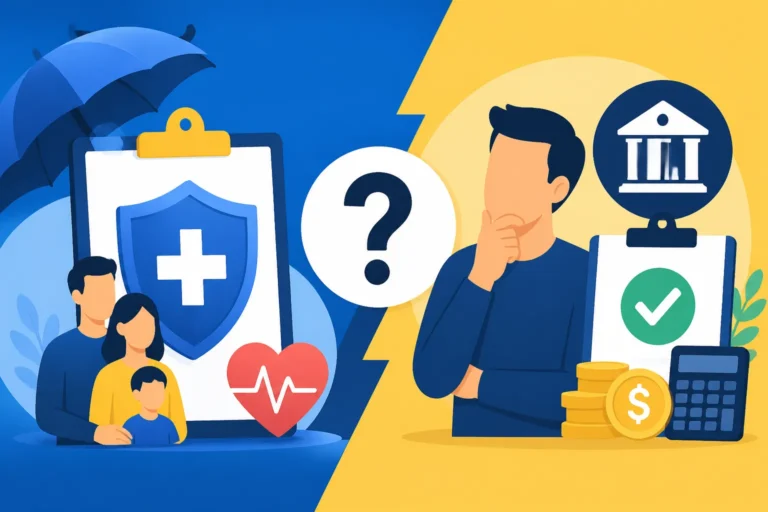
Summary Table: EHIC vs. Private Travel Insurance for Expats
| Feature | EHIC (Romanian CASS) | Private (SafetyWing) |
|---|---|---|
| Geographic Scope | EU / EEA / Switzerland | Worldwide |
| Facility Type | Public Only | Public & Private |
| Cost | Free (included in CASS) | Monthly Subscription |
| Emergency Evacuation | Not Covered | Covered |
| Repatriation | Not Covered | Covered |
| Claim Process | Slow (Manual/Paper) | Faster (Digital) |
| Direct Billing | Yes (Public Hospitals) | Yes (Network Hospitals) |
Disclaimer
This guide is for informational purposes only and does not constitute legal or medical advice. The Romanian healthcare system and international insurance regulations are subject to frequent changes. Always verify your coverage status with the National Health Insurance House (CNAS) or your private insurance provider before traveling. The author and publisher are not responsible for any denied claims or medical costs incurred by following this advice.