What Is the Process for Registering a Car in Romania?
Alright, let's talk cars in Romania, because let's face it, almost everything here involving official documents can feel like a labyrinth designed by Kafka. Trying to get your car registered, whether you've imported your beloved vehicle or just bought a shiny new (or trusty used) one here, is one of those quintessential expat experiences that will test your patience and your grasp of obscure administrative steps. But don't worry, you're not alone, and this guide is here to untangle the bureaucratic spaghetti and give you a realistic roadmap to getting those Romanian plates.
Understanding the Landscape of Vehicle Registration in Romania
Before we dive into the nitty-gritty, it’s important to understand why this process can feel so uniquely challenging. It’s not just you; it’s genuinely a complex dance involving multiple institutions, specific document requirements, and often, a hefty dose of waiting.
Why Is This Process So… Romanian?
Many expats arriving in Romania, especially from countries with highly streamlined digital services, often find themselves bewildered by the sheer number of physical documents, stamps, and signatures required. The vehicle registration process, known officially as "înmatricularea vehiculelor," is a prime example of this administrative hurdle. You're dealing with the General Directorate for Driving Licenses and Vehicle Registration (DRPCIV), the Romanian Auto Register (RAR), your local tax authority (Direcția de Taxe și Impozite Locale), and various insurance providers. Each has its own set of demands, and they don't always communicate seamlessly with each other.
It's a process that often involves multiple trips, sometimes to different corners of the city, and certainly requires a good amount of patience. Consider it a rite of passage, a true immersion into the Romanian administrative spirit. The key is preparation and understanding that flexibility and persistence are your best friends.
Who Needs to Register a Car in Romania?
Essentially, anyone who wants to legally drive a vehicle on Romanian roads for an extended period, and isn't just passing through as a tourist, needs to get it registered. This typically falls into a few categories:
- New Residents Bringing a Car from Abroad: If you're relocating to Romania and bringing your car with you, you'll need to go through the full import and registration process. This applies whether you're from an EU/EEA country or a non-EU nation, though the steps vary slightly. Non-EU vehicles generally face more scrutiny and customs procedures.
- Buying a Used Car Locally: This is a very common scenario. When you purchase a second-hand car from another individual in Romania, you must transfer the ownership into your name and register it. This involves obtaining fiscal certificates from both the seller's and your local tax office, among other steps.
- Buying a New Car: While dealerships often handle a significant portion of the initial paperwork and even the DRPCIV registration for new vehicles, you, as the owner, will still need to provide personal documents, ensure insurance is in place, and register the vehicle for local taxes. The dealer streamlines a lot, but you're not entirely off the hook.
Regardless of your situation, there's usually a timeframe within which you must complete the registration – often around 30 days after acquiring the vehicle or bringing it into the country. Failing to meet this deadline can lead to fines, so it’s crucial to start the process as soon as possible.
The Step-by-Step Journey to Romanian Plates
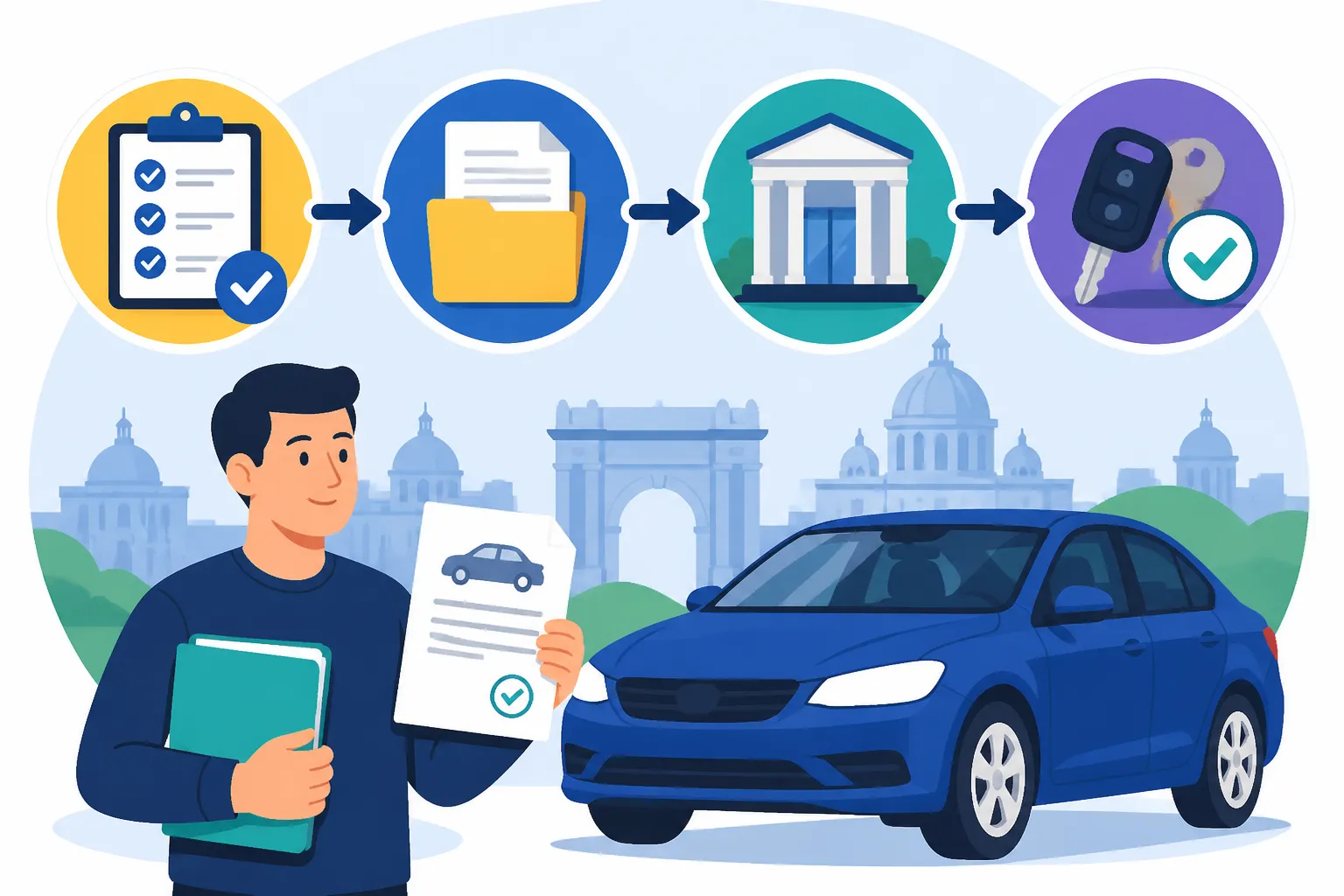
Now, let's roll up our sleeves and walk through the actual stages. Each step builds on the last, so taking them in order is crucial.
Gathering Your Mountain of Documents
This is often the most daunting part, but meticulous preparation here will save you headaches down the line. You'll quickly learn that every official in Romania has a deep love for original documents and multiple copies.
Here’s a general list, but always check with the specific institutions (DRPCIV, RAR, local tax office) as requirements can change:
- Your ID and Residence Documents: This will be your passport, your Romanian The Complete Guide to Romanian Residence Permits for Expats (2027), and your CNP (Personal Numeric Code). If you're still waiting on your permanent residence card, make sure you have temporary papers or your initial registration certificate handy. For many steps, you'll also need How to Get Proof of Address and Residence Documents in Romania, like a rental contract (registered with ANAF) or a utility bill in your name.
- Original Ownership Documents:
- Invoice/Sales Contract: If you bought the car new or used. For used cars, this is the contract de vânzare-cumpărare.
- Car Registration Certificate (Talon): The smaller paper document with the car's basic details and your name as the owner.
- Vehicle Identity Card (Carte de Identitate a Vehiculului – CIV): This is the thicker, usually pink, document issued by RAR, containing the full technical specifications and history of the vehicle. If you're importing a car that has never been registered in Romania, you won't have this yet, and obtaining it will be a key step at RAR.
- Proof of Mandatory Insurance (RCA): This is the Compulsory Civil Liability Insurance for damages caused to third parties. You need valid RCA for the vehicle from a Romanian insurer. You can get quotes from various providers online or through insurance brokers.
- Proof of Customs Duties (if applicable): If you're importing a non-EU vehicle, you'll need documentation proving you've paid all relevant customs duties and VAT.
- Fiscal Certificate (Certificat Fiscal): This is a critical document obtained from your local tax authority, confirming that you have no outstanding debts to the local budget and that the vehicle has been declared for taxation in your name.
- Technical Inspection (ITP) Certificate: A valid ITP, or Inspecția Tehnică Periodică, is mandatory. If you're importing, this will often be done at RAR (more on that below). If buying locally, ensure the ITP is still valid, or plan to get a new one. Learn more about Understanding the Vehicle Inspection (ITP) in Romania.
- Power of Attorney (Procură), if using an agent: If you hire someone to do parts of this for you (and many expats do, to save sanity), they'll need a notarized power of attorney.
- Certified Translations: For any documents not in Romanian (e.g., your foreign car registration papers, sales contracts from abroad), you will need certified translations (traducere legalizată) done by an authorized translator in Romania. This is non-negotiable.
Pro-Tip: Make at least three copies of every single document on this list, including your ID. Officials often require copies in addition to sight of the original.
Navigating the Fiscal Registration (ANAF & Local Tax Office)
Before you can get those lovely Romanian license plates, your vehicle needs to be recorded with the local authorities for tax purposes. This is where your local Direcția de Taxe și Impozite Locale comes in.
You'll take your ownership documents, proof of address, and ID here. The car will be entered into the local tax roll, meaning you'll start paying annual vehicle tax (impozit auto). The most important output from this step is the Certificat Fiscal (Fiscal Certificate). This document confirms that the vehicle is declared in your name and that you, as the owner, have no outstanding fiscal debts locally. Without this, DRPCIV will not proceed with the registration. It's often required that the previous owner (if buying a used car) also obtains a fiscal certificate from their local tax office, confirming they have no debts and have removed the car from their records. This can be one of the most frustrating hoops to jump through when buying second-hand, as you're dependent on the seller.
The Technical Inspection (ITP) and Vehicle Identity (RAR)
This stage is primarily for confirming the vehicle's roadworthiness and, for imported vehicles, establishing its identity in Romania.
- ITP (Inspecția Tehnică Periodică): All vehicles on Romanian roads need a valid ITP. This inspection checks everything from lights and brakes to emissions and tire condition. If your car already has a valid ITP, great. If not, or if you've imported a car, it will need one.
- RAR (Registrul Auto Român – Romanian Auto Register): This is a crucial stop, especially for imported cars or those needing a new CIV. The RAR's main role is to ensure that vehicles meet Romanian and European technical and safety standards.
- Homologation: If your car is imported and doesn't have a Romanian CIV, RAR will perform a full homologation. This involves a comprehensive technical check, emissions testing, and verification of the VIN (Vehicle Identification Number) and engine number. They will then issue the Romanian Carte de Identitate a Vehiculului (CIV), which is essentially the car's identity document in Romania. This document is absolutely indispensable for final registration.
- Appointment is Key: You must book an appointment at RAR well in advance. These can often have waiting times of several weeks, so don't delay. You can usually book online through their website.
- Costs: Expect to pay fees for the RAR inspection and the issuance of the CIV.
Frustration Point: The RAR process can be a bottleneck. Language can be an issue, and any non-standard modifications or discrepancies in your imported car's documentation can lead to delays or additional requirements. Be prepared for a thorough inspection and potentially a long day. If you're bringing a car from a non-EU country, this step is often much more complex due to different standards.
The Big Day at DRPCIV (Driving and Vehicle Registration Directorate)
This is the finish line for getting your official plates! With your fiscal certificate, RAR-issued CIV (if applicable), RCA insurance, and all other documents in hand, you'll head to the local DRPCIV office.
Here's what generally happens:
- Payment of Fees: You'll pay the registration fee and the fee for the number plates. These are usually paid at the treasury (trezorerie) or sometimes at specific bank counters within the DRPCIV office.
- Document Submission: You'll submit your meticulously prepared dossier of documents. An officer will review everything. Any missing document or incorrect detail means you'll be sent back.
- Plate Choice (Optional): You can often choose a standard plate or opt for a personalized one for an extra fee.
- Temporary Plates: If you're registering an imported car, you might have been driving on temporary "red" plates (numere provizorii). The DRPCIV will manage the exchange for your permanent "white" plates.
- The Wait: After submission, you'll usually be given a time to return later the same day, or sometimes the next day, to collect your permanent plates and the new registration certificate (Talon).
Tip: Offices like DRPCIV often have long queues. If you're an expat who relies on being online, having a reliable mobile data connection can make the wait infinitely more tolerable. Services like Airalo provide immediate eSIMs, so you can stay connected the moment you land, avoiding the hassle of finding a local SIM before tackling bureaucracy.
Mandatory Insurance (RCA) and Road Tax (Rovinieta)
Once your car is registered with its new Romanian plates, you need to ensure two things are continuously in place:
- RCA (Răspundere Civilă Auto): As mentioned, this mandatory civil liability insurance is crucial. You must have valid RCA at all times. The cost varies based on engine size, your age, driving history, and the insurer. Keep a copy in your car.
- Rovinieta: This is Romania's national road tax, a vignette required for driving on national roads and motorways. It's electronic, so you don't get a physical sticker. You can purchase it for various durations (7 days, 30 days, 90 days, 12 months) online, at petrol stations, or at post offices. It's checked electronically, so make sure your number plate is entered correctly. Don't forget this, as fines for not having a valid rovinieta are hefty! You can read more about Understanding the Motorway Vignette (Rovinieta) in Romania.
Common Pitfalls and Expat Tips for a Smoother Ride
This journey, while navigable, has its share of bumps. Here are some insights to help you avoid common pitfalls.
The Language Barrier and Official Translators
Unless you're fluent in Romanian, the language barrier will be a constant companion throughout this process. Official forms, instructions, and interactions with civil servants are almost exclusively in Romanian.
- Certified Translations: We already touched on this, but it's worth reiterating: never skimp on certified translations. They must be done by a translator authorized by the Ministry of Justice, and often, they need to be notarized as well.
- Bring a Buddy or Hire Help: If you don't speak Romanian, bringing a Romanian-speaking friend or colleague along to appointments is invaluable. Even better, many expats choose to hire a specialized agent (firmă de înmatriculări) who understands the intricacies of the process. They charge a fee, but they can save you immense time and stress, handling document preparation, appointments, and even standing in queues for you.
Timelines, Appointments, and Patience
The Romanian administrative machine operates on its own unique rhythm. Expedited services are rare, and patience is a virtue.
- Book Appointments Early: For RAR especially, booking your appointment as soon as you know you'll need it is critical. Waiting times can extend to several weeks in major cities.
- Expect Multiple Visits: It's rare for everything to go perfectly on the first try. A missing stamp, a document not formatted exactly right, or an unforeseen requirement can mean another trip. Budget your time accordingly.
- Leverage Online Services (where available): While many steps are still very paper-based, some institutions are moving towards online booking systems or information portals. Use them!
Essential Services and Tech for Expats
Living in a new country presents its own challenges, and having the right tools can make all the difference.
- Stay Connected: Whether you're navigating Google Maps to find the correct office, translating a complex document on the fly, or just passing time in a long queue, a reliable internet connection is vital. Consider an eSIM from providers like Airalo to ensure you have data the moment you arrive, without needing to hunt down a physical SIM card. It's one less thing to worry about when you're already juggling so much bureaucracy. For setting up your home internet, you can refer to How to Set Up Home Internet and TV in Romania.
- Moving Logistics: If you're bringing your car from another country, you might be shipping other belongings too. Platforms like Sirelo can help you compare and find reputable international moving companies to manage the logistics of getting your possessions, including your vehicle, safely to Romania.
- Knowing Where to Turn: The expat community in Romania, particularly in major cities like Bucharest, Cluj-Napoca, and Timișoara, is generally very supportive. Online forums and social media groups are excellent resources for asking specific questions and getting up-to-date advice from those who have recently gone through the same process. For broader relocation advice, you might find useful tips in The Complete Guide to Moving to Romania: Your First 90 Days (2027).
What to Do If You're Buying a Used Car Locally
Buying a used car from another individual in Romania has its own set of unique steps that need extra attention:
- Sales Contract (Contract de Vânzare-Cumpărare): This document legally transfers ownership. It needs to be filled out correctly and signed by both buyer and seller. Sometimes, it's notarized for extra legal weight.
- Fiscal Certificates (from both sides): This is key. The seller must obtain a fiscal certificate from their local tax office proving they've paid all taxes on the vehicle and have removed it from their records. You, as the buyer, will also need to get your own fiscal certificate after declaring the car at your local tax office. Without the seller's certificate, you cannot register the car.
- Car History Check: Before buying, try to get as much information about the car's history as possible. Check for previous accidents, outstanding fines, or if the car has been involved in any legal disputes. Reputable garages can often do a pre-purchase inspection for you.
- Deregistration by Seller: The seller has a responsibility to deregister the vehicle from their name at DRPCIV once sold. This ensures you can then register it without issues.
Here's a simplified document checklist for car registration:
| Document Type | Required for | Notes |
|---|---|---|
| Passport / ID Card | All | Original + multiple copies. |
| Residence Permit / Stay Card | All | Original + multiple copies. Refer to How to Apply for a Romanian Residence Permit (Permis de Ședere). |
| CNP (Personal Numeric Code) | All | Your unique identifier. See How to Get Your CNP (Personal Numeric Code) for Healthcare Access in Romania. |
| Proof of Address | All | Rental contract (registered with ANAF), utility bill. Original + copy. |
| Ownership Document (Invoice / Sales Contract) | All | Original + copies. For used cars, contract de vânzare-cumpărare. |
| Car Registration Certificate (Talon) | All | Original + copy. If importing, foreign registration papers + certified translation. |
| Vehicle Identity Card (CIV) | All | Original + copy. If importing, obtained at RAR. |
| Technical Inspection (ITP) Certificate | All | Valid certificate. If expired or importing, you'll get a new one at RAR or authorized station. |
| Mandatory Insurance (RCA) | All | Valid policy from a Romanian insurer. |
| Fiscal Certificate (Certificat Fiscal) | All | From your local tax office. For used cars, seller's also needed. |
| Customs Documents (non-EU imports) | Specific | Proof of paid duties, original + copies. |
| Original Number Plates (if applicable) | Specific | If replacing foreign plates or exchanging old Romanian ones. |
| Certified Translations | Specific | For any non-Romanian documents. |
Navigating the car registration process in Romania requires thoroughness, a strategic approach to appointments, and a healthy dose of good humor. While it might not be the most straightforward administrative task you'll encounter, by being prepared and understanding each step, you can successfully get your vehicle officially on the road.
Disclaimer
The information provided in this guide is intended for general informational purposes only and does not constitute legal, financial, or immigration advice. While we strive to keep the information up-to-date and accurate, regulations and procedures in Romania can change frequently. It is always recommended to consult with official government sources, legal professionals, or specialized agents for the most current and personalized advice regarding your specific situation. We are not liable for any decisions made based on this information.