How Do I Set Up Fibre Internet in Bucharest?
Oh, the joy of moving to a new country and realizing that something as fundamental as getting online isn't quite as straightforward as it is back home! You've just arrived in Bucharest, found your cozy apartment, and now you’re itching to connect with loved ones, stream your favorite shows, or just… exist digitally. But how do you navigate the often bewildering process of setting up fibre internet in a city where sometimes even asking for directions can feel like a linguistic obstacle course? This guide is here to untangle the wires and walk you through every step of getting blazing-fast internet in your new Romanian home.
Understanding Romania's Fibre Internet Landscape in Bucharest
First things first, let's talk about the internet itself. You might be pleasantly surprised by the sheer quality and speed of fibre optic internet available in Romania, especially in major cities like Bucharest. It's truly a hidden gem, often ranking among the best globally.
Why Fibre is the Go-To Choice Here
Romania has invested heavily in its fibre optic infrastructure over the years, leading to widespread availability and incredibly competitive pricing. For us expats, this means saying goodbye to sluggish downloads and buffering streams that might have plagued us elsewhere. When I first moved here, I was genuinely shocked by how affordable and fast the internet was compared to what I was used to in Western Europe. It felt like a small victory in the midst of all the other administrative hoops!
This robust infrastructure means that most apartments, particularly those in newer buildings or well-established residential areas in Bucharest, are already wired for fibre. This significantly simplifies the installation process for you, as the primary work has often already been done. It's not uncommon to find speeds exceeding 1 Gbps (gigabit per second) readily available, which for many is more than enough for heavy streaming, online gaming, and working from home simultaneously. The "fibre" here isn't just a marketing term; it's the real deal.
Key Internet Service Providers ISPs in the Capital
Bucharest has a few dominant players in the internet service provider (ISP) market, and understanding who they are will be your first step. These are the names you'll see everywhere and who you'll likely be signing a contract with.
The big three, often offering bundled services (internet, TV, mobile), are Digi (RCS & RDS), Orange Romania, and Vodafone Romania. Digi is renowned for its incredibly competitive pricing and high speeds, often being the most popular choice for budget-conscious users who still demand top-tier performance. They were really pioneers in fibre rollout here. Orange and Vodafone, while sometimes a touch pricier, often come with the added benefit of more English-speaking customer support options and broader mobile network coverage, which can be a huge plus when you're still finding your feet.
Beyond these giants, you might encounter some smaller, more localized providers, but for simplicity and widespread coverage, sticking with one of the big three is generally the safest bet for an expat. Each has its own strengths and weaknesses, so a little research will go a long way in deciding which one aligns best with your needs and, crucially, which one actually services your specific address.
The Step-by-Step Process to Get Connected
Alright, let's get down to brass tacks. You know who the players are, now how do you actually get that sweet, sweet fibre into your apartment? This process might feel a bit daunting at first, but breaking it down makes it much more manageable.
Initial Research and Availability Check
Before you even think about signing a contract, you must confirm that fibre internet is available at your specific address. Trust me on this one – nothing is more frustrating than falling in love with a plan only to find out it's not actually an option for your building. This step is non-negotiable.
Most providers have online tools on their websites where you can enter your address and check for service availability. However, these tools aren't always foolproof. The most reliable method is often to ask your landlord directly, or if you've already moved in, ask a neighbor. They'll know which providers serve the building and can often give you insights into local reliability. Sometimes, a building might only have infrastructure from one specific provider, making your choice quite easy! Don't hesitate to give the customer service lines a call (even if you need to enlist a Romanian-speaking friend for help) to double-check. Getting clear information upfront will save you a lot of headaches later.
Choosing a Plan and Navigating Contracts
Once you know which providers can reach you, it's time to compare plans. This is where things can get a little complex, as most ISPs offer a dizzying array of bundles. You'll often see internet-only packages, but also options that include digital TV, landline phone, and even mobile phone subscriptions.
Consider your actual needs. Do you watch a lot of local Romanian TV, or will streaming services be enough? Do you need a landline? Often, bundling can offer significant savings, but only if you'll actually use all the services. Pay close attention to the advertised speeds (usually expressed in Mbps or Gbps), data caps (rare for fibre, but always good to check), and, crucially, the contract length. Most contracts are for 12 or 24 months, and early termination fees can be hefty. Make sure you understand the entire offer, including any promotional pricing that might jump up after a certain period. Don't be shy about asking for an English version of the contract terms, or at least having a trusted Romanian speaker translate the key clauses for you. This is where patience and meticulousness really pay off.
Documentation Required and Application Submission
When you've finally picked your champion ISP, you'll need to gather some documents to submit your application. This is standard procedure for any utility in Romania. Typically, you’ll need:
- Your ID: This will usually be your passport and your Romanian residence permit (Permis de Ședere). If you're an EU citizen, your national ID card and proof of registration in Romania will suffice. For those still in the early days of their move, navigating these requirements can be tricky, so be sure you've covered your bases regarding your legal stay.
- Your CNP (Personal Numeric Code): This is your unique Romanian identification number, essential for almost any official transaction, including setting up utilities. If you haven't got one yet, you'll need to know How to Get Your CNP (Personal Numeric Code) for Healthcare Access in Romania, as the process is generally the same for all official purposes.
- Proof of Address: Your rental contract (contract de închiriere) is usually sufficient. Make sure it's an official, registered contract. You might even need to show that you've completed your registration for residence. You can find more detailed information on How to Get Proof of Address and Residence Documents in Romania if you're unsure.
You can usually submit your application either online through the provider's website or by visiting one of their physical stores. For expats, especially if your Romanian isn't fluent, going to a physical store is often preferable. You can speak to a representative, ask questions face-to-face, and ensure all your documents are correctly processed. Many of the larger stores in central Bucharest or major shopping malls will have English-speaking staff, or at least someone who can communicate effectively.
Installation Appointment and Activation
Once your application is approved, the provider will schedule an installation appointment. This is usually where a technician comes to your apartment to connect everything up.
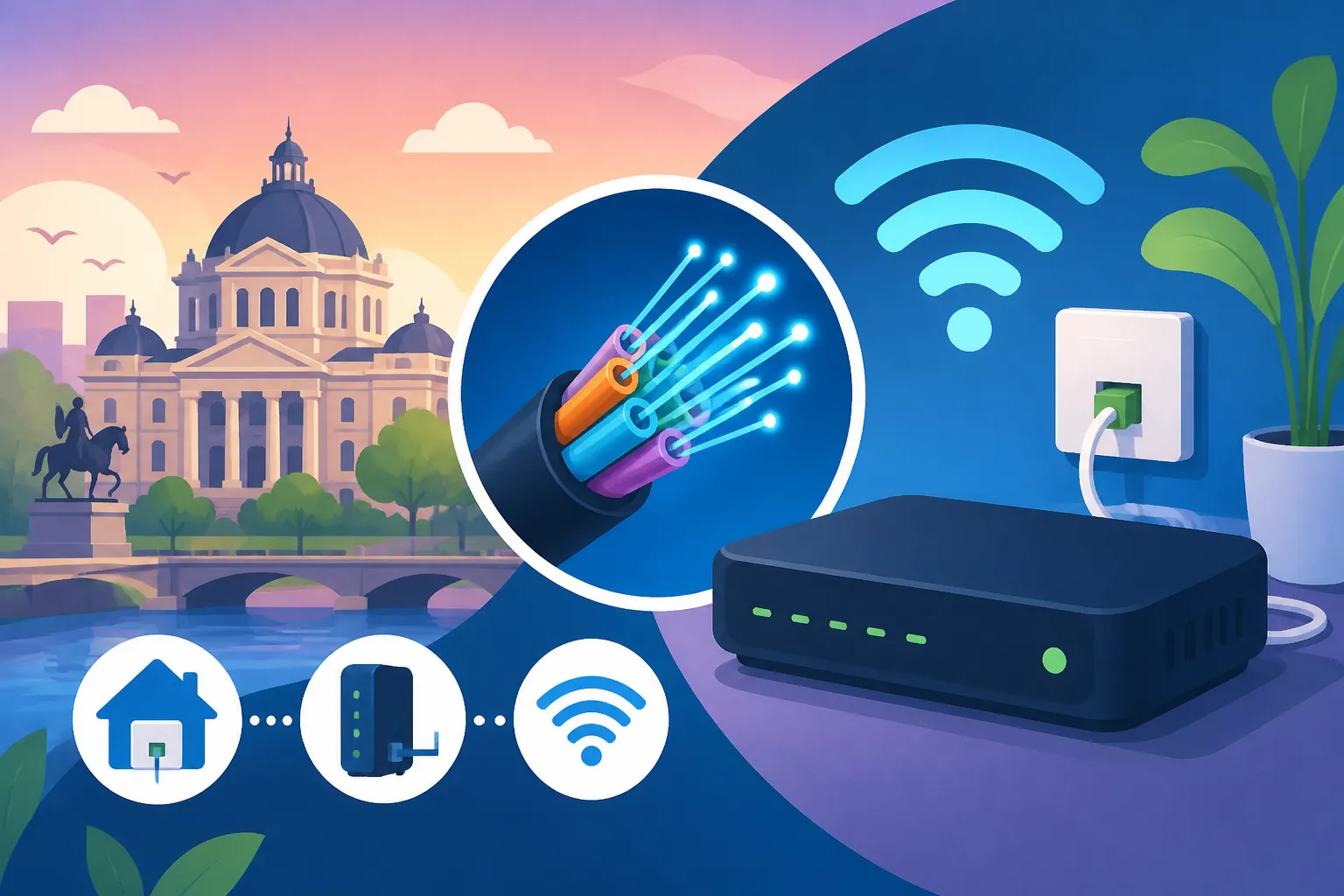
Expect the technician to spend anywhere from 30 minutes to a couple of hours, depending on whether your building is already wired or if they need to run new cables. They will connect the fibre optic cable from the building's main distribution point to your apartment, install a small fibre optic converter (ONT – Optical Network Terminal), and then connect that to the Wi-Fi router they provide. They’ll usually test the speed on their device to confirm everything is working as promised. It's a good idea to be present during this time, or have someone you trust there, to ensure everything is set up to your satisfaction and to ask any questions you might have about the router or network. Installation times can vary, from a few days to a couple of weeks, so factor this into your moving timeline when considering The Complete Guide to Moving to Romania: Your First 90 Days. Once the installation is complete, you should be good to go! Your internet will be active immediately.
Common Challenges and Pro-Tips for Expats
Let's be real: living abroad means encountering hurdles. Setting up utilities in a foreign country is almost guaranteed to present a few. But armed with a little knowledge and patience, you can navigate these bumps with more ease.
Overcoming the Language Barrier
This is perhaps the biggest hurdle for many expats in Romania. While English is increasingly common, especially among younger generations and in international business, administrative tasks can still fall into Romanian-only territory. When you're trying to figure out your internet bill or troubleshoot an issue, it can be incredibly frustrating.
My top tips? First, learn a few key phrases related to internet and customer service. Even a little effort goes a long way. Second, always ask if they have an English-speaking representative – often they do, especially on dedicated expat lines if the provider has one. Third, don't be afraid to bring a Romanian-speaking friend or colleague with you to the store, or ask them to make calls on your behalf. Sometimes, a quick chat with Google Translate or a helpful neighbour is all you need. Remember, Romanians are generally very friendly and willing to help, even if they don't speak perfect English.
Dealing with Bureaucracy and Delays
Welcome to Romania, where things sometimes move at their own pace. While fibre installation is usually efficient, unforeseen delays can occur. This could be due to a backlog of appointments, technical issues with your building's wiring, or simply the "Romanian way" of things.
My advice here is simple: patience and persistence. Don't assume that if something takes longer than expected, it's a personal affront. It’s usually just how things go. Keep records of all your interactions – names of representatives, dates of calls, application numbers. Follow up politely but consistently. Be prepared for things to not always go perfectly smoothly on the first try, but know that eventually, you will get there. Remember, flexibility is key when dealing with administrative processes in a new country.
Temporary Internet Solutions Upon Arrival
So, you've just landed, and you need internet now. You don't want to wait days or weeks for fibre installation just to tell your family you've arrived safely or to check out your new neighborhood on a map. This is where temporary solutions shine.
Your absolute best bet is a local SIM card with a generous data plan. Providers like Orange, Vodafone, and Digi offer prepaid SIM cards that are incredibly easy to acquire from almost any convenience store, supermarket, or their own brand shops. You just pop it into your phone, top it up, and you're good to go. You can then use your phone as a mobile hotspot for your laptop or other devices until your fibre is installed. For those coming from outside the EU, consider using an eSIM like Airalo for immediate connectivity upon landing, giving you precious time to get a local physical SIM without stress. For more on this, check out How Do I Get a Romanian SIM Card as a New Arrival?
What to Do When Moving Out or Switching Providers
Eventually, you might move apartments or decide to switch to a different provider. Understanding the termination process is just as important as the setup.
Firstly, revisit your contract. Note the minimum contract duration and any early termination fees. Most contracts require a written notice period (often 30 days) before you can cancel. You'll usually need to return the equipment (router, TV box, etc.) to a designated store. Failure to do so can result in hefty charges. It’s a good idea to get a confirmation of your contract termination and equipment return in writing. If you're using a moving service, like those you might find through platforms like Sirelo, they can sometimes offer advice or assistance in coordinating these types of administrative tasks as part of your broader relocation. Being proactive and organized will save you from unexpected bills down the line.
Cost Considerations for Fibre Internet in Bucharest
Let's talk money. One of the pleasant surprises about living in Romania is often the cost of utilities, and internet is no exception. While prices can fluctuate, fibre internet in Bucharest generally offers excellent value for money.
Monthly Subscription Fees
The cost of your monthly internet subscription will depend largely on the speed you choose and whether you opt for a bundled package. As a general guideline:
- Basic Fibre (300-500 Mbps): Expect to pay anywhere from 40-60 RON per month (approximately €8-€12). This is usually more than sufficient for a single person or a couple for general browsing, streaming, and even some remote work.
- High-Speed Fibre (500 Mbps – 1 Gbps+): For faster speeds, you're looking at 60-90 RON per month (approximately €12-€18). This is perfect for households with multiple users, heavy gamers, or those who rely on ultra-fast uploads for work.
These prices become even more attractive when you consider bundled packages that include TV channels and sometimes even mobile phone plans. For instance, you might get 1 Gbps internet, a decent TV package, and a basic mobile plan for around 80-120 RON per month (€16-€24), which is incredible value compared to many other European capitals. These costs are a significant factor when considering the overall Cost of Living in Cluj-Napoca for Expats, or any city in Romania for that matter.
Installation and Equipment Costs
In most cases, especially if you sign a 12 or 24-month contract, installation is free of charge. Providers often waive this fee as an incentive to sign up. Similarly, the Wi-Fi router and any necessary fibre optic converters are typically provided free of charge as part of your subscription, though they remain the property of the ISP and must be returned if you cancel your service.
However, there can be exceptions. If your apartment requires complex wiring or additional internal cabling beyond the standard setup, there might be extra charges, but this is usually discussed upfront. Sometimes, if you opt for a short-term contract (e.g., 6 months), there might be a one-time activation fee. Always clarify these potential costs during the application process to avoid any surprises on your first bill. Overall, the upfront costs for getting fibre internet in Romania are usually minimal, making it quite accessible for new residents.
Disclaimer
The information provided in this guide is intended for general informational purposes only and does not constitute legal, financial, or professional advice. While we strive to keep the content accurate and up-to-date, regulations, procedures, and market conditions in Romania can change frequently. Expats are strongly advised to consult with relevant authorities, service providers, or professional advisors for specific, personalized advice regarding their individual circumstances. We assume no responsibility for any actions taken based on the information contained herein.