How Do I Set Up Waste Collection in My Apartment Building in Romania?
Alright, so you’ve just moved into your new apartment in Romania. You’ve probably navigated the maze of getting your internet set up, maybe even figured out how to pay your first utility bills. But then, as the bins start filling up, you pause and think, "Wait, where does all this go?" It's not always obvious, and the system can vary, leaving many expats feeling a bit lost. This guide is here to unravel the mystery of waste collection in Romanian apartment buildings, offering practical, no-nonsense advice to help you manage your household rubbish like a seasoned local.
Decoding Romania's Urban Waste Management: The Basics for Apartment Dwellers
Let's be honest, waste management isn't the most glamorous topic when you're settling into a new country, but it’s absolutely essential. In Romania, particularly in apartment buildings, the system is less about individual responsibility for contracting services (like you might find in some countries) and more about a communal approach. Your local municipality contracts with a waste management company, but how that service is delivered to your specific building often depends on your Asociație de Proprietari, or homeowners' association.
This is where the nuances begin. In some older buildings, you might still find the dreaded "ghenă," an old-school waste chute that often leads to a single, undifferentiated bin in the basement. Thankfully, these are slowly but surely being phased out due to hygiene and environmental concerns. More commonly now, you'll see a dedicated area for waste bins, either outside your building or in a communal space, clearly designated for your block. The type and number of bins will usually reflect the local recycling scheme, which we'll dive into shortly.
A key thing to grasp is that waste collection charges are typically included in your monthly maintenance fees (întreținere), which are managed by your Asociație de Proprietari. This means you generally won't be paying a separate bill directly to a waste company. It’s important to understand this because it’s through your association that any issues or questions about waste collection should be addressed. If you’ve just moved in and are trying to get all your affairs in order, including understanding what goes into your monthly costs, reading up on "Understanding Building Maintenance Fees (Întreținere) for Apartments in Romania" can provide a clearer picture of these consolidated charges.
The frequency of collection also varies. For general household waste, it's often daily or every other day in larger cities, while recycling bins might be collected once or twice a week. You'll need to figure out the schedule for your specific building. This might involve a quick chat with a friendly neighbour (a great way to practice your Romanian!) or a visit to the administrator's office. Don't be shy; everyone has to deal with trash, and locals are usually happy to point you in the right direction once you break the ice. Remember, having a reliable way to communicate or look up information, perhaps using a local eSIM from a provider like Airalo, can be incredibly helpful during these initial settling-in phases.
The Unsung Heroes (and Headaches): Your Apartment Building's Asociație de Proprietari
For anyone living in an apartment building in Romania, the Asociație de Proprietari is an omnipresent entity. They handle everything from communal lighting to building repairs, and yes, waste collection is firmly in their wheelhouse. This means that your direct interaction with the actual waste management company will be minimal, if at all. Your point of contact for anything related to rubbish – from missing bins to overflowing containers – will be your building administrator.
The administrator is the person who facilitates the contract with the waste collection company, ensures that bins are available, and communicates any changes in schedules or rules to residents. They're also the one who fields complaints or requests. If you're a new tenant, it's a good idea to introduce yourself to the administrator early on. They can be an invaluable source of information about your building's specific quirks, including how and when to dispose of different types of waste. They might even have a schedule posted somewhere, though these aren’t always in English.
For example, imagine you've just unpacked the last of your boxes from your move (perhaps with the help of a service like Sirelo) and now you have a huge pile of cardboard. You can't just leave it next to the general waste bin. Your administrator will be able to tell you if there's a specific recycling bin for paper and cardboard, when it's collected, or if there's a designated area for larger items. Sometimes, they might even arrange special collections for such things, pooling resources from the building.
One of the common frustrations expats face is the lack of clear, consistent communication. Notices about changes to waste collection might be posted on a bulletin board in the stairwell, often only in Romanian, or communicated verbally by neighbours. This is where building a rapport with a local resident can really pay off. They can help translate important updates or even remind you about special collection days. Don't underestimate the power of a friendly "Bună ziua" and a smile! Understanding the general administrative processes, like those involved in "How to Sign a Rental Contract (Contract de Închiriere) in Romania", often helps in navigating these communal rules too.
Navigating Recycling and Separate Collection: More Than Just Bins
Romania has made significant strides in improving its waste management, with an increasing focus on separate collection and recycling. However, the implementation can still be a bit… creative, varying from city to city and even from neighbourhood to neighbourhood. For apartment dwellers, this usually means a set of colour-coded bins in a communal area, but what goes where isn't always intuitive.
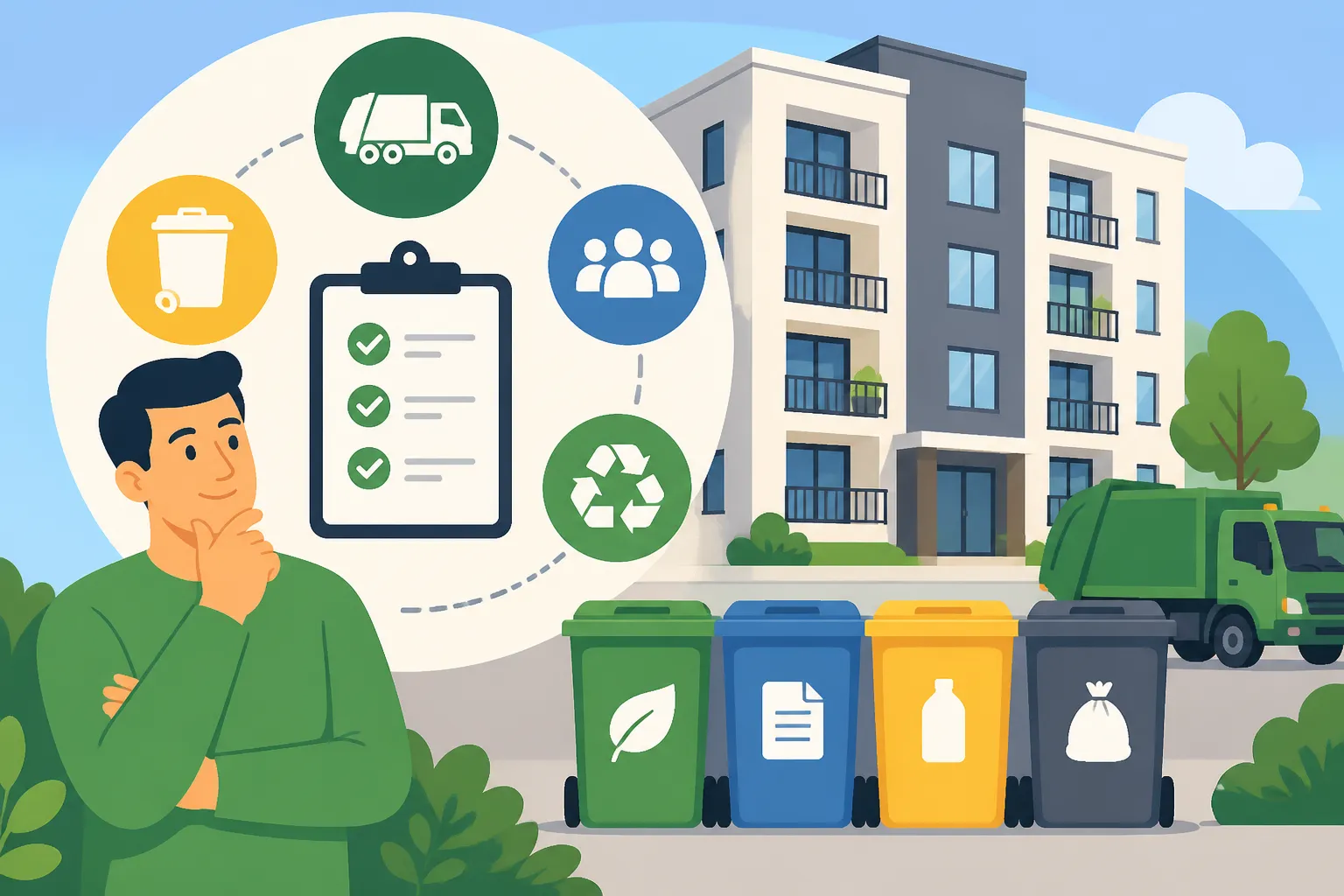
Generally, you’ll encounter bins for:
- Mixed Waste (Reziduuri menajere/Gunoi menajer): This is your general household waste that can't be recycled. Often, this is a grey or black bin.
- Plastic & Metal (Plastic și Metal): Usually a yellow bin. This includes plastic bottles, containers, bags, metal cans, and aluminium foil. Make sure items are rinsed and relatively clean.
- Paper & Cardboard (Hârtie și Carton): Typically a blue bin. Think newspapers, magazines, cardboard boxes (flattened, please!), and paper packaging.
- Glass (Sticlă): Often a green bin. This is for glass bottles and jars, again, usually rinsed.
- Organic/Biodegradable (Bio/Organic): In some areas, particularly newer developments or cities with stricter environmental initiatives, you might find a brown bin for food scraps and organic waste. This is less common in older apartment blocks but is becoming more prevalent.
The biggest challenge often lies in knowing exactly which plastics or metals are accepted, or if certain types of paper (like greasy pizza boxes) should go into general waste. When in doubt, it's safer to put questionable items into mixed waste rather than contaminating a recycling stream. Contamination can lead to an entire batch of recyclables being sent to landfill, which defeats the purpose.
Here’s a quick guide to common waste categories you might encounter:
| Waste Category | Typical Bin Colour | What Goes In | What Doesn't Go In |
|---|---|---|---|
| Mixed Waste | Grey / Black | Food waste (if no organic bin), dirty packaging, non-recyclable items | Anything that can be recycled or is hazardous |
| Plastic & Metal | Yellow | PET bottles, plastic containers (yogurt, detergent), plastic bags, metal cans, aluminium foil, tetra-pak cartons (milk/juice) | Styrofoam, hard plastics (toys, furniture), dirty plastics |
| Paper & Cardboard | Blue | Newspapers, magazines, cardboard boxes, paper packaging, flyers | Wet or greasy paper, plastic-coated paper, tissues |
| Glass | Green | Glass bottles, jars (rinsed) | Ceramic, mirrors, window glass, light bulbs |
| Organic (if available) | Brown | Food scraps, fruit/vegetable peels, coffee grounds, tea bags, garden waste | Meat, dairy, cooked food (unless specified), plastic bags |
Keep an eye out for labels on the bins themselves; they often have pictorial guides, which are a godsend even if you don't speak Romanian fluently. You might also find local municipality websites (like those for Bucharest, Cluj-Napoca, or Timișoara) have detailed guides, usually under a section related to salubritate or colectare deșeuri. These online resources can be tricky to navigate, so having your internet setup through services mentioned in "How to Set Up Home Internet and TV in Romania" will be crucial.
What to Do with the Big Stuff: Bulk Waste and Special Collections
So, you've mastered the daily bin routine. But what about when you have a broken chair, an old mattress, or a pile of construction debris from a small renovation project? This is "bulk waste" (deșeuri voluminoase) or "special waste," and it requires a different approach entirely. You absolutely cannot just leave these items next to the regular bins; you'll likely face a fine and definitely earn the ire of your neighbours and administrator.
For general bulk waste like old furniture, large appliances, or mattresses, there are a few common scenarios:
- Scheduled Collections by the Municipality/Contracted Company: Many cities have specific days a few times a year when they collect bulk waste from designated points. Your Asociație de Proprietari will usually be informed of these dates and may even organize for a communal collection point for your building. This is where your administrator becomes your best friend. They can provide the dates and locations.
- Dedicated Collection Centres (Centre de Colectare): Most larger cities have permanent collection centres where residents can bring their bulk waste, electronics (WEEE), and sometimes even construction debris. You’ll need to transport these items yourself, and there might be limits on quantities or types of waste accepted free of charge. A quick online search for "centru de colectare deșeuri" plus your city name will usually yield results. It’s always best to call ahead if possible, especially if you have a lot of items, to confirm their operating hours and acceptance policy.
- Private Waste Removal Services: If you need to dispose of items outside of municipal schedules or if you have a large quantity of renovation waste, you can hire a private company. These services are widely available in major cities. A simple search for "evacuare moloz" (debris removal) or "colectare mobilă veche" (old furniture collection) will give you options. This will incur a cost, of course.
When you're settling in Romania, especially during the first 90 days, you might have many of these larger items as you furnish your new place or clear out old stuff. It’s part of the process of making a new house a home. This is often covered in broader guides like "The Complete Guide to Moving to Romania: Your First 90 Days (2026)". Similarly, if you're looking into buying property, "The Complete Guide to Property and Transaction Taxes in Romania (2026)" might be relevant, as renovation debris is often part of that journey.
For specific types of waste, like old electronics (WEEE – Waste Electrical and Electronic Equipment) or batteries, you’ll often find dedicated collection points in large supermarkets, electronics stores, or at the municipal collection centres. Pharmacies sometimes have bins for expired medications. It's crucial not to put hazardous waste (paints, chemicals, batteries) into regular bins, as this can be extremely damaging to the environment.
Navigating waste collection in a Romanian apartment building certainly has its learning curve. But once you understand the role of your Asociație de Proprietari, the local recycling scheme, and how to deal with bulkier items, it becomes second nature. Don't be afraid to ask for help, keep an eye on those communal notice boards, and you'll be disposing of your rubbish like a pro in no time! For further reading on setting up your life, guides like "How to Find and Rent Long-Term Accommodation in Romania" and "The Expat Guide to Setting Up Utilities in Romania" can provide even more foundational knowledge. Even understanding "How Do I Get Proof of Address and Residence Documents in Romania" can indirectly help, as sorting out these administrative details gives you the confidence to tackle others. And for a broader perspective on costs, "The Complete Guide to Cost of Living in Romania for Expats (2026)" touches on household expenses that include waste management.
Disclaimer
The information provided in this guide is for general informational purposes only and does not constitute legal or professional advice. Waste management regulations and practices in Romania can vary by municipality and may change over time. Always consult with your local Asociație de Proprietari (homeowners' association), building administrator, or municipal waste authority for the most accurate and up-to-date information pertaining to your specific location.