How Do I Exchange My UK Driving Licence in Romania?
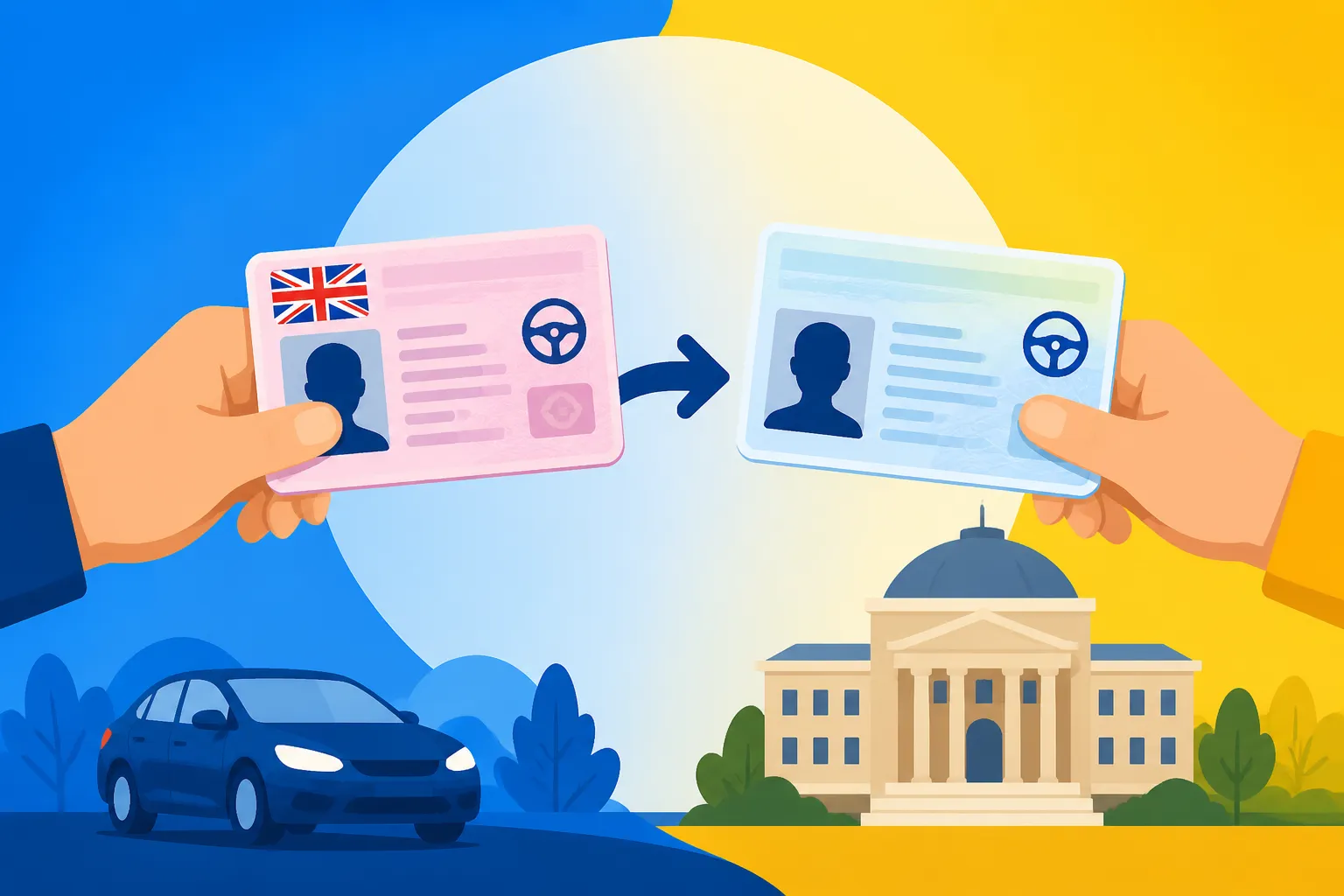
Navigating the administrative labyrinth in Romania can often feel like a Herculean task, and something as seemingly straightforward as exchanging a driving licence can quickly become a multi-chapter saga. For those of you who've moved here from the UK, the rules have shifted significantly, no longer offering the easy swap of pre-Brexit days. This comprehensive guide is here to walk you through every step, frustration, and triumph involved in exchanging your UK driving licence for a Romanian one, ensuring you stay legal on Romania's roads.
Understanding the Rules: Why Exchange Your UK Licence in Romania?
The rules around driving licences in Romania can be a real head-scratcher, especially for those of us from non-EU countries. What was once a relatively simple process for UK citizens has become more complex post-Brexit, throwing many expats into a bureaucratic maze. It's not just about having a piece of plastic; it's about being legally compliant and ensuring your insurance remains valid.
The Post-Brexit Reality for UK Drivers in Romania
Before Brexit, your UK driving licence was treated much like any other EU/EEA licence. This meant a fairly straightforward exchange process, often without the need for additional testing. However, those days are firmly in the rearview mirror, pun intended. Since the UK's departure from the European Union, UK driving licences are now considered "third-country" licences in Romania, which fundamentally changes how they are viewed and, more importantly, how they must be processed.
What this means in practice is that you can still use your valid UK driving licence in Romania for a specific period after establishing residency. Generally, this grace period is 12 months from the date you registered your residency in Romania – not just from the day you arrived, but from the date your Romanian residence permit (Permis de ședere) was issued. Beyond this initial 12-month window, your UK licence is no longer legally recognized for driving purposes here, and you must have a Romanian licence. This can feel like a sudden drop off a cliff for many, especially those who assume their licence is internationally valid indefinitely. Many expats have found themselves caught off guard, suddenly needing to navigate a system that wasn't designed for a simple swap.
When and Why You Must Exchange
The 12-month clock starts ticking from the moment you officially become a resident in Romania. This means once you have your residence permit in hand, you have a year to get your UK licence exchanged. Failing to do so can lead to a heap of trouble. Imagine being pulled over by the police after your 12 months are up, only to find out your licence is no longer considered valid here. The fines can be hefty, your vehicle could be impounded, and you might even face criminal charges for driving without a valid licence in Romania. This is definitely one of those administrative tasks you don't want to procrastinate on, no matter how daunting it seems.
Beyond the immediate legal ramifications, there are practical consequences. Your car insurance policy might become invalid if you're found to be driving with an unrecognized licence. This could leave you in a dire financial situation if you're involved in an accident, as your insurance company might refuse to cover damages or injuries. It's not just about avoiding a ticket; it's about protecting yourself and others. Understanding the obligation is the first crucial step in what can be a lengthy process, but rest assured, it's entirely manageable with the right preparation and a good dose of patience.
The Exchange Process: Step-by-Step for UK Nationals
Exchanging your UK driving licence in Romania, as a non-EU/EEA national, involves a series of steps that are a blend of familiar and uniquely Romanian bureaucracy. It's not a simple one-for-one swap; you'll need to prove your ability to drive under Romanian law, which includes taking a theory test.
Gathering Your Mountain of Paperwork
Ah, the Romanian paperwork marathon! This is often where expats truly earn their stripes. You'll need a meticulous approach to ensure you have every single document, original and copy, correctly translated and certified. Missing one item can send you right back to the start of the queue, losing valuable time and patience.
Here’s a breakdown of what you'll typically need to assemble:
- Application Form (Cerere): This form is usually available at the Directorate for Driving Permits and Vehicle Registration (DRPCIV) office or sometimes can be downloaded from their website. Fill it out accurately, ensuring all your personal details match your other documents.
- Valid UK Driving Licence: You'll need the original and a clear photocopy. This is the document you're exchanging, so it must be current and valid.
- Romanian Residence Permit (Permis de Ședere): The original and a copy. This is your cornerstone document proving your legal stay in Romania. Without it, you can't proceed. If you’re still working on getting yours, check out our guide on How to Apply for a Romanian Residence Permit for a comprehensive walkthrough.
- Passport or National Identity Card: Again, original and a copy for identification purposes.
- Proof of Address: A recent utility bill (gas, electricity, water), or your rental contract (contract de închiriere) registered with ANAF, will typically suffice. This confirms where you live. For more details on this, you might find our article on How to Get Proof of Address and Residence Documents in Romania helpful.
- Medical Certificate (Fișă Medicală Auto): This is a mandatory medical evaluation to prove you are fit to drive. You'll need to visit a specialized, authorized medical clinic that performs these examinations. Major private healthcare providers like MedLife or Regina Maria often offer specific packages for "Fișă Medicală Auto." This certificate involves several consultations: ophthalmology, internal medicine, orthopedics, neurology, and sometimes even an ENT specialist. Expect to pay a fee for this comprehensive check-up, typically ranging from 150-300 RON.
- Psychological Evaluation (Test Psihologic): While often integrated into the medical certificate package offered by clinics, sometimes it's a separate test or a distinct part of the medical examination. It assesses your psychological aptitude for driving.
- Fiscal Certificate (Certificat de Atestare Fiscală): This document, issued by the Romanian Tax Authority (ANAF), certifies that you have no outstanding tax debts to the state. Getting this can be a mini-adventure in itself. You'll need your CNP (Personal Numeric Code) and potentially an account with ANAF's Virtual Private Space (SPV) to request it online, or you might have to visit a local ANAF office. For more on navigating the tax system, check out How the Romanian Tax Authority (ANAF) Works.
- Criminal Record Certificate (Cazier Judiciar): You'll need to obtain this from the police (Inspectoratul General al Poliției Române or your local police station). It proves you don't have a criminal record in Romania. This is usually issued on the spot if you have your ID/passport and your CNP.
- Certified Translations: Any document not originally in Romanian (like your UK driving licence) will need a certified translation by a public notary (notar public). This is a standard procedure for many administrative tasks in Romania.
- Proof of Fee Payment: You'll need to pay a standard fee for the issuance of the new licence. This payment is typically made at CEC Bank branches or via online platforms like Ghișeul.ro. Keep the receipt!
Here’s a handy table to keep track of your paperwork:
| Document Required | Source / How to Obtain | Notes & Potential Hurdles |
|---|---|---|
| Application Form | DRPCIV Office / Website | Ensure all details are accurate and legible. |
| Valid UK Driving Licence | Your own | Original + photocopy. Must not be expired. |
| Romanian Residence Permit | Inspectoratul General pentru Imigrări (IGI) | Original + photocopy. Crucial proof of residency. See The Complete Guide to Romanian Residence Permits for Expats (2027) for more info. |
| Passport/ID | Your own | Original + photocopy. |
| Proof of Address | Landlord/Utility Providers/ANAF | Rental contract registered with ANAF, recent utility bill. Must be in your name. |
| Medical Certificate | Authorized Medical Clinic (e.g., MedLife, Regina Maria) | Requires multiple specialist consultations. Expect a fee. Ensure the clinic is authorized for Fișă Medicală Auto. |
| Psychological Evaluation | Authorized Medical Clinic | Often part of the medical certificate package. |
| Fiscal Certificate | ANAF (Romanian Tax Authority) | Certifies no outstanding tax debts. Can be tricky to get without a good grasp of the system. See Filing Your Annual Tax Return in Romania: The Complete Walkthrough (2027) for related tax info. |
| Criminal Record Certificate | Local Police Station | Issued on the spot with ID/CNP. |
| Certified Translations | Public Notary | For any document not in Romanian (e.g., UK Licence). Ensure the translator is authorized and the translation is certified by a public notary. |
| Proof of Fee Payment | CEC Bank / Ghișeul.ro | Keep the original receipt. |
The Dreaded Theory Test (and Practical if Applicable)
This is the part that causes the most stress for many UK expats. Unlike the simpler exchange process for EU/EEA citizens, UK nationals are now typically required to pass a theory test (probă teoretică) on Romanian road rules. Yes, you read that right – you'll need to prove your knowledge of the Highway Code, Romanian style!
The theory test is usually a computer-based exam, consisting of multiple-choice questions. It covers everything from road signs and traffic regulations to first aid and mechanical knowledge. The significant hurdle here is that the test is almost exclusively administered in Romanian. While a few DRPCIV offices in larger, more expat-heavy cities might offer it in English, this is not guaranteed and shouldn't be relied upon. The sheer volume of technical terms and specific phrasing in Romanian can make this a formidable challenge even for those with a basic grasp of the language. My advice? Don't underestimate this. Many expat friends have found themselves failing the theory test multiple times due to the language barrier and nuances of the Romanian road code.
A practical driving test (probă practică) is generally not required for a licence exchange, provided your UK licence is current and valid, and you successfully pass the theory test. However, if there are any discrepancies, or if you fail the theory test repeatedly, the DRPCIV office might, in rare cases, require a practical assessment. This is less common but worth being aware of. The main focus will be on the theory.
Navigating the DRPCIV Office
Once your documents are in order and you’ve mentally prepared for the theory test, it’s time for the DRPCIV office itself. These offices, responsible for issuing driving permits and vehicle registrations, can be bustling hubs of activity. In Bucharest, the main DRPCIV office in Pipera is a well-known location for expats.
It's highly advisable to book an appointment online if your local DRPCIV office offers this service. Showing up without one, especially in larger cities, often means facing extremely long queues, sometimes stretching for hours. Even with an appointment, be prepared for potential delays. Romanians are generally patient with bureaucracy, and you'll do well to adopt a similar mindset. When your turn comes, present all your meticulously gathered documents. The officials will check everything, and if anything is missing or incorrect, you'll be advised to return once it's sorted. If all is in order, you'll proceed to take your theory test. This is where a reliable data connection, perhaps through a global eSIM from Airalo, can be a real asset, allowing you to quickly look up translations or re-confirm details while you're waiting.
Common Hurdles and Practical Advice for UK Expats
The path to a Romanian driving licence is rarely a straight one. Expect twists, turns, and a few detours. But armed with the right advice, you can navigate these challenges with greater ease.
The Language Barrier and Finding Help
As I mentioned, the language barrier is perhaps the biggest single hurdle. While many younger Romanians and those in service industries speak English, government officials, especially in smaller towns, often do not. Trying to understand complex instructions or clarify a nuance on a form in Romanian can be incredibly frustrating.
My top piece of advice here is simple: bring a Romanian speaker with you. This could be a friend, a colleague, or a professional translator. Having someone who can fluently communicate on your behalf will save you immense stress, prevent misunderstandings, and significantly speed up the process. Don’t feel embarrassed to ask for help; it's a common strategy for expats dealing with Romanian bureaucracy. When preparing for the theory test, consider enrolling in a local driving school. Many are accustomed to helping foreigners and can provide study materials or even brief courses specifically on the road rules in Romanian.
Timing and Validity Concerns
The 12-month window for exchanging your licence is firm. What if your UK licence expires during this process, or before you even start the exchange? This is a tricky situation. It's best to initiate the exchange well before your UK licence expires to avoid any complications. If your UK licence does expire before you've completed the exchange, it might complicate things and potentially require more steps or even a full driving course.
Another common concern is driving while your application is being processed. Once you hand over your UK licence to DRPCIV, you're technically without a valid driving document until your Romanian one is issued. In general, you cannot legally drive during this interim period. Romania does not typically issue temporary driving permits for licence exchanges. This means you need to plan carefully for a period when you won't be able to drive. This might mean relying on friends, taxis, or utilizing Romania's public transport system. If you're in Bucharest, for instance, learning to use the STB travel card and understanding [Public Transport in Bucharest] will be invaluable. This period of not having a licence is often overlooked, but it's a critical aspect to consider for your daily commute and errands.
Driving Schools and Test Preparation
Even if you've been driving for decades, enrolling in a local driving school for a few theory lessons (or even a full course if you're feeling rusty or want extra practice) is a smart move. These schools are up-to-date with current Romanian road legislation and can provide invaluable insights into the specific format and content of the theory test. They can also offer materials and practice tests. The investment in a few hours of instruction can save you the headache and repeated fees of failing the test multiple times. Some schools might even offer assistance with the paperwork, acting as a mini-relocation service. Speaking of which, for those who find all this overwhelming, especially during the initial stages of moving, services like Sirelo can provide a broader range of relocation assistance, potentially easing the burden of such administrative tasks.
What to Do While You Wait
As mentioned, there's usually a waiting period after you submit your documents and pass the theory test until your new Romanian licence is printed and ready for collection. This period can vary, but typically ranges from a few days to a couple of weeks. During this time, you won't have your physical licence. If you are stopped by police, you won't have a valid document to present. Therefore, it is strongly advised not to drive until you have your new Romanian licence in hand. Plan alternative transportation during this period. It might be an inconvenience, but it's far better than facing legal trouble.
Getting Your New Romanian Driving Licence
After wading through the paperwork and conquering the theory test, you're finally nearing the finish line. The moment you hold your new Romanian driving licence, it’s a tangible symbol of having successfully integrated into another aspect of life here.
Collection and Verification
Once your new licence is ready, the DRPCIV office will typically notify you via SMS or a notification on their online platform (if you registered for one). You'll then need to return to the office, usually during specific collection hours, to pick up your new card. Remember to bring your identification (passport/ID and residence permit) for verification.
When you receive your new Romanian driving licence, take a moment to carefully inspect it. Check all your personal details – your name, date of birth, and address – to ensure they are absolutely correct. Also, verify that all the driving categories you held on your UK licence (e.g., B for cars, A for motorcycles) have been accurately transferred to your new Romanian licence. Mistakes can happen, and it's much easier to rectify them on the spot than to discover an error weeks or months later.
Understanding Your New Licence Categories
The categories on your new Romanian licence will largely mirror those on your UK licence. For example, a standard Category B on your UK licence for cars will transfer to a Category B on your Romanian licence, allowing you to drive vehicles up to 3,500 kg. If you had other categories, like Category A for motorcycles or C for lorries, these should also transfer over, provided they meet the Romanian equivalency requirements and were noted on your medical certificate.
It's a good idea to familiarize yourself with the specifics of Driving in Romania: Licences, Registration and Rules for Expats (2027) now that you have your Romanian licence. Understanding local rules, speed limits, and even peculiarities like the "cedează trecerea" (give way) signs will ensure you drive safely and confidently. Your new Romanian licence is a key document for your life here, opening up more independence and mobility.
Disclaimer
Please note that while I strive to provide accurate and up-to-date information based on my experience and available public data, administrative rules and requirements in Romania can change without prior notice. This guide is for informational purposes only and should not be considered legal advice. Always consult with the official Romanian authorities (DRPCIV, IGI, ANAF) or a legal professional for the most current and personalized guidance regarding your specific situation.