Understanding the Electronic Prescription (Rețeta Electronică) System in Romania
Trying to navigate a foreign pharmacy when you are feeling under the weather is a universal expat nightmare. In Romania, the confusion is often amplified by the "sistemul picat" (the system is down) phenomenon and the transition from paper to digital records. This guide breaks down exactly how the electronic prescription system works, ensuring you can actually get your medication without three extra trips back to the doctor.
What Exactly is a Rețeta Electronică?
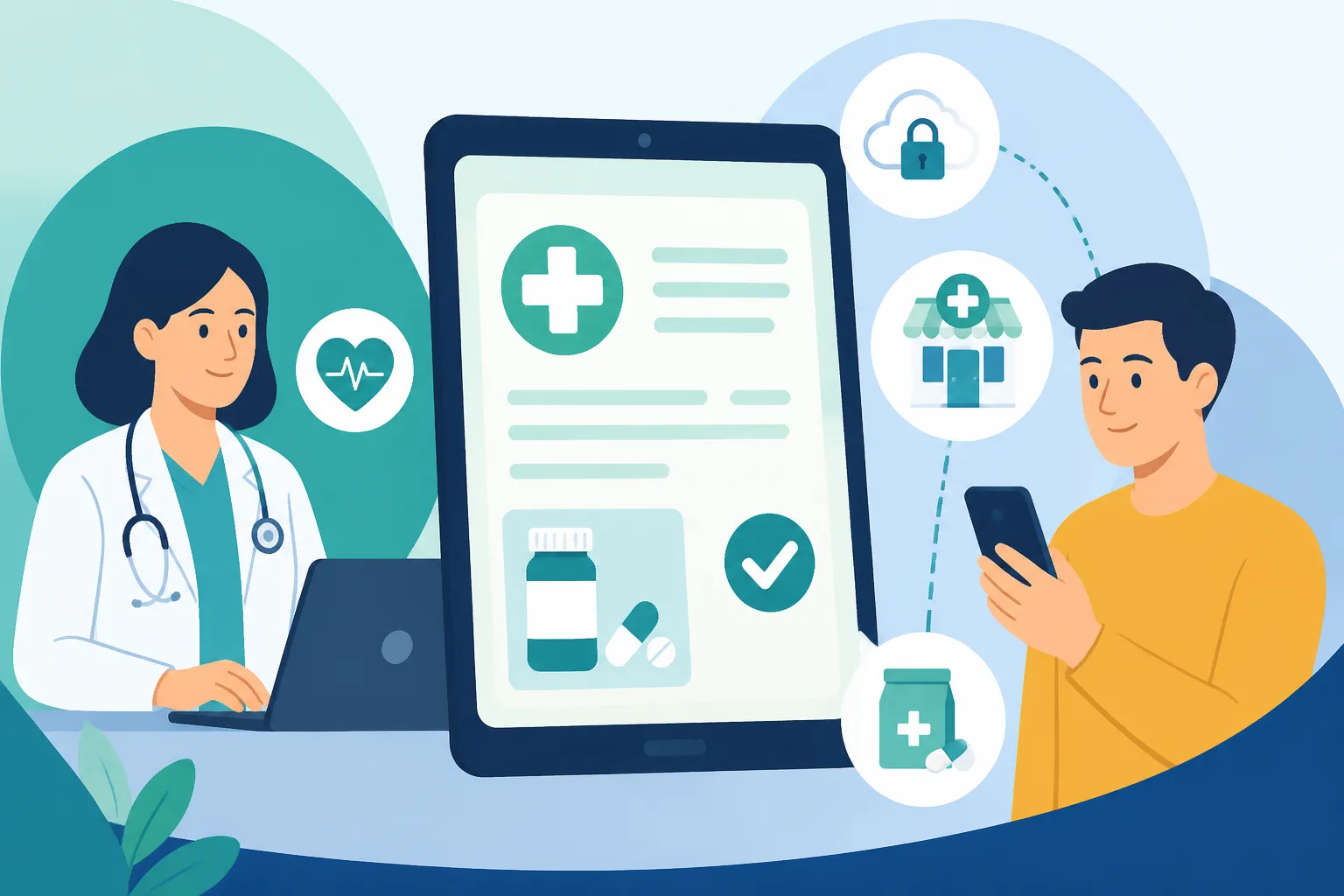
For those of us who moved here a decade ago, the old system involved handwritten, barely legible scraps of paper that pharmacists had to squint at for minutes on end. Today, Romania has largely modernized with the Rețeta Electronică (Electronic Prescription). This is part of the broader SUIH (Single Integrated Information System), designed to track medications, prevent fraud, and theoretically make life easier for the patient. When a doctor "issues" an electronic prescription, they aren't just giving you a piece of paper; they are uploading a record to a centralized national database managed by the state.
Even though it is called an "electronic" prescription, you will almost always receive a physical printout. This paper contains several bar codes, a series of identification numbers, and a list of your medications. However, the paper itself is technically just a "summary" or a reference. The real prescription lives in the cloud. If you lose that piece of paper, a pharmacist can often find your prescription by using your CNP (Personal Numeric Code) and your health card, provided the system is behaving. This shift was a massive undertaking for How Romania's Health Insurance House (CNAS) Works: A Full Overview, and while it has improved transparency, it has also introduced new technical hurdles that every expat needs to prepare for.
The SUIH system connects every registered doctor—whether they are in a public hospital or a small private clinic—to every licensed pharmacy in the country. This means you could see a specialist in Bucharest and pick up your medication at a tiny pharmacy in a mountain village in Transylvania. As long as they have an internet connection and a card reader, they can access your data. This connectivity is the backbone of the healthcare experience here, and understanding that your medical data is essentially "traveling" with you is the first step to mastering the system.
How the Prescription Process Works for Expats
As an expat, your entry point into the world of electronic prescriptions is almost always going to be your family doctor. I remember my first visit to a "Medic de Familie" in a dusty building in Sector 3; I was confused why I couldn't just go to a specialist directly for my chronic sinus issues. In Romania, the family doctor acts as the gatekeeper. They are the ones authorized to issue long-term, "compensated" prescriptions that the state pays for. If you haven't done this yet, you really need to prioritize The Expat Guide to Finding a Family Doctor (Medic de Familie) in Romania to ensure you have a point of contact when you get sick.
The process usually follows a specific sequence: you visit the doctor, they diagnose you, and then they turn to their computer to enter your details into the national system. If you are covered by the public health insurance (CASS), the doctor will ask for your health card. They insert this into a small reader, you type in your PIN, and the prescription is "signed" digitally. This digital signature is what allows the pharmacy to see that the prescription is legitimate and eligible for state subsidies. Without that digital signature, the prescription might only be valid for full-price purchase, which can be a shock to the wallet if you are on expensive maintenance meds.
For more complex issues, you will likely need a specialist. The specialist can also issue an electronic prescription, but they often work in tandem with your family doctor. For instance, a cardiologist might decide on your treatment plan, but your family doctor is the one who will issue the monthly recurring electronic prescription so you don't have to visit the hospital every 30 days. This requires a specific flow of paperwork, often involving How Specialist Referrals (Bilet de Trimitere) Work in Romania. If the specialist is in a private clinic that doesn't have a contract with the state, they can still issue an electronic prescription, but it will be "white"—meaning you pay 100% of the cost.
The Critical Role of Your CNP and Health Card
In Romania, your CNP is the key to your entire administrative life. Without it, you are essentially a ghost in the machine. When a doctor attempts to issue a Rețeta Electronică, the first thing they type into the software is those 13 digits. If you are a new resident and haven't received your residency card yet, this can be a major pain point. It is vital to understand How to Get Your CNP (Personal Numeric Code) for Healthcare Access in Romania because, without it, the electronic system cannot track your insurance status or your medical history.
Once you have your CNP, the next hurdle is the physical Health Card (Cardul de Sănătate). This little plastic card is the "key" that unlocks the prescription system. You are supposed to receive it in the mail after a few months of paying into the system, but many expats find themselves in a limbo where they are insured but don't have the card yet. If this happens to you, the doctor can still issue a prescription, but they have to use a "workaround" in the software, and the pharmacy will likely ask for a certificate from the insurance house (adeverință) proving you are covered. For more on this, check out Understanding the Electronic Health Card (Cardul de Sănătate) in Romania.
While you are waiting for all this Romanian bureaucracy to align, it is often wise to have a backup plan. It is wise for newcomers to know that having a reliable expat-focused insurance like SafetyWing is a lifesaver during those first six months. If the national system refuses to recognize your CNP or your card hasn't arrived, SafetyWing can help cover the costs of private consultations and the resulting prescriptions, allowing you to bypass the public system's technical glitches while you get your paperwork in order. This gives you the peace of mind to focus on getting better rather than arguing with a database.
Types of Electronic Prescriptions in Romania
Not all prescriptions are created equal in the Romanian system. There are essentially two main flavors: "Compensated" and "Non-compensated." A compensated prescription means that the National Health Insurance House (CNAS) pays for part or all of the medication. The percentage they cover (the "copay") depends on the "List" the drug belongs to—List A, B, C, or D. List C, for example, often covers 100% of the cost for chronic diseases and for children. You can find more detail on these costs in our guide on The Cost of Healthcare in Romania: A Complete Breakdown for Foreigners (2026).
Another distinction is between "Acute" and "Chronic" prescriptions. An acute prescription is for a one-off illness, like a chest infection. These are usually valid for a single fill and must be picked up within 48 to 72 hours of issuance, depending on the specific medication. On the other hand, chronic prescriptions are for long-term conditions like hypertension or diabetes. These can be issued for up to 90 days. The doctor will often give you a single electronic prescription that the pharmacist "fractions" into three monthly installments. You take your first month's worth, the pharmacist records it in the system, and you come back 30 days later for the next batch.
There are also "Fractioned" prescriptions. This happens when a pharmacy doesn't have all your meds in stock. In the old days, this was a disaster. Now, the electronic system allows the pharmacist to give you what they have, "close" that part of the prescription in the system, and give you a printout showing what is left. You can then take that printout to a completely different pharmacy to get the remaining items. This flexibility is one of the few genuine perks of the digital system, though it still requires a bit of legwork. This is particularly relevant if you are navigating Understanding Sick Leave (Concediu Medical) and Sick Pay in Romania, as you need your meds to recover and your paperwork to be in order for your employer.
Navigating the Pharmacy (Farmacie) Experience
Walking into a Romanian pharmacy can feel a bit like a transaction at a high-security bank. Most pharmacies, like Catena, Dona, or HelpNet, have a ticketing system or a very strict line. When it’s your turn, you hand over your printout and your health card. The pharmacist will scan the barcode on the prescription and then ask for your card to "validate" the transaction in the SUIH system. If you are using a plan like SafetyWing, you should keep all your receipts and the prescription printouts, as you will likely need to submit them for reimbursement if you are seeing a private doctor outside the public system.
One thing to watch out for is the "Generic vs. Brand Name" debate. By law, Romanian doctors must prescribe the active substance (INN), not the brand name. The electronic system will show the pharmacist the cheapest version available that the state fully compensates. If you want a specific brand name (like choosing Panadol over a generic paracetamol), the pharmacist will calculate the "price difference" you have to pay out of pocket. It is always a good idea to read up on Prescription Medications and Pharmacies in Romania: The Complete Guide so you aren't surprised when the pharmacist asks if you want the "free" one or the "good" one.
Stock issues are also a reality. If you live in a city like Bucharest or Cluj, you are lucky because there is a pharmacy on almost every corner. However, certain specialized medications (like specific hormones or biologics) can be hard to find. The electronic system doesn't tell the doctor if a pharmacy has the drug; it only records that they prescribed it. If you find yourself hunting for a rare medication, I recommend checking the larger chains first, as they have better internal logistics. You can find more tips on this in Understanding the Romanian Pharmacy (Farmacie) System and Opening Hours.
| Feature | Public System (CNAS) | Private (Out-of-Pocket/Insurance) |
|---|---|---|
| Prescription Type | Electronic (SUIH System) | Electronic or Paper |
| Cost | Subsidized (0% – 90% off) | 100% of Market Price |
| Validation | Requires Health Card + PIN | Requires ID only |
| Medication Name | Active Substance (Generic) | Can specify Brand Name |
| Availability | Any pharmacy with CNAS contract | Any licensed pharmacy |
Common Hurdles and Troubleshooting
The most frequent phrase you will hear in a Romanian pharmacy is "Nu merge sistemul" (The system isn't working). This usually refers to a nationwide outage of the SUIH platform. When this happens, the pharmacist cannot validate your health card or check the electronic database. If it’s a total outage, they might not be able to give you compensated medication at all. In these cases, you have two choices: wait a few hours and try again, or pay full price for the meds and try to settle it later (though the latter is notoriously difficult with the public system).
Language barriers can also make things tricky. While many pharmacists in city centers speak decent English, the technical terms for "copay," "fractional fill," or "active substance" might lead to confusion. It helps to have the prescription printout in hand, as the codes tell the pharmacist everything they need to know. If you are struggling with the public system's delays, SafetyWing is again a great fallback. Their 24/7 support and straightforward claims process mean that if you have to go to a private clinic because the public system is "down," you aren't left holding a bill you can't afford.
Lastly, keep an eye on expiration dates. An electronic prescription for a chronic condition is usually valid for 30 days from the date it was issued by the doctor. If you wait until day 31, the system will literally lock the pharmacist out, and they won't be able to process it. You'll have to go back to your family doctor, wait in the queue again, and ask for a new one. It sounds like a hassle—and it is—but the system is rigid for a reason: to prevent the double-filling of prescriptions across different pharmacies.
Private vs. Public: How It Affects Your Prescription
If you are working for a multinational company in Romania, you likely have a private medical subscription (Abonament) with providers like Regina Maria or MedLife. These clinics use their own internal electronic systems for prescriptions. If the doctor there has a contract with the state, they can issue a compensated "state" prescription. If they don't, they will issue a "private" electronic prescription. You can still use this at any pharmacy, but the state won't pay a cent toward it.
This is where many expats get caught out. They assume that because they have a "prescription," it will be cheap. In reality, unless that prescription was signed with a health card and issued by a doctor within the CNAS network, you are paying the retail price. This is why many expats choose to maintain a relationship with a public family doctor even if they primarily use private clinics. They get the diagnosis at the fancy private clinic, then take the "medical letter" to their public family doctor to have it "transcribed" into a compensated electronic prescription.
SafetyWing fits into this ecosystem as a bridge. While an "Abonament" is great for routine checkups, and the public system is necessary for subsidized meds, SafetyWing provides the international coverage and emergency support that neither of those fully covers. If you are traveling outside Romania or if you need to see a specialist who isn't covered by your local subscription, having that extra layer of insurance ensures that your "private" prescription costs don't drain your bank account. It’s about having a multi-tiered approach to health in a country where the systems don't always talk to each other.
Disclaimer
The information provided in this guide is for informational purposes only and does not constitute medical or legal advice. The Romanian healthcare system and its digital platforms are subject to frequent legislative and technical changes. Always consult with a licensed medical professional or the National Health Insurance House (CNAS) for the most current regulations regarding prescriptions and insurance coverage. High-cost medications and specific chronic treatments may have additional requirements not covered in this general overview.