How to Set Up Waste and Recycling Collection in Romania
Moving to Romania, you've probably noticed that things don't always work quite the same way they did back home. While settling into your new apartment or house, one of the everyday hurdles that often catches expats off guard is figuring out the waste and recycling collection system. It's not always straightforward, and the rules can seem to change from one street to the next, leaving you scratching your head with a bag of trash in hand. This guide aims to pull back the curtain on Romania's waste management, helping you understand how to set up your services, what goes where, and how to navigate the local specifics without losing your mind.
The Romanian Waste Management Landscape: A Head-Scratcher for Newcomers
When you first arrive in Romania, the concept of waste collection might seem a bit… fluid. You might be used to a hyper-organized system where everything is clearly labelled, schedules are religiously followed, and recycling is second nature. Here, it’s a different beast, one that requires a bit of local insight and a healthy dose of patience. It’s not necessarily worse, just different, and understanding those differences is your first step to a smooth-running household.
Decentralized System: Why It's Not a One-Size-Fits-All
One of the biggest eye-openers for many expats is that Romania doesn't operate under a single, unified national waste collection system. Instead, it's a highly decentralized setup, meaning that waste management is primarily organized at the municipal or even district level. What applies in Bucharest might be completely different in Cluj-Napoca, and even within Bucharest, the rules can vary between Sector 1 and Sector 4, for instance. This local autonomy leads to a patchwork of services, collection schedules, and recycling facilities.
This can be incredibly frustrating if you're trying to figure things out based on general information online or even from a friend living a few towns over. You might move from a smaller town that has weekly doorstep recycling collection for all categories to a large city where you have to take your sorted waste to communal bins that are less frequently emptied. This is why local inquiry and observation are so crucial. Don't assume anything; always ask your landlord, building administrator, or even trusted neighbors about the specific practices in your immediate area. It's often through these informal channels that you get the most accurate, ground-level information.
Public vs. Private Operators: Who Does What?
While waste management is a municipal responsibility, the actual dirty work of collecting and processing trash is almost universally handled by private companies under contract with the local authorities. You won't typically deal directly with "the city hall" for your bins; instead, you'll be interacting with a contracted service provider. In Bucharest, for example, you have companies like Romprest, Urban SA, and Salubritate București, each covering different sectors or specific types of waste. Other cities will have their own local champions, such as Brantner Servicii Ecologice in Cluj-Napoca or Urban SA in Timișoara.
The system works like this: the municipality sets the general framework and procures services from these private operators. As a resident, your relationship is usually with this contracted company, whether directly (if you live in a house) or indirectly (if you live in an apartment building and pay through your block association). These companies are responsible for providing the bins, managing collection routes, and often operating the recycling points. Understanding which company services your area is the first crucial piece of information you'll need, as their websites will be your primary source for schedules, rules, and contact information, although often only in Romanian.
Setting Up Your Residential Waste Collection Service
Getting your waste collection sorted is one of those essential tasks right after you've found a place to live and started setting up other utilities. The process differs quite a bit depending on whether you're renting an apartment or have bought a house, so let's break down both scenarios.
For Apartment Dwellers: Navigating the Block Association
If you've moved into an apartment, especially in a larger city like Bucharest or Iași, you'll find that waste collection is almost always managed centrally by your building's Asociația de Proprietari (Owners' Association) or its Administrator de Bloc (Building Administrator). This is a common setup across Romania, and it simplifies things for individual residents in one sense, but can add a layer of bureaucracy in another. Essentially, the Association has a contract with the local waste collection company for the entire building.
What this means for you is that you typically won't be signing a separate contract or receiving individual waste bills. Instead, the cost of waste collection is rolled into your monthly întreținere (maintenance fee), which you pay directly to the Association. Your job, then, is to ensure your building administrator is aware you've moved in and has registered you as a resident, so your contribution to the waste service is correctly calculated. This is usually done when you first register your presence in the building, and it's part of the broader administrative tasks of settling into an apartment here. You can find more comprehensive details on how these charges work in our guide on Understanding Building Maintenance Fees (Întreținere) for Apartments in Romania. The main challenge here can be communication; if your administrator doesn't speak English, it helps to have a Romanian-speaking friend assist you or use a translation app for clarity.
For House Owners: Direct Contracts and Local Rules
If you've bought a house or are renting one, the situation is usually quite different from apartment living. In this scenario, you'll most likely need to establish a direct contractual relationship with the waste management company that services your specific address. This means a bit more legwork upfront, but it gives you direct control over your service. The first step is to identify the waste collection company responsible for your area. A quick search for "salubritate [your city/town name]" should point you in the right direction, or ask your neighbours.
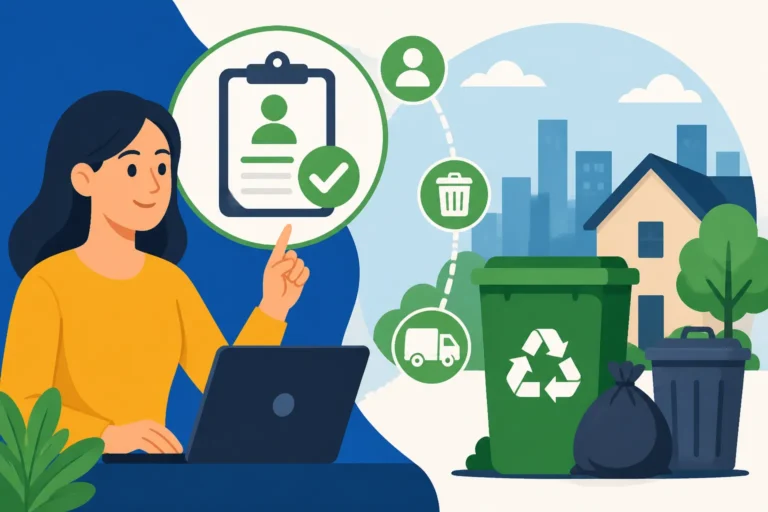
Once you've identified the company, you'll need to visit their local office to sign a contract. Be prepared with your identification documents (passport, residence permit), proof of address (such as your property deed or a recent utility bill; you can learn more about how to get these set up in our guide on How to Set Up Electricity in Your Romanian Home), and potentially your CNP (Personal Numeric Code). The company will typically provide you with the necessary waste bins – often separate ones for mixed waste and recycling – and inform you of the collection schedule. They will then send you monthly or quarterly bills, which you can usually pay online, at their office, or through various payment points. If you've just purchased a home, our comprehensive guide on How to Buy Property in Romania as a Foreigner: The Full Guide (2027) can provide further insights into related administrative steps.
Understanding Romania's Recycling System
Romania has made significant strides in implementing a national recycling framework, but like many things here, the actual application can be a mixed bag depending on your location and the local infrastructure. The intention is there, and the system is largely based on the widely recognized color-coded bin method. However, getting it right as an expat often means understanding the official guidelines and the practical realities on the ground.
Color-Coded Bins: What Goes Where?
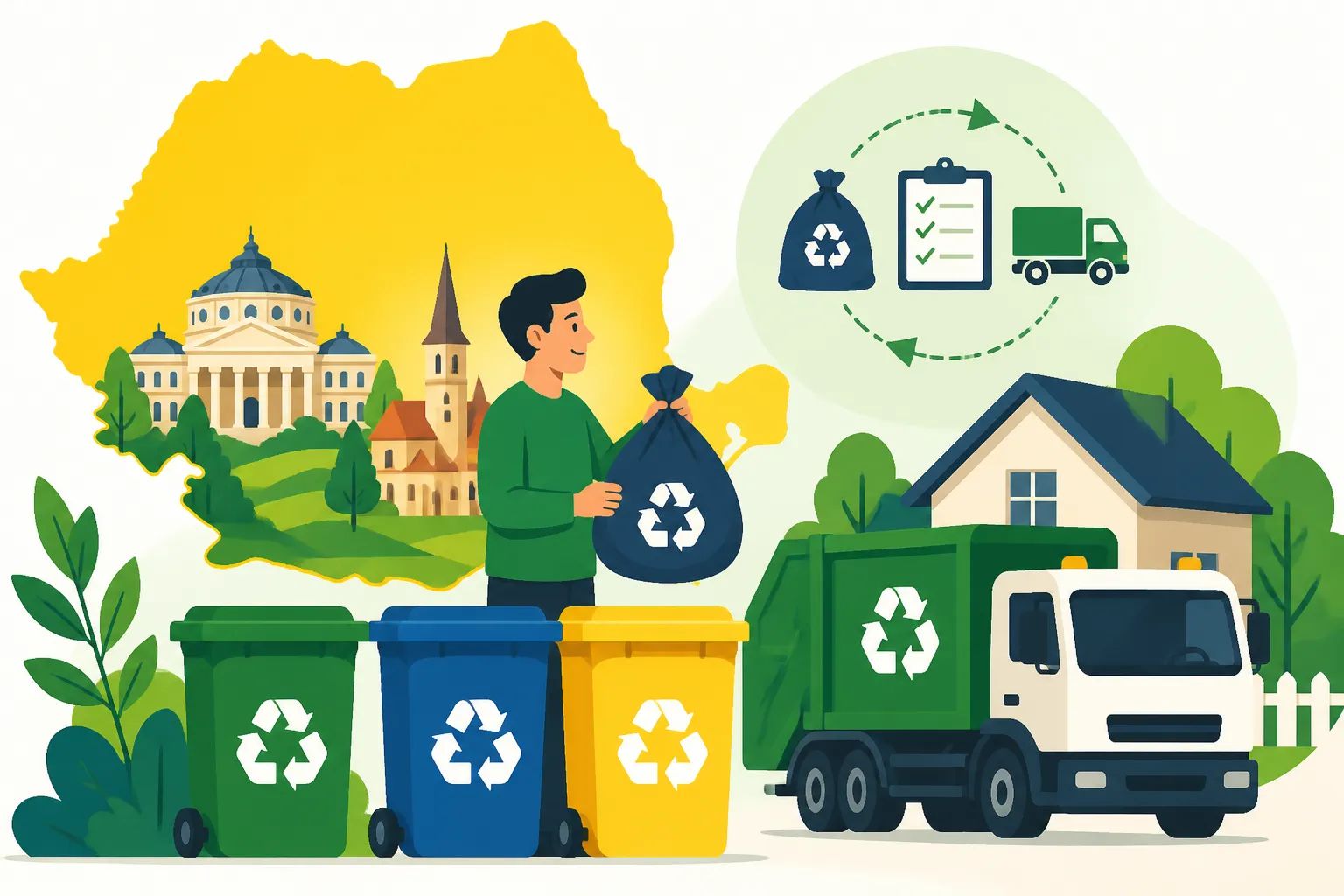
The standard recycling system in Romania uses color-coded bins, usually grouped together at designated collection points or provided individually to households (especially for houses). While there might be slight variations, the general scheme is as follows:
- Yellow Bin (Plastic & Metal): This is for all your plastic packaging (PET bottles, yogurt cups, detergent bottles, plastic bags), as well as metal cans (soda cans, food tins). The golden rule here is to rinse containers lightly if they contained food or drink, and ideally, flatten them to save space.
- Blue Bin (Paper & Cardboard): Here, you'll deposit newspapers, magazines, cardboard boxes (flattened), and paper packaging. Make sure the paper isn't contaminated with food grease or other liquids, as this can render it unrecyclable.
- Green Bin (Glass): This bin is exclusively for glass bottles and jars. Again, a quick rinse is appreciated. Ceramics, mirrors, and window panes generally do not go into the green bin, as they have different chemical compositions and melting points.
- Black or Grey Bin (Mixed/Residual Waste): Anything that doesn't fit into the above categories, or cannot be recycled (like food waste, dirty packaging, certain types of plastics not typically recycled locally, ceramics, etc.), goes here. This is your general waste bin.
It’s important to remember that for recycling to be effective, items need to be reasonably clean and dry. A pizza box drenched in grease is not recyclable in the paper bin; it goes to mixed waste. Similarly, a yogurt cup full of leftover yogurt isn't going to make it into the yellow bin. Pay attention to the symbols on packaging, but also exercise common sense.
Challenges and Inconsistencies for Expats
While the color-coded system is the official guideline, many expats quickly discover that the reality of recycling in Romania can be inconsistent and, frankly, a bit disheartening at times. One common frustration is the lack of clear signage or accessible recycling points, especially in older neighbourhoods or smaller towns. You might find communal bins, but they aren't always conveniently located or clearly marked. Sometimes, despite best efforts to sort, you'll see people indiscriminately mixing waste in communal bins, leading to a sense that your efforts are in vain.
Another point of contention can be the collection frequency. Recycling bins might be emptied less often than general waste, leading to overflowing containers, especially for paper and plastic. It's crucial to check with your waste provider or block administrator about the specific collection schedules for each type of waste in your area. Don't be shy to ask neighbours; they often have the most up-to-date information on local practices, including whether certain bins are more effectively sorted than others.
A recent and very positive development, however, is the implementation of the Sistem Garanție-Returnare (SGR), a nationwide deposit-return scheme for beverage packaging. This means that for plastic, glass, and metal beverage containers (water bottles, soft drink cans, beer bottles) between 0.1L and 3L, you pay a small deposit (0.50 RON) at the point of purchase. You can then return these empty, undamaged containers to designated collection points (usually large supermarkets like Kaufland, Lidl, Carrefour, or Mega Image) and get your deposit back. This system significantly boosts the recycling rates for these specific items and offers a clear incentive to properly separate them. It's a game-changer that has made recycling some common items much easier and more reliable.
Special Waste and Bulk Item Disposal
Beyond your everyday household waste and basic recycling, there are always those awkward items that don't fit into standard bins. This "special waste" category includes everything from old electronics to broken furniture, and knowing how to dispose of it properly is essential to avoid fines and contribute responsibly to your new community.
Electronics, Batteries, and Hazardous Waste
These items absolutely cannot go into your regular trash or recycling bins. Disposing of electronics (known as WEEE – Waste Electrical and Electronic Equipment), batteries, and other hazardous materials (like paints, chemicals, certain lightbulbs) requires special handling due to their potential environmental impact.
For batteries, most large supermarkets and electronics stores (like Altex, Flanco, Dedeman) have small collection boxes near their entrances. It’s a convenient way to get rid of your spent AA, AAA, or mobile phone batteries. For electronics, many of the larger electronics retailers also offer take-back programs for old appliances when you purchase a new one. Additionally, some municipalities organize periodic collection drives for WEEE, or they might have designated collection centers where you can drop off items. A quick search on your local city hall's website or the website of your waste management company for "colectare DEEE" (WEEE collection) will usually yield relevant information. Don't simply discard these items; it's bad for the environment and can result in significant fines if you're caught.
Furniture and Large Household Items (Deșeuri Voluminoase)
Eventually, you'll likely need to get rid of an old sofa, a broken washing machine, or a pile of renovation debris. These are categorized as deșeuri voluminoase (bulky waste) and require specific arrangements. You cannot just leave them on the curb.
Most waste management companies offer a service for collecting bulky waste, but it's rarely free and almost always requires prior arrangement. You'll typically need to call them, describe the items, and schedule a pickup. There might be a fee based on the volume or weight of the items. Some municipalities also organize scheduled collection campaigns a few times a year, where residents can bring bulky items to designated points or have them picked up on specific dates. Again, checking your local city hall's website or your waste company's site is the best way to find out about these services. You might search for "colectare deșeuri voluminoase [your city/town name]". Be wary of fly-tipping; sadly, it's a sight you might occasionally see, but it is illegal and carries stiff penalties. When you're making a big move, perhaps with the help of a company like Sirelo, they might also offer services for the initial clearing of packaging waste or old items left by previous tenants. Understanding the cost of these services is part of managing your overall expenditures in Romania, which we delve into in more detail in The Complete Guide to Cost of Living in Romania for Expats (2026).
Tips and Tricks for Expats Navigating Waste Collection
Navigating Romania's waste and recycling systems can feel like a puzzle at first, but with a few pointers and a bit of perseverance, you'll get the hang of it. It’s all about local knowledge and being prepared for a slightly different approach than what you might be used to.
Communication is Key: Overcoming Language Barriers
Let's be honest: while English is increasingly common, especially among younger generations and in business, it's not a given when dealing with administrative tasks like setting up waste collection, especially outside of major cities. Most official websites for waste management companies are primarily in Romanian, and phone operators might have limited English skills. This is where your communication strategy becomes crucial.
First, always try to bring a Romanian-speaking friend or colleague with you if you need to visit an office in person. Their assistance will be invaluable. If you're calling, a translation app can help with basic phrases, but for complex discussions, a human translator is better. For apartment dwellers, your building administrator is your first point of contact, and while some may speak English, many will not. Be patient, use simple language, and perhaps have key questions written down in Romanian. It’s a process, and often, small gestures of goodwill and patience go a long way. Having a reliable local SIM card is also vital for making these calls; services like Airalo can help you get connected quickly upon arrival, giving you the data and calls you need to start sorting these practicalities.
Staying Informed and Local Best Practices
Because the system is so localized, the best way to stay informed is to tap into local resources and observe. Your municipal (Primăria) website and the website of your contracted waste management company are your official sources for collection schedules, types of waste accepted, and special collection campaigns. Look for sections on "salubritate" or "gestionarea deșeurilor" (waste management).
Beyond official channels, don't underestimate the power of local expat groups on platforms like Facebook. These communities are often goldmines of hyper-local information, as members share their experiences and practical tips for their specific neighborhoods. You can ask very specific questions like "What day is recycling collected in Militari, Sector 6?" and usually get helpful, up-to-date answers. Furthermore, observing your neighbours' habits can provide crucial clues. When do they put out their bins? Which types of waste do they separate? These subtle cues are often more reliable than outdated online schedules. And remember, waste collection is just one of many utility setups you'll face; our general guide on The Expat Guide to Setting Up Utilities in Romania offers broader advice. If you're still early in your journey, getting your proof of address squared away, as detailed in Registering Your Residence (Viză de Flotant) in Romania: The Complete Guide, is a foundational step that often precedes signing utility contracts.
| Waste Type | Standard Bin Color | Examples | Key Considerations |
|---|---|---|---|
| Plastic & Metal | Yellow | PET bottles, plastic containers, bags, aluminum cans, food tins | Rinse well, flatten, no food residue. Beverage containers are part of SGR. |
| Paper & Cardboard | Blue | Newspapers, magazines, cardboard boxes, paper packaging | Keep dry and clean, flatten boxes, no food-contaminated paper (e.g., pizza boxes). |
| Glass | Green | Glass bottles, jars | Rinse well, no ceramics, mirrors, window glass. Beverage containers are part of SGR. |
| Mixed / Residual Waste | Black / Grey | Food waste, dirty packaging, ceramics, broken dishes, hygiene products, non-recyclable items | Anything not fitting other categories or contaminated. |
| Electronics (WEEE) | Special Collection | Old phones, TVs, washing machines, computers | Designated collection points, electronics stores, municipal campaigns. |
| Batteries | Special Collection | AA, AAA, mobile phone batteries | Collection boxes in supermarkets/electronics stores. |
| Bulky Waste | Special Arrangement | Furniture, large appliances (not WEEE-categorized if working), construction debris | Schedule pickup with waste company, municipal campaigns. Avoid illegal dumping. |
Disclaimer
The information provided in this guide is intended for general informational purposes only and does not constitute legal, financial, or professional advice. While we strive to provide accurate and up-to-date information, rules and regulations in Romania can change frequently. Always consult with the relevant local authorities, waste management companies, or professional advisors for the most current and specific information pertaining to your individual situation. We cannot be held responsible for any inaccuracies or for any actions taken based on the information provided herein.