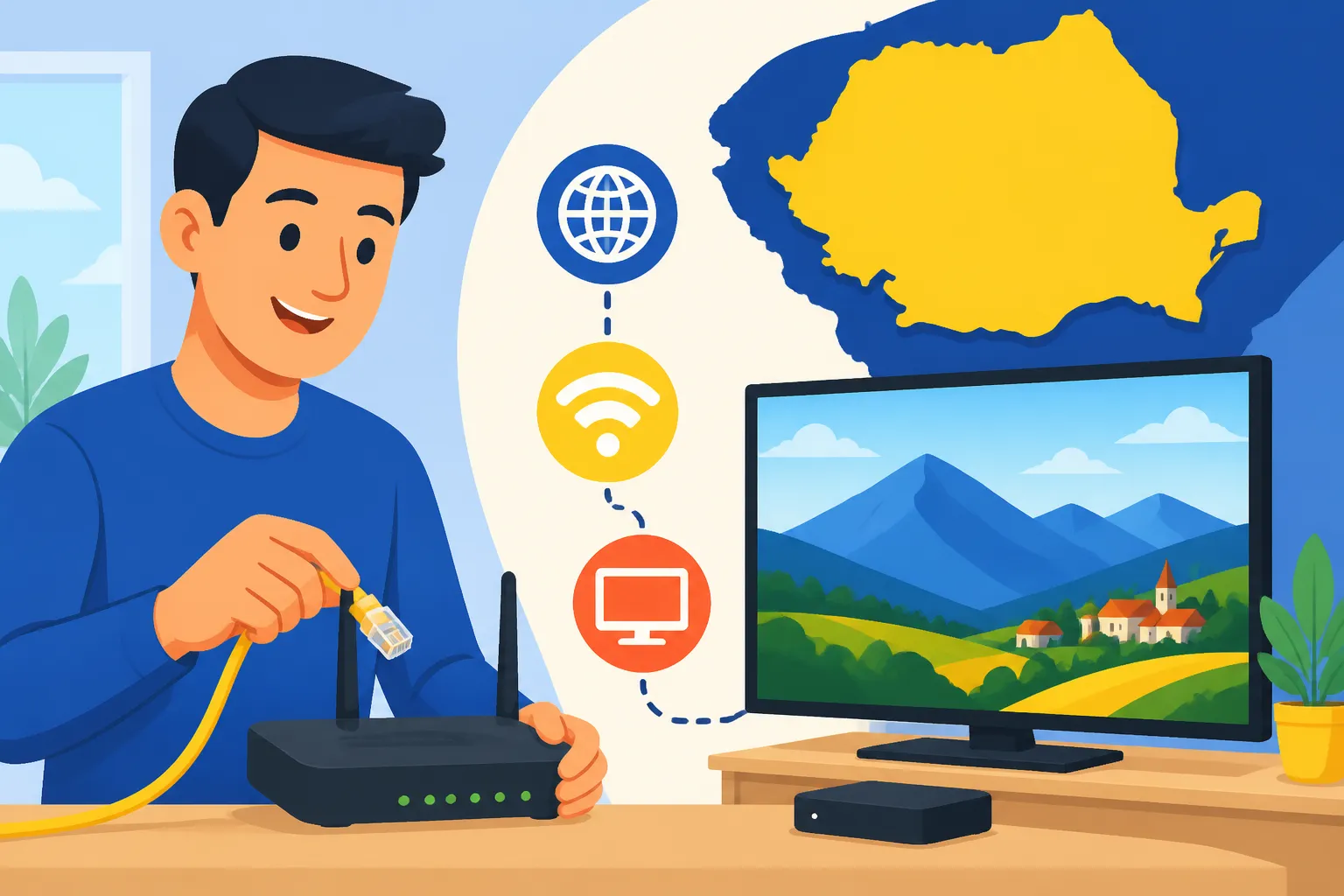
How to Set Up Home Internet and TV in Romania
Moving to a new country like Romania is an adventure, but let's be real – getting your basic utilities sorted can feel like trying to solve a Rubik's Cube blindfolded. One of the most crucial, and often frustrating, tasks for any expat is setting up home internet and TV. This comprehensive guide will walk you through the labyrinthine process, from understanding the providers and choosing your package to navigating installation and deciphering your bills, so you can get connected without the usual headaches.
The Romanian Internet and TV Landscape: Getting Started
When you first arrive in Romania, you might be overwhelmed by the sheer number of options and the different terms used for services. It's a common expat experience to feel like you're drowning in details, especially if you're not fluent in Romanian. Don't worry, the goal here is to demystify the system so you can make informed choices. The good news is that Romania boasts some of the fastest internet speeds in Europe, particularly for fiber optic, so once you're set up, you're usually set up well!
Major Providers and Their Offerings
Romania's telecommunications market is dominated by a few key players, each with its own strengths and weaknesses. Understanding who these are and what they offer is your first step. Think of them like the big supermarkets – they all sell groceries, but with different brands, prices, and customer service. The main players you'll encounter are Digi (RCS & RDS), Orange, and Vodafone.
Digi is often lauded for its competitive pricing and extensive fiber optic network, especially for internet services. They are typically the go-to for many expats looking for high-speed internet on a budget. However, some find their customer service can be a bit more challenging if you don't speak Romanian. Orange and Vodafone, on the other hand, are giants with strong mobile networks and have expanded significantly into fixed-line internet and TV, often through acquisitions (like Orange buying Telekom's fixed line operations). They might offer slightly higher prices than Digi but often come with more comprehensive customer support, including English-speaking options, and a wider array of TV channels, making them a popular choice for those prioritizing ease of use and content variety.
Types of Connectivity: Fiber Optic is King
Forget slow DSL or outdated cable internet; in Romania, fiber optic is truly king, especially in urban areas. This is fantastic news for anyone who relies on a stable, high-speed connection for work, streaming, or keeping in touch with family back home. Fiber optic connections (known as "fibră optică") offer unparalleled download and upload speeds, making buffering a distant memory.
Most providers will offer fiber optic to your home, sometimes even up to gigabit speeds or more in major cities like Bucharest, Cluj-Napoca, or Timișoara. While cable internet (through providers like Vodafone, which inherited a significant cable network from UPC) is still available, fiber is generally superior in terms of performance and reliability. Satellite internet is pretty much unheard of for residential use in urban centers, usually only an option for very remote areas. Before committing to a provider, it's always wise to check what type of connection is available at your specific address – a quick call or an online availability checker on the provider's website can confirm this.
Understanding Bundled Packages
Providers in Romania love to bundle services, offering you internet, TV, and sometimes even mobile phone plans all under one attractive monthly price. These "pachete" (packages) are often the most cost-effective way to get all your communication needs met. It’s a bit like getting a combo meal at a restaurant – usually cheaper than buying everything separately.
When looking at bundled packages, you'll typically find options like "Internet + TV," "Internet + TV + Mobil," or even "Internet + Mobil." The exact contents of the TV package can vary wildly, with different tiers offering more channels, including international ones. Mobile bundles often include unlimited national calls and SMS, plus a generous data allowance. Weigh your needs carefully. Do you watch a lot of local TV, or do you rely mostly on streaming? Do you need a Romanian mobile number with a large data plan, or are you happy with a separate plan or a temporary eSIM from a provider like Airalo when traveling? Understanding these personal preferences will help you choose a bundle that genuinely saves you money and serves your expat lifestyle, rather than paying for services you don't really use.
The Nitty-Gritty: Choosing the Right Plan for Your Expat Life
Once you have a grasp of the major players and connection types, it's time to dive into the specifics of picking a plan. This is where many expats get bogged down in the details, so let's break it down into manageable steps. Remember that patience is key when dealing with administrative tasks in Romania, and setting up utilities is no exception.
Assessing Your Needs: Speed, Channels, and Budget
Before you even look at a price list, sit down and figure out exactly what you need. For internet, think about how many people will be using the connection, what they'll be doing (heavy gaming, 4K streaming, remote work with video calls), and how many devices will be connected simultaneously. A single person might be fine with 300 Mbps, but a family of four with multiple devices and work-from-home needs will likely benefit from 500 Mbps or even 1 Gbps. Many expats working remotely in Romania find that a fast, reliable connection is non-negotiable for their livelihood. If you're planning on Working Remotely from Romania: The Definitive Expat Guide (2027), strong internet is paramount.
For TV, consider your viewing habits. Are you keen on local Romanian channels, or do you prefer international news, sports, or movie channels? Most providers offer different TV packages with varying numbers of channels. If you're a heavy streamer using platforms like Netflix, HBO Max, or Disney+, then a basic TV package might be sufficient, or you might not even need TV at all. Finally, set a realistic budget. While Romania offers affordable internet, understanding The Complete Guide to Cost of Living in Romania for Expats (2026) will help you allocate your funds wisely across all your expenses.
Deciphering Contracts and Hidden Costs
Romanian contracts can sometimes feel like ancient scrolls written in a foreign language (which, for most expats, they are!). It’s absolutely crucial to understand the terms and conditions, especially regarding contract length, early termination fees, and any promotional periods. Most contracts are for 12 or 24 months, and breaking them early can incur significant penalties.
Always ask for a contract in English if available, or bring a trusted Romanian-speaking friend or translator with you to the provider's office. Pay close attention to the fine print concerning equipment rental fees (for the router or TV box), activation fees, and any potential hidden charges that might kick in after an initial promotional period. Sometimes, the advertised price is only for the first few months, so clarify the price for the entire contract duration. Don't be shy about asking questions – it's your right to understand what you're signing up for. This due diligence is just as important as when you How to Sign a Rental Contract (Contract de Închiriere) in Romania, ensuring you avoid unpleasant surprises down the line.
Essential Documents for Subscription
Like most administrative processes in Romania, signing up for internet and TV requires specific documents. This is often where the real challenge for new arrivals begins. You'll typically need:
- Proof of Identity: Your passport or national ID card (for EU/EEA citizens).
- Residence Permit: If you're a non-EU/EEA citizen, your Romanian residence permit (Permis de Ședere) is essential. If you're an EU citizen, your registration certificate (Certificat de Înregistrare) will suffice.
- Proof of Address: This is usually your rental contract (Contract de Închiriere) or the property deed if you own the place. Make sure it's an official, registered document. Getting How to Get Proof of Address and Residence Documents in Romania will be a recurring theme in your expat life.
- CNP (Personal Numeric Code): This unique identification number is vital for almost any official transaction in Romania, including signing contracts for utilities. If you don't have one yet, you'll need to sort this out. Our guide on How to Apply for a CNP as Part of Your Residence Process can help you with this.
- Bank Account Details: For setting up direct debits for your monthly payments. You'll need a Romanian bank account for this. Check out our guide on The Expat Guide to Opening a Bank Account in Romania for more information.
Ensure you have physical copies and potentially digital scans of these documents. Sometimes, providers might ask for additional papers, so it's always good to be prepared.
| Provider | Typical Internet Speed (Mbps) | Average Monthly Cost (Internet only) | Contract Length | English Support | Noted Advantages | Noted Disadvantages |
|---|---|---|---|---|---|---|
| Digi | 500-1000 | 30-45 RON | 12/24 months | Limited | Best prices, fast fiber | Customer service can be challenging |
| Orange | 500-1000 | 40-60 RON | 12/24 months | Good | Reliable, good bundles, mobile integration | Slightly higher prices |
| Vodafone | 500-1000 | 40-60 RON | 12/24 months | Good | Strong network, extensive TV options | Can be pricier for top bundles |
Note: Prices are approximate and can vary based on promotions, location, and specific package inclusions. Always check current offers directly with providers.
The Installation Journey: From Application to Online
You've chosen your provider, navigated the contract, and gathered your documents. Now comes the exciting part: getting the internet actually set up in your home. This process usually involves a few steps, and knowing what to expect can alleviate a lot of the anxiety.
The Application Process: In-Store vs. Online
While you might be tempted to do everything online from the comfort of your couch, for your initial internet and TV setup as an expat in Romania, visiting a physical store is often the most straightforward approach. This allows you to speak directly with a representative, ask questions in person (ideally with a Romanian-speaking friend), and sort out any document discrepancies on the spot. It also provides a paper trail with a physical signed contract.
Major providers like Digi, Orange, and Vodafone have numerous stores in cities and larger towns. You'll find their shops in shopping malls or on main streets. While some providers offer online application forms, they might still require an in-person visit for contract signing and document verification, especially for foreigners. Once you're an existing customer, managing your account or adding services might be easier online or via their dedicated apps.
Scheduling and What to Expect from Installers
After your application is approved and the contract is signed, the provider will schedule an installation date. This can sometimes be the trickiest part, as appointment windows can be broad (e.g., "between 10 AM and 4 PM"), and specific times aren't always guaranteed. This is a common aspect of utility setup in Romania, so prepare for a flexible schedule on installation day.
The installation team will arrive, usually with the necessary cables, a router, and a TV decoder (if applicable). They will run the fiber optic cable (or coaxial cable for cable internet) into your apartment, set up the router, and connect your TV. It's a fairly standard process, but the language barrier can sometimes be an issue. If you can, have a Romanian speaker present during installation to facilitate communication. Make sure to test the internet speed and TV channels before the installers leave to ensure everything is working correctly according to your contract. Ask them to show you where the main connections are and how to restart the router if needed.
Activating Your Services and Initial Checks
In most cases, the installers will activate your services on the spot. Once they're done, they'll usually ask you to confirm that the internet is working (e.g., by connecting a device and browsing) and that the TV channels are accessible. This is your moment to ensure everything is in order.
Don't be afraid to connect your own laptop or phone to the Wi-Fi immediately and run a speed test (fast.com or speedtest.net are good options) to verify that you're getting the speeds advertised in your contract. Also, flick through the TV channels to make sure your package is active and all expected channels are showing. If there are any issues, report them to the installers before they leave. They can often troubleshoot minor problems on the spot. They should also provide you with the Wi-Fi network name and password, as well as any login details for online accounts or TV apps.
Managing Your Services: Billing, Support, and Changes
Once your internet and TV are up and running, the journey doesn't end there. You'll need to understand your monthly bills, know how to reach customer support, and what to do if you need to make changes to your services. This ongoing management can sometimes feel like a mini-adventure of its own.
Understanding Your Monthly Bill (Factura)
Ah, the monthly "factura"! These can look quite different from what you might be used to in your home country. Romanian utility bills are often detailed, listing various charges, taxes, and consumption details. It's important to understand the key components to ensure you're being charged correctly.
Look for the "total de plată" (total amount to pay) and the "data scadentă" (due date). Your bill will break down charges for internet, TV, and any mobile services if you have a bundle. There might also be a "chirie echipament" (equipment rental fee) for your router or TV box. Most providers offer electronic bills (facturi electronice) which you can access through their online portals or mobile apps. You can usually set up direct debit (plată directă) from your Romanian bank account, which is the easiest way to ensure timely payments. Our guide on How Do I Understand My Utility Bills (Facturi) in Romania? might offer further insights into reading these documents. If you've set up How to Set Up Online Banking and Instant Payments in Romania, paying these bills should be a breeze.
Customer Support and Language Barriers
This is often where the rubber meets the road for expats. While major providers are becoming increasingly expat-friendly, consistent English-speaking support isn't always a guarantee.
- Digi: While very popular for its low prices, English support can be hit-or-miss. You might need to rely on a Romanian-speaking friend or use translation tools for more complex issues.
- Orange and Vodafone: These companies generally offer better English-speaking customer support, especially through their dedicated helplines or in larger stores. When calling, you might be prompted to select an option for English, or you might need to specifically ask if an English speaker is available.
For general inquiries or simple issues, checking the FAQ section on their websites (often available in English) or using their mobile apps can be helpful. For technical problems, be prepared to explain the issue clearly. Sometimes, a visit to a physical store can be more effective for resolution than trying to navigate phone menus. Remember that politeness and persistence, even with language barriers, often go a long way.
Moving, Upgrading, or Cancelling Your Contract
Life happens, and sometimes you'll need to make changes to your services. Perhaps you're moving to a new apartment in Romania, need faster internet, or are even leaving the country. Each scenario has its own process.
If you're moving within Romania, contact your provider well in advance. They can usually transfer your services to your new address, though this might involve a relocation fee and a new installation appointment. Be prepared to provide proof of your new address. If your new location doesn't have coverage from your current provider, you might be able to terminate your contract without penalty, but this needs to be explicitly confirmed. If you're looking for broader moving advice, especially for international relocations, services like Sirelo can be helpful resources beyond just utilities.
Upgrading or downgrading your plan is usually straightforward and can often be done through your online account, by phone, or in person. Be aware that downgrading might come with specific conditions or require a contract renewal.
Cancelling your contract is the most delicate process. If your contract term is complete, you can usually cancel with a 30-day notice period. If you're cancelling before the contract term is over, be prepared for early termination fees, which can be substantial. These fees are usually calculated based on the remaining months of your contract. Always get written confirmation of your cancellation request and any associated costs. Return any rented equipment (router, TV box) in good condition to avoid additional charges.
Beyond Standard Packages: Alternatives and Temporary Solutions
Sometimes, a full-blown fixed-line internet and TV package isn't quite what you need, especially if you're a digital nomad, on a short-term stay, or just need something while you wait for your permanent setup. Thankfully, Romania offers flexible alternatives to keep you connected.
Mobile Internet and Data Plans for Flexibility
For many expats, especially those who travel frequently or work primarily from cafes and co-working spaces, a robust mobile data plan can serve as their primary internet connection. Romania's mobile networks (Orange, Vodafone, and Digi) offer excellent 4G and increasingly 5G coverage, with very generous data allowances at affordable prices.
You can often get a SIM card with a prepaid plan ("cartelă preplătită") for just a few euros, which can be topped up monthly with data, calls, and SMS. Postpaid plans ("abonament") offer even better value for consistent users, but typically require a contract and the same identification documents as fixed-line internet. A mobile hotspot or simply tethering from your phone can power your laptop and other devices. This is an incredibly convenient option for short-term stays, travel around the country, or as a temporary solution while you wait for your home internet installation. For international travelers or those needing quick, temporary internet upon arrival, eSIM providers like Airalo can offer immediate connectivity without having to track down a physical SIM card. Consider looking into How Do I Set Up a Mobile Plan with Orange or Vodafone in Romania? for more details on these options.
Prepaid Options and Short-Term Needs
Beyond mobile data, there are other prepaid and short-term options that can bridge the gap or serve as your main source of connectivity if your needs are minimal. This is particularly useful for tourists or those who haven't yet secured long-term accommodation and its associated utilities.
Most mobile providers offer USB modems or portable Wi-Fi devices that come with prepaid data plans. You buy the device and then top up the data as needed, similar to a prepaid phone card. While these might not offer the ultra-high speeds of fiber optic, they are perfectly adequate for browsing, emails, and light streaming. They provide flexibility, as you're not tied to a long-term contract, and you can easily scale your data usage up or down. For example, if you're using a short-term rental and need internet for a week or two, a prepaid mobile data stick might be a much simpler solution than trying to arrange a fixed-line service.
Streaming Services and VPNs for Expat Entertainment
When it comes to TV, many expats find that traditional linear TV packages don't quite cut it. That's where streaming services come into their own. Platforms like Netflix, HBO Max, Disney+, Amazon Prime Video, and YouTube are all widely available in Romania, offering a vast library of international content, often with Romanian subtitles or dubbing options.
For accessing content from your home country that might be geo-restricted, a Virtual Private Network (VPN) becomes an indispensable tool. A VPN allows you to connect to servers in other countries, making it appear as if you are browsing from there, thus unlocking region-locked content. Choosing a reliable VPN provider is key for consistent streaming quality. While Romania offers a wealth of local entertainment and media, having access to familiar shows and news can be a huge comfort for expats, helping you feel more connected to home even when you're thousands of miles away.
Disclaimer
The information provided in this guide is intended for general informational purposes only and does not constitute legal, financial, or professional advice. While we strive to keep the information accurate and up-to-date, regulations, procedures, and service offerings in Romania can change frequently. Expats are strongly advised to verify all information with official sources, relevant authorities, and service providers, and to seek professional advice tailored to their specific circumstances. We do not endorse any specific brand or service mentioned in this article beyond their contextual relevance.