What Is the Tax-Free Income Threshold in Romania?
One of the most common questions I get from fellow expats, especially those new to Romania, is about a "tax-free income threshold." It's a concept many of us are familiar with from our home countries – a certain amount you can earn before the taxman comes knocking. However, when you delve into the Romanian tax system, you'll quickly find that it operates a little differently, often leading to a good deal of head-scratching and frustration. This guide is here to untangle that knot, explaining how income tax generally works in Romania and clarifying where (and if!) any "tax-free" elements actually apply, helping you navigate your financial landscape here.
Understanding Income Tax in Romania for Expats
Let's get one thing straight from the get-go: Romania doesn't really have a general "tax-free income threshold" in the way many Western countries have a personal allowance or tax-exempt amount that everyone benefits from before income tax kicks in. This is a crucial distinction that often catches foreigners off guard. Instead, Romania operates primarily on a flat tax system, which simplifies things in some ways, but also means that nearly every leu you earn is subject to tax, albeit at a consistent rate.
Romania's Flat Tax System Explained
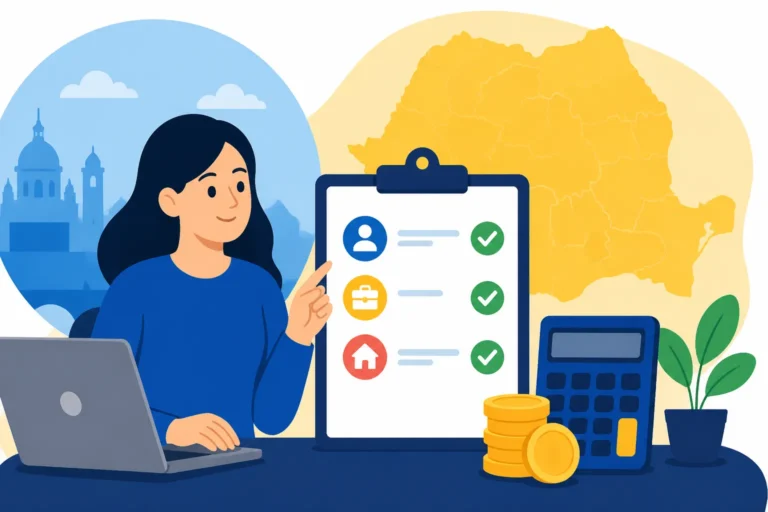
Since 2018, Romania has maintained a flat income tax rate of 10% on most types of income. This means that, for the vast majority of your earnings – whether it's salary, freelance income, rental income, or even capital gains – you're looking at a 10% deduction for income tax. There's no progressive banding where your first X amount is tax-free, your next Y is taxed at 15%, and so on. It's a flat 10% right from the first leu earned, above certain minimal exceptions or specific industry exemptions we'll discuss later.
This flat rate applies to your gross income, after any eligible deductions have been applied, but before you see it in your bank account if you're an employee. For salaried individuals, your employer is responsible for withholding income tax and social contributions (pension and health) directly from your gross salary and paying them to the state. This means what lands in your bank account is already net of these taxes. If you're self-employed, running a PFA (Persoană Fizică Autorizată) or micro-enterprise, you're responsible for calculating and paying these taxes yourself, usually quarterly or annually, through the ANAF (Agenția Națională de Administrare Fiscală) system.
For example, if your gross salary is 5,000 RON, the 10% income tax will be calculated on this amount (or a slightly adjusted base after minor deductions) before any money reaches you. This system, while seemingly straightforward, often leads expats to wonder if they're missing something, especially if they come from countries where a portion of their income is explicitly declared as tax-free. Rest assured, this is just how it works here. For a much more detailed breakdown of all income types, you can consult our comprehensive guide on Understanding Income Tax (Impozit pe Venit) in Romania: The Full Expat Guide.
Who Pays Income Tax in Romania? Defining Tax Residency
Before you even start thinking about what's taxable, you need to understand who is considered taxable in Romania. This boils down to your tax residency status. Generally, if you are considered a tax resident of Romania, you are liable for taxes on your worldwide income. If you are a non-resident, you typically only pay tax on income sourced from Romania.
So, how do you become a tax resident? The general rule of thumb, consistent with most international standards, is if you spend more than 183 days in Romania within any 12-month period. However, it's not always that simple. Factors like your "centre of vital interests" (where your family lives, where your economic interests are concentrated) also play a significant role. Even if you spend less than 183 days, but your family is here, or your main source of income is tied to Romania, you might still be considered a tax resident.
The process of officially establishing your tax residency, or declaring non-residency if you still have strong ties to another country, involves submitting a Fiscal Residency Certificate (Certificat de Rezidență Fiscală) to ANAF. This is a critical step for many expats, particularly digital nomads or those working remotely for foreign companies while living in Romania. Misunderstanding your tax residency can lead to complications, including potential double taxation if not handled correctly through a Double Taxation Agreement (DTA) between Romania and your home country. It's a bureaucratic hurdle, yes, but an essential one to jump early on. You can dive deeper into this topic with our guide on Tax Residency in Romania: A Definitive Guide for Expats (2027).
The Nuances: When "Tax-Free" Might Apply (Specific Exemptions & Deductions)
While a blanket tax-free income threshold for everyone doesn't exist, Romania does offer specific tax exemptions and limited deductions that can effectively reduce your taxable income or even make certain income types entirely tax-free under very particular circumstances. These are not universal, and you usually have to qualify for them based on your profession, specific income source, or family situation.
IT Sector Tax Exemption: A Major Exception
This is arguably the most significant "tax-free" provision in Romania and one that attracts a lot of foreign talent. If you work in the IT sector, specifically on software development activities, you might be eligible for a 100% income tax exemption on your salary. Yes, you read that right: no income tax on your salary. This policy was put in place to stimulate growth in Romania's booming IT industry, which is a huge employer of both local and expat talent, especially in cities like Bucharest, Cluj-Napoca, and Iași.
However, it's not a free-for-all. There are strict conditions you and your employer must meet:
- Employer Qualification: The company must have IT software development activities as its main object of activity or be a unit of a company that primarily generates revenue from such activities.
- Job Role: Your specific job title must be one of the eligible roles defined by the government (e.g., programmer, systems analyst, database administrator, IT project manager, etc.). Generic "IT specialist" might not cut it.
- Educational Background: You typically need to hold a university degree in a relevant field (e.g., computer science, mathematics, electronics, etc.). While some exemptions have been made for highly experienced individuals without degrees in the past, the general rule is a relevant diploma.
- Contract Type: The exemption applies to income from employment contracts, not typically to freelance (PFA) income, though there are nuanced ways PFAs in IT might benefit from other micro-enterprise regimes with lower overall tax burdens.
This exemption means that for eligible IT professionals, your net salary is significantly higher than it would be otherwise, as the 10% income tax is simply not applied. It's a massive incentive and one of the biggest draws for expats considering a career move to Romania's tech hubs. However, remember that social contributions (CAS for pension and CASS for health) are still mandatory and will be deducted from your gross salary. If you're looking into specific roles, our article Working in Romania's IT and Tech Sector: The Expat Guide (2027) delves deeper into the opportunities and requirements.
Other Limited Deductions and Exemptions
Beyond the headline-grabbing IT exemption, there are other, albeit much smaller, ways to reduce your taxable income. These are often referred to as "personal deductions" or specific exemptions for certain income types, rather than a general tax-free threshold.
- Personal Deduction (Deducerea Personală): For employees, there is a limited personal deduction available, primarily based on the number of dependents (children or other family members) you support. This deduction is a fixed amount, applied to your gross income before the 10% income tax is calculated, thereby slightly reducing your taxable base. However, the amounts are relatively small and decrease as your gross salary increases, eventually phasing out for higher earners. It's certainly not a "tax-free threshold" that applies to your initial income, but rather a small benefit that reduces the portion of your income subject to tax. It's common for expats to miss out on this if they're not aware or don't declare their dependents correctly. To explore this in more detail, see Understanding the Personal Deduction (Deducerea Personală) in Romania.
- Specific Income Exemptions: Certain types of income might be explicitly exempt from income tax. Examples could include some social assistance benefits, scholarships, and certain types of compensation. These are very specific and usually outlined in tax law. For instance, specific capital gains from selling shares might be exempt if certain holding periods are met, or if the gains are below a very small threshold. These are not universal and generally do not apply to regular employment or freelance income.
- Micro-Enterprise Regime for Businesses: While not a "tax-free threshold" for income, the micro-enterprise tax regime for small businesses (SRLs) can result in a significantly lower overall tax burden compared to personal income tax. If your company meets certain criteria (e.g., turnover below a specific threshold, mainly provides services, has at least one employee), it can opt to pay a 1% or 3% tax on revenue, instead of the standard 16% corporate profit tax. For many freelancers or small business owners, especially those consulting for foreign clients, structuring their activities as a micro-enterprise SRL can be extremely tax-efficient. This is a complex area, and it's where seeking advice from a tax professional, like those at Taxes for Expats, becomes invaluable to determine the best structure for your situation.
Social Contributions and Their "Thresholds" (CAS & CASS)
Beyond income tax, there are mandatory social contributions that every employee and self-employed individual in Romania must pay. These are often colloquially grouped with "taxes" and can sometimes feel like they have their own "thresholds" due to minimum and maximum contribution bases, particularly for the self-employed. But it's crucial to understand they are separate from income tax.
Understanding Mandatory Social Contributions (CAS and CASS)
In Romania, the two main social contributions are:
- CAS (Contribuția la Asigurări Sociale): This is your pension contribution. For employees, it's a fixed percentage (currently 25%) of your gross salary, paid by the employee. For the self-employed (PFA, PFI, etc.), it's calculated on a chosen contribution base, which cannot be less than the gross minimum wage.
- CASS (Contribuția la Asigurări Sociale de Sănătate): This is your health insurance contribution. For employees, it's currently 10% of your gross salary, also paid by the employee. For the self-employed, it's calculated on a base of 6, 12, or 24 times the gross minimum wage, depending on your annual income.
These contributions are fundamental to accessing the public healthcare system and building up your state pension entitlement. They are significant deductions from your gross income, often making up a larger portion of your "tax bill" than the 10% income tax itself. For example, on a gross salary of 5,000 RON, you'd contribute 1,250 RON to CAS and 500 RON to CASS, in addition to the 10% income tax.
The "threshold" aspect comes into play mainly for self-employed individuals and those earning income outside of traditional employment contracts. For PFAs, for instance, there are minimum income thresholds that trigger the obligation to pay CAS and CASS, and there are also maximum annual ceilings beyond which you don't contribute more. For example, if your annual income from independent activities is below a certain multiple of the minimum gross wage, you might not be obligated to pay CAS or CASS. Conversely, if your income is very high, your contributions are capped at a certain multiple of the minimum wage, meaning income above that cap is not subject to further CAS or CASS contributions. These aren't "tax-free income thresholds" in the sense of letting you keep the money without any deductions, but rather thresholds that define your obligation and maximum liability for social contributions.
Understanding these contributions is vital for accurate financial planning. For more detailed insights into how these contributions work, especially for employees, you can refer to Understanding Social Contributions (CAS and CASS) in Romania: The Full Guide. And for a full picture of the healthcare system these contributions fund, check out How Romania's Health Insurance House (CNAS) Works: A Full Overview.
Impact on Net Income and Financial Planning
The combined effect of income tax and social contributions means that your net income (what you actually take home) is significantly lower than your gross income. For an employee, after all these deductions, you're looking at a take-home pay that's roughly 55-65% of your gross salary, depending on any personal deductions and other factors.
For self-employed individuals, the calculation can be more complex, as you also have to factor in business expenses, VAT (if applicable), and potentially the differences between a PFA and a micro-enterprise SRL. This is why many expats living in Romania seek professional guidance to optimize their tax structure. A financial advisor or an expert in expat taxation can help you navigate these waters, ensuring compliance while maximizing your net income. This is where services like Taxes for Expats become incredibly useful, providing tailored advice for your specific situation.
Here's a simplified illustrative table for gross vs. approximate net income for an employed individual with no dependents in the private sector (excluding IT exemption) in 2024, assuming a gross minimum wage of 3,300 RON:
| Gross Monthly Salary (RON) | CAS (25%) | CASS (10%) | Income Tax (10% of Gross – CAS – CASS) | Approximate Net Salary (RON) |
|---|---|---|---|---|
| 3,300 (Minimum Wage) | 825 | 330 | (3300 – 825 – 330) * 0.10 = 214.50 | 1,930.50 |
| 5,000 | 1,250 | 500 | (5000 – 1250 – 500) * 0.10 = 325 | 2,925 |
| 8,000 | 2,000 | 800 | (8000 – 2000 – 800) * 0.10 = 520 | 4,680 |
| 12,000 | 3,000 | 1,200 | (12000 – 3000 – 1200) * 0.10 = 780 | 7,020 |
Note: This table is illustrative and simplifies calculations. Actual deductions can vary based on specific legislation, personal deductions, and company policies.
This table clearly shows that even at the minimum wage, a significant portion goes to contributions and income tax.
Practical Implications and Getting Professional Help
Navigating the tax system in a new country is rarely straightforward, and Romania is no exception. While the flat tax rate seems simple, the lack of a general "tax-free threshold" and the complexity of social contributions and specific exemptions require careful attention.
Navigating the Romanian Tax System as a Foreigner
One of the biggest frustrations for expats is often the language barrier and the sheer amount of paperwork involved. ANAF, the Romanian tax authority, has made efforts to digitize services, including the "SPV" (Spațiul Privat Virtual) platform, but it can still be a maze for non-Romanian speakers. Getting your Romanian tax number (NIF) and personal numeric code (CNP) are foundational steps, but they are just the beginning. Even filing your annual tax return, the "Declarația Unică," requires a good understanding of what income to declare and what deductions you might be eligible for.
My best advice here, which I can't stress enough, is to not go it alone. Investing in professional advice from a local tax accountant or a specialized expat tax service can save you a lot of headaches, potential penalties, and even help you optimize your tax situation legally. These experts can help you understand your specific obligations, ensure you're compliant, and advise on the best legal structures for your income streams. They can also assist with communicating with ANAF, which is a huge relief for many. Our guide on How the Romanian Tax Authority (ANAF) Works can give you an overview of the system, but for personalized advice, a human expert is indispensable.
Managing Finances and International Transfers
Living in Romania often means managing money across borders. Whether you're receiving income from abroad, sending money home, or simply managing your day-to-day finances, having efficient and cost-effective ways to transfer money is key. Local Romanian banks are certainly an option, and you'll need a local bank account for many financial transactions here, like receiving your salary or paying bills. However, for international transfers, traditional banks can sometimes have less favorable exchange rates and higher fees. You can learn more about local banking options in The Expat Guide to Opening a Bank Account in Romania.
Many expats find services like Wise (formerly TransferWise) incredibly useful for international money transfers. They often provide more competitive exchange rates and lower fees compared to traditional banks, making it easier to move money between countries without losing a significant chunk in conversion costs. This can be especially helpful if you're a freelancer receiving payments in different currencies or supporting family back home. It's about making your money work harder for you, which is always important when you're managing various tax and contribution obligations. For more on this, check out How to Transfer Money Internationally from a Romanian Account.
Disclaimer
The information provided in this guide is for general informational purposes only and does not constitute professional tax, legal, or financial advice. While we strive to keep the information accurate and up-to-date, tax laws and regulations in Romania are subject to change. It is essential to consult with a qualified Romanian tax advisor or legal professional for advice tailored to your specific circumstances. We do not assume any liability for actions taken based on the information contained herein.