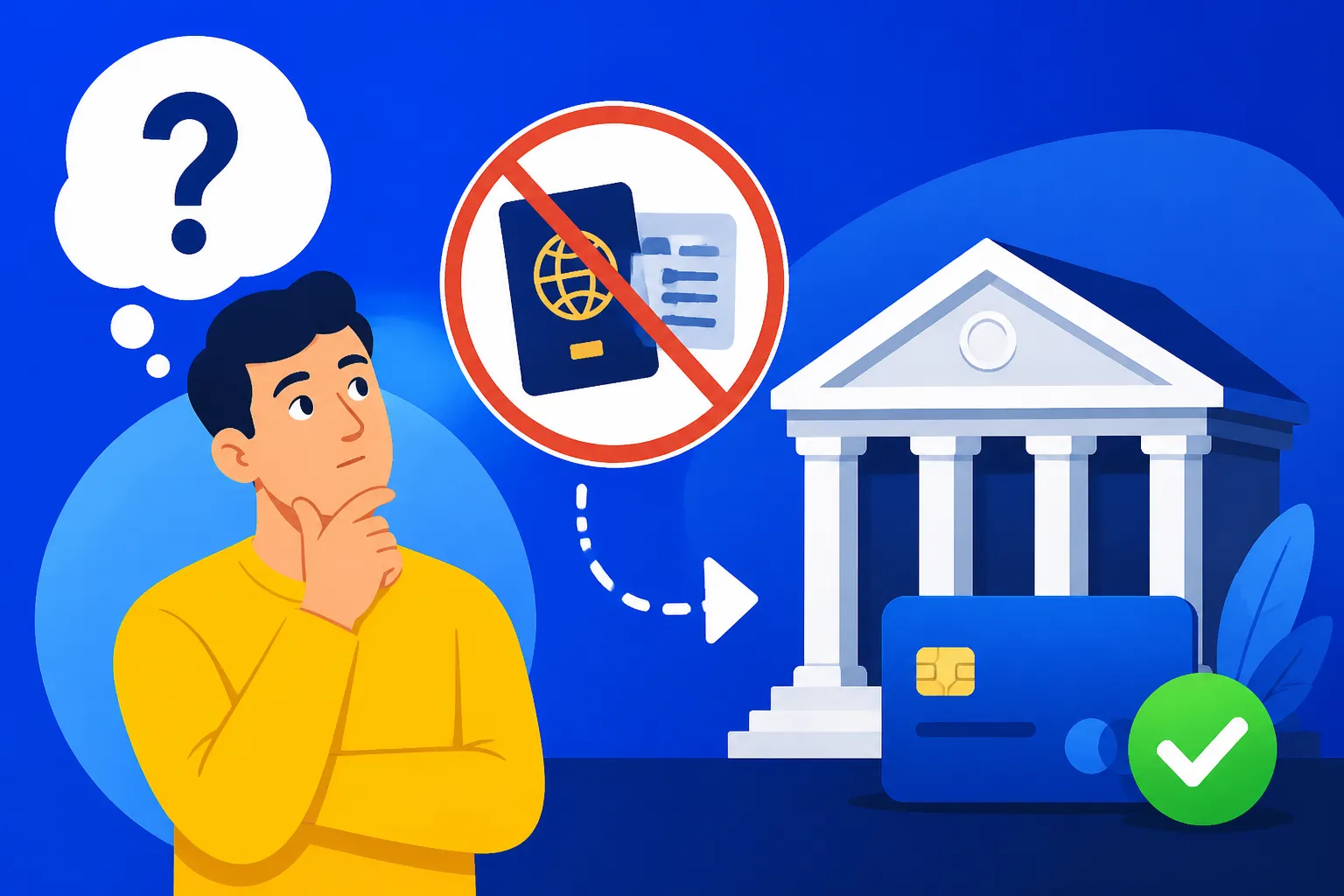
Can I Open a Romanian Bank Account Without Residency?
Many expats arrive in Romania, eager to settle in, only to hit an unexpected roadblock: how do you open a bank account when you haven't fully established residency yet? It's a classic chicken-and-egg scenario that leaves many feeling frustrated and financially stuck. This guide will meticulously break down the challenges, explore your viable options, and walk you through the practical steps to manage your finances in Romania, even before you have that coveted residence permit in hand.
The Initial Hurdle: Romanian Banks and Residency
Expats often underestimate just how essential a local bank account is until they arrive and find themselves juggling foreign cards, racking up fees, and struggling to pay local bills. The challenge, however, comes when you walk into a traditional Romanian bank branch without what they consider "full residency." It's not a matter of being unwelcome, but rather one of stringent regulations and internal policies designed to prevent money laundering and ensure financial stability.
Why Banks Prefer Residents
From a bank's perspective, a resident is a known entity. They have a more stable legal status, a registered address, and usually a consistent income source that is taxable within Romania. This makes them easier to verify, track, and adhere to "Know Your Customer" (KYC) regulations. For non-residents, especially those newly arrived or still in the visa process, the perceived risk for banks increases significantly. They need to be absolutely certain of your identity, your source of funds, and your legitimate reason for needing an account in Romania. This isn't unique to Romania; many countries have similar requirements, but for a newcomer, it can feel like a personal affront. They're not trying to be difficult, but they're protecting themselves and adhering to national and international financial compliance.
The difficulty often stems from the requirement for a Personal Numeric Code (CNP) and proof of address. While EU citizens might find it a bit easier due to freedom of movement, even they often face the CNP hurdle. For non-EU citizens, who might still be on a long-stay visa and awaiting their residence permit, the situation is even more complex. Banks are simply unwilling to take on the administrative burden or perceived risk associated with individuals who don't yet have a solid, verifiable footprint in the country. It's a logistical nightmare for them to manage accounts for transient individuals if something goes awry, especially concerning tax implications that might arise.
The Chicken-and-Egg Problem for New Arrivals
This is where the real frustration sets in. You desperately need a bank account to receive your salary, pay your rent, set up utilities, and generally function in Romanian society. But to open a bank account, many banks insist on a residence permit, or at the very least, a valid CNP and a long-term rental contract that often requires you to already have a bank account for direct debit payments. It's a vicious cycle that leaves many expats feeling stranded and overwhelmed. Imagine trying to get your electricity connected for your new apartment; the providers often want a local bank account for direct debits. Then you go to the bank, and they tell you they need proof of address, which usually means a utility bill in your name, which you can't get without an account. See the problem?
This bureaucratic loop can be incredibly disheartening. Many expats recall stories of going from bank to bank, getting slightly different answers each time, and feeling like they’re hitting a brick wall. It’s important to remember that this isn't personal; it's a systemic issue tied to national and international regulations and the perceived difficulty of verifying non-residents. Sometimes, even if you manage to secure a temporary address, the bank might not accept it as sufficient proof for a full account. You might only be able to open a basic current account with limited functionalities or face higher fees due to your non-resident status, assuming they even offer one.
Understanding the "Without Residency" Conundrum
To truly navigate this, it's crucial to understand what banks mean when they talk about "residency" and what documents are typically required. The nuances in their definitions and requirements can make all the difference in whether you're successful or not.
Defining "Residency" for Banking Purposes
When a Romanian bank asks for proof of residency, they're generally looking for one of two things, or a combination: legal residence status and a stable physical address.
Firstly, "legal residence status" often means a valid Romanian residence permit (Permis de Ședere) for non-EU/EEA citizens, or registration with the local Inspectoratul General pentru Imigrări (IGI) for EU/EEA citizens who intend to stay longer than 90 days. This proves your legal right to live in the country long-term and is key for institutions to identify you as a stable member of the community. Without this, even if you have a long-stay visa, some banks will still be extremely hesitant, viewing your status as temporary or uncertain. For EU citizens, registering your residence as an EU citizen in Romania might be required, showing you're properly integrated and not just a tourist.
Secondly, and perhaps more commonly, they want "proof of a stable physical address" in Romania. This could be a utility bill (electricity, gas, water) in your name, a long-term rental contract registered with ANAF (the tax authority), or sometimes even an official statement from your employer confirming your address in Romania. The problem arises because new arrivals often don't have utility bills in their name yet, and rental contracts might not always be registered with ANAF, especially for short-term or informal arrangements. This distinction is critical because you might have a temporary place to stay, but the bank needs something more official that can be verified against a national registry.
The Essential Documents (and Where "No Residency" Falls Short)
Let's look at what banks typically ask for. Understanding these helps you see where you might be lacking and what alternatives you need to consider for your journey to open a bank account in Romania.
- Valid ID: Your passport (for non-EU citizens) or national ID card (for EU citizens) is always the starting point. Ensure it's valid for at least six months beyond your intended stay.
- Personal Numeric Code (CNP): This is your unique Romanian identification number, akin to a social security number. It's almost universally required for any official transaction in Romania, including banking. Non-EU citizens usually get this as part of their residence permit application. EU citizens living long-term in Romania can apply for one after registering their stay. Knowing How to Get Your CNP (Personal Numeric Code) for Healthcare Access in Romania is important even if you aren't thinking of banking yet, as it's foundational for so much else.
- Proof of Address: As discussed, this is usually a utility bill, a registered rental contract, or a formal letter from your employer or landlord. For new arrivals, getting a utility bill in your name before you have a bank account or even a registered tenancy can be a major headache.
- Proof of Income/Funds: Banks want to know where your money is coming from. This could be an employment contract with a Romanian company, a scholarship letter, or proof of significant funds transferred from abroad (e.g., bank statements from your home country). They need to assess your financial stability and prevent illicit financial activities.
- Tax Residency Certificate: While not always strictly needed for a basic account, if you're dealing with larger sums or complex financial situations, they might ask about your tax residency in Romania to ensure full compliance. This becomes even more pertinent for self-employed individuals or those with significant foreign income.
Where "no residency" falls short is precisely in the CNP and the official proof of address. Without a CNP, most banks won't even process your application. Without an officially recognized Romanian address, they won't know where to send statements or how to verify your physical presence over time. This is why the path to a traditional bank account often runs parallel to, or slightly behind, the process of officially establishing your legal residency in Romania. For those on a work visa in Romania, securing these documents is usually part of the initial integration process.
Your Options When Lacking Full Residency
So, you're in Romania, you need to manage your money, but the traditional bank doors seem firmly shut because you haven't got that elusive permit or CNP yet. Don't despair! There are definitely ways around this, especially in the interim, to ensure you can pay bills, receive funds, and manage your day-to-day finances.
The Uphill Battle with Traditional Banks
Attempting to open an account with major Romanian banks like Banca Transilvania, BCR, ING Bank, or Raiffeisen Bank without at least a CNP and official proof of address can feel like you're running a marathon in quicksand. Most branches, especially in smaller towns, will politely but firmly refuse your request. Their systems are simply not set up for it, and their staff are trained to follow strict protocols that require definitive identification and residency proof. You might be asked to provide your CNP and a utility bill, and if you don't have them, the conversation often ends there.
However, there can be some exceptions or nuances, often depending on the specific branch or the understanding of the staff member you encounter. Some banks might be slightly more flexible if you are an EU citizen with a temporary registration certificate from IGI and a rental contract, even if it's not yet registered with ANAF, provided you can present an employer's letter. Corporate clients sponsoring an expat's move might also be able to facilitate an account opening. For example, if your Romanian employer has a strong relationship with a particular bank, they might be able to vouch for you or provide necessary documentation. This is rare, though, and still usually requires you to at least have applied for your CNP, as the bank needs a valid identifier.
It's worth noting that if you do manage to get an account opened under exceptional circumstances, it might come with limitations. You might only get a basic debit card, limits on transactions, or an account that charges higher fees for non-resident status. It's crucial to ask about all terms and conditions upfront, including potential fees for international transfers, which can be steep if you're regularly moving money from your home country.
Embracing Digital Solutions for Early Days
This is where modern fintech solutions become your absolute best friend. Digital banks and money transfer services have revolutionized how expats manage their finances, particularly during those tricky early days before full residency is established. Services like Wise (formerly TransferWise) are perfectly designed for this exact scenario.
With Wise, you can open a multi-currency account online, often using just your passport and proof of address from your home country. This means you can get a virtual account with Romanian RON details (an IBAN) to receive local payments, or even manage other currencies. You can get a physical or virtual debit card linked to this account, which works just like any other debit card in Romania for payments and ATM withdrawals. This is a game-changer for paying rent, groceries, and receiving your salary if your employer is willing to send it to an IBAN not directly linked to a traditional Romanian bank. The beauty of these services is their focus on international users, making the onboarding process much simpler and less bureaucratic. They understand that not everyone has a CNP or a local utility bill in their new country immediately.
Other platforms like Revolut also offer similar functionalities. While their primary focus might be on simplified international transfers and spending, they can often provide local account details in various currencies, including RON, which can bridge the gap until you secure a traditional Romanian bank account. They typically have lower fees for international transactions compared to traditional banks and offer a very user-friendly mobile app experience. Many expats use these services for months, or even years, finding them perfectly adequate for their day-to-day financial needs in Romania. They can often be a lifeline for those needing to receive a salary or make local payments without having jumped through all the bureaucratic hoops for a traditional Romanian bank account.
The Pathway to a Traditional Account (Once You Get Residency)
Once you've navigated the initial hurdles and secured your official Romanian residence permit (or certificate of registration for EU citizens) and your CNP, the path to opening a traditional bank account becomes significantly smoother. This permit, along with your CNP, is usually the golden ticket that unlocks full access to the Romanian financial system.
Here’s a general outline of what you’ll typically need once you’re officially a resident:
- Residence Permit/Certificate: Your official document proving your right to live in Romania. This will usually have your CNP printed on it.
- CNP: This will be present on your residence permit or a separate document if you're an EU citizen who has applied for it.
- Proof of Address: Now that you're a resident, you should be able to get a utility bill in your name or have a rental contract that is registered with ANAF. This provides the stable, verifiable address banks require.
- Employment Contract (if applicable): A copy of your Romanian work contract demonstrates your income source and financial stability within the country. This can be crucial, especially if you're looking for credit products down the line.
- Passport/National ID: Your primary identification document for cross-referencing.
With these documents in hand, you can walk into almost any branch of Banca Transilvania, BCR, ING Bank, Raiffeisen Bank, or other major banks and expect a much more straightforward process. You'll typically fill out an application form, present your documents, and usually, your account will be opened on the spot or within a few business days. You'll then receive your debit card via post or pick it up at the branch. This is the point where you can consolidate your finances, move away from your interim digital solutions if you wish, and benefit from the full range of services a local bank offers, such as local loans, direct debits for utilities, and access to physical branches for more complex transactions. For many, this also marks a significant milestone in feeling truly settled in Romania. Understanding The Expat Guide to Opening a Bank Account in Romania in detail can further prepare you for this step.
Practical Steps and What to Expect
Understanding the theoretical framework is one thing, but knowing the practical steps and managing your expectations on the ground is key to a less stressful experience when trying to navigate Romanian banking.
Preparing for Your Bank Visit
If you decide to try your luck with a traditional bank before having full residency (e.g., as an EU citizen with a temporary registration or someone with a long-stay visa but no permit card yet), preparation is paramount. Gather every single document you have that might remotely prove your intent to reside or your connection to Romania. The more official paperwork you can present, the better your chances, even if it's not the "ideal" document.
Bring:
- Your passport and several photocopies.
- Your visa (if non-EU) and several photocopies.
- Your EU registration certificate (if EU) and several photocopies.
- Your employment contract with a Romanian company (original and several copies).
- Any official letter from your employer confirming your employment and even your temporary address.
- Your rental contract (original and several copies), even if not registered with ANAF, as a starting point.
- A recent bank statement from your home country, showing proof of funds and a good financial history.
- A utility bill from your home country, to show prior address history.
- Marriage certificate (if applicable, especially if your spouse is a Romanian citizen or resident).
- Crucially, if you have one, your CNP assignment document. Even if you don't have the physical residence card yet, sometimes the document confirming your CNP has been issued can be enough. For non-EU citizens, understanding What Documents Do I Need to Get a CNP in Romania? is a vital first step.
It's also a good idea to bring a Romanian-speaking friend if your Romanian isn't fluent. While staff in major city branches often speak English, you can't always count on it, especially when discussing complex administrative requirements. Be polite, patient, and prepared for potential refusal, but also be persistent and try multiple branches or banks. Some expats report success with certain banks over others; for instance, some have found Banca Transilvania to be slightly more expat-friendly than others, though this can vary wildly by branch and staff member.
Alternative Proofs and Workarounds
Sometimes, you can use creative, albeit temporary, solutions while awaiting your official documents. For instance, if you're renting from an individual who won't register the contract with ANAF immediately, you might ask them to provide a sworn declaration (declarație notarială) confirming your residence at their address. This needs to be notarized by a public notary, which adds a cost, but it's sometimes accepted by banks or for other administrative purposes as temporary proof of address. This can be particularly useful when trying to get any official form of identification or service initiated.
Another workaround for non-EU citizens on a work visa is to leverage your employer. If your employer is a large, reputable company, they may have existing relationships with banks that allow them to expedite certain processes for their foreign employees. They might even be able to provide a letter guaranteeing your employment and current address, which, while not a substitute for a residence permit, can certainly help sway a bank's decision. This is often an option when discussing How to Access Healthcare on a Work Visa in Romania too, as employers often play a key role in initial setup and vouching for their staff.
Remember, the goal here is usually to get something set up to handle immediate financial needs, knowing that a full-fledged account will come later. Don't be afraid to clearly explain your situation and your current status (e.g., "I have a long-stay work visa, my residence permit is processing, and I have my CNP document, but not the card yet"). Sometimes, offering to open a limited account or one with specific restrictions (like no overdraft or credit facilities) can be a good negotiation point.
Costs and Fees Associated with Non-Resident/Early Accounts
Even when you do manage to open an account, be mindful of potential costs. Traditional banks might impose higher monthly maintenance fees for non-resident accounts, if they offer them at all. There could be charges for international transfers (both incoming and outgoing), ATM withdrawals from non-bank ATMs, and even for simple transactions. Always ask for a detailed breakdown of fees before committing and read the fine print carefully, including any foreign exchange rate markups.
Compare these costs with digital solutions like Wise. Often, the fees for opening and maintaining a multi-currency account are minimal or non-existent, and international transfer fees are significantly lower and more transparent. For example, if you're relying on receiving your salary from a foreign employer, or transferring funds from your home account, services like Wise or Revolut can save you a substantial amount in exchange rate markups and transfer fees compared to what a traditional bank might charge for a similar service to a non-resident account. This is particularly relevant when considering The Cost of Living in Romania: A Complete Breakdown for Foreigners (2026), where every saving counts. For more detailed insights into financial management and tax implications for your various income streams, it's always wise to consult resources like Taxes for Expats.
| Feature | Traditional Romanian Bank (Pre-Residency Attempt) | Digital Solution (e.g., Wise, Revolut) |
|---|---|---|
| Account Opening Ease | Very difficult, often impossible without CNP/residence permit | Relatively easy with foreign passport and home address proof |
| Required Documents | CNP, residence permit, registered rental contract, work contract | Passport, proof of address (from home country often accepted) |
| Local IBAN (RON) | Yes, if account opened successfully | Yes, often provided for local transfers and salary reception |
| Physical Card | Yes (debit/credit), usually picked up or mailed | Yes (debit card), usually mailed to your address |
| ATM Access | Widely available, potentially fees for non-bank ATMs | Widely available, potential fees for certain ATMs/after free limits |
| International Transfers | Possible, can be slow and expensive with poorer exchange rates | Fast, transparent, and often cheaper with better exchange rates |
| Branch Access | Yes, but limited if only a basic account, language barrier possible | No physical branches, all support online via app/website |
| Fees | Potentially high monthly fees, transfer fees, hidden charges for non-residents | Often low/no monthly fees, transparent transaction fees |
| Suitability | Best for long-term residents, full integration into Romanian financial system | Excellent for new arrivals, temporary solution, international transactions |
In conclusion, while opening a traditional Romanian bank account without established residency is indeed an uphill battle, it's far from impossible to manage your finances effectively in Romania. Leveraging digital solutions in the interim and diligently working towards securing your residence permit will ultimately provide you with all the financial tools you need to thrive and feel truly settled in your new home.
Disclaimer
The information provided in this guide is intended for general informational purposes only and does not constitute legal, financial, or immigration advice. While every effort has been made to ensure accuracy and up-to-date information, regulations and procedures in Romania can change frequently. Expats should always consult with relevant authorities, legal professionals, or financial advisors for advice tailored to their specific situation. The author and publisher are not responsible for any actions taken based on the information presented herein.