How Do I Apply for Family Reunification in Romania?
Bringing your loved ones to join you in Romania can feel like navigating a labyrinth, a common challenge many of us expats face once we've settled in but still long for our family to be by our side. The administrative journey for family reunification can be complex, filled with specific requirements and sometimes frustrating delays, but this guide will walk you through every step, helping you understand how to apply for family reunification in Romania and smoothly bring your family closer.
Understanding Who Can Apply for Family Reunification in Romania
When you start thinking about bringing your family to Romania, the first crucial step is to understand exactly who the Romanian authorities consider eligible for family reunification. It’s not a one-size-fits-all situation, and the rules are quite specific, often depending on your own immigration status here in Romania.
Generally, the concept of "family member" in Romania primarily covers your immediate dependents. This includes your spouse – provided the marriage is legally recognized and wasn't entered into solely for immigration purposes. They're pretty strict on checking that out, so make sure all your marriage documents are in perfect order. Then, there are your minor children, which means any children under the age of 18, including adopted children. If you have adult children who are financially dependent on you, perhaps due to a serious health condition or disability, they might also be considered, but this usually requires robust proof of their dependency. Lastly, dependent parents of either you or your spouse may be eligible, but again, this is usually for those who are genuinely unable to support themselves in their home country and need your financial assistance. The key here is "dependency" – expect to provide ample evidence of it.
Your own status in Romania plays a massive role in whether you can sponsor family reunification. If you're an EU/EEA/Swiss citizen, the process is generally simpler, falling under EU free movement directives. You register your residence, and your family members can then register theirs. However, if you're a non-EU citizen holding a valid Romanian residence permit (Permis de ședere), you're typically the "sponsor" in this process. You need to hold a residence permit that is valid for at least one year and have a realistic prospect of extending it. Those with long-term resident status or who have become Romanian citizens themselves, naturally, have a much smoother path. This journey can often feel like a puzzle, but knowing the pieces and your place within The Complete Guide to Romanian Residence Permits for Expats (2027) can truly make a difference. It's not enough to just live here; you need to be properly established.
Essential Conditions and Documentation for Family Reunification
Now that you have a grasp of who is generally eligible, let's dive into the practicalities: the conditions you must meet and the mountain of paperwork you'll need to gather. Trust me, Romania loves its paperwork, and this process is no exception. Each document needs to be perfect, or you'll be sent back to square one.
Proving Adequate Accommodation
One of the first things the General Inspectorate for Immigration (IGI) will scrutinize is your living situation. You need to demonstrate that you have suitable accommodation for yourself and all the family members you intend to bring. This isn't just about having a roof over your head; it's about having enough space. They'll look at the number of rooms and the overall size of your apartment or house. For instance, a single-room studio might be fine for one person, but if you're bringing a spouse and two children, you'll need something significantly larger, perhaps a two or three-room apartment.
You'll need to provide either a rental contract (registered with ANAF, the tax authority, which is super important!), a property title deed if you own your home, or a notarized declaration from the property owner giving consent for your family members to reside there, along with a copy of their ID and property deed. This is about proving stability and ensuring your family won't be living in cramped, unsuitable conditions. They want to see that you've thought this through and can provide a decent home.
Demonstrating Sufficient Financial Means
This is arguably the most critical and often most challenging condition for many expats. You absolutely must prove that you have stable and adequate financial resources to support your entire family without them becoming a burden on the Romanian social assistance system. The general rule of thumb is that your income, after taxes, should be at least equal to the gross average salary in Romania for each family member you are sponsoring. Yes, each family member, including yourself. As of my last check, the gross average salary hovers around 7,500-8,000 RON, but this can fluctuate. You need to multiply this by the number of family members.
For example, if you're sponsoring your spouse and one child, you'd need to demonstrate an income equivalent to three times the national gross average salary. This income can come from your salary, proven by an employment contract and recent payslips, or from other stable sources like business profits (if you're self-employed with an SRL or PFA), pension income, or even significant savings in a Romanian bank account that can realistically sustain your family for the foreseeable future. Bank statements covering the last 6-12 months are usually required to show consistency. Don't assume your foreign income will be enough without showing it's regularly transferred and accessible here. They really want to see that you're self-sufficient.
Mandatory Health Insurance
Before your family members can even think about stepping foot in Romania, they will need private health insurance. This is non-negotiable. Until they obtain their own residence permits and eventually become eligible to register for the public health insurance system (CASS), they must have comprehensive private medical coverage that is valid in Romania. This insurance needs to cover emergency medical care, hospitalization, and repatriation expenses. It's similar to the travel insurance requirements for visas but needs to be for a longer duration, typically covering at least the initial period until they can enroll in the public system. Companies like Cigna Global are often recommended for expats due to their comprehensive international coverage, which can bridge this gap. Don't cheap out on this – it's crucial for their safety and for your application's success. More details on different options can be found in Health Insurance in Romania: Mandatory, Private and Travel Options Explained.
Key Documents and Certificates
Beyond accommodation, finances, and health insurance, you'll need a pile of official documents. All foreign documents (like marriage certificates, birth certificates, criminal record certificates) must be apostilled or superlegalized in your home country, and then officially translated into Romanian by a public notary in Romania. This process alone can be lengthy and expensive, so start early!
Here's a quick summary of the usual suspects for documents:
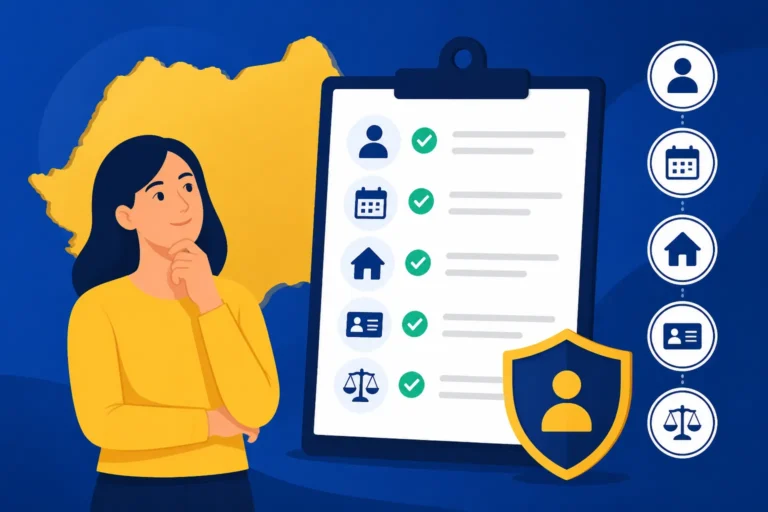
| Document Type | Sponsor (You) | Family Member(s) |
|---|---|---|
| Proof of Identity | Valid passport, Romanian residence permit | Valid passport, 2 recent passport-sized photos |
| Relationship Proof | – | Original (apostilled/superlegalized & translated) Marriage/Birth Certificate(s) |
| Financial Means | Employment contract, payslips (last 6 months), bank statements (last 6-12 months) | – |
| Accommodation Proof | Rental contract (registered), property deed, or notarized owner consent | – |
| Health Insurance | Proof of own health insurance | Private health insurance policy valid in Romania |
| Criminal Record | Original (apostilled/superlegalized & translated) police clearance certificate (for adult sponsor from home country) | Original (apostilled/superlegalized & translated) police clearance certificate (for each adult applicant from home country) |
| Application Forms | Family reunification request form (IGI) | Long-stay visa application form (Embassy/Consulate) |
| Declaration | Notarized declaration of no legal impediments to marriage/family | – |
| Fees | Proof of payment for processing fees | Proof of payment for visa fees |
This table is a general guideline; always check the latest requirements on the IGI website or at your specific local office, as rules can change.
The Step-by-Step Application Process for Family Reunification
Once you've wrapped your head around the requirements and started gathering those documents, it's time to embark on the actual application process. This isn't a single, straightforward application; it's a multi-stage journey involving both you in Romania and your family members abroad.
Step 1: The Sponsor's Application at IGI (Romania)
As the sponsor already residing in Romania, you are the one who kicks off the process. You need to submit a "request for family reunification" (solicitare de reîntregire a familiei) at the local General Inspectorate for Immigration (IGI) office in your county of residence. This is where all those documents you gathered will come into play. You'll need to present your own residence permit, proof of your stable and adequate income, your accommodation documents, your health insurance, and all the authenticated and translated marriage or birth certificates proving your relationship with the family members you wish to bring.
It's highly recommended to book an appointment beforehand, as IGI offices can be notoriously busy. Knowing How to Book an Appointment at the Immigration Office (IGI) in Romania can save you a lot of grief and wasted trips. Be prepared for a potentially long wait for your appointment and then another wait while your file is being reviewed. The IGI might call you in for an interview to clarify aspects of your application, especially concerning your financial means or the authenticity of your relationship. Don't be surprised if they ask very specific questions – they're thorough. After you submit your application, you'll enter a waiting period, which can vary from a few weeks to a couple of months, for IGI to issue a decision. If approved, you'll receive a formal decision (Decizie) confirming that the conditions for family reunification are met. This is the golden ticket for the next step.
Step 2: Family Member's Long-Stay Visa Application Abroad
With the IGI approval in hand, your family members abroad can now apply for their long-stay visa for family reunification (Type D/VF visa). This application is made at the Romanian embassy or consulate in their country of residence. They will need to fill out a visa application form, provide their valid passport, recent passport-sized photos, and crucially, the original IGI approval decision you received.
In addition to these, they will need the full set of authenticated and translated relationship documents (marriage/birth certificates), proof of their private health insurance that covers the entire duration of their initial stay in Romania, and potentially a criminal record certificate from their country of origin. The embassy or consulate might also require an interview, similar to the IGI process. The processing time for the visa can also vary, so patience is key. Once the visa is granted, your family members can finally make their travel arrangements to Romania! For a broader understanding of this stage, check out The Complete Visa Guide for Relocating to Romania (2027).
Step 3: Residence Permit Application Upon Arrival in Romania
Congratulations, your family has arrived in Romania! But the journey isn't quite over. Within a specific timeframe, usually 30 days of their entry into the country, your family members must apply for their own residence permits at the local IGI office corresponding to your place of residence. This is a critical deadline, and missing it can lead to complications.
At this stage, they'll need their passport with the D/VF visa, the IGI approval, proof of their address in Romania (usually a copy of your registered rental contract or property deed, plus your own residence permit), and proof of your financial means again. They will also undergo medical checks at a designated clinic to ensure they don't have any diseases that could pose a public health risk. Furthermore, they'll be required to provide their biometrics – fingerprints and a photo – which are essential for the production of their biometric residence card. This card, often referred to as a "Permis de ședere," is their official document proving their legal right to live in Romania. The wait for the card itself can take a few weeks after the application is submitted. Once approved, knowing How to Get a Biometric Residence Permit Card in Romania will guide you through picking it up.
For families planning a larger move, particularly those from non-EU countries, it's worth considering logistical support. Companies like Sirelo offer services that can help manage the physical relocation once all the immigration paperwork is in order. While they won't handle the visa applications, they can certainly ease the burden of moving belongings across borders after you've secured all the necessary permits.
Common Challenges and Important Considerations
Navigating the Romanian bureaucracy for family reunification can be a test of patience, and it's essential to be aware of the common hurdles and crucial details.
The Language Barrier
Unless you or your family members are fluent in Romanian, the language barrier can be a significant obstacle. While some IGI officers may speak English, it's not guaranteed, especially in smaller cities. Having a Romanian speaker accompany you, or even hiring an authorized translator for appointments, can make a world of difference. All official communications, forms, and interviews will be in Romanian, so ensure you understand everything perfectly.
Document Apostille/Superlegalization
I cannot stress this enough: get your documents right the first time. Any marriage certificates, birth certificates, or criminal record certificates issued outside of Romania must undergo the apostille or superlegalization process in the country where they were issued. After that, they must be translated into Romanian by a public notary in Romania. An unofficial translation or one not done by a Romanian notary will be rejected. This process is time-consuming and often costly, so factor it into your planning and budget. You'll find similar demands when reading The Expat Guide to Moving to Romania from a Non-EU Country (2027).
Nuances of Financial Proof
The IGI looks for stability and consistency in your financial means. A sudden large deposit into your account just before applying might raise eyebrows. They want to see a history of regular income. If your income varies, be prepared to explain it and provide additional documentation. Remember, the requirement is based on the gross average salary, not the minimum wage, which often surprises people. If you're self-employed (PFA, SRL), make sure your tax declarations and bank statements clearly demonstrate sufficient, consistent income.
Managing Expectations for Waiting Times
The entire process, from your initial application at IGI to your family members receiving their residence permits, can easily take several months. Each stage has its own processing time, and these can be influenced by the workload at IGI or the Romanian consulates, holidays, or even simple administrative delays. It's not uncommon for the whole process to stretch to 4-6 months, or even longer in some cases. Start planning well in advance and manage your family's expectations.
When to Seek Legal Assistance
For straightforward cases (e.g., spouse and minor children, clear financial means), you might be able to handle it yourself. However, if you have adult dependent children, dependent parents, complex financial situations, or if you've faced previous rejections, it's highly advisable to consult with a Romanian immigration lawyer. They can help navigate the specific legal nuances, ensure all documents are correctly prepared, and represent you in communications with IGI. While it adds to the cost, it can save you immense stress and potentially avoid costly delays or rejections.
Post-Arrival Health Insurance
Once your family members receive their residence permits, they will typically become eligible to register for the public health insurance system (CASS), just like you. However, there might be a short transition period or specific steps involved. It’s important to understand this transition to avoid gaps in coverage. Make sure to initiate the process for them to get their CNP (Personal Numeric Code) soon after arrival, as this is fundamental for accessing public services, including healthcare. Understanding How to Apply for a CNP as Part of Your Residence Process is a crucial next step once your family is here. After securing the CNP, you can then proceed with Registering for Public Health Insurance (CASS) in Romania (2027). This way, your family transitions from private insurance to the public system seamlessly.
Bringing your family to Romania is a significant undertaking, both emotionally and administratively. While the process is indeed bureaucratic, it's entirely manageable with careful planning, attention to detail, and a good dose of patience.
Disclaimer
The information provided in this guide is intended for general informational purposes only and does not constitute legal advice. Immigration laws and regulations in Romania are subject to change. It is highly recommended to consult with the official General Inspectorate for Immigration (IGI) website, a qualified immigration lawyer, or the relevant Romanian embassy/consulate for the most accurate and up-to-date information pertaining to your specific situation.