What Is the Patient Dossier Platform and How Do I Use It in Romania?
Navigating the healthcare system in a new country can feel like trying to solve a Rubik's Cube blindfolded, especially when your medical history is scattered across various clinics and paper files. For expats in Romania, this fragmentation often leads to frustrating repeat explanations and a lack of continuity in care. This guide will meticulously break down the Dosarul Electronic de Sănătate (DES), or the Patient Dossier Platform, explaining what it is, how it works, and most importantly, how you, as an expat, can harness its power to streamline your medical journey in Romania.
Demystifying the Patient Dossier Platform (DES)
For years, many of us expats here in Romania (myself included!) have faced the universal challenge of medical records being stuck in the dark ages. You'd go to one doctor, get a diagnosis, then move to a specialist, and they'd ask for everything again. The Dosarul Electronic de Sănătate (DES), Romania's electronic patient dossier platform, was introduced precisely to tackle this very real problem. It's not just some obscure government website; it's designed to be a central, secure repository for all your essential medical information. Think of it as your medical passport, but digital and accessible to authorized healthcare professionals nationwide.
What is the Dosarul Electronic de Sănătate (DES) Really?
At its core, the DES is a national IT system managed by the National Health Insurance House (Casa Națională de Asigurări de Sănătate – CNAS). Its ambitious goal is to collect and integrate medical data from various sources – your family doctor, specialists, hospitals, laboratories, and pharmacies – into a single, comprehensive electronic file for every insured person in Romania. It’s meant to ensure that any authorized doctor, anywhere in the country, can access your relevant medical history instantly, making healthcare more efficient and safer. This means less paperwork for you, fewer forgotten details, and a more coherent approach to your health. I know, it sounds almost too good to be true for those of us who have wrestled with Romanian bureaucracy, but it's a vital step forward.
Who Can Access Your DES and Why?
Privacy is, naturally, a big concern when it comes to sensitive medical data. So, it's important to understand who exactly has access to your DES and under what circumstances. Primarily, you as the patient have full access to your own dossier. Beyond that, the access levels are tiered and strictly regulated:
- Your Family Doctor (Medic de Familie): This is your main gatekeeper to the public system, and they have comprehensive access to your entire dossier. They are often the first point of contact and play a crucial role in updating your records. Learning How to Choose and Register with a Family Doctor (Medic de Familie) in Romania is truly paramount for expats.
- Specialist Doctors: When your family doctor refers you to a specialist, that specialist will have access to the specific parts of your dossier relevant to their area of expertise and your current consultation. They won't see everything, just what's necessary for your treatment.
- Hospital Doctors: In a hospital setting, attending physicians and emergency staff can access your dossier, especially critical information like allergies, ongoing treatments, and past diagnoses, which can be life-saving in an urgent situation.
- Emergency Services: In a dire emergency, the 112 services and SMURD teams can gain immediate access to critical data from your DES to make informed decisions rapidly. This is where the system truly shines, as having immediate access to your blood type, allergies, or chronic conditions can make all the difference.
All access is logged, ensuring a clear audit trail. This means you can see who has viewed your dossier and when, adding an extra layer of security and transparency to your medical data.
What Information Does Your DES Contain?
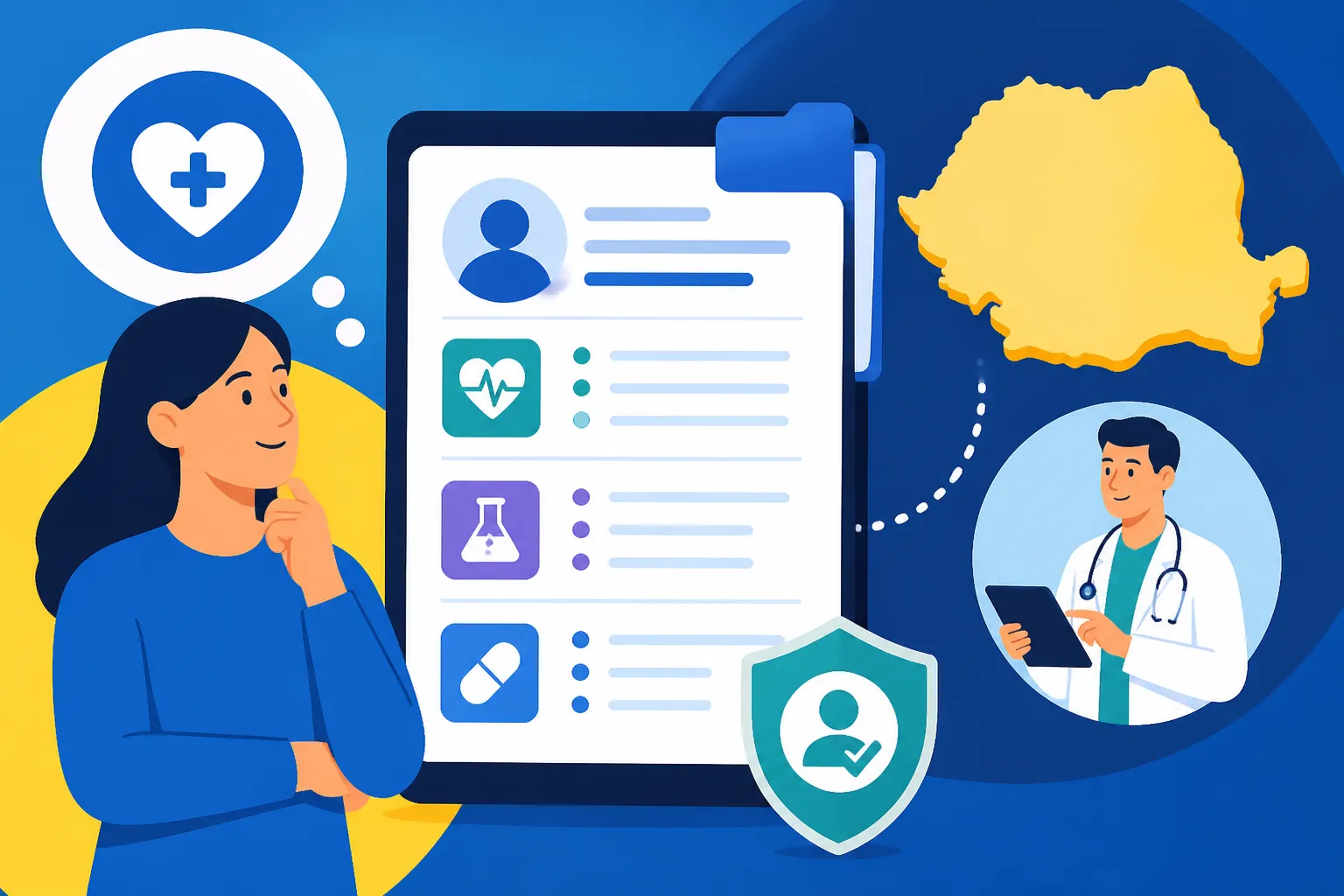
The DES is designed to be a holistic record of your health. It aggregates a vast amount of information, aiming to paint a complete picture of your medical history. This includes:
- Electronic Health Summary (Sumar Electronic de Sănătate – SES): This is the core, most critical part. It contains vital information like your blood type, known allergies, chronic conditions, current medications, significant diagnoses, and surgical history. This is the part that emergency personnel will look at first.
- Medical Documents: This section holds digital copies of various medical documents issued by different healthcare providers over time. This can include specialist consultation notes, hospital discharge papers, imaging results (like X-rays or MRI reports), and even vaccination records.
- Electronic Prescriptions (Rețeta Electronică): All your prescriptions issued through the public system will be recorded here, making it easier to track your medication history and for pharmacists to verify prescriptions. Understanding the Electronic Prescription (Rețeta Electronică) System in Romania can save you a lot of hassle at the pharmacy.
- Laboratory Results: Test results from blood work, urine samples, and other diagnostic tests are uploaded and stored.
- Diagnoses and Procedures: A record of all diagnoses you've received and any medical procedures you've undergone.
Essentially, the DES becomes the single source of truth for your medical journey in Romania, reducing the need for you to be the sole custodian of your health information.
Why the DES is a Game-Changer for Expats in Romania
When you first arrive in Romania, setting up healthcare can be daunting. From figuring out The Complete Guide to Healthcare in Romania for Expats (2027) to understanding how the local system operates, it's a lot to take in. The Patient Dossier Platform might seem like another bureaucratic hurdle, but once you're set up, it truly becomes an invaluable tool, especially for us foreigners who are already grappling with language and cultural differences.
Streamlining Your Healthcare Journey
One of the biggest headaches for expats is the lack of continuity when seeing different doctors or moving to a new city. I remember having to haul a folder full of papers around, trying to explain my history in broken Romanian to every new specialist. The DES eliminates much of this pain.
Imagine this: you've been living in Bucharest, seeing a family doctor and a few specialists there. Then, your job takes you to Cluj-Napoca. Without the DES, you'd be starting from scratch, trying to recall every detail, get old records transferred, or simply hoping the new doctor understands your translated notes. With the DES, your new family doctor in Cluj, once registered with you, can instantly access your comprehensive medical history, past diagnoses, medication lists, and even previous lab results. This means less time explaining, more accurate diagnoses, and a smoother transition. It's like having a digital guardian angel for your health records, always there, always updated (provided your doctors are diligent!).
Empowering You with Your Own Health Data
The DES isn't just for doctors; it's also for you. As a patient, you have the right to view your own dossier. This means you can:
- Review your diagnoses: Understand what your doctors have noted.
- Track your medications: Keep tabs on what you've been prescribed and for how long.
- Monitor test results: See your lab work and compare results over time.
- Identify potential errors: If you spot something incorrect or missing, you can bring it to your doctor's attention for correction.
This level of transparency gives you a sense of control and allows you to be a more active participant in your healthcare decisions. For expats, this is particularly empowering, as it helps bridge the information gap that language barriers or unfamiliarity with the system can create. You can sit down with a Romanian friend, or use translation software, and calmly review your records outside of a pressured doctor's appointment.
Crucial for Emergency Situations
This is arguably where the DES truly proves its worth, especially for those of us living far from our home support networks. Picture this: you're out and about, maybe exploring the breathtaking Carpathian mountains, and suddenly, an unexpected medical emergency strikes. You might be unconscious or unable to communicate vital information.
In such a scenario, emergency medical personnel, whether from a local clinic or the SMURD ambulance service, can quickly access your Electronic Health Summary (SES) within the DES. This brief, critical overview contains life-saving details: your blood type, severe allergies (to medications, food, or insect stings), any chronic conditions (like diabetes or heart disease), and even your current medications. Without this, doctors would have to waste precious time trying to ascertain this information, potentially administering a drug you're allergic to or delaying critical treatment because they don't know your medical history. This immediate access to crucial data can drastically improve outcomes during a crisis.
It's also a stark reminder of why having reliable insurance is so important. While the DES covers public healthcare records, comprehensive expat or travel insurance like SafetyWing provides a broader safety net, especially when you might be travelling internationally or need to cover unforeseen circumstances beyond public system services. Having both the DES for medical continuity and a robust insurance plan like SafetyWing for financial protection truly offers peace of mind.
How to Access and Utilize Your Patient Dossier Platform
Alright, so you’re convinced the DES is a good thing. Now, how do you actually get your hands on it? Like many things in Romania, it involves a few steps, and patience is definitely a virtue. It’s not an instant online signup, but rather a process tied into your official healthcare registration.
The Essential First Steps: CASS, CNP, and Family Doctor
Before you can even think about accessing your DES, you need to be firmly integrated into the Romanian public healthcare system. This means a few crucial prerequisites:
- Be Insured with CASS: You must be contributing to the CASS (Casa de Asigurări de Sănătate) system, which is Romania's public health insurance scheme. If you're employed, your employer handles this. If you're self-employed (PFA) or not working, you'll need to register and pay contributions yourself. This is the foundation of your access to public healthcare services. I've written extensively on How to Register for Public Health Insurance (CASS) as a Foreigner in Romania because it’s such a fundamental step.
- Obtain a CNP: The Personal Numeric Code (CNP) is your unique identification number in Romania, analogous to a social security number. It's essential for everything from banking to healthcare. Without a CNP, you simply cannot be registered in the DES system. If you haven't got one yet, check out our guide on How to Get Your CNP (Personal Numeric Code) for Healthcare Access in Romania.
- Register with a Family Doctor (Medic de Familie): This is perhaps the most critical step for DES access. Your family doctor acts as your primary care provider and is generally the one who initiates and helps manage your DES access. They are responsible for uploading much of your initial data and ensuring it's kept up-to-date. Finding a family doctor who speaks English and is understanding can be a challenge, but it's worth the effort. Our comprehensive guide, The Expat Guide to Finding a Family Doctor (Medic de Familie) in Romania, can help you navigate this.
Once these three pillars are in place, your journey to accessing your DES becomes much smoother. Your family doctor will usually be the one who first populates your Electronic Health Summary (SES) and can guide you through the next steps.
Getting Your Login Credentials and Activating Access
This is where things can get a little tricky, as the process isn't always uniform and can depend on your family doctor or local CNAS office. Generally, there are two main ways to obtain your login credentials:
- Through Your Family Doctor: This is the most common and recommended route. After you've registered with them and your CASS contributions are active, your family doctor can initiate the process of setting up your DES access. They will generate initial login credentials (usually a username and a temporary password) for you. Make sure to explicitly ask them about activating your "Dosarul Electronic de Sănătate" access. They might require you to sign a consent form.
- Through the CNAS Website/Local Office (Less Common for Initial Setup): While you can eventually access the platform via the CNAS portal at www.des-cnas.ro, the initial activation and getting those first login details are almost always done through a medical professional, specifically your family doctor. It's not something you can just sign up for directly online as an individual without a doctor initiating it.
Once you receive your temporary credentials, you'll need to activate your account online. You'll log in to the DES platform (www.des-cnas.ro), change your temporary password to a secure, personal one, and confirm your details. It might feel a bit like activating a new bank account, but persist!
Navigating the Platform: What to Expect Online
When you finally log into the DES platform, you'll find a structured interface, though it is predominantly in Romanian. Here’s a general idea of what you’ll encounter:
- Dashboard/Overview: This is usually the first screen, offering a summary of your key medical information, often the Electronic Health Summary (SES).
- Sections for Medical History: You'll find tabs or menus to explore different categories of your health data, such as:
- Sinteza Electronică de Sănătate (SES): Your crucial summary.
- Documente Medicale: Where your various medical documents (discharge papers, specialist notes) are stored.
- Consultații: A list of your consultations.
- Prescripții Medicale: Your electronic prescriptions.
- Investigații Paraclinice: Lab results and other investigations.
- Search and Filter Options: While the interface can be a bit clunky, there are usually ways to search for specific documents or filter by date.
Keep in mind that the accuracy and completeness of your DES heavily depend on the healthcare providers you visit diligently uploading your data. Not all private clinics are fully integrated with the DES, though many do upload data for public system reimbursement. It’s always a good idea to politely remind your doctors to ensure your records are updated in the system, especially after significant consultations, tests, or hospital stays.
Here’s a simplified breakdown of the requirements and what information is typically stored:
| Feature/Requirement | Description | Expat Relevance |
|---|---|---|
| CASS Contributions | Mandatory public health insurance. | Essential for any public healthcare access and DES registration. |
| CNP (Personal Numeric Code) | Unique identification number. | Non-negotiable for official registration in the DES. |
| Family Doctor | Your primary point of contact in the public system. | Crucial for initiating DES access and managing your records. |
| Electronic Health Summary (SES) | Core data: allergies, blood type, chronic diseases, current meds, past surgeries. | Vital for emergency care and quick information sharing with new doctors. |
| Medical Documents | Consultation notes, hospital discharge, lab results, prescriptions. | Consolidates all your records, reducing paperwork and enabling continuity of care. |
| Access Platform | Online portal: www.des-cnas.ro | Access your data 24/7, though interface is Romanian. |
| Security | Access logging, tiered access for medical staff. | Ensures privacy and accountability for who views your sensitive data. |
Common Hurdles and Practical Advice for Expats
As with almost any administrative process in Romania, particularly one involving an IT system, there are likely to be a few bumps in the road. For expats, these challenges can be amplified by language barriers and an unfamiliarity with local norms. But don't despair – there are ways to navigate them.
Language Barriers and Technical Glitches
The most immediate challenge for many expats will be the language. The entire DES platform is in Romanian, without an official English translation option. This can make navigating the menus, understanding the descriptions of documents, or even deciphering technical messages quite difficult.
Practical Advice:
- Use Browser Translation Tools: While not perfect, Google Chrome's built-in translate feature can provide a rough idea of what you're looking at. Be cautious, though, as medical terminology can be lost in translation.
- Ask Your Family Doctor for Guidance: Your family doctor is your best ally here. Ask them to walk you through the platform during an appointment, pointing out key sections and explaining what different types of documents represent. Don't be shy; they are used to explaining things to patients.
- Seek Help from a Romanian Speaker: If you have a trusted Romanian friend, colleague, or even a spouse, ask them to sit with you when you first explore the platform. Their insights will be invaluable.
- Patience with Technical Issues: Like any large IT system, the DES can sometimes experience glitches, slow loading times, or periods of maintenance. If you can't access it, try again later or clear your browser's cache. If the problem persists, contact your family doctor or the CNAS helpdesk (though this will likely require Romanian language skills).
Ensuring Your Data is Up-to-Date
The DES is only as useful as the data it contains. If your doctors aren't consistently uploading your information, then it loses its purpose. This is a common frustration, especially if you visit various private clinics that might not be fully integrated or diligent with uploads to the public system.
Practical Advice:
- Proactively Ask Your Doctor: After every significant consultation, test, or procedure, politely ask your family doctor or specialist if they will be updating your DES. A simple, "Veți încărca informațiile în Dosarul Electronic de Sănătate, vă rog?" (Will you upload the information to the Electronic Health Dossier, please?) can go a long way.
- Keep Your Own Records: Until you are fully confident in the DES system's completeness, continue to keep your own personal copies of important medical documents, such as lab results, specialist reports, and hospital discharge summaries. This provides a crucial backup.
- Review Your Dossier Regularly: Log in periodically (perhaps once every few months, or after a significant medical event) to review your DES. Check if recent consultations, test results, or prescriptions have been added. If you notice glaring omissions, contact the relevant doctor to inquire.
- Understand Public vs. Private Integration: Remember that while a public hospital or a family doctor must upload to the DES, a purely private clinic might not always do so, or might only upload what's required for a specific CASS-reimbursed service. This is one of the reasons many expats opt for private health subscriptions alongside public insurance. If you travel frequently outside Romania, a robust travel insurance plan like SafetyWing ensures you have coverage and access to medical assistance, regardless of your DES status abroad. It acts as a continuous safety net for your health, complementing your Romanian arrangements.
What to Do If You Can't Access Your DES
Sometimes, despite your best efforts, you might encounter persistent problems accessing your DES. This can be incredibly frustrating, especially when you feel like you've jumped through all the hoops.
Troubleshooting Steps:
- Re-confirm Credentials: Double-check your username and password. Are you entering them correctly? Is Caps Lock on?
- Contact Your Family Doctor: This should always be your first point of contact. They can verify your registration status, re-issue temporary credentials if needed, or check if there's a technical issue on their end. They are typically the most equipped to help with DES access problems.
- Contact CNAS: If your family doctor is unable to help, or if you're between family doctors, you can try contacting your local Casa de Asigurări de Sănătate (CNAS) office. Be prepared for a bureaucratic process and potential language barriers here. You might need a Romanian speaker to assist you with phone calls or in-person visits.
- Consider Private Options in Parallel: While the public system is evolving, slow administrative processes are a reality. Many expats maintain private health insurance or subscriptions (like those offered by clinics such as Understanding Private Clinics and Medical Networks (Regina Maria, MedLife) in Romania) precisely to bypass potential delays and ensure prompt access to care. These private systems often have their own electronic record-keeping, which can be faster and more English-friendly, offering an alternative to relying solely on the public DES during periods of non-access. It means you're covered even if the public system is temporarily inaccessible.
The Patient Dossier Platform is a powerful tool designed to improve healthcare in Romania. While it comes with its own set of challenges, particularly for expats, understanding its function and how to proactively engage with it can significantly enhance your experience within the Romanian medical system.
Disclaimer
Please note that while this guide provides comprehensive information based on current knowledge and typical expat experiences in Romania, administrative procedures, laws, and healthcare system specifics can change. We always recommend verifying the latest requirements with official Romanian authorities, such as the National Health Insurance House (CNAS), and consulting with local legal or healthcare professionals for personalized advice. This content is for informational purposes only and does not constitute official legal, medical, or financial advice.