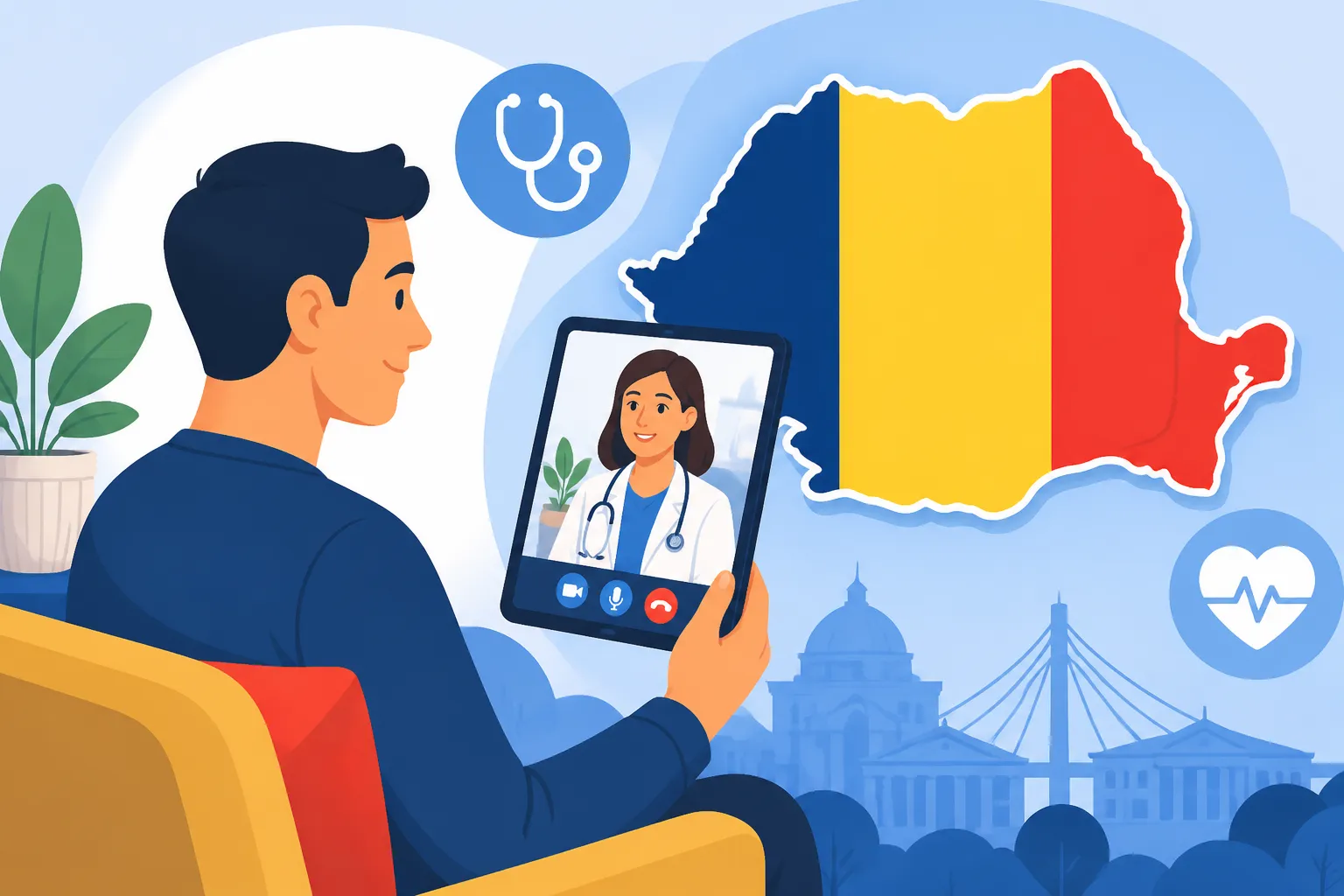
Can I Use Telemedicine Services in Romania as an Expat?
Navigating a new country’s healthcare system can feel like trying to solve a Rubik's Cube blindfolded, and Romania is no exception. For many expats, the idea of getting a simple doctor's appointment, especially when you're feeling under the weather and the language barrier looms large, can be incredibly daunting. This guide is here to shed some light on a relatively modern solution: telemedicine services in Romania, detailing how you can access and utilize them effectively as a foreigner.
Understanding Telemedicine in Romania: The Lay of the Land
Telemedicine, or telemedicină as it's known here, has seen a significant boom in Romania, especially since the recent global health events forced a rapid digitalization of many services. This shift has been a genuine relief for many, particularly for expats who might struggle with the traditional, often bureaucratic, in-person consultation process. Essentially, telemedicine allows you to consult with a medical professional remotely, using video calls, phone calls, or secure messaging platforms. It's not just a fancy new trend; it’s become a crucial, accessible option for routine consultations, follow-ups, and even some specialist advice.
Historically, the Romanian healthcare system has been very much based on face-to-face interactions. The concept of an electronic health card (Cardul de Sănătate) was a big step, but remote consultations were slow to catch on until necessity pushed them forward. Now, you’ll find that many private clinics, and even some public initiatives, have embraced the convenience of telemedicine. This means you no longer always have to trek across town, navigate traffic, or spend hours in waiting rooms just to discuss a non-urgent issue or get a prescription refilled. For those of us who have juggled work, family, and the ever-present expat admin, this is nothing short of a godsend.
One of the biggest advantages for expats is undoubtedly the reduced language barrier. While finding an English-speaking doctor in Romania for an in-person visit is certainly possible, telemedicine platforms often make it easier to filter for doctors who are proficient in English or other common expat languages. This can save you from the anxiety of miscommunication, which is particularly stressful when it comes to your health. Imagine trying to explain complex symptoms or understand nuanced medical advice through a Google Translate app – it's far from ideal. Telemedicine helps bridge that gap, offering a more comfortable and comprehensible interaction, making it a viable component of your overall strategy for healthcare in Romania.
Accessing Telemedicine Services: Public vs. Private Options
When it comes to telemedicine in Romania, you primarily have two avenues: the public system (limited, but growing) and the private sector (widespread and generally more expat-friendly). Understanding the nuances of each is key to making an informed choice about your healthcare.
Telemedicine Through the Public System
While the public healthcare system in Romania, managed by the National Health Insurance House (CNAS), has been slower to adopt widespread telemedicine, there have been significant advancements. During the pandemic, regulations were relaxed to allow family doctors (medic de familie) to offer phone and video consultations, particularly for renewing prescriptions or discussing minor ailments. This was a crucial step, and many family doctors continue to offer these services, albeit often on a more informal basis or as part of their regular practice.
The challenge here, especially for new expats, is that you first need to be registered with a family doctor in the public system to access these services. This involves navigating the initial registration process, which can be a bureaucratic hurdle in itself, especially if you're trying to get your CNP (Personal Numeric Code) for healthcare access in Romania. Once registered, your family doctor might offer remote consultations, but it's not a universal service across all public practices. Furthermore, availability can be inconsistent, and specialized public telemedicine is still quite nascent. For anything beyond a basic check-in or prescription renewal, you’ll likely find yourself directed to an in-person visit or, more commonly, towards the private sector. It’s worth noting that if you're relying solely on public insurance, there might be limitations on what types of telemedicine appointments are fully covered, so always clarify with your doctor or the local CNAS office.
Telemedicine Through Private Clinics and Platforms
This is where telemedicine truly shines for expats in Romania. The private medical sector, spearheaded by large networks like Regina Maria and MedLife, along with several smaller clinics and dedicated telemedicine platforms, has fully embraced remote consultations. These services are typically more structured, readily available, and often specifically cater to an international clientele.
Private telemedicine services offer a broad spectrum of care:
- General Practitioner Consultations: For colds, flu symptoms, minor infections, skin issues, or general health advice.
- Specialist Consultations: Many specialists, including dermatologists, nutritionists, psychologists, and even some cardiologists, now offer initial consultations or follow-ups via video call. This can be incredibly convenient, especially when you need to access specialist care through the Romanian public system but face long waiting lists, or simply want a faster appointment.
- Prescription Renewal: A common and highly appreciated use for telemedicine. You can often get existing prescriptions renewed without an in-person visit.
- Medical Second Opinions: If you’re unsure about a diagnosis or treatment plan, a remote consultation can provide a fresh perspective.
- Mental Health Support: Tele-psychology and tele-psychiatry have become invaluable, offering discrete and accessible mental health services in Romania as an expat.
The main difference, of course, is cost. While public telemedicine might be covered by your CASS contributions, private telemedicine requires direct payment or coverage through private health insurance. Many private health insurance plans or subscriptions (abonamente) now include telemedicine as a standard benefit, so it’s crucial to check your policy details. For those still exploring their options, it's worth considering international travel and health insurance providers like SafetyWing, which often provide coverage for telehealth services, even if you’re a digital nomad or long-term traveler without traditional local insurance initially. They can be a good stop-gap or a primary solution, especially when moving between countries or during initial residency periods when local insurance might not yet be fully active.
Here’s a quick overview of how public and private telemedicine stack up:
| Feature | Public Telemedicine (CNAS) | Private Telemedicine (Clinics/Platforms) |
|---|---|---|
| Access | Requires registration with a public family doctor. Limited availability. | Open to anyone, usually easier to book. Widely available. |
| Cost | Generally covered by CASS (public health insurance) once registered. | Paid directly, or covered by private health insurance/subscriptions. |
| Language Support | Varies widely by individual doctor. Finding English can be harder. | Often specifically caters to English speakers; wider selection available. |
| Services Offered | Primarily GP consultations, prescription renewals. | Broad range: GP, specialists, mental health, second opinions. |
| Booking & Availability | Can be informal, less structured. Appointments might be limited. | Online booking platforms, often same-day or next-day appointments. Faster. |
| Required Documents | CNP, proof of CASS contributions. | ID (passport/residence permit), payment method or insurance details. |
| Integration | Connected to your public health record (via family doctor). | Records typically kept within the private system; less integration with public. |
The Practicalities: How to Use Telemedicine as an Expat
So, you’ve decided telemedicine is for you. Great! Now, let’s get down to the nitty-gritty of actually using it in Romania.
Choosing a Provider
Your first step is to decide which type of provider you want to use.
- Existing Family Doctor: If you've already registered with a family doctor, check if they offer remote consultations. A simple phone call to their office will clarify this. This is often the most cost-effective if you're already paying into CASS.
- Private Clinic Networks: Major networks like Regina Maria, MedLife, Sanador, or Arcadia (in Iași) all have robust online platforms for booking telemedicine appointments. They offer a wide range of specialties and often have English-speaking doctors readily available. You can usually browse doctor profiles, see their specialties, and even read reviews before booking. Many also offer monthly abonamente (subscriptions) that include a certain number of telemedicine consultations, which can be very cost-effective for regular users.
- Dedicated Telemedicine Platforms: Beyond the big clinic chains, several platforms focus exclusively on remote consultations. These can sometimes offer more flexibility in terms of doctor availability and pricing. A quick online search for "telemedicină România" will bring up options.
When choosing, always consider the doctor's language proficiency, their specialization (if you need something beyond general advice), and the clinic's reputation. Reviews from other expats can be incredibly helpful here. You might find useful recommendations in expat forums in Bucharest, Cluj-Napoca, or Timișoara, for instance.
Booking Your Appointment
Once you’ve picked a provider, booking is usually straightforward:
- Online Portal/App: Most private providers have user-friendly websites or mobile apps. You'll typically create an account, which might require your basic personal details, including your full name, date of birth, and possibly a Romanian phone number.
- Select Doctor & Time: Browse available doctors and time slots. Pay attention to the language options if you need an English-speaking practitioner.
- Provide Details: You'll usually be asked to briefly describe your reason for consultation. Be as clear as possible – this helps the doctor prepare.
- Payment/Insurance: If it's a paid service, you'll enter your credit card details or provide your private health insurance policy number. If you're covered by an international health insurance provider like SafetyWing, ensure you have your policy details handy, as they can sometimes directly bill or require you to submit for reimbursement.
- Confirmation: You’ll receive an email or SMS confirmation with the appointment details and a link for your video call.
Remember that while you don't necessarily need a Romanian CNP to use private telemedicine, having an identification document like your passport or residence permit is essential, as the clinic will need to verify your identity and create a patient file.
The Consultation Itself
On the day of your appointment, ensure you have:
- Stable Internet Connection: Crucial for a smooth video call.
- Quiet and Private Space: To discuss your health concerns freely.
- Charged Device: Laptop, tablet, or smartphone.
- Any Relevant Documents: Previous test results, a list of current medications, or notes about your symptoms.
Log in a few minutes before your scheduled time. The doctor will join the call, introduce themselves, and begin the consultation. Treat it like a regular in-person visit: be clear and honest about your symptoms, ask questions, and take notes if needed. If you require a prescription, the doctor can often issue an electronic prescription (rețeta electronică) which you can then take to any pharmacy in Romania. For more complex cases, or if a physical examination is deemed necessary, the doctor might recommend an in-person follow-up.
The Benefits and Limitations of Telemedicine for Expats
While telemedicine offers immense convenience and accessibility, it's essential to understand its advantages and its limitations for expats in Romania.
The Bright Side: Why Telemedicine is a Boon
- Accessibility and Convenience: This is probably the biggest selling point. No travel, no waiting rooms, and consultations often available outside traditional working hours. This is especially useful for those with busy schedules or who live in areas with fewer medical facilities. For example, if you're in a smaller town where finding an English-speaking doctor is a challenge, a telemedicine consultation with a Bucharest-based doctor can be a lifesaver.
- Reduced Language Barrier: As mentioned, many private telemedicine platforms actively promote English-speaking doctors, making communication significantly smoother and reducing the stress associated with medical consultations in a foreign language.
- Cost-Effectiveness (for certain scenarios): While private telemedicine has a fee, it can sometimes save you money compared to a rushed emergency room visit for a non-urgent issue. Furthermore, if your private health insurance covers it, it can be a highly economical way to manage routine health concerns. Even for those with travel insurance like SafetyWing, which typically covers emergency medical situations, understanding your telemedicine options can help you avoid unnecessary in-person visits that might not be fully covered for minor issues.
- Privacy and Comfort: Being able to consult from your own home can offer a greater sense of privacy and comfort, especially for sensitive topics like mental health.
- Faster Access to Specialists: For initial assessments or follow-ups that don't require a physical examination, telemedicine can significantly cut down waiting times for specialist appointments compared to the public system. This can be particularly beneficial if you need to understand how specialist referrals (bilet de trimitere) work in Romania, as a remote GP might be able to issue one faster.
The Realistic View: Where Telemedicine Has Its Limits
- No Physical Examination: This is the most obvious limitation. A doctor cannot physically examine you through a screen. For symptoms requiring palpation, auscultation, or visual inspection beyond what a camera can capture, an in-person visit will be necessary. Don't push for a telemedicine diagnosis if you feel your symptoms warrant a physical check-up.
- Diagnostic Limitations: Telemedicine is excellent for symptoms that can be verbally described and don’t require immediate hands-on diagnosis. However, for complex or undiagnosed conditions, or symptoms that could indicate a serious underlying issue (e.g., severe abdominal pain, chest pain, unexplained weight loss), an in-person consultation is always recommended. Always remember that for emergency medical care in Romania, you should be calling 112, not trying to book a telemedicine appointment.
- Technology Dependence: A poor internet connection, outdated device, or lack of technical savvy can hinder the quality of the consultation.
- Continuity of Care: While convenient, relying solely on ad-hoc telemedicine appointments with different doctors might not offer the same continuity of care as having a dedicated family doctor who knows your full medical history.
- Insurance Coverage Nuances: Always double-check what your specific insurance policy covers regarding telemedicine. Some might cover it fully, others partially, and some might have specific providers they work with. If you're still navigating health insurance in Romania: mandatory, private and travel options explained, this is a detail you'll want to clarify.
Telemedicine is a fantastic tool in an expat's healthcare arsenal in Romania, offering flexibility and overcoming many common hurdles. It's not a replacement for all in-person medical care, but it’s an invaluable first port of call for many health concerns, helping you manage your well-being in your new home with greater ease and confidence.
Disclaimer
The information provided in this guide is for general informational purposes only and does not constitute medical, legal, or financial advice. While we strive to provide accurate and up-to-date information, regulations and services in Romania can change rapidly. Always consult with a qualified medical professional for health concerns and seek advice from relevant legal or financial experts for specific situations. Reliance on any information in this guide is solely at your own risk.