Can I Use Public Healthcare in Romania on a Work Visa?
Moving to a new country on a work visa is a whirlwind of excitement and paperwork, but one question always lingers in the back of an expat's mind: what happens if I get sick? Navigating the Romanian medical landscape can feel like a labyrinth of bureaucracy and confusing acronyms. This guide clarifies exactly how public healthcare works for those on a work visa.
Understanding Your Right to Public Healthcare on a Work Visa
If you are in Romania on a valid work visa and are legally employed by a Romanian company, you are not just allowed to use the public healthcare system—you are paying for it. In Romania, health insurance is mandatory for all employees and is funded through a social security contribution known as CASS. Your employer is responsible for deducting this amount (currently 10% of your gross salary) and remitting it to the National Health Insurance House, known locally as CNAS.
Because you are contributing to the national fund, you have the same rights as a Romanian citizen when it comes to accessing state-run hospitals and clinics. However, being "eligible" and being "registered" are two different things. Many expats make the mistake of assuming that the moment they sign an employment contract, they can walk into any hospital and be treated for free. In reality, the administrative wheels turn slowly.
During your first few weeks or months, before your registration is fully updated in the national database, there can be a "grey period." If you need non-emergency care during this time, you might find the system rejects your CNP (Personal Numeric Code). This is why veteran expats often suggest having a backup plan, such as SafetyWing, to cover any gaps or emergencies while the local bureaucracy catches up with your employment status. This ensures that even if the state system doesn't "see" you yet, you aren't paying out of pocket for a sudden illness.
The Legal Connection Between Employment and CASS
The foundation of your healthcare access is your labor contract. Under the Romanian Labor Code, every legal employee is automatically an insured person. You can learn more about how this works by reading about Understanding Social Contributions (CAS and CASS) for Employees in Romania. Your status as "insured" remains valid as long as your employer is making those monthly contributions.
It is important to note that if you are on a work visa but your employment is terminated, your health insurance doesn't disappear the same day, but it will lapse shortly after the last contribution is paid. Keeping a close eye on your payslip (fluturaș) is a good way to verify that CASS is being deducted. If you ever have doubts about whether you are appearing as insured in the system, you can check your status on the CNAS website using your CNP, though the interface is notoriously difficult to navigate for non-Romanian speakers.
When Does Coverage Actually Start
Technically, your coverage starts on your first day of work. However, the system is not real-time. Employers usually report the previous month's taxes by the 25th of the following month. This means if you start work on September 1st, the system might not officially recognize you as insured until late October.
This delay is the most common frustration for new arrivals. If you need a prescription or a non-emergency specialist visit during this window, the doctor might tell you that you appear "uninsured" in their portal. While you can eventually get this sorted with an "Adeverință" (a certificate from your employer proving they pay your taxes), many find it easier to rely on private options or international providers like SafetyWing during this transition period to avoid the headache of arguing with clinic receptionists.
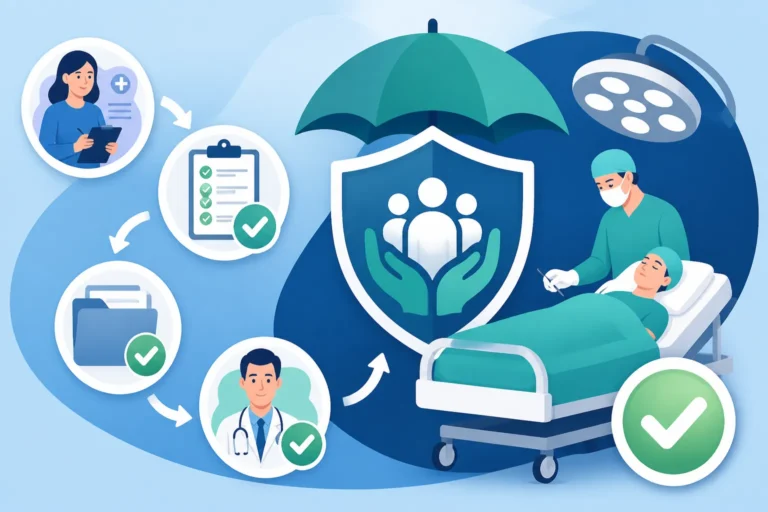
The Registration Process and Necessary Documentation
To use the public system effectively, you need more than just a work visa; you need to be integrated into the local medical administrative structure. The most critical piece of this puzzle is your CNP. Without this 13-digit number, which is found on your residence permit (Permis de Ședere), you essentially do not exist in the eyes of the Romanian healthcare system. You can find out more about the requirements for this by checking What Documents Do I Need to Get a CNP in Romania.
Once you have your residence permit and CNP, you need to find a "Medic de Familie" (Family Doctor). In Romania, the family doctor is the gatekeeper of the entire system. You cannot see a specialist in a public hospital for a non-emergency without a referral from your family doctor.
Getting Your CNP and Health Card
Your CNP is issued by the General Inspectorate for Immigration (IGI) when you receive your residence permit. This number is used for everything from opening a bank account to paying taxes. In the context of healthcare, it is the key to How to Get Your CNP (Personal Numeric Code) for Healthcare Access in Romania and ensuring your contributions are linked to your medical record.
After you have been working and contributing for some time (usually several months), the state is supposed to issue you an "Electronic Health Card" (Cardul de Sănătate). This card is meant to be inserted into a reader every time you visit a doctor or a pharmacy. However, there is a massive backlog in printing these cards. Many expats live in Romania for years without ever receiving their physical card. Don't panic if yours doesn't arrive; as long as you are "active" in the system via your CNP, doctors can still treat you, though they may require a printed certificate from the CNAS office proving your insured status.
Registering with a Family Doctor
Finding a family doctor is perhaps the most important step for an expat. You are free to choose any doctor who has room on their list, but it is highly recommended to find one close to your home or office. More importantly, as an expat, you will want to find someone who speaks English.
When you find a doctor, you will need to provide them with a copy of your residence permit, your employment contract, and a certificate from your employer (Adeverință de salariat) stating that you are a contributor to the health fund. Once registered, this doctor becomes your first point of contact for any health issue. For a deeper dive into this process, see The Expat Guide to Finding a Family Doctor (Medic de Familie) in Romania.
What the Public System (CNAS) Actually Covers
Romania’s public healthcare system, managed by How Romania's Health Insurance House (CNAS) Works: A Full Overview, offers a surprisingly comprehensive range of services, though the quality of the facilities can vary significantly. On a work visa, you are entitled to:
- Primary care through your family doctor.
- Emergency medical services and hospitalization.
- Specialist consultations (with a referral).
- Subsidized or free prescription medications.
- Basic dental care (though this is limited).
- Maternity care.
While the "medical act" (the surgery or the consultation) is free, there are often long waiting lists for non-critical procedures. For example, if you need an MRI, the public "quota" for the month might be exhausted within the first few days, meaning you would have to wait until the next month or pay for it yourself at a private clinic.
Accessing Specialist Care and Referrals
If your family doctor determines you need to see a specialist—for example, a cardiologist or a dermatologist—they will issue a "Bilet de trimitere." This is a paper (often yellow or green) that allows you to book a consultation at a public hospital or a private clinic that has a contract with CNAS.
Understanding How Specialist Referrals (Bilet de Trimitere) Work in Romania is crucial because if you go to a specialist without one, you will be charged the full private rate, even if that specialist works in a public hospital. With the referral, the consultation is free, and any tests ordered are usually covered by the state budget.
Emergency Services and 112
In a true emergency, your work visa status or insurance registration is secondary to saving your life. Romanian law dictates that emergency rooms must stabilize any patient, regardless of their insurance status. The emergency service, often involving the SMURD (Specialized Emergency Service for Resuscitation and Extrication), is highly efficient. For more details on what to do in a crisis, refer to Emergency Medical Care in Romania: What Every Expat Needs to Know.
Comparing Public Healthcare with Private Alternatives
Most expats in Romania adopt a "hybrid" approach. While they contribute to the public system via their work visa, they also utilize private healthcare for speed and comfort. Many Romanian employers include a "private medical subscription" (Abonament) as part of their benefits package. These subscriptions are usually with networks like Regina Maria or MedLife.
| Feature | Public Healthcare (CNAS) | Private Subscription (Abonament) | International Insurance (e.g., SafetyWing) |
|---|---|---|---|
| Cost | 10% of gross salary | Often free via employer | Monthly premium |
| Wait Times | Can be long (weeks/months) | Very short (days) | Short (depends on clinic) |
| Facilities | Often dated | Modern and "hotel-like" | High-end private clinics |
| Emergencies | Best for major trauma/surgery | Limited emergency capacity | Comprehensive coverage |
| Coverage | Domestic only | Network-specific | Global (includes travel) |
While Understanding Private Clinics and Medical Networks (Regina Maria, MedLife) in Romania is useful for routine blood tests or quick visits to a GP, these subscriptions are not actually "insurance." They usually do not cover major surgeries, long-term cancer treatments, or complex hospitalizations. For those, you are redirected back to the public system or expected to have a proper insurance policy. This is where SafetyWing provides a safety net that covers the gaps between a basic private subscription and the sometimes overwhelming public system.
Why Many Expats Use Both Systems
The reality of living in Romania is that the public system handles the "big stuff" (complex surgeries, heavy trauma, chronic diseases) while the private system handles the "comfort stuff" (fast diagnostics, English-speaking staff, clean rooms). If you have a work visa, you have a foot in the public door, which is vital for major medical events.
However, for a routine flu or a minor sports injury, the public system can be exhausting. Navigating a crowded "Policlinică" where no one speaks English can be a harrowing experience. Therefore, seeing Is a Private Medical Subscription (Abonament) Worth It in Romania is a common question, and for most, the answer is a resounding yes—as a supplement, not a replacement.
The Role of Travel and International Insurance
A work visa gives you rights in Romania, but those rights don't necessarily travel with you. If you take a weekend trip to Bulgaria or head back home for the holidays, your Romanian CASS doesn't provide much protection. Furthermore, during the initial months of your work visa while your paperwork is being processed, you are vulnerable.
SafetyWing is frequently used by digital nomads and expats on work visas to bridge this gap. It provides the peace of mind that if something happens before your CNP is active or while you are exploring the rest of Europe, you are covered. It’s a way to ensure that the administrative lag of the Romanian state doesn't put your health or finances at risk.
Common Challenges and Troubleshooting
Even with a work visa and a compliant employer, you will likely face hurdles. The most common is the "System is Down" (Pică sistemul) phenomenon. Romania's centralized health database is prone to technical glitches. When the system is down, pharmacies cannot process Prescription Medications and Pharmacies in Romania: The Complete Guide using the state subsidy, and doctors cannot validate your visit with your health card.
Another challenge is the language barrier. While many younger doctors speak excellent English, the administrative staff in public hospitals often do not. It is always wise to bring a Romanian-speaking friend or colleague with you for your first few appointments. You should also make sure you understand Understanding the Electronic Health Card (Cardul de Sănătate) in Romania so you know what to do when a provider asks for a card you haven't received yet.
Finally, keep all your medical records. The Romanian system is still very paper-heavy. Every time you get a "Bilet de trimitere," an "Adeverință," or a lab result, keep it in a dedicated folder. This will save you endless hours of re-testing and frustration when moving between the public and private sectors.
Disclaimer
This guide is for informational purposes only and does not constitute legal or medical advice. Healthcare regulations and tax percentages in Romania are subject to change. Always consult with your employer's HR department, a qualified legal professional, or the official CNAS website for the most current information regarding your specific situation and rights under a Romanian work visa.