How Do I Get a Residence Permit for My Non-EU Spouse?
The quest to bring your loved one to Romania, especially when they're from outside the European Union, can feel like navigating a labyrinth designed by Kafka. You've found your footing here, maybe built a life, and now you want your non-EU spouse to share it with you, only to be confronted with a mountain of paperwork, appointments, and seemingly endless regulations. This guide is here to demystify the process of securing a residence permit for your non-EU spouse, offering clear, actionable steps based on real-world expat experiences.
Laying the Groundwork: Eligibility and Initial Visa Requirements
So, you’re an expat in Romania, probably already holding your own residence permit, and you want your life partner, who hails from outside the EU/EEA, to join you. This is where the journey of "family reunification" officially begins in Romania. It’s important to understand right from the start that while the concept is simple – bringing family together – the bureaucratic path to achieve it is anything but. The Romanian authorities, specifically the General Inspectorate for Immigration (IGI), are meticulous, and preparation is absolutely key.
Defining "Spouse" and Who Qualifies for Family Reunification
First things first, let's talk about who qualifies as a "spouse" in the eyes of Romanian immigration law. Generally, Romania recognizes legally solemnized marriages, meaning you need an official marriage certificate. Common-law partnerships or civil unions, while recognized in some countries, might present significant hurdles or may not be directly applicable for a spouse residence permit under the family reunification framework without a legal marriage. If your marriage took place outside Romania, you will likely need to have it recognized and transcribed into the Romanian civil registry, a process that involves its own set of documents and potentially long waits at local civil status offices (Starea Civilă). This transcription is usually a prerequisite before you can even think about the residence permit application.
The primary applicant for family reunification is you, the expat already residing legally in Romania. You are the "sponsor." For your spouse to qualify, you must hold a valid Romanian residence permit that is valid for at least one year and has a minimum remaining validity of 90 days at the time of application. This means if you're here on a short-term visa or a permit nearing its end, you'll need to sort out your own longer-term status first. The system is designed to ensure stability for both the sponsor and the family member being brought over. This part can be tricky because often, you've just managed to get your own paperwork sorted, and now you're immediately looking at more. It can feel like a never-ending cycle of forms and stamps!
Initial Visa Requirements for Non-EU Citizens
Before your non-EU spouse can even apply for a residence permit in Romania, they'll almost certainly need a Long-Stay (Type D) Visa from a Romanian diplomatic mission or consulate in their home country, or a country where they hold legal residence. This isn't a simple tourist visa; it's specifically a D/ÎNT (family reunification) visa. This initial visa application abroad is where the bulk of the early documentation effort goes. Your spouse will need to gather a series of documents, including your Romanian residence permit details, your marriage certificate (duly legalized and translated, of course), proof of sufficient financial means to support both of you, and proof of accommodation in Romania. You'll find more details on this initial step in our guide on Understanding the Long-Stay (Type D) Visa for Romania.
This step is critical and often the first major bottleneck. Consulates can have varying processing times and specific requirements beyond what's officially listed. My advice? Check their website, then call them, then check again. Be prepared for potential discrepancies. Remember that your spouse's ability to even enter Romania with the intention of settling permanently hinges on this specific visa. Without it, they might only be granted a short stay, making the subsequent residence permit application impossible or very complicated. Sometimes, even finding an appointment at the consulate can be a challenge. Once they secure this long-stay visa and enter Romania, then you can proceed with applying for the actual residence permit.
Navigating the Bureaucratic Labyrinth: The Application Process in Romania
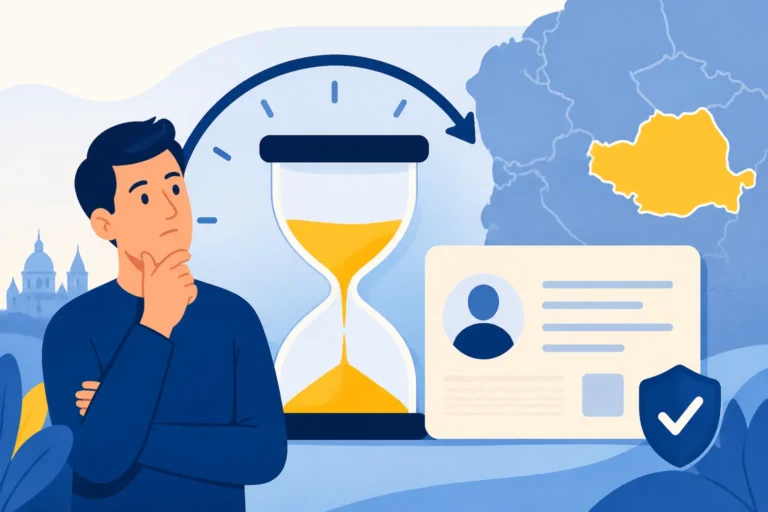
Once your spouse has arrived in Romania on their shiny new D/ÎNT visa, the clock starts ticking. They typically have 30 to 90 days (depending on the visa type and nationality) from their entry date to submit their residence permit application to the General Inspectorate for Immigration (IGI). Don't procrastinate on this; the IGI offices, particularly in larger cities like Bucharest or Cluj-Napoca, can be notoriously busy, and securing an appointment can take time. This is where your mettle will truly be tested, as it's a marathon of document gathering, appointments, and proving your legitimate intentions. Our How to Apply for a Romanian Residence Permit (Permis de Ședere) article provides a general overview that complements this specific focus on spouses.
Required Documents Checklist for Spouse Residence Permit
This is often the most overwhelming part. The IGI needs to be absolutely convinced that your marriage is genuine, you have the means to support your spouse, and you both have suitable accommodation. Here’s a typical list of documents you’ll need to prepare. Be warned: every piece of paper needs to be up-to-date, and many will need official Romanian translations and apostilles or super-legalization, depending on the issuing country. It's a true test of patience. For a more comprehensive list of general requirements, refer to What Documents Do I Need for a Romanian Residence Permit?.
- Application Form: Filled out in Romanian, available from the IGI website or office.
- Passport: Original and copy of your spouse's passport, including the visa page and entry stamp.
- Marriage Certificate: Original and copy, legalized (apostilled) from the issuing country, and officially translated into Romanian by a certified translator. If it was transcribed in Romania, the Romanian certificate is what they're looking for.
- Your (Sponsor's) Residence Permit: Original and copy of your valid Romanian residence permit.
- Proof of Accommodation: This can be a rental contract (contract de închiriere) registered with ANAF (the tax authority) or a title deed (act de proprietate). Both original and copy are needed. The rental contract needs to be in your name or joint names, ensuring it clearly states your right to reside at that address. Many expats find getting their rental contracts registered is a hurdle in itself, but it's non-negotiable for IGI. For a deeper dive, check out How to Prove Accommodation for a Romanian Residence Permit?.
- Proof of Financial Means: This is crucial. You, the sponsor, must prove you have sufficient funds to support both of you. The requirement is typically at least the gross average Romanian salary per month for a single person, multiplied by the number of months the permit is requested for (usually 12 months for the first permit), for each person. This means for two people, you'd need twice that amount. This is usually proven with recent bank statements (Romanian bank, naturally), salary slips, or a certificate from your employer. Our article on How Much Income Is Required for a Romanian Residence Permit? explains this further.
- Health Insurance: Mandatory private health insurance for your spouse, covering at least one year. This is not just any travel insurance; it needs to be a comprehensive policy valid in Romania. This is where a company like Cigna Global could be a lifesaver, as they understand expat needs and specific country requirements for full coverage. Make sure the policy explicitly covers emergency medical assistance and repatriation. You can also explore options for Health Insurance in Romania: Mandatory, Private and Travel Options Explained or specifically What Health Insurance Do I Need for a Romanian Residence Permit?.
- Medical Certificate: A medical certificate from a Romanian public health institution stating your spouse is not suffering from any diseases that could endanger public health. You'll typically be referred to a specific clinic by the IGI.
- Criminal Record Certificate: Your spouse might need a criminal record certificate from their home country, apostilled and translated, and possibly one from Romania, if they've resided here before.
- State Fee: Proof of payment for the residence permit application fee. This fee changes, so always check the latest amount on the IGI website or at their office.
- Photos: Two recent passport-sized photos.
Here's a simplified table to help you keep track of the main documents:
| Document Category | Required for (Spouse) | Notes |
|---|---|---|
| Identification | Passport (Original + Copy) | Must include visa page and entry stamp. |
| Application Form | Filled out in Romanian | Available at IGI or online. |
| Marriage Proof | Marriage Certificate | Legalized/apostilled, officially translated. Romanian transcribed certificate is ideal. |
| Sponsor's Status | Sponsor's Residence Permit | Copy of your valid Romanian permit. |
| Accommodation | Rental Contract / Title Deed | Registered with ANAF (if rental), original + copy. |
| Financial Means | Bank Statements, Salary Slips | Sponsor's proof of income, meeting minimum thresholds (gross average salary x 2 for two people). |
| Health Coverage | Private Health Insurance | Valid for at least one year in Romania, covering medical emergencies and repatriation. Cigna Global is a recommended option. |
| Medical Check | Romanian Medical Certificate | Issued by a designated Romanian public health clinic. |
| Background Check | Criminal Record Certificate(s) | From home country (apostilled, translated) and possibly Romania. |
| Fees | Proof of Payment | State fee for the residence permit. |
| Photos | Passport-sized photos | Two recent photos. |
Navigating the Immigration Office (IGI) Appointment
Once you have your document fortress built, the next major step is getting an appointment at the IGI. In most larger cities, you can schedule this online via the IGI portal, but slots fill up quickly. For detailed instructions, you might find How to Book an Appointment at the Immigration Office (IGI) in Romania very useful. It’s imperative to book well in advance of your spouse's visa expiry or the 90-day window. When you go for the appointment, try to arrive early. Even with an appointment, waiting times can be long, and the atmosphere can be tense.
This is where your Romanian language skills (or a trusted Romanian-speaking friend/translator) will be invaluable. While some IGI officers may speak English, it's not a guarantee, and official communication will almost always be in Romanian. The officer will review all your documents. Be prepared for them to ask for additional papers, or to point out minor discrepancies that feel monumental. Don't get discouraged; it's part of the process. If they ask for something you don't have, they'll usually give you a deadline to provide it. This might mean another trip to a notary, a translator, or even your bank. It's a test of patience, and you will need to keep a clear head.
Proving Financial Means and Accommodation
Let's zoom in on two common sticking points: finances and accommodation. The requirement for financial means is quite specific. As of my last check, for a single person, it's often linked to the national gross average salary for the period requested. For family reunification, this amount is typically doubled for the couple. So, if the gross average salary is, for example, 7,000 RON, you'd need to show you have consistent income or savings of at least 14,000 RON per month for the duration of the permit. This isn't just about having money in your account on one day; it’s about demonstrating a stable, continuous source of income. Employment contracts, salary statements, and bank statements showing regular deposits are usually accepted. For those who are self-employed or run a business, proving this steady income can be even more complex, often requiring tax declarations and company financial statements.
For accommodation, the rental contract must be registered with ANAF. Landlords sometimes resist this because it means they have to pay taxes on the rental income. However, without an ANAF-registered contract, the IGI will not accept it. If you own your property, the title deed is sufficient. The address on your residence permit, your spouse's D/ÎNT visa, and the proof of accommodation should all match. Any inconsistencies can lead to delays or rejection. These seemingly minor details are major checkpoints for the IGI, and often the reason why many expats face setbacks.
The Finish Line: Waiting, Biometrics, and the Residence Card
You've submitted your application, survived the IGI appointment, and handed over your meticulously prepared stack of documents. Now comes the hard part for many: the waiting game. The IGI has a legal timeframe to process applications, usually around 30 days, but it can extend to 90 days or even longer, especially during peak periods or if they require additional clarifications. Our guide to How to Apply for Family Reunification in Romania provides more general context around the overall process.
The Biometric Appointment and Permit Issuance
During this waiting period, or sometimes shortly after the initial submission, your spouse will likely receive an appointment for biometric data collection. This involves fingerprinting and a digital photograph, which will be used for their actual residence permit card. This appointment is mandatory, and missing it can cause significant delays. Once the biometrics are taken, it’s another waiting period until the actual permit card is printed and ready for collection. For more on this, check out How to Get a Biometric Residence Permit Card in Romania.
You’ll typically be notified by mail or sometimes via the online system when the card is ready. Collecting the card usually requires an appointment again. When you finally hold that plastic card – the permis de ședere – in your hands, it's a huge moment of relief! This card allows your non-EU spouse to legally reside in Romania for the validity period stated on the card, and it also grants them the right to travel within the Schengen area for up to 90 days in any 180-day period, without needing an additional visa. The first residence permit for family reunification is generally issued for one year.
Understanding the Validity and Renewal Process
Congratulations, your spouse now has their first Romanian residence permit! But remember, it's not permanent. As mentioned, the first permit is usually valid for one year. As the expiry date approaches, typically 60 days before it runs out, you'll need to start preparing for the renewal process. The good news is that renewals are generally smoother than the initial application because you've already established a presence and a paper trail. However, don't get complacent. The IGI still requires diligence.
The requirements for renewal are largely similar to the initial application, though some documents might be easier to update. You'll still need proof of ongoing financial means, valid health insurance (yes, another year with Cigna Global or a local provider!), and consistent accommodation. The IGI will also be looking for proof that your family relationship is still ongoing, which usually means your marriage certificate is still valid and no changes have occurred. It's a continuous process to ensure you meet the criteria for continued residence. You can find more comprehensive details on How to Renew Your Romanian Residence Permit.
After a certain period of continuous legal residence on consecutive permits (typically 5 years, with some exceptions), your spouse may become eligible to apply for Permanent Residence in Romania: The Complete Pathway (2027), which is a significant step towards long-term stability and greater integration. Moving to a new country and setting up a life is a monumental task, let alone doing it for two people. Companies like Sirelo, which specialize in international relocations, can help alleviate some of the practical burdens of moving, so you can focus on the administrative beast that is immigration. It’s a journey, not a destination, but with perseverance, you'll get there.
Disclaimer
Please note that while this guide provides comprehensive information based on current regulations and typical expat experiences in Romania, immigration laws and procedures can change without notice. This content is for informational purposes only and does not constitute legal advice. Always consult with the official General Inspectorate for Immigration (IGI) website, a qualified immigration lawyer, or a specialized consultant for the most accurate and up-to-date information pertaining to your specific situation.