How to Access Specialist Care Through the Romanian Public System
You are standing in the hallway of a crowded public clinic, holding a crumpled piece of paper and wondering why the receptionist just told you to come back next month. Navigating specialist care in Romania's public system is a journey through bureaucracy, language barriers, and peculiar scheduling rules. This guide explains exactly how to move from your initial symptom to a specialist consultation without losing your sanity.
Understanding the Gateway: Your Family Doctor (Medic de Familie)
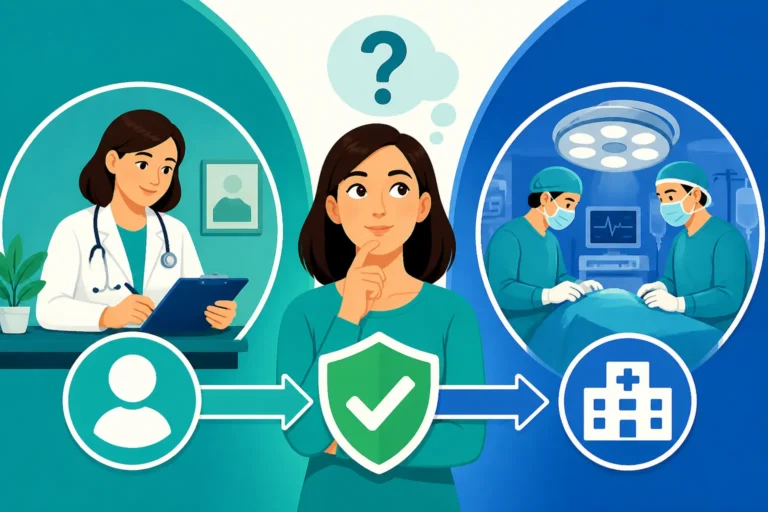
The Romanian healthcare system is strictly hierarchical, and for better or worse, the gatekeeper to almost every specialist in the country is your family doctor. You cannot simply decide to visit an endocrinologist or a neurologist on a whim and expect the public system to foot the bill. The process always begins in the modest office of your primary care provider, where you must first present your symptoms and convince them that a specialist's intervention is necessary.
This initial step is often the most frustrating for expats who are used to direct-access systems. You might feel like you are "wasting time" by seeing a general practitioner for a problem you already understand, but in Romania, the Medic de Familie is the only one who can issue the golden ticket known as the "Bilet de Trimitere." Without this document, the specialist's office at the public hospital will treat you as a private patient, and you will be asked to pay out of pocket. For more details on setting up this initial relationship, see The Expat Guide to Finding a Family Doctor (Medic de Familie) in Romania.
The Mandatory First Step
Your family doctor's role is not just to diagnose you but to manage the administrative flow of the National Health Insurance House (CNAS). When you visit them, they will perform a basic check-up and determine which branch of specialized medicine you need. It is vital to be very specific about your symptoms during this visit. In the Romanian system, the referral is often specific to a certain specialty and has a limited validity period. If you wait too long to book your specialist appointment, the referral expires, and you have to start the entire process from the beginning.
Many expats find that building a good rapport with their family doctor is the secret to navigating the system effectively. These doctors often know which specialists are "expat-friendly" or which clinics have the shortest waiting lists. If you haven't yet registered with one, you should prioritize it, as you cannot get a referral without being on a doctor's official list. You can learn more about this in our guide on How to Choose and Register with a Family Doctor (Medic de Familie) in Romania.
How the Referral System Works
The "Bilet de Trimitere" is a standardized form that contains your personal data, your CNP (Personal Numerical Code), and the specific medical code for the specialty you are being referred to. It usually comes in three copies: one for you, one for the specialist, and one for the insurance house records. Understanding How Specialist Referrals (Bilet de Trimitere) Work in Romania is crucial because if there is a typo in your name or your CNP, the specialist clinic may reject the referral entirely, leaving you stuck at the registration desk.
Once you have this paper in hand, you have a window—typically 30 to 90 days depending on the condition—to find a specialist who has "contract with CAS" (the local health insurance house). Not every doctor in a public hospital is available at all times; they have specific quotas of patients they can see under the state budget each month. This is why you might hear the phrase "nu mai sunt fonduri" (there are no more funds), which usually means the doctor has reached their monthly limit for state-funded consultations and can only see you if you pay privately.
The Administrative Maze: Documents Needed for Specialist Care
Walking into a specialist clinic without the right folder of documents is a recipe for a wasted morning. The Romanian public system is still very much driven by physical paperwork and specific identifiers. Even if the system is technically "electronic," the staff will almost always demand to see your original documents and often a few photocopies for good measure. Being prepared is the only way to avoid the classic "go to the copier across the street and come back" routine.
The most important piece of information you carry is your CNP. This 13-digit number is your identity within the medical system. Without it, you effectively do not exist in the eyes of CNAS. If you are a new resident and haven't received your residency card yet, you might face significant hurdles. It is essential to understand How to Get Your CNP (Personal Numeric Code) for Healthcare Access in Romania before you even think about booking a specialist, as it is the primary key used to check if your insurance contributions are up to date.
The CNP and Your Health Card
Once you have your CNP, the system eventually issues a "Card de Sănătate" (Health Card). This card is supposed to be inserted into a card reader at every specialist visit to "validate" the service. However, many expats wait months or even years for their physical card to arrive in the mail. If you find yourself in this position, don't panic. You can still access specialist care by obtaining a "certificate in lieu of the card" from the CAS office in your city.
For those living in the capital, navigating the local branch can be a headache, so checking How Do I Register for CASS After Moving to Bucharest? can save you a lot of logistical trouble. If you arrive at a specialist's office and they ask for your card, simply present your residency permit and the replacement certificate. If you are unsure about the status of your card, you can find help in our article on What Should I Do If My Health Card Hasn't Arrived Yet in Romania.
Validating Your CASS Contributions
Even with a referral and a CNP, the specialist's clinic will check the "SIUI" (the integrated information system) to see if you are "asigurat" (insured). This means your employer has been paying your CASS (health insurance) contributions. If there is a lag in the system or an error in your company's accounting, the specialist may refuse to see you for free. It is a good idea to bring a "adeverință de salariat" (employee certificate) from your HR department, which proves you are currently employed and insured.
For freelancers or those on a digital nomad visa, this process is slightly different. You might need to show proof of your voluntary contributions or your specific visa-related insurance. While the public system is great for long-term chronic issues, many expats choose to supplement this with something like SafetyWing to cover gaps or to have a safety net while the state bureaucracy processes their initial registration. SafetyWing can be particularly helpful if you need immediate care while your CASS status is still being updated in the national database.
Navigating the Policlinică: Where Specialist Care Happens
In Romania, specialist care is usually delivered in one of two places: a "Policlinică" (an outpatient clinic) or the "Ambulatoriu" of a large "Spital" (hospital). A Policlinică is generally a standalone building that houses doctors from various specialties—dermatology, ENT, cardiology, etc.—who see patients for consultations and minor procedures. Understanding the difference is vital for knowing where to show up for your appointment.
The environment in a public Policlinică can be overwhelming. They are often crowded, and the signage might only be in Romanian. However, these facilities are the backbone of the system and are where the most experienced doctors often practice. To get a better sense of what to expect, read Understanding the Role of the Policlinică in Romania.
Spital vs. Policlinică
If your condition requires advanced diagnostic equipment, like an MRI or a specialized cardiac stress test, your referral will likely lead you to the "Ambulatoriu" of a major state hospital. Hospitals like Floreasca or Universitar in Bucharest have specialized wings for these outpatient visits. The distinction is that a Spital is geared toward inpatient care (staying overnight), while the Policlinică is strictly for "in and out" consultations.
One thing to keep in mind is that the equipment in public hospitals is often state-of-the-art, even if the building looks like it hasn't been painted since 1985. Romania has invested heavily in high-end diagnostic tools, so while the "hotel conditions" (the comfort of the waiting room) might be poor, the actual medical technology is often excellent. For a broader overview of these facilities, see Understanding Hospital Care at a Romanian Spital.
Booking Your Appointment
This is where the system gets tricky. Most public specialist clinics do not have an online booking system. You often have to call a landline number that is rarely answered, or physically go to the registration desk (registratura) to book a slot. When you call, you should have your "Bilet de Trimitere" ready, as they will ask for the code written on it.
A common "pro-tip" among locals is to find out when the "programări" (appointments) open for the following month. Usually, this happens in the last few days of the current month. If you wait until the 5th of the month to call, you might find that the "plafon" (budget) is already exhausted, and you'll be told to call back in three weeks. This is another area where having a backup like SafetyWing is useful; if the public wait is too long for an urgent but non-emergency issue, you might choose to see a specialist privately and use your own coverage.
| Feature | Public Specialist Route | Private Specialist Route |
|---|---|---|
| Cost | Free (covered by CASS) | 200 – 500+ RON per visit |
| Referral | Mandatory (Bilet de Trimitere) | Usually not required |
| Wait Time | 2 weeks to 3 months | 1 to 5 days |
| Paperwork | High (CNP, Health Card, Referral) | Low (ID card only) |
| Language | Primarily Romanian | English often available |
Wait Times and Realities: What to Expect in the Public System
Let's be realistic: the Romanian public system is under-resourced and over-burdened. Waiting times for a specialist can vary wildly depending on the city and the specialty. For a general dermatologist, you might get in within a week. For a high-demand neurologist or a specific surgeon, you could be looking at months. This is a common point of frustration for many foreigners who are used to more efficient scheduling.
It’s important to understand How Romania's Health Insurance House (CNAS) Works: A Full Overview to grasp why these delays happen. The budget is distributed to clinics based on contracts, and once that money is allocated for the month, the "free" slots are gone. This doesn't mean the doctor isn't there; it just means the state won't pay for your visit that day.
Managing Your Expectations
When you finally arrive for your appointment, don't expect it to start exactly on time. In Romania, the time on your paper is often more of a "suggestion" of when you should be in the hallway. Doctors may be called away for emergencies in the hospital wing, or previous consultations may run over. It is wise to clear your entire morning or afternoon for a single specialist visit.
The consultation itself might feel brief. Romanian doctors tend to be very direct and clinical. They will review your tests, write a "Scrisoare Medicală" (Medical Letter) for your family doctor, and perhaps issue an electronic prescription. Make sure you walk away with that Medical Letter, as it is the only way your family doctor will know what happened and be able to continue your treatment or issue compensated prescriptions. Learn more about this in our guide on Understanding the Electronic Prescription (Rețeta Electronică) system in Romania.
Bridging the Gap with Private Options
Because of these wait times, many expats use a hybrid approach. They use the public system for chronic conditions, expensive surgeries, or long-term medications, but they turn to private clinics for quick specialist consultations. Brands like SafetyWing are excellent for providing that layer of security. If you have a sudden specialized need and the public system says "wait two months," SafetyWing can provide the flexibility to seek care elsewhere without the stress of an unmanageable bill.
Furthermore, many private clinics in Romania (like Regina Maria or MedLife) actually have small "quotas" for the public system. You can sometimes use your "Bilet de Trimitere" at a fancy private clinic if they still have state funds available for that month. This gives you the comfort of a private facility with the cost-savings of the public system. For more on this, check out Understanding Private Health Insurance and Subscriptions (Abonament) in Romania.
Overcoming Language Barriers and Cultural Nuances
If you don't speak Romanian, the public specialist system can feel like a fortress. While many younger doctors speak excellent English, the administrative staff (the people at the front desk and the nurses in the hallways) almost certainly will not. They are often stressed and have little patience for a language barrier. This is the single biggest hurdle for most expats.
You might feel like you are being treated rudely, but often it is just the "bureaucratic tone" that is common in Romanian public institutions. It isn't personal; it's just the way the system operates. To prepare yourself, read Navigating the Romanian Healthcare System: An Expat's Roadmap (2027), which touches on these cultural expectations.
Tips for the Non-Romanian Speaker
The best advice I can give is to bring a Romanian-speaking friend or hire a local "fixer" for your first few appointments. If that isn't possible, have Google Translate ready on your phone, specifically with the "medical" terms you might need. Writing down your symptoms in Romanian beforehand can also be a lifesaver.
Another trick is to look for specialists in larger cities like Bucharest, Cluj-Napoca, or Timișoara, where the likelihood of finding an English-speaking doctor is much higher. You can often find reviews or expat recommendations online for specific doctors. For example, check Where Can I Find an English-Speaking Family Doctor in Bucharest? to start your journey with someone you can actually communicate with.
The "Wait Your Turn" Culture
In many public clinics, there isn't a clear "line" or a number-calling system. You might find a group of people standing outside a door. The standard procedure is to ask, "Cine este ultimul?" (Who is the last one?). Once that person identifies themselves, you know that you are after them. It sounds primitive, but it is the social contract that keeps the hallway from descending into chaos.
Don't be surprised if someone with an "Urgență" (emergency) or a fellow doctor "cuts" the line. In the hospital environment, clinical priority often overrides the appointment schedule. Staying calm and patient is key. If you are someone who struggles with this kind of ambiguity, you might find that Understanding Private Clinics and Medical Networks (Regina Maria, MedLife) in Romania is more your speed, as they operate much more like Western service-oriented businesses.
Specialist Care Scenarios: From Diagnostics to Chronic Conditions
Accessing a specialist isn't always about a single consultation; often, it’s about the diagnostic tests that follow. If the specialist decides you need blood work, an X-ray, or an ultrasound, they will issue another type of referral for these services. Just like the consultation, these tests are covered by the state, but you have to find a lab that has a contract with CAS and—you guessed it—available funds.
Laboratories also run on a monthly budget. If you need a "set de analize" (set of analyses), you should try to go to the lab in the first week of the month. By the 20th, many labs will tell you that the state quota is finished and you'll have to pay if you want the results sooner. This is a quirk of the system that catches many foreigners off guard.
Accessing Lab Tests and Imaging
When a specialist gives you a referral for an MRI or CT scan, don't expect to get it done the same day. These high-cost imaging services often have the longest waiting lists in the public system. It is not uncommon to wait three to six months for a "free" MRI. If your case is urgent but doesn't qualify as a life-threatening emergency, this is another moment where private coverage or a plan like SafetyWing becomes invaluable.
If you do choose to wait, you must take your referral to the hospital's imaging department and get "put on the list." They will call you when a slot opens up. If you are in a major hub, check How Much Does an MRI Scan Cost Privately in Romania? to decide if the wait is worth the savings. Sometimes the cost of paying privately (around 600-1000 RON) is worth the peace of mind of getting a diagnosis within 48 hours.
Hospitalization and Surgical Consults
If your specialist visit concludes that you need surgery, the process shifts into a different gear. You will be given an "Internare" (hospitalization) recommendation. In the public system, major surgeries are generally free, including the stay and the medication. However, the "hotel conditions" of public hospitals vary wildly. Some have been recently renovated and are quite modern, while others are still lagging behind.
Before agreeing to a surgery, many expats seek a second opinion. This is perfectly legal and encouraged, but you will need a new "Bilet de Trimitere" if you want the second consultation to be free as well. For a deeper dive into the costs and choices involved in surgery, see The Cost of Healthcare in Romania: A Complete Breakdown for Foreigners (2026). Knowing your options between the public spital and private surgical centers will help you make the best decision for your long-term health.
Disclaimer
This guide is for informational purposes only and is based on the personal experiences of expats and the current regulations in Romania as of 2026. Healthcare laws and procedures can change frequently. Always consult with your family doctor, the National Health Insurance House (CNAS), or a legal professional to verify the most up-to-date requirements for your specific situation. This content does not constitute medical or legal advice.