How Do I Understand My Utility Bills (Facturi) in Romania?
Oh, the infamous Romanian utility bill! I remember those early days, staring at a factură (bill) filled with what felt like hieroglyphics, wondering if I was paying for electricity, water, or the privilege of existing. It’s a common rite of passage for every expat here – feeling utterly bewildered by the jargon, the multiple sheets of paper, and the seemingly arbitrary numbers. You're not alone in feeling like you need a degree in Romanian bureaucracy to simply understand what you owe. This guide is here to cut through the confusion and help you finally make sense of those bewildering paper trails.
The Labyrinth of Romanian Utility Bills: What to Expect
Moving to a new country is full of excitement, but it also means navigating a whole new set of administrative hurdles. And let's be honest, Romanian utility bills, or facturi, can feel like deciphering an ancient scroll. They often come from multiple providers, each with its own format, payment deadlines, and sometimes, a completely different set of terms. This isn't like back home where maybe one company handles everything; here, it’s a mosaic of services.
Identifying Your Providers and Bill Types
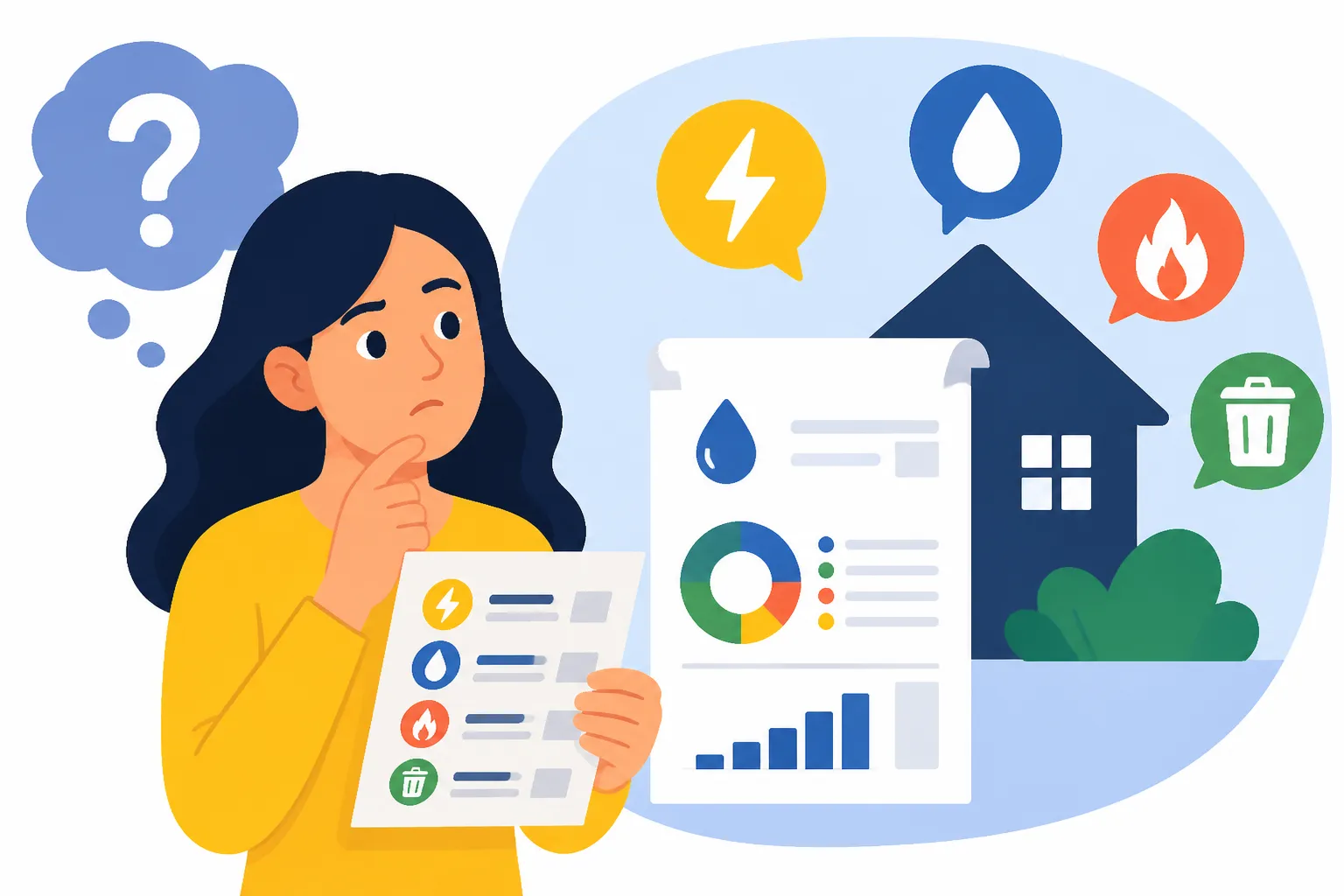
First things first: you'll likely have separate bills for different services. It's rare to get one consolidated bill for everything. Typically, you'll encounter at least these categories, and sometimes more:
- Electricity (Energie Electrică): Major providers include Enel, E.ON, Electrica Furnizare, and Hidroelectrica. You'll receive a monthly or bimonthly bill from your chosen provider. These bills are usually quite detailed, showing consumption in kWh (kilowatt-hours) and various taxes.
- Natural Gas (Gaze Naturale) & District Heating (Încălzire): For gas, Engie and E.ON are the main players, depending on your region. If your building is connected to the city's district heating system (Radet, Termoenergetica in Bucharest, or local equivalents in other cities), your heating and hot water might come as a separate communal bill, often managed by your asociație de proprietari (homeowners' association). If you have your own central heating system based on gas, then your gas bill will reflect this usage.
- Water and Sanitation (Apă și Canalizare): This is typically managed by a municipal company like Apa Nova in Bucharest or Compania de Apă in other major cities. These bills usually come monthly or bimonthly and cover both clean water consumption and wastewater/sewerage.
- Waste Collection (Salubritate): While sometimes included in the building's întreținere (maintenance fees), you might receive a separate bill from companies like Romprest, Salubrizare sector, or Urban SA. This usually depends on your specific municipality and the type of housing you have.
- Internet, TV, and Mobile (Internet, TV și Telefonie Mobilă): These are usually bundled together into one bill from your chosen telecom provider. The big names here are Digi (RCS & RDS), Orange, Vodafone, and Telekom. If you're fresh off the plane, you might have initially picked up a local SIM card to get by, perhaps even an eSIM from providers like Airalo for instant connectivity, but eventually, you'll settle into a local contract. This bill, thankfully, is usually the most straightforward, as the services are more clearly defined.
Common Charges and Unexpected Fees
Beyond the core consumption, Romanian utility bills can hide a few extra charges that might catch you off guard. It’s not just about the consum (consumption) itself.
- Fixed Fees (Taxă fixă/Abonament): Many utilities have a fixed monthly fee, regardless of your consumption. This covers network maintenance and infrastructure costs.
- VAT (TVA): Value Added Tax is applied to almost all services, currently at 19% for most utilities. You'll see this clearly itemized.
- Accise (Excise duties): Especially on electricity and gas, you'll find various excise duties that contribute to the overall cost.
- Green Certificates (Certificate Verzi): This is an additional charge on electricity bills that supports renewable energy production. It's usually a small amount but adds to the complexity.
- Cogeneration Bonus (Bonus Cogenerare): Another charge related to energy production, often seen on electricity bills.
- Distribution/Transmission Tariffs: The cost of transporting the utility to your home, separate from the cost of the energy itself.
The key is to scan for these additional lines, as they can sometimes constitute a significant portion of the total. Don't assume the biggest number is just your usage; it's a sum of many smaller components.
The Language Barrier: Deciphering the Romanian Terms
This is often the biggest hurdle! Even if you’re slowly picking up Romanian, the specialized vocabulary on utility bills can be baffling. Here's a table of common terms you'll encounter:
| Romanian Term | English Translation | Explanation | Common on Bills For |
|---|---|---|---|
| Factură | Bill / Invoice | The document detailing services and charges. | All Utilities |
| Furnizor | Provider / Supplier | The company supplying the service (e.g., Enel, Apa Nova). | All Utilities |
| Consum | Consumption | The amount of utility used (e.g., kWh, m³). | Electricity, Gas, Water |
| Index nou / Index vechi | New index / Old index | Meter readings at the beginning and end of the billing period. | Electricity, Gas, Water |
| Perioada de facturare | Billing period | The dates covered by the bill. | All Utilities |
| Data scadenței | Due date | The last day you can pay the bill without incurring penalties. | All Utilities |
| Total de plată | Total amount to pay | The final amount due. | All Utilities |
| Tarif | Tariff / Rate | The price per unit of consumption. | All Utilities |
| TVA (Taxa pe Valoarea Adăugată) | VAT (Value Added Tax) | Standard consumption tax. | All Utilities |
| Penalități | Penalties | Late payment fees. | All Utilities |
| Abonament | Subscription / Fixed Fee | A fixed charge, often monthly, regardless of usage. | Electricity, Gas, Internet |
| Citire contor | Meter reading | The process of checking your utility meter. | Electricity, Gas, Water |
| Estimare | Estimate | A bill based on estimated consumption, not actual meter readings. | Electricity, Gas |
| Regulament | Regulations | Rules and conditions of service. | All Utilities |
| Cont client | Customer account | Your unique customer number or ID. | All Utilities |
| Cod loc de consum | Consumption point code | Specific ID for your property's utility connection. | Electricity, Gas |
| Întreținere | Maintenance / Building Fees | Common expenses in apartment blocks (includes central heating, communal water, garbage). | Shared Utilities |
| Apă caldă/rece | Hot/cold water | Self-explanatory, often part of communal bills. | Water |
| Gaze naturale | Natural gas | Gas consumption. | Gas |
| Energie electrică | Electricity | Electricity consumption. | Electricity |
| Salubritate | Waste collection | Garbage collection fees. | Waste |
Keep this table handy! I used to have a similar one taped to my fridge. It's truly a game-changer when you're trying to figure out if you're looking at your actual usage or just a monthly subscription charge. It also helps immensely when you need to contact a provider and explain your issue, or even when you're simply asking a Romanian friend to glance over something for you.
Breaking Down Your Bills: A Practical Guide to Each Utility
Understanding the general landscape is one thing, but getting into the nitty-gritty of each bill is where the real struggle often lies. Each utility has its own specific format and unique elements you need to pay attention to. Let's tackle them one by one, much like I did during my first year here, armed with Google Translate and a lot of patience.
Electricity (Factura de Energie Electrică)
Your electricity bill, whether from Enel, E.ON, Electrica Furnizare, or Hidroelectrica, is usually one of the most substantial. It will detail your consumption in kilowatt-hours (kWh). You'll see your index nou (new meter reading) and index vechi (old meter reading), and the difference between these is your consum (consumption).
- Key things to look for: The tariff structure. Some plans have different rates for peak/off-peak hours, or higher rates after a certain consumption threshold. Keep an eye on the "Preț unitar energie activă" (unit price for active energy). Then you have the various network tariffs: "Tarif de transport" (transmission tariff), "Tarif de distribuție" (distribution tariff), and "Servicii de sistem" (system services). These add up. Finally, you'll see "Contribuție cogenerare" (cogeneration contribution), "Certificate verzi" (green certificates), "Acciză" (excise tax), and of course, "TVA."
- What throws people off: The estimated bills. Often, especially if you're new or haven't reported your meter reading, the supplier will send a bill based on an estimate (estimare). This can be wildly inaccurate. It's crucial to learn How to Set Up Electricity in Your Romanian Home and how to report your actual meter readings regularly to avoid nasty surprises later when a reconciliation bill arrives. Some providers have online portals or even dedicated phone numbers for this.
Gas and Heating (Factura de Gaze Naturale și Încălzire)
This bill can come in two main forms. If you have your own gas central heating system or gas for cooking, you'll receive a bill from your gas provider (e.g., Engie, E.ON). If you live in an apartment building connected to the city's district heating network, your heating and hot water will likely be part of your building's communal întreținere bill, or a separate bill from the local heating company.
- For gas bills: Consumption is measured in cubic meters (m³), which is then converted into energy units (kWh or MWh) using a calorific coefficient. Look for "Consum gaze naturale" (natural gas consumption) and the "Preț gaz natural" (price of natural gas). Similar to electricity, you'll find transport, distribution, and storage tariffs, excise duties, and VAT. The temperature outside can drastically change this bill, so prepare for higher amounts in winter.
- For district heating (part of întreținere): This is often a black box. Your homeowners' association (asociație de proprietari) will receive a bulk bill for the entire building, and then they'll divide it amongst residents based on various factors – apartment size, number of residents, individual heat meters (if installed), or even just a flat rate. Getting a clear explanation can be tough. It's worth trying to understand how your building calculates these shared costs, perhaps by asking a friendly neighbor or someone on the comitet (committee) of the association. Learning How to Set Up Water, Heating and Gas in Romania is a crucial step in this process.
Water and Sanitation (Factura de Apă și Canalizare)
Typically from municipal companies like Apa Nova, these bills cover both the water you consume (apă rece/caldă – cold/hot water) and the wastewater/sewerage services (canalizare).
- Key sections: You’ll see "Consum apă potabilă" (drinking water consumption) and "Consum canalizare" (wastewater consumption), both measured in cubic meters (m³). Sometimes, if you have hot water from a central system, you might have separate meters for apă caldă (hot water) and apă rece (cold water). The canalizare charge is usually a percentage or a fixed amount based on your total water consumption.
- Meter readings are key: Just like electricity, accurate meter readings are vital. In apartments, these are often read by a representative from the homeowners' association or even self-reported monthly. For houses, you might need to provide readings directly to Apa Nova or your local water company via their website or a designated phone line. Failing to do so can lead to estimates that don't reflect your actual usage.
Internet, TV, and Mobile (Factura de Internet, TV și Telefonie Mobilă)
Compared to the other utilities, these bills are usually the easiest to understand. Major players like Digi, Orange, Vodafone, and Telekom offer various packages.
- What to expect: A breakdown of your subscribed services (e.g., internet speed, TV channels package, mobile data, call minutes). You'll typically see a fixed monthly subscription fee (abonament) and then any extra charges for calls outside your plan, international calls, or premium services.
- Ease of management: Most providers have excellent online platforms and mobile apps where you can view your bill, track usage, and make payments. This makes things much more transparent. If you're looking for new services, or perhaps initially used a temporary solution, check out How to Choose a Mobile and Internet Provider in Romania. And remember, if you're using a foreign SIM when you first arrive, switching to a local plan will save you money, though temporary eSIMs from companies like Airalo are excellent for initial connectivity.
Managing and Paying Your Facturi: Practical Steps for Expats
Once you've deciphered the content of your bills, the next challenge is actually paying them. Romania offers several payment options, some more convenient for expats than others.
Understanding Payment Methods and Deadlines
Each bill will have a "Data scadenței" (due date) clearly marked. Missing this date usually results in "Penalități" (penalties), which are late fees. While not usually exorbitant, they add up and are easily avoidable.
Common payment methods include:
- Online Banking/Mobile Apps: This is by far the most convenient method. Most Romanian banks (like Banca Transilvania, ING, BCR, Raiffeisen) have robust online banking platforms and mobile apps. You can usually find your utility providers listed as beneficiaries. You simply enter your customer code (cod client or cod abonat) and the amount, and the payment is processed. Learning How to Set Up Online Banking and Instant Payments in Romania is one of the first things you should do when settling in.
- Direct Debit (Plată directă): The holy grail of convenience! Once set up, the utility provider automatically debits the amount from your bank account on the due date. This avoids missed payments and late fees altogether. However, you'll need to set this up directly with each provider, which often involves filling out a form and submitting it to your bank and the utility company. It's an initial hassle, but well worth it. You can learn more about How to Set Up Direct Debit for Bills in Romania.
- Ghișeul.ro: This is Romania's national online payment portal for various services, including some utilities and local taxes. While not all utility providers are integrated, it's worth checking if yours is, as it can consolidate some payments. You'll need an account, which sometimes requires a trip to the local municipality to activate.
- PayPoint/Un-Doi Mobile Stores: These are small shops, often integrated into supermarkets, convenience stores, or independent kiosks, where you can pay bills in cash or by card. You simply give them your bill or customer code, they scan it, and you pay. They’re super useful for cash payments or if you're out and about.
- Post Offices (Oficiul Poștal): You can pay most utility bills at any Romanian post office. Again, useful for cash payments, but prepare for potential queues.
- At the Provider's Offices: Some providers still have physical payment points, but these are generally less convenient and often have limited hours.
Setting Up Online Accounts and Direct Debits
I cannot stress this enough: set up online accounts with all your utility providers as soon as possible. Most major providers (Enel, Engie, Apa Nova, Digi, Orange, Vodafone) have dedicated customer portals on their websites or mobile apps.
- Benefits: These portals allow you to:
- View your facturi (bills) electronically.
- Track your consumption history.
- Submit meter readings online (crucial!).
- Set up direct debit or make immediate payments.
- Contact customer support more easily.
- The process: Usually, you'll need your customer code (cod client) from a previous bill and your CNP (Personal Numeric Code). If you haven't received your CNP yet, that's another hurdle; for most official processes, including setting up these accounts, your CNP is vital. Check out How to Get Your CNP (Personal Numeric Code) for Healthcare Access in Romania – the same CNP is used for almost everything administrative! Once you have your CNP and a recent bill, head to the provider's website and look for "Contul meu" (My Account) or "Înregistrare" (Register).
What to Do When Something Goes Wrong
It's Romania, so something will inevitably go wrong at some point. It might be a sky-high bill, a missed payment notification despite paying, or a service interruption. Don't panic.
- High Bill/Billing Error: First, re-read the bill carefully with your Romanian dictionary/translation app. Is it an estimare (estimate) instead of an actual reading? Have you perhaps used more than you thought (especially in extreme weather)? If you genuinely believe there's an error, gather your evidence (meter photos, previous bills, payment confirmations) and contact the provider. Start with their online chat or email if available, as a written record is always better than a phone call. If you need to call, ask if they have English-speaking agents; many larger companies do.
- Service Interruption: Check if your neighbors are also affected. If it's a general outage, providers usually have status updates on their websites or social media. If it's just you, contact the provider immediately.
- Need to change details: For example, if you get new identity documents or change your phone number, inform your providers. This is especially important for How Do I Get Proof of Address in Romania? for other bureaucratic needs.
The main takeaway here is proactive engagement. Don't just ignore the bills. The sooner you address an issue, the easier it is to resolve. Turns out, it was an estimate from a year prior that they suddenly "corrected." It took several phone calls, emails, and a trip to their office, but eventually, it was sorted. Patience and persistence are your best friends here.
Common Pitfalls and How to Avoid Them
Even with the best intentions, expats often stumble over a few common issues when it comes to Romanian utility bills. Understanding these can save you a lot of grief (and money!).
Estimated vs. Actual Readings: The Meter Reading Dance
This is, hands down, the biggest source of frustration for many expats. Utility companies, especially for electricity and gas, will often issue bills based on estimated consumption (estimare) if they don't have your actual meter reading. These estimates are sometimes based on previous consumption patterns, but if you've been away, or if the previous tenant used a lot more/less than you, these estimates can be wildly inaccurate.
- The problem: If you're consistently under-billed on estimates, a huge "reconciliation" bill will eventually arrive when an actual reading is finally taken. This can be thousands of Lei and a massive shock. Conversely, if you're over-billed on estimates, you're paying for energy you haven't used, and while you'll get a credit eventually, it ties up your money.
- The solution: You must actively submit your meter readings. Most providers have a specific window each month (e.g., between the 20th and 25th) when you can report your index (meter reading).
- Online portal: The easiest way is through your provider's online customer account. Take a photo of your meter for your records.
- Phone call: Many providers have automated phone lines where you input your customer code and meter reading.
- SMS: Some even allow SMS submissions.
- In-person: Less common now, but sometimes a representative will visit.
Make it a monthly habit. Seriously, put a reminder on your calendar. This simple act can save you immense stress and unexpected costs down the line. It's a key part of effectively managing The Complete Guide to Cost of Living in Romania for Expats (2026).
Dealing with Unforeseen Charges and Billing Errors
Beyond the estimated bills, sometimes legitimate errors occur, or you simply don't understand why a charge is there.
- Unexpected connection fees: When you first move in and set up utilities, there might be connection fees or guarantees required. These should be clearly outlined when you sign your contract.
- Previous tenant's debt: This is a major one, especially if you moved into a new rental. Always ensure that the landlord or agent confirms that all previous utility bills have been paid off before you take over the contract. Ask for proof! If you sign a new contract with a utility provider but the previous tenant had outstanding debt at that address, you won't be liable, but resolving disputes with the provider can be a headache. This is why when you're looking to How to Find and Rent Long-Term Accommodation in Romania and signing your How to Sign a Rental Contract (Contract de Închiriere) in Romania, clear communication about utilities is paramount. Make sure your contract specifies whose responsibility it is to transfer utilities and that previous bills are settled.
- Service suspension fees: If you miss too many payments, your service might be suspended, and there will be a fee to reactivate it.
- Customer service challenges: When you do need to contact customer service for an error, prepare for a potentially frustrating experience. Language can be a barrier, wait times can be long, and sometimes you might get conflicting information. Be polite but firm, keep notes of who you spoke to and when, and if possible, use written communication (email, online chat) so you have a record. If you are using a moving service like Sirelo, they might offer some assistance or advice on utility transfers as part of their package, which can be invaluable during those initial chaotic weeks.
Remember, you have rights as a consumer. If you feel you've been unfairly charged and can't resolve it directly with the provider, you can escalate the issue to ANPC (Autoritatea Națională pentru Protecția Consumatorilor) – the National Authority for Consumer Protection. However, try to resolve it with the provider first; ANPC is a last resort. Understanding Tenant and Landlord Rights in Romania can also sometimes help if your issue is linked to your rental agreement.
Staying on top of your utility bills in Romania might feel like a full-time job initially, but with a bit of practice, a good translation app, and knowing what to look for, you'll soon be navigating them like a seasoned expat.
Disclaimer
The information provided in this guide is for general informational purposes only and does not constitute legal, financial, or professional advice. While we strive to keep the content up-to-date and accurate, utility regulations, provider policies, and costs in Romania can change frequently. It is always recommended to consult official sources, relevant utility providers, or a local expert for the most current and specific information pertaining to your individual situation.