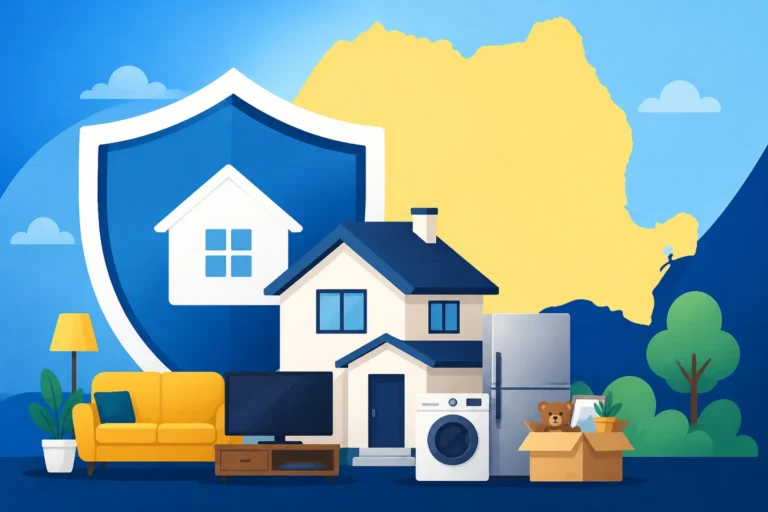
Can I Buy a House in Romania Without Residency?
Moving to a new country like Romania is full of exciting possibilities, but when it comes to big decisions like buying property, it can feel like you're trying to navigate a bureaucratic labyrinth blindfolded. Many expats dream of owning a slice of this beautiful country, and a common first question is whether you absolutely need to be a resident to do so. This guide will meticulously unpack the complexities of buying property in Romania as a non-resident, breaking down the rules, challenges, and workarounds for both EU and non-EU citizens.
The Short Answer: Yes, But With Caveats
Let's cut right to the chase, because I know that's what you're really wondering. Yes, it is possible to buy a house or property in Romania without having full residency. However, it's not a straightforward "yes" for everyone, and the process differs significantly based on your citizenship and the type of property you're looking to acquire. This isn't like buying a loaf of bread, believe me. You'll need patience, good advice, and a clear understanding of the rules that apply to your specific situation.
For citizens of the European Union (EU), European Economic Area (EEA), or Switzerland, the path is considerably smoother. Thanks to the principles of free movement and equal treatment within the EU, you generally have the same rights to acquire property as a Romanian citizen. This means you won't typically face the same restrictions that non-EU citizens might encounter, particularly when it comes to owning land. It’s still not a totally friction-free experience – you'll still have to deal with Romanian bureaucracy, which can test anyone's patience – but the legal framework is on your side.
On the other hand, for non-EU citizens, the situation becomes a good deal more intricate. While you can certainly buy apartments and other types of buildings without establishing residency, direct ownership of land, especially agricultural or forest land, is largely restricted. This is where things get a bit more complex, often requiring creative legal solutions like forming a Romanian company. Don't worry, we'll dive deep into these strategies. It’s a common frustration for many expats, feeling like there are extra hoops to jump through just because your passport isn't from around here, but it's a reality we have to deal with.
Navigating Property Acquisition for Non-Residents
Understanding the distinct pathways for different citizenships is absolutely critical. What might be a simple step for an Italian citizen could be a multi-stage legal project for someone from, say, the United States or India.
EU/EEA/Swiss Citizens: A Smoother Path
If you hold a passport from an EU, EEA, or Swiss member state, you're in a much more fortunate position. The foundational treaties of the European Union grant you the right to acquire property in Romania under the same conditions as Romanian citizens themselves. This means that, in principle, you can buy a plot of land, a house, an apartment, or even commercial property without needing to jump through the extra hoops that non-EU citizens face regarding land ownership.
The key here is that you're largely treated as a local when it comes to property rights. You won't be asked to form a company just to own a garden or a rural plot of land. However, this doesn't mean it's entirely without administrative steps. You'll still need to obtain a Romanian fiscal identification number (NIF), which is essential for any financial transaction in the country, including property purchases. This is a non-negotiable step for anyone looking to buy, resident or not, and it’s one of the first things you should tackle. You can find detailed information on How to Get a Romanian Tax Number (NIF) and CNP.
Think of it this way: while the legal right to acquire property is identical, the administrative process still requires you to engage with the Romanian system. This includes everything from finding a reliable real estate agent to getting your paperwork notarized. You'll need to pay the same taxes and fees as a Romanian citizen, and you'll be subject to the same property laws. This parity is a huge advantage and simplifies things immensely compared to the labyrinthine path non-EU citizens might have to take.
Non-EU Citizens: The Legal Landscape and Hurdles
Now, if your passport is from outside the EU/EEA/Switzerland, prepare for a somewhat more complicated journey, especially if your dream involves a charming little plot of land. Romanian law, particularly Article 44 of the Constitution, states that foreign citizens and stateless persons can only acquire land ownership rights under the conditions resulting from Romania’s accession to the European Union and from other international treaties to which Romania is a party, on a reciprocal basis.
This "reciprocity" clause is the tricky part. While you might be able to buy an apartment or a house (which is considered a "building" and not "land" in the same restrictive sense) without too much fuss, directly owning the land it sits on, or any independent plot of land, can be restricted unless there’s a specific bilateral treaty between Romania and your home country that allows it. And let's be honest, those treaties aren't exactly commonplace for every nation on earth.
The most common and effective workaround for non-EU citizens who wish to own land in Romania is to establish a Romanian legal entity, typically a Limited Liability Company (SRL). When you form an SRL, this company, being a Romanian legal entity, can own land. You, as the foreign individual, then own the company, effectively giving you indirect ownership of the land. It’s a bit of a legal dance, but it’s a well-trodden path. This means a separate set of administrative hurdles: company registration, appointing an administrator, and ongoing compliance with Romanian corporate law. It's a significant commitment beyond just buying a house, so it’s crucial to weigh the costs and benefits. More information on this can be found in our guide on How to Register an SRL Limited Liability Company in Romania.
While this method is effective, it adds layers of complexity and cost. You'll need to factor in legal fees for company formation, accounting services, and the ongoing administrative burden of maintaining a company, even if its sole purpose is to hold property. It also means you're investing in a business entity, which has its own tax implications and reporting requirements, as detailed in The Complete Guide to Taxes in Romania for Expats (2027). This is why getting a solid local lawyer from the outset is not just recommended, it's essential for non-EU buyers.
Essential Steps Before You Buy Without Residency
Regardless of your citizenship, there are several fundamental steps and considerations you absolutely must address before you even think about putting down a deposit. These are the bedrock of a smooth property purchase in Romania.
Obtaining a Fiscal Identification Number (NIF)
This is step one for everyone, regardless of residency status or citizenship. A NIF, or Număr de Identificare Fiscală, is your tax identification number in Romania. You will need it for absolutely any financial transaction here, from opening a bank account to purchasing property, and yes, even for utilities. Without a NIF, the notary cannot proceed with the property sale contract. It’s simply non-negotiable.
The process of obtaining a NIF involves applying to the National Agency for Fiscal Administration (ANAF), which is the Romanian tax authority. You'll typically need your passport, potentially an apostilled birth certificate (depending on your nationality and the specific ANAF office), and a completed application form. Sometimes, a power of attorney is also required if someone else is applying on your behalf, which is common if you’re not physically in Romania or don’t speak Romanian. While it sounds simple, navigating ANAF can be a classic bureaucratic experience, so prepare for some back-and-forth. Patience is key, as is having all your documents perfectly in order.
Even if you're not planning to become a tax resident, this number ties you into the Romanian fiscal system for the purpose of property ownership. It ensures that property taxes and other related levies can be properly assessed and paid. If you plan to apply for a Romanian residence permit eventually, you'll also need a CNP (Personal Numeric Code), which is different but often discussed alongside the NIF. Our guide on How to Get a Romanian Tax Number (NIF) and CNP offers a comprehensive breakdown.
Legal Representation and Due Diligence
Look, I've said it before, and I'll say it again: do not go into a property purchase in Romania without independent legal representation. This isn't the time to pinch pennies. A good, English-speaking lawyer specializing in real estate will be your shield and sword against potential pitfalls. They will perform thorough due diligence on the property itself, checking its legal status in the Understanding the Romanian Land Registry Cartea Funciară and Property System to ensure there are no outstanding debts, disputes, or hidden claims.
The role of the notary public in Romania is also crucial. The notary public is a neutral party responsible for authenticating the transaction and ensuring all legal requirements are met. They draft the final sale-purchase agreement, verify identities, and ensure the transfer of ownership is legally sound. However, the notary does not represent your interests in the same way a lawyer does. They ensure legality, not necessarily the best possible outcome for you specifically. It's why having both is often the wisest approach. The guide on Understanding Notary Notar Costs When Buying Property in Romania can give you a better idea of what to expect there.
Your lawyer will also help you understand the intricacies of the Romanian property market, the specific clauses in contracts, and your rights and obligations as a buyer. They can also navigate the often-complex world of permits and registrations, especially if you're buying something that might require renovation or if you're a non-EU citizen establishing a company for land ownership. Given the language barrier and the different legal framework, this expertise is invaluable. While you might rely on real estate agents to find properties, remember that their primary goal is to facilitate a sale, not necessarily to protect your individual legal standing. If you need help finding one, check out our guide on How to Find a Reliable Real Estate Agent Agent Imobiliar in Romania.
Financial Considerations and Funding
Once you've found your dream property and understood the legalities, the next big question is how to pay for it. Since you're buying as a non-resident, obtaining a traditional mortgage from a Romanian bank can be incredibly challenging, if not impossible. Banks typically require proof of stable income in Romania, a good credit history within the country, and often full residency. So, expect to fund your purchase predominantly through cash or by securing financing in your home country.
This brings up the topic of international money transfers. Moving a substantial sum of money across borders requires careful planning. You’ll need to work with your bank or a reputable international money transfer service. While your Romanian NIF will allow you to open a basic bank account in Romania for transaction purposes, it's crucial to understand the fees, exchange rates, and transfer limits. Many expats use services like Wise (formerly TransferWise) or Revolut for smaller transfers, but for a property purchase, you’ll want to compare options carefully. Services listed on platforms like Sirelo can help you find and compare reliable movers and international money transfer providers, ensuring your funds arrive safely and efficiently. Remember, every percentage point saved on exchange rates can translate to hundreds or thousands of euros on a large purchase.
You also need to budget for all the associated costs beyond the property price itself. These typically include notary fees, registration fees for the Land Registry, legal fees, real estate agent commissions, and various property taxes. These can easily add up to 5-10% of the property value, so don't overlook them! Our comprehensive guide on The Complete Guide to Property and Transaction Taxes in Romania 2026 is a must-read to avoid any nasty surprises. Being financially prepared and understanding all the potential costs upfront will save you a lot of stress down the line.
What You Can Buy and What's Tricky
The type of property you are interested in is perhaps the single most important factor determining the ease of your purchase as a non-resident, particularly for non-EU citizens.
Apartments and Buildings
If you’re looking to buy an apartment in one of Romania’s vibrant cities like Bucharest, Cluj-Napoca, or Timișoara, or perhaps a standalone house that is not primarily about the land it sits on (meaning the value is predominantly in the structure itself), the process is generally much simpler. For both EU and non-EU citizens, buying an apartment is typically straightforward.
Legally, an apartment is often seen as a separate "unit" within a larger building structure, and its ownership doesn't usually confer direct ownership of a share of the land underneath the building in the same way a standalone house might. While technically, you own a share of the common parts of the building and the land, it's not viewed with the same restrictions as raw land. Non-EU citizens can generally purchase apartments directly, without the need to set up an SRL or other legal entity. This is a significant relief for many who just want a place to call their own without the added corporate baggage.
However, even with apartments, due diligence is paramount. You need to verify the legal status of the apartment itself, check for any outstanding utility bills (utilities are usually tied to the property, not just the previous owner), and understand the building’s administrative rules (e.g., maintenance fees, renovation policies). A good lawyer will verify the "Carte Funciară" extract for the apartment, ensuring it's free of encumbrances. While the path to purchase is clearer for apartments, don't let your guard down on the administrative and legal checks.
Land and Agricultural Property
This is where the major distinction truly lies, especially for non-EU citizens. Direct ownership of land, particularly agricultural land, forest land, or large undeveloped plots, is subject to much stricter regulations for foreign individuals from outside the EU/EEA/Switzerland. The reasons behind these restrictions are often rooted in national sovereignty, agricultural policy, and preventing speculation by foreign entities.
For non-EU citizens, directly buying a significant plot of land for a future dream home, a farm, or simply as an investment, will almost certainly require you to establish a Romanian legal entity. As mentioned earlier, an SRL (Limited Liability Company) is the most common vehicle for this. The SRL, being a Romanian legal person, then purchases and owns the land. You, in turn, own the SRL. This effectively circumvents the direct ownership restriction by creating an intermediary Romanian entity.
The implications of this workaround are far-reaching. You're not just buying a piece of land; you're also taking on the responsibilities of running a Romanian company, which includes financial reporting, annual statements, potential audits, and adherence to corporate tax laws. This adds a layer of complexity and ongoing costs that must be carefully considered. It’s also crucial to understand that agricultural land purchases by any entity (Romanian or foreign-owned) are subject to specific pre-emption rights, meaning neighboring farmers or the state might have the first right to buy. This can significantly prolong the sale process.
For EU/EEA/Swiss citizens, as discussed, these land ownership restrictions generally do not apply. You can buy agricultural land, build on a plot, or invest in forest land under the same conditions as Romanian citizens. However, even for EU citizens, there are often specific procedures to follow, especially for agricultural land, which may involve registering your intent to purchase with local authorities. This is less about restriction and more about regulation to ensure transparency in land transactions.
Here's a quick comparison of the process:
| Feature | EU/EEA/Swiss Citizen (Non-Resident) | Non-EU Citizen (Non-Resident) |
|---|---|---|
| Apartment Purchase | Generally straightforward, same conditions as Romanians. Need NIF. | Generally straightforward, similar to EU citizens. Need NIF. |
| House (with Land) | Direct purchase possible, same conditions as Romanians. Need NIF. | Direct purchase of the building itself is possible. Direct purchase of the land it sits on is often restricted. Common workaround: establish a Romanian SRL to own the land, and you own the SRL. Need NIF for personal finances, company registration for SRL. |
| Raw Land Purchase | Direct purchase possible, same conditions as Romanians. May involve local regulatory steps for agricultural land. Need NIF. | Direct purchase is highly restricted due to reciprocity rules. Almost always requires establishing a Romanian legal entity (e.g., SRL) which then purchases and owns the land. Significant administrative and legal overhead for company formation and maintenance. Need NIF for personal finances, company registration for SRL. |
| Fiscal ID Required | Yes, NIF (Număr de Identificare Fiscală). | Yes, NIF for personal transactions. If forming a company, the company will have its own fiscal ID. |
| Legal Representation | Highly recommended for due diligence and navigating local laws. | Absolutely essential, especially for land acquisition via a company. Expertise needed for company law, property law, and international implications. |
| Financing (Mortgage) | Very challenging without local residency and income. Typically cash purchase or foreign financing. | Even more challenging than for EU citizens. Almost exclusively cash purchase or foreign financing. |
| Ongoing Costs | Property taxes, utility bills, maintenance fees, potentially administrative fees. | Property taxes, utility bills, maintenance fees, plus company maintenance costs (accounting, legal, compliance fees for the SRL). |
| Bureaucracy Level | High (standard Romanian administration, notarization, land registry). | Very High (additional layers of company formation, corporate compliance, and specific land regulations on top of standard property transaction bureaucracy). |
In conclusion, buying property in Romania without residency is indeed possible, but it demands a strategic and informed approach. For EU citizens, the path is more direct, albeit still requiring careful navigation of local administrative processes. For non-EU citizens, especially those eyeing land, it involves more complex legal structures and a greater commitment to understanding Romania's corporate and property laws. No matter your passport, securing competent legal counsel from the outset is the single best investment you can make to ensure a smooth and secure transaction.
Disclaimer
Please remember that I am an expat blogger, not a legal or financial professional. The information provided here is for general informational purposes only and is based on my personal experience and understanding of Romanian laws as of the date of publication. Laws and regulations can change, and specific situations may require tailored advice. Always consult with a qualified Romanian lawyer, notary public, and/or financial advisor before making any decisions related to property purchase or legal entity formation in Romania.