How to Use the STB Travel Card and Public Transport in Bucharest
Navigating public transport in a new city can feel like deciphering an ancient script, and Bucharest is no exception. The city's sprawling network of buses, trams, trolleybuses, and its distinct metro system can initially seem overwhelming, leaving many expats feeling lost before they even step foot on a vehicle. This guide is here to untangle that web, walking you through the ins and outs of Bucharest's public transportation, with a special focus on the STB Travel Card, so you can confidently explore your new home.
Understanding Bucharest's Public Transport Network
Bucharest is a huge, vibrant city, and getting around it efficiently is key to enjoying your expat life here. Thankfully, the public transport system, while quirky at times, is extensive and generally reliable. You'll primarily be using two main operators: STB (Societatea de Transport București) for buses, trams, and trolleybuses, and Metrorex for the underground metro system. They operate independently but now have integrated ticketing options, which is a big step forward and a relief for anyone who remembers the old days of separate tickets and confusion!
The STB Network: Buses, Trams, and Trolleybuses
The STB network is the workhorse of Bucharest's surface transport. Imagine a giant spiderweb spread across the city, connecting virtually every neighborhood, big or small, to the center and beyond. This network is what you'll use most frequently for shorter trips, or to reach a metro station from your home.
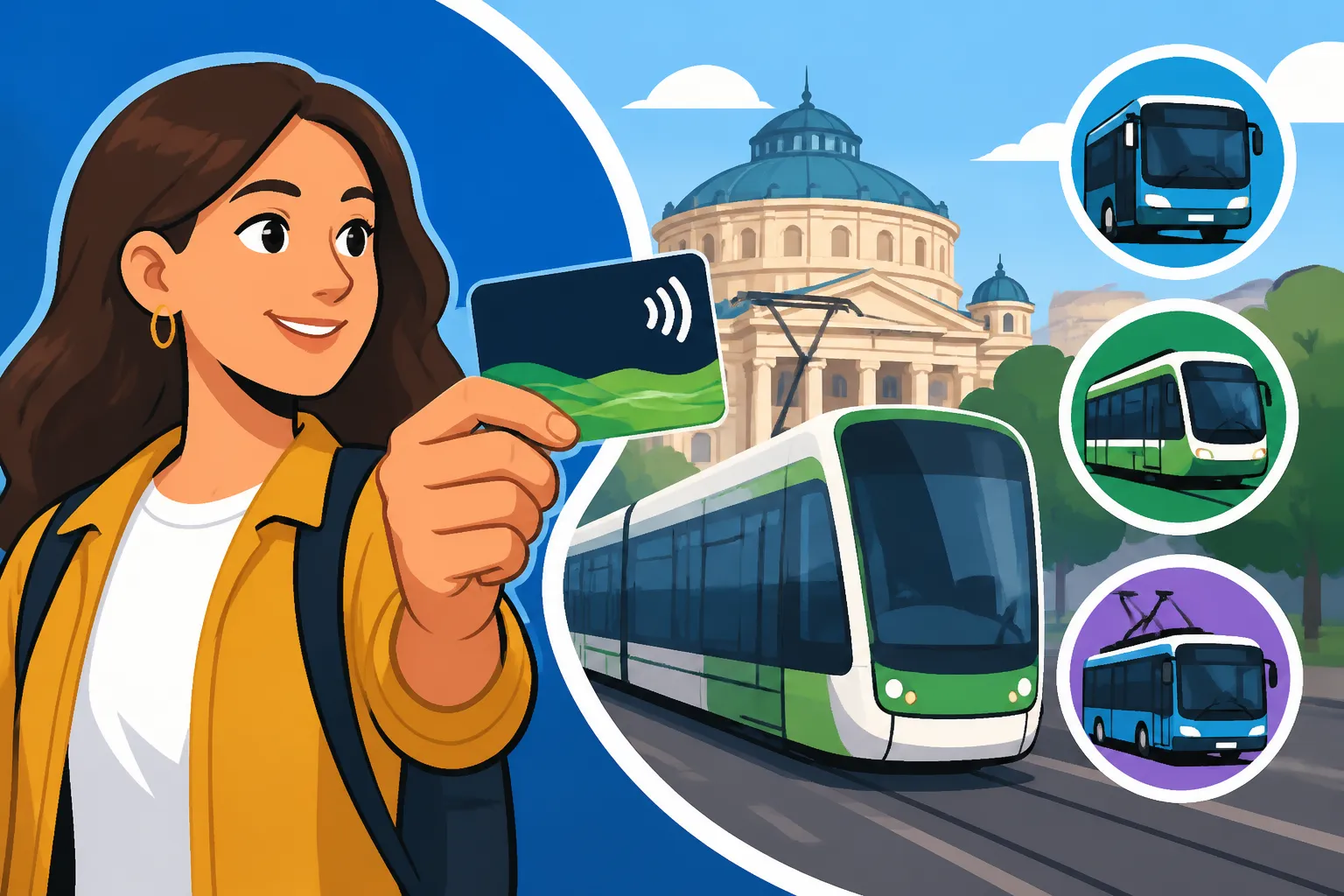
Buses (autobuze) are the most common, navigating through bustling streets and quiet residential areas. They come in various sizes, from standard to longer articulated models. Trams (tramvaie) typically run on dedicated tracks, often in the middle of wider boulevards, offering a smoother, often faster, ride through dense traffic. Trolleybuses (troleibuze) are like electric buses, drawing power from overhead lines, and are less prevalent but serve important routes, particularly in the city center. Don't worry about trying to distinguish them too much, as the ticketing system is unified across all STB vehicles. Learning to use them is essential, especially when you're first settling in and figuring out where everything is. This network will be your best friend when you're looking for that specific hidden gem restaurant or need to get to the immigration office across town, helping you get around easily in your first 90 days in Romania.
Metrorex: Bucharest's Underground Lifeline
While STB handles the surface, Metrorex takes you beneath the city. The Bucharest Metro is fast, efficient, and often the best choice for longer distances, especially when you need to avoid surface traffic. It's a lifesaver during rush hour, and temperatures underground can be a welcome escape in the scorching summer or freezing winter. The metro lines connect major hubs, business districts, and residential areas, making it indispensable for daily commutes.
Currently, there are five operational metro lines (M1, M2, M3, M4, M5), with M6 under construction to connect the city center to Henri Coandă International Airport. Each line is color-coded on maps, making navigation fairly straightforward once you get the hang of it. What’s fantastic now is the ability to use a single card for both STB and Metrorex, although there are nuances we'll dive into regarding the types of passes available for this integration. This unified approach makes living in Bucharest a lot less stressful than it used to be, especially for someone who just moved here and is still finding their feet.
Decoding the STB Travel Card (Cardul de Transport)
Gone are the days of paper tickets and multiple types of single-use passes. Bucharest has largely moved to an electronic ticketing system centered around the "Cardul de Transport," or travel card. This is your key to unlocking the public transport network, and understanding its different iterations and how to use them is paramount.
Types of Travel Cards: Multiplu vs. Activ
When you first approach a ticketing kiosk, you'll hear about two main types of cards: the Cardul Multiplu and the Cardul Activ. This is where a lot of the initial confusion can kick in, so let's break it down.
The Cardul Multiplu is generally a non-personalized card. Think of it as a disposable, reloadable card. It's perfect for tourists, short-term visitors, or those who don't want the hassle of registering a personal card. You can load it with 10-trip tickets (for STB or combined STB/Metrorex), single-day passes, 72-hour passes, or even pay-per-trip credit. The main limitation is that you cannot load monthly or weekly unlimited passes onto it. If you're only in Bucharest for a few days, or just use public transport occasionally, this is probably the easiest option. You simply buy the card for a small fee (around 3.70 RON, non-refundable as of early 2024), load it with your desired trips, and you're good to go.
The Cardul Activ is the personalized version of the travel card. This is what long-term residents, students, and employees will want. It requires registration with your ID, and often your CNP (Personal Numeric Code), which you'll probably get as part of your residence process in Romania. The benefit? You can load weekly, monthly, or even annual unlimited passes on it, which are significantly more cost-effective if you're a regular user. There are also special versions for students or pensioners that offer reduced fares. If you're planning on staying in Bucharest for any significant period, investing in a Cardul Activ is definitely worth it. It feels a bit like a hurdle to get, but once you have it, it simplifies your life immensely.
Where and How to Get Your Card
Getting your travel card is straightforward once you know where to go. For a Cardul Multiplu, you can simply walk into any STB ticketing kiosk (indicated by a small blue or yellow booth often near bus or tram stops) or use one of the newer STB self-service machines. Just tell the attendant (or select on the machine) that you want a "Cardul Multiplu" and what kind of trips you'd like to load. Most attendants will understand basic English.
For a Cardul Activ, you'll typically need to go to a larger STB sales point or a special counter, often located in metro stations or major transport hubs. You'll need your ID (passport or Romanian ID card if you have one) and possibly your CNP. If you're an employee, some companies might even help you get one. Students will need their student ID. It might take a bit longer, and perhaps a small form to fill out, but it’s a one-time administrative chore that pays off.
Once you have your physical card, whether Multiplu or Activ, topping it up is easy. You can do it at any STB kiosk, at the self-service machines, or increasingly, through mobile apps. Speaking of apps, this is where staying connected really helps. Make sure you've got a local SIM card or an eSIM from providers like Airalo set up. It’s incredibly helpful for loading credit on the go and checking schedules, especially when you're still getting used to things.
The Evolution of Ticketing: QR Codes and Mobile Apps
Romania is rapidly embracing digital solutions, and public transport is no different. Alongside the physical cards, you can now purchase tickets and passes via mobile apps. The "STB Pay" app is specifically designed for STB services, allowing you to buy single trips, daily passes, or even metropolitan passes and generate a QR code directly on your phone. You simply scan this QR code at the validator when you board.
Other popular payment apps like "24Pay" also offer public transport ticketing options for Bucharest. These are particularly convenient if you find yourself without a loaded physical card and no kiosk nearby. It eliminates the need to carry cash for tickets and provides a quick, easy way to pay. This digital convenience is a true blessing, especially when you’re still wrestling with local currency and exchange rates. Just remember, your phone needs to be charged!
Navigating Different Transport Modes
Once you have your travel card or app ready, it’s time to actually use the transport! Each mode has its own rhythm and nuances, and understanding them will make your daily commute much smoother.
Buses Autobuze
Buses are everywhere. They are the most flexible transport option, reaching deeper into neighborhoods where trams or metros don't go. Bus stops are usually clearly marked with a blue sign showing the route numbers. Always check the sign at the stop to ensure you're waiting for the correct bus number and going in the right direction. Google Maps is generally reliable for bus routes and real-time tracking, but sometimes a quick look at the Info STB app gives you more precise real-time information.
When the bus arrives, you'll notice multiple doors. You can board through any door, but you absolutely must validate your trip immediately upon boarding. Look for the small orange validation machines near the doors. Hold your physical travel card against the reader until it beeps and shows a green light or a confirmation message. If you're using a QR code from an app, hold your phone with the QR code under the scanner. Failure to validate can result in a hefty fine from controllers ("controlori") who frequently check tickets. Trust me, you don't want to get caught without a validated ticket; it's an unnecessary headache and expense.
Trams Tramvaie and Trolleybuses Troleibuze
Trams and trolleybuses operate similarly to buses but often have more consistent routes and sometimes faster journeys due to dedicated lanes. Tram stops are also clearly marked, often with a small shelter. Like buses, you board through any door and validate your card or QR code immediately. The validation process is identical – hold your card to the orange reader until it confirms.
Trams, with their sometimes retro charm and rhythmic clatter, offer a unique perspective of the city. Some routes, like the 41, are practically sightseeing tours in themselves, cutting across various parts of the city. Trolleybuses, being electric, offer a quieter ride and are an environmentally friendlier option. The main thing to remember for all STB vehicles is that consistent validation. Don't assume that just because you have credit, it's 'activated' until you tap your card.
Route Planning and Schedules
For planning your journeys, I highly recommend using Google Maps. It’s integrated with Bucharest’s public transport data and provides fairly accurate real-time information for STB and Metrorex. You can see bus arrival times, tram routes, and metro connections. Another excellent resource is the official "Info STB" app, which can give you even more granular real-time tracking and estimated arrival times, especially useful if you're standing at a bus stop wondering where your ride is. This is another area where having a robust data plan, possibly an eSIM from Airalo when you first arrive, really pays off.
Bucharest's traffic can be unpredictable, so always factor in extra time, especially if you have an important appointment. While the metro runs on a very consistent schedule, surface transport can be subject to delays. Generally, most routes run from early morning (around 4:30-5:00 AM) until late evening (around 11:00 PM-midnight). There are also some night bus routes ("linii de noapte") that operate on a reduced schedule, usually hourly, during the overnight hours, primarily serving major arteries. These are marked with an "N" before the route number (e.g., N1).
Integrating with the Metro Metrorex and Commuter Trains
One of the best improvements in Bucharest's public transport has been the integration of STB and Metrorex ticketing. While historically separate, you can now purchase combined passes that cover both systems, making transfers much smoother.
Combined STB/Metrorex Passes
For regular commuters, the combined pass is a game-changer. These are typically loaded onto a Cardul Activ and can be bought as daily, weekly, or monthly subscriptions. For example, you can get a 24-hour urban pass that works on both STB and Metrorex, or a monthly subscription that covers both. These passes are usually more expensive than STB-only or Metrorex-only passes, but the convenience of seamless travel between surface and underground is invaluable.
To use a combined pass, you simply tap your Cardul Activ at the STB validators when boarding a bus, tram, or trolleybus, and at the metro turnstiles when entering or exiting a metro station. This unified approach really streamlines the process, cutting down on queuing for separate tickets and making your commute less stressful. When you're first arriving, and perhaps still getting your belongings settled after a move arranged with a company like Sirelo, anything that makes daily life simpler is a huge plus.
Separate Metro Tickets
If you only use the metro occasionally and don't have a combined pass or an STB Cardul Multiplu loaded with combined trips, you can still buy separate metro tickets. These are purchased from Metrorex ticket booths or automated machines located at every metro station. Options include single trips, 2-trip tickets, 10-trip tickets, or daily/weekly passes that are only valid for the metro.
Metro tickets are typically magnetic cards or paper tickets with a QR code that you'll either insert into a reader or scan at the turnstile. It's crucial to hold onto your metro ticket until you exit the station, as you might need to use it again to validate your exit at some older stations. The metro system is usually very efficient, with trains running frequently, especially during peak hours, often every 3-7 minutes depending on the line and time of day.
Commuter Trains (CFR Călători)
Beyond the urban network, Bucharest also has a system of regional commuter trains operated by CFR Călători, the national railway company. These trains connect Bucharest to surrounding towns and villages, and also to Henri Coandă International Airport (Otopeni). The express train to the airport, the Henri Coandă Express, runs frequently from Gara de Nord (the main train station).
Tickets for CFR Călători trains are entirely separate from STB or Metrorex. You'll need to purchase these directly from CFR ticket offices at train stations or online via their website. If you're planning excursions outside the city or need to reach the airport, knowing about these commuter trains can be very useful. They offer a comfortable and relatively inexpensive way to explore more of the region beyond Bucharest itself.
Tips and Tricks for Expats Using Public Transport
Having lived here for a while, I've picked up a few unwritten rules and helpful hints that can make your public transport experience in Bucharest much more pleasant. Forget the textbook; this is the real talk.
Essential Apps and Online Resources
As mentioned, Google Maps and Info STB are your best friends for real-time tracking and route planning. Download them immediately. Seriously. There's nothing worse than standing at a stop in the pouring rain, having missed your bus by two minutes, and realizing you could have known it was delayed. For getting your connectivity sorted so these apps actually work, remember options like Airalo to avoid roaming charges when you first land. You'll need reliable internet access to navigate the initial maze of the city.
Another useful online resource is the STB website (stb.ro), which provides maps, route information, and official announcements, although it's primarily in Romanian. For metro-specific information, check the Metrorex website (metrorex.ro).
Navigating Peak Hours and Crowds
Bucharest is a city of nearly 2 million people, and during peak hours (roughly 7:00-9:00 AM and 5:00-7:00 PM on weekdays), public transport can get very crowded. Expect sardine-can conditions on popular routes and metro lines. If you're susceptible to claustrophobia, try to schedule your travel outside these times.
When it's crowded, keep a firm hold on your belongings. Pickpocketing is a known issue, especially on crowded buses, trams, and metro trains, and around major tourist areas. It’s not an everyday occurrence, but it's always wise to be vigilant and keep valuables secured. This is just common sense for any big city, but a gentle reminder never hurts.
Public Transport Etiquette
Romanians are generally polite, and this extends to public transport. Here are a few things to keep in mind:
- Offer your seat: It's considered good manners to offer your seat to elderly people, pregnant women, or those with small children. Look for the designated seats (often marked with a sticker) near the doors.
- Move to the back: Especially on crowded buses and trams, try to move further inside the vehicle to make space for others boarding. Don't block the doors unless you're about to get off.
- Let people off first: When a vehicle arrives at a stop, wait for passengers to exit before you attempt to board. It speeds up the process for everyone.
- Don't block doors: When the doors are about to close, don't try to force your way in. Wait for the next vehicle.
- Keep noise down: While lively conversations are common, loud phone calls or music without headphones are generally frowned upon.
What to Do in Case of an Emergency
In the unlikely event of an emergency on public transport, the emergency number in Romania is 112 for all services (ambulance, fire, police). If it's a medical emergency, you'll want to know how emergency medical care in Romania works. Most drivers also have communication systems to alert dispatch if there's an issue with the vehicle or a passenger. Don't hesitate to speak up if you see something concerning.
Understanding Accessibility
While improvements are being made, accessibility for passengers with disabilities can still be a challenge on Bucharest's public transport. Newer buses and trams are often equipped with ramps and designated spaces, but older models may not be. Metro stations usually have elevators, but not all of them, and some older stations might only have escalators or stairs. If you rely on mobility aids, it's always a good idea to check the specific route and station information beforehand.
Metropolitan Areas and STB Extensions
Bucharest is surrounded by a metropolitan area, and the STB network extends to many of these suburban communities. If you live or work in a town just outside Bucharest (e.g., Popești-Leordeni, Voluntari, Chiajna), you'll need a "metropolitan pass" or ticket. These are generally a bit more expensive than urban-only passes but cover both the urban Bucharest network and the extended suburban lines. It’s important to clarify this when purchasing your card or loading credit, especially if your commute takes you beyond the strict city limits. The price of these can impact your overall cost of living in Bucharest.
Troubleshooting and Support
Things can, and sometimes do, go wrong. Maybe your card isn't validating, you've lost it, or you're simply confused. Don't panic; there are resources and steps you can take.
What to Do If Your Card Fails to Validate
The most common issue is a card not validating. First, try again. Sometimes the sensor needs a slightly firmer or more precise tap. Ensure you're holding the card flat against the reader. If it still doesn't work:
- Check your balance: You might simply be out of credit or your pass has expired. You can often check your balance at kiosks, self-service machines, or through the STB Pay app.
- Try another validator: Most vehicles have multiple validators. Try one near a different door.
- Buy a QR ticket: If all else fails and you have internet access on your phone, quickly purchase a single trip via the STB Pay or 24Pay app. This is your best immediate solution to avoid a fine.
- Inform the driver (but don't rely on it): You can try to explain the situation to the driver, but they are generally not equipped to handle ticketing issues. They might let you ride to the next stop, but it's not a guarantee against a controller.
Dealing with Controllers and Fines
STB and Metrorex employ controllers (called "controlori") who randomly board vehicles or check at metro gates to ensure everyone has a valid, validated ticket. They usually wear uniforms, but sometimes they might be in plain clothes, only revealing their ID once they start checking.
If you are caught without a validated ticket or an active pass, you will be issued a fine. This fine can be quite significant (e.g., 50-100 RON on the spot, or higher if not paid within a certain timeframe). Trying to argue usually won't help, and it’s best to comply. Pay the fine promptly to avoid additional penalties. This is another reason why it's so important to always validate your card upon boarding. Better safe than sorry! They are not typically sympathetic to "I didn't know" arguments from foreigners, as the rules are prominently displayed.
Lost or Stolen Travel Cards
If you lose a Cardul Multiplu, unfortunately, there's not much you can do. Since it's not personalized, the credit on it is gone. Consider it a lesson learned.
If you lose a Cardul Activ (the personalized one), there's hope! Because it's registered to you, you can report it lost or stolen at a major STB sales point. You'll likely need your ID and the original registration details. For a small fee, they can usually block the old card and transfer any remaining valid passes or credit to a new Cardul Activ. This process can take a few days, so be prepared to buy single tickets or use the app in the interim. This makes the Cardul Activ a safer bet for long-term residents.
Customer Support and Information Points
For more complex issues, questions about routes, or specific card problems, you can visit one of STB's main customer service centers. These are usually located at major transport hubs or metro stations. While English might not be universally spoken by every staff member, you'll generally find someone who can assist you. Patience and a willingness to use translation apps can be very helpful here. Additionally, the STB and Metrorex websites often have contact forms or phone numbers for general inquiries. Don't hesitate to reach out if you're truly stuck.
| Card Type | Personalization | Best For | Loadable Passes | Cost (Card Fee) |
|---|---|---|---|---|
| Cardul Multiplu | No | Tourists, occasional users, short-term stays | 10-trip (STB only or STB/Metrorex combined), 24h urban, 72h urban, pay-per-trip (electronical wallet) | ~3.70 RON |
| Cardul Activ | Yes (registered) | Residents, regular commuters, students, employees | Weekly, monthly, annual unlimited (STB only or STB/Metrorex combined), 10-trip, 24h/72h urban, metropolitan passes, student/pensioner reduced fares. Can also function as an electronic wallet for pay-per-trip. | ~3.70 RON |
This table provides a concise comparison to help you choose the right travel card for your needs. Remember, the Cardul Activ requires your ID and CNP, so it's best to register for your CNP as part of your initial steps in Romania.
Public transport in Bucharest is an adventure, a necessity, and a fantastic way to truly get to know the city. It has its quirks, sure, but once you master the STB Travel Card and understand the rhythm of the buses, trams, trolleybuses, and metro, you’ll be zipping around like a local. It’s all part of the expat experience, and soon enough, you’ll be the one offering advice to newcomers, just as I’m sharing with you now.
Disclaimer
The information provided in this guide is for general informational purposes only and does not constitute legal or official advice. While we strive to keep the information up-to-date and accurate, public transport rules, ticketing systems, and prices in Romania can change. Always consult the official STB București and Metrorex websites or visit a local information point for the most current and authoritative information. Individual experiences may vary.