Understanding the Motorway Vignette (Rovinieta) in Romania
Driving in Romania, especially for us expats, can be an adventure, a scenic delight, or a bureaucratic maze, often all three at once! One of the first things many foreign drivers stumble upon, sometimes literally, is the concept of the rovinieta. It's not a physical sticker you slap on your windshield anymore, but a digital toll that allows you to traverse the country's national roads. Failing to understand it can lead to frustrating fines, so let's break down everything you need to know about this essential piece of Romanian road access.
What Exactly is a Rovinieta and Why Do You Need It?
When you first arrive in Romania and get behind the wheel, whether it's your own car, a rental, or a friend's vehicle, you quickly realise that the road infrastructure is a mix. While city streets are generally fine, and many local roads are in decent shape, the moment you hit a national road or a motorway, you're entering a different system. The rovinieta is Romania's national road toll, a mandatory tax that grants you the legal right to use all national roads, including expressways and motorways, outside of urban areas. It's essentially a user fee that contributes to the maintenance and development of the national road network. Think of it as your passport to driving freely across the country.
The Legal Obligation and Its Purpose
The rovinieta isn't an option; it's a legal requirement enshrined in Romanian law. The National Company for Road Infrastructure Administration (CNAIR) is the authority responsible for managing this system, and all funds collected from rovinieta purchases are directed towards the upkeep, repair, and expansion of Romania's extensive road network. For us expats, coming from countries with varying toll systems or none at all, this can feel like an extra layer of bureaucracy. However, once you understand that it's simply how the country funds its major arteries, it makes more sense.
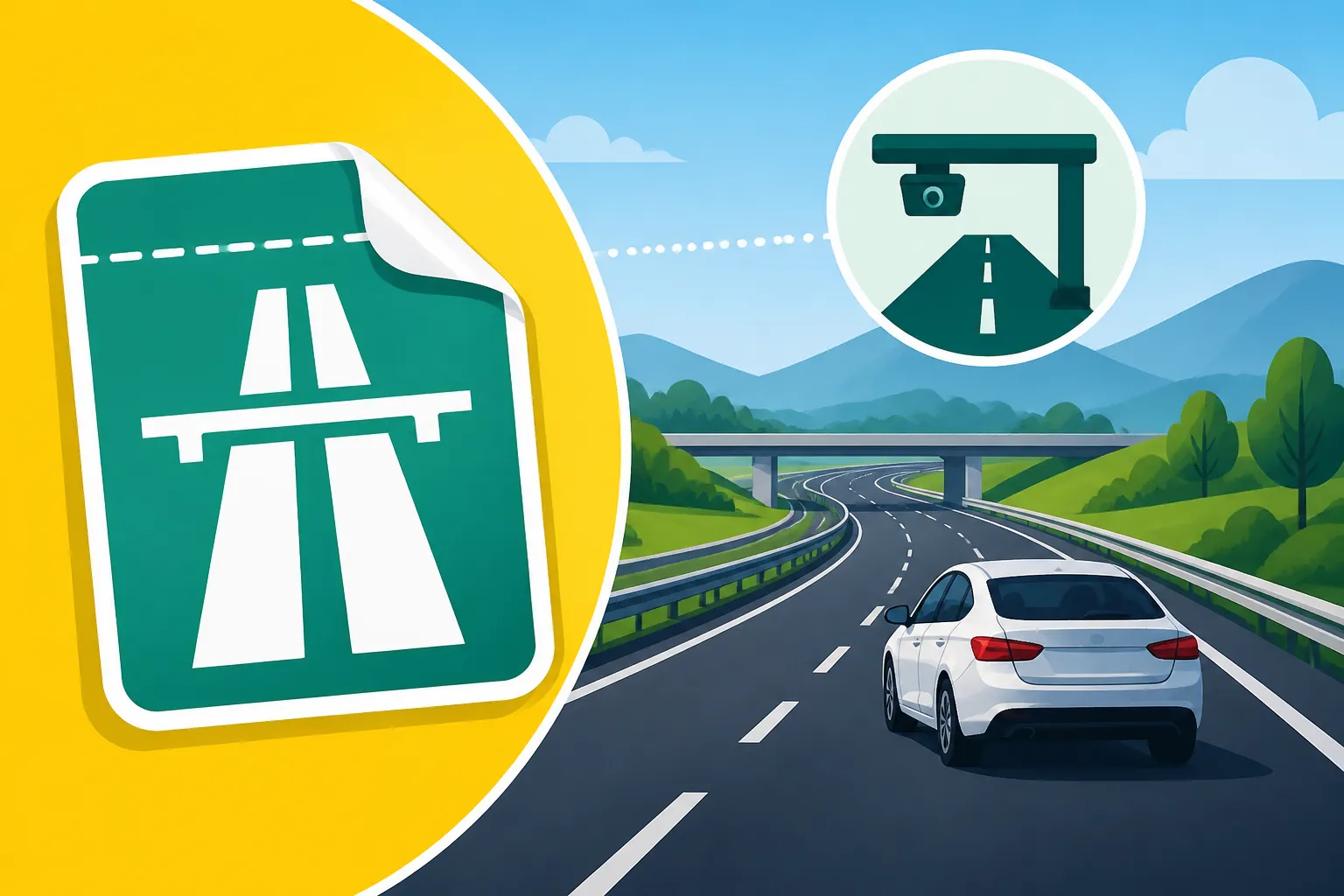
The crucial point here is that every vehicle, regardless of whether it's registered in Romania or abroad, needs a valid rovinieta to use these designated roads. It's not about your citizenship or your vehicle's plates; it's about the road you're on. You won't find traditional toll booths where you pay as you go. Instead, the system relies on an electronic database linked to your vehicle's registration plate, monitored by an extensive network of cameras. This means that if you forget to purchase one, or if yours expires, you're not going to be stopped at a barrier, but rather caught by a camera, and a fine will follow.
Types of Roads Covered
The rovinieta specifically covers national roads, which are categorised as DN (Drum Național), and motorways, marked as A (Autostradă). These are the main arteries connecting cities, towns, and regions across Romania. When you see road signs indicating a DN or A prefix, you should assume a rovinieta is required.
Local roads (DJ – Drum Județean, or DC – Drum Comunal), which are maintained by county or local authorities, do not require a rovinieta. So, if you're just pottering around a village or travelling exclusively on minor routes, you generally won't need one. However, it's very rare to traverse any significant distance in Romania without touching a national road at some point. For instance, even a short trip between two seemingly small towns might involve a stretch of DN.
It's also important to distinguish between motorways and expressways. While both require the rovinieta, expressways (DX – Drum Expres) are a newer category of high-speed roads that are also covered. The key takeaway is: if you're leaving a city and heading out onto a major road connecting to another city, assume you need a rovinieta. Don't get caught out by thinking it only applies to fancy new motorways; older national roads are also included.
Who Needs a Rovinieta and for Which Vehicles?
The beauty (or sometimes, the headache) of the rovinieta system is its universality. It applies to virtually everyone and every vehicle category that uses Romania's national road infrastructure. There are no special exemptions for tourists, expats, or particular vehicle types, though the cost and category might differ.
Drivers of Romanian-Registered Vehicles
If you've gone through the process of How to Register a Vehicle and Get Romanian Plates, then your vehicle is firmly ensconced in the Romanian system, and getting a rovinieta will be a regular part of your driving life. For Romanian-registered vehicles, the process is straightforward. When you buy a rovinieta, it's linked directly to your car's Romanian registration number (number plate) and chassis number (VIN).
Many Romanians opt for the annual rovinieta as it's the most cost-effective for year-round use. If you have a company car, typically the employer will handle the rovinieta purchase, but it's always wise to double-check, especially if you're new to the company. For private individuals, managing your rovinieta means knowing its expiry date and renewing it promptly. The system is entirely digital, so there's no physical sticker; the validity is checked against the national database.
Foreign-Registered Vehicles and Tourists
This is where many expats often get confused. "My car is registered in Germany, do I still need it?" The answer, unequivocally, is yes. Whether you're driving your personal foreign-registered vehicle that you imported after your move, or you're a tourist just passing through, if your vehicle is using Romanian national roads, it needs a valid rovinieta. This applies equally to those of us who haven't yet gotten around to exchanging our foreign driving licence in Romania.
If you're renting a car from a Romanian rental company, the good news is that the rovinieta is almost always included in your rental fee. However, it's a good practice to confirm this with the rental agent before you drive off. A simple "Are rovinieta fees covered?" should suffice. If you're driving your own car with foreign plates, you are solely responsible for purchasing and ensuring the validity of your rovinieta. The cameras don't care about your nationality or the country of your license plate; they just scan, check the database, and if there's no match, a fine is generated. This is a common pitfall for new arrivals, so make it a priority if you're bringing your own wheels.
Vehicle Categories and Associated Costs
The cost of a rovinieta isn't one-size-fits-all; it depends on your vehicle's category. These categories are determined by the maximum authorised mass (MAM) and the number of seats. Here's a general breakdown:
- Category A: Private cars (passenger cars) with a MAM not exceeding 3.5 tonnes and up to 9 seats, including the driver. This is the most common category for expats.
- Category B: Freight vehicles with a MAM between 0 and 3.5 tonnes. This would typically include smaller vans or utility vehicles.
- Category C: Freight vehicles with a MAM between 3.5 and 7.5 tonnes.
- Category D: Freight vehicles with a MAM between 7.5 and 12 tonnes.
- Category E: Freight vehicles with a MAM over 12 tonnes, with up to 3 axles.
- Category F: Freight vehicles with a MAM over 12 tonnes, with 4 or more axles.
- Category G: Passenger transport vehicles with more than 9 seats (including the driver), up to 23 seats.
- Category H: Passenger transport vehicles with more than 23 seats (including the driver).
For most expats, you'll likely fall into Category A. It's crucial to select the correct category when purchasing, as an incorrect category could still lead to a fine, even if you paid something. Always double-check your vehicle's registration documents for its MAM if you're unsure.
How to Purchase Your Rovinieta: Options and Process
Gone are the days of needing a physical sticker. Romania's rovinieta system is fully digital, which means you can buy it from anywhere with an internet connection, or at various physical locations. This flexibility is a huge plus, but it also means there's no visual reminder on your windscreen that you have one.
Online Purchase through CNAIR and Authorized Partners
The easiest and most convenient way to purchase your rovinieta is online. The official source is the website managed by CNAIR itself, which is typically found at e-rovinieta.ro. This is the most reliable place to ensure you're getting a legitimate rovinieta and avoiding any scams.
Here's a general step-by-step guide for online purchase:
- Access the Website: Go to e-rovinieta.ro. The site usually has an English language option, which is a lifesaver for us.
- Select Vehicle Type: Choose your vehicle category (Category A for most cars).
- Enter Vehicle Details: You'll need your vehicle's registration number (license plate) and chassis number (VIN). The chassis number is usually found on your vehicle's registration certificate (Certificat de înmatriculare) or on the car itself, often visible through the windshield or on a doorframe.
- Select Validity Period: Choose how long you want the rovinieta to be valid (7 days, 30 days, 90 days, or 12 months).
- Choose Start Date: You can usually select a future start date for your rovinieta, which is handy if you're planning a trip.
- Enter Personal Details: Provide your name, address, and email for the confirmation.
- Review and Pay: Double-check all the information carefully, especially the registration number and start date. Any error here could render your rovinieta invalid. Then proceed to payment.
- Confirmation: After successful payment, you'll receive an email confirmation. This email acts as your proof of purchase and includes all the details. Save it!
Beyond the official site, there are several authorised partners, typically major gas station chains (like OMV Petrom, Rompetrol, Mol, Lukoil) and banks, that also offer online purchase through their own portals. While these are legitimate, always ensure you're using an authorised partner to avoid unofficial sites that might charge excessive fees or even be fraudulent. It's important to remember that for any online service in Romania, a stable internet connection is key, and if you're relying on your phone, getting a local SIM card or using an eSIM from providers like Airalo can ensure you stay connected without roaming headaches.
Physical Purchase Points: Gas Stations and Post Offices
For those who prefer a more traditional approach or don't have immediate internet access, rovinieta can be bought in person at various locations throughout Romania.
- Gas Stations: This is probably the most common and convenient option for many drivers. Almost all major gas stations, including OMV Petrom, Rompetrol, Mol, and Lukoil, have terminals where you can purchase a rovinieta. You simply go inside, tell the attendant you need a rovinieta, provide your vehicle registration number, chassis number, desired validity period, and your vehicle category. They'll process it and give you a printed receipt. It's quick and efficient, especially if you're already stopping for fuel.
- Post Offices (Poșta Română): Many Romanian Post offices also offer rovinieta sales. This might be a good option if you're in a more rural area and there isn't a major gas station nearby. The process is similar: provide your vehicle details and pay at the counter. However, be prepared for potentially longer queues compared to a gas station.
- CNAIR Agencies: While less common for the average expat, you can also purchase a rovinieta directly at CNAIR's regional agencies. This might be useful if you have a particularly complex situation or need to clarify something directly with the authorities.
When purchasing in person, always make sure to keep the receipt. This is your immediate proof of purchase.
Verifying Your Rovinieta and Avoiding Scams
After purchase, whether online or in person, it’s critical to verify that your rovinieta has been correctly registered. Even a small typo in your license plate or VIN can render it invalid, leading to a fine.
You can verify your rovinieta on the official e-rovinieta.ro website. There's usually a "Verifica valabilitate" (Check validity) section where you can enter your vehicle's registration number and chassis number to see if it's active and for what period. Do this immediately after purchase. If there's an error, contact the point of sale (or the online support) as soon as possible.
Be extremely wary of unofficial websites that look legitimate but aren't. They might appear high in search results, often charging exorbitant service fees or, worse, being outright fraudulent and never actually registering your rovinieta. Stick to the official CNAIR website or well-known, authorised partners. If the price seems too high or the website looks unprofessional, trust your gut and avoid it.
Costs and Validity Periods: Planning Your Journey
Understanding the cost structure and choosing the right validity period for your rovinieta is key to economical driving in Romania. The prices are set nationally by CNAIR and are uniform across all purchase points, regardless of whether you buy online or at a gas station.
Understanding the Price Structure by Vehicle Category
As mentioned, prices vary significantly by vehicle category and the duration you select. For most expats driving personal cars (Category A), these are the options you'll consider:
- 7-day validity: Ideal for short trips or transit through Romania.
- 30-day validity: Good for a longer holiday or if you're just settling in and haven't decided on long-term plans.
- 90-day validity: Suitable for those staying for a few months or making multiple trips within a quarter.
- 12-month validity: The most economical choice for residents or those planning to be in Romania for a full year.
Here's a simplified table for Category A vehicles (passenger cars up to 9 seats, MAM up to 3.5 tonnes), showing approximate costs in Romanian Lei (RON) and Euros, for illustrative purposes. Please note that exchange rates fluctuate, and prices can be updated, so always check the official CNAIR website for the most current figures.
| Validity Period | Approximate Cost (RON) | Approximate Cost (EUR) |
|---|---|---|
| 7 days | 13 RON | ~2.6 EUR |
| 30 days | 28 RON | ~5.7 EUR |
| 90 days | 52 RON | ~10.5 EUR |
| 12 months | 96 RON | ~19.5 EUR |
Prices are indicative as of early 2024 and subject to change. Always verify on e-rovinieta.ro.
For other vehicle categories, especially commercial vehicles, buses, and heavy goods vehicles, the prices are considerably higher, reflecting their impact on road wear and tear. A Category H rovinieta for 12 months, for instance, can be several thousand RON.
Choosing the Right Validity Period for Your Needs
This is a common question, and the answer truly depends on your driving habits and stay duration in Romania.
- For Tourists or Short Visits: If you're coming for a quick weekend getaway, a 7-day rovinieta is perfect. If you're on a two-week holiday driving around, a 30-day one will cover you adequately. It's often cheaper to buy a longer one than risk a fine by underestimating your stay.
- For New Expats (First 90 Days): As you navigate The Complete Guide to Moving to Romania: Your First 90 Days (2027), you might initially go for a 30 or 90-day rovinieta while you decide on your long-term vehicle plans or before you've fully registered your car. If you're bringing your own vehicle from abroad, it’s a good idea to consider the 90-day option to give yourself breathing room.
- For Long-Term Residents: If you plan to live and drive in Romania for more than a few months, the 12-month rovinieta is the most sensible and cost-effective option. It saves you the hassle of frequent renewals and is significantly cheaper per day than the shorter options. Set a reminder on your phone or calendar for its expiry date!
Payment Methods and Currency
When purchasing a rovinieta, transactions are typically in Romanian Lei (RON). If you're buying online, most platforms accept major credit and debit cards (Visa, Mastercard). In person at gas stations or post offices, you can pay with cash (RON) or card.
For tourists or new arrivals who might not yet have a Romanian bank account, remember that paying with an international card might incur foreign transaction fees from your bank. While the cost of a rovinieta isn't massive, these small fees can add up. It's always a good idea to have some local currency on hand or use a travel-friendly card that minimises exchange fees.
Penalties for Non-Compliance and Enforcement
This is the serious part, and where the digital nature of the rovinieta system can catch unsuspecting drivers off guard. Because there are no physical toll booths to stop you, it's easy to forget or not realise you need one until it's too late. The enforcement system is fully automated and relentless.
The Surveillance System: Cameras and Checks
Romania employs a sophisticated network of surveillance cameras strategically placed along its national roads and motorways. These cameras are specifically designed to read vehicle license plates automatically. When your vehicle passes under one of these cameras, its plate number is instantly cross-referenced with the CNAIR rovinieta database.
If the system finds no valid rovinieta associated with your plate number for that specific date and time, it triggers a warning. If this happens, you've been "caught". The beauty (or terror, depending on your perspective) of this system is that it's 24/7, doesn't discriminate, and leaves no room for human error in detection. This means you could be caught driving without a rovinieta in one part of the country, and again an hour later hundreds of kilometres away, resulting in multiple fines if not addressed quickly.
The important thing to understand is that the system logs entry and exit points. If you enter a national road without a valid rovinieta and exit it (passing another camera) without one, you're looking at a fine. Even if you purchase one midway through your journey, the initial entry without a valid rovinieta could still lead to a penalty.
Fines for Driving Without a Valid Rovinieta
The fines for driving without a valid rovinieta are substantial and far exceed the cost of purchasing one. For a Category A passenger car, the fine can range from 250 RON to 500 RON. However, this is just the initial fine. What many expats don't realise is that this fine is accompanied by a compensation fee equal to the cost of a 12-month rovinieta for your vehicle category. So, for a Category A car, you're not just looking at the 250-500 RON, but also an additional ~96 RON.
Adding to the frustration, you can receive multiple fines on the same day if your vehicle is detected by different cameras at different locations. While Romanian law specifies that only one fine can be issued for a 24-hour period for the same route segment (e.g., if you drive back and forth on the same short stretch of highway), if you traverse different segments of national road or different motorways, you can indeed be fined multiple times. This can quickly turn a forgotten rovinieta into a very expensive oversight.
Fines are typically sent via registered mail to the address associated with the vehicle's registration. If your car is foreign-registered, this means it will go to the address in your home country. This can lead to significant delays, and you might only discover the fine months later, potentially with added late payment penalties.
How to Contest a Fine and if it's Worth It
Contesting a rovinieta fine in Romania is, frankly, a bureaucratic headache. It's generally a path fraught with paperwork, potential language barriers, and a low probability of success unless there's a clear error on their part (e.g., they fined the wrong plate number, or you can unequivocally prove you had a valid rovinieta at the time).
If you believe you've been wrongly fined, you have 15 days from the date of receipt to submit an appeal to the court in the district where the infraction was recorded. This involves drafting a formal appeal (contestație), often in Romanian, presenting your evidence, and potentially attending court hearings. Given the costs of legal advice and the administrative burden, for many expats, especially for a single fine, paying the fine, often with the reduced amount if paid within 15 days, is the less stressful option.
However, if you're certain you had a valid rovinieta at the time of the alleged infraction, and you have undeniable proof (like the confirmation email or receipt), then contesting it might be worthwhile. Ensure your proof clearly shows the correct vehicle registration number, chassis number, and a validity period that covers the date and time of the alleged infraction.
Practical Tips and Common Expat FAQs
Navigating the rovinieta system can feel like learning a new language, but with a few practical tips and answers to common questions, you'll be driving smoothly in no time.
Rental Cars and Rovinieta
As mentioned earlier, nearly all legitimate car rental companies in Romania include the rovinieta in their rental fees. When you pick up your rental car, it should already have a valid rovinieta associated with its registration plate. However, it's always smart to ask for confirmation from the rental agent. A quick "Are rovinieta fees covered?" at the counter can save you a lot of grief. They should be able to provide proof of its validity if you ask. Don't assume; verify! This is especially important if you're getting a great deal on a rental from a less-known company, as sometimes these small details can be overlooked.
Changing Vehicle Details or Selling a Car
Life happens, and sometimes your vehicle details change, or you decide to sell your car. If you change your license plate number (e.g., you move within Romania and get a new county plate), your existing rovinieta becomes invalid, as it's tied to the old plate. You will need to purchase a new rovinieta for the new plate. There is no simple transfer process for the existing rovinieta to a new plate.
If you sell your vehicle, the rovinieta is associated with the vehicle itself and its plate number, not the owner. So, theoretically, the new owner benefits from any remaining validity. However, the legal responsibility for the rovinieta then passes to the new owner upon vehicle registration transfer. If they fail to renew it, they are liable for fines. It's always a good idea to inform the buyer of the rovinieta's expiry date upon sale. For a smooth moving experience, consider using services like Sirelo to help plan your vehicle transfer or sale if you're relocating to another country.
Keeping Track and Renewal Reminders
The biggest challenge with a digital rovinieta is remembering when it expires. Unlike a sticker that provides a constant visual reminder, an email buried in your inbox might easily be forgotten. Here are some ways to keep track:
- Set Calendar Reminders: Immediately after purchasing a rovinieta, add a recurring reminder to your digital calendar (Google Calendar, Outlook, etc.) a month or two before its expiry date.
- Use the CNAIR Website: The official e-rovinieta.ro website allows you to check the validity of any rovinieta by entering the plate and chassis number. Make it a habit to check once every few months, especially if you opted for a 12-month validity.
- Email Confirmation Storage: Create a dedicated folder in your email for important Romanian administrative documents, and save your rovinieta confirmation emails there.
- Automated Reminders (if available): Some online purchase platforms or even some Romanian banks (through their internet banking apps) might offer automated email or SMS reminders closer to your rovinieta's expiry. Inquire about this when you purchase.
Being proactive about your rovinieta renewal is the best way to avoid unnecessary fines and ensure your road trips through Romania are stress-free and enjoyable. After all, the country has so much to offer, and you don't want to spoil it with administrative blunders!
Disclaimer
The information provided in this guide is for general informational purposes only and does not constitute legal advice. While we strive to keep the content accurate and up-to-date, laws and regulations in Romania, especially regarding road usage and tolls, can change. Always refer to the official websites of the Romanian authorities, such as CNAIR (e-rovinieta.ro), or consult with a legal professional for the most current and specific advice pertaining to your situation. We cannot be held responsible for any omissions, errors, or for any actions taken based on the information provided herein.