Understanding How CASS Contributions Fund Healthcare in Romania
Navigating the Romanian bureaucracy often feels like trying to solve a Rubik's Cube in the dark, especially when it comes to your paycheck deductions. Many expats arrive in Bucharest or Cluj and are shocked to see a significant portion of their gross salary vanished. This guide demystifies CASS (Contribuția de Asigurări Sociale de Sănătate), explaining exactly how these funds sustain the public system and what you must do to ensure your contributions actually grant you medical access.
What Exactly is CASS and Why Does it Exist
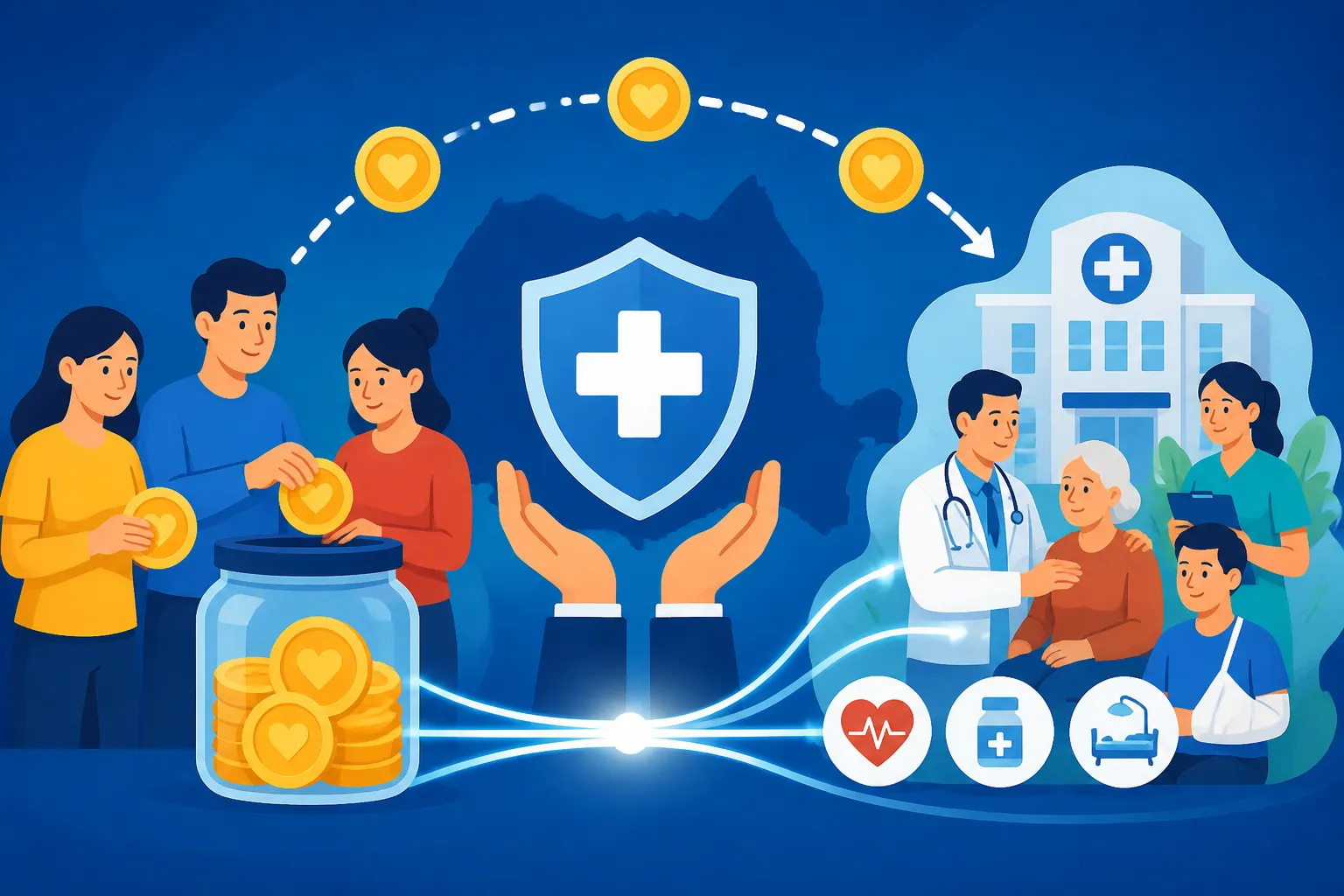
If you have spent any time looking at a Romanian payslip, you have likely seen the acronym CASS listed alongside other taxes. CASS is the mandatory social health insurance contribution that funds the entire public healthcare infrastructure in Romania. Unlike private insurance where premiums are based on your health risk, CASS is a solidarity-based system. This means that everyone contributes a percentage of their income to a collective pot, which is managed by the National Health Insurance House, known locally as CNAS.
The philosophy behind this system is that high earners help subsidize the care for lower earners, children, and the elderly. For a foreigner, this can be a bitter pill to swallow if you are used to a more individualized insurance model, but it is the legal foundation for residency. Without paying into this system, you cannot legally obtain a residence permit for work or long-term stay in most cases. Understanding How Romania's Health Insurance House (CNAS) Works: A Full Overview is the first step in realizing that your money isn't just disappearing; it is buying you a place within the state’s safety net.
The Connection Between CASS and CNAS
It is helpful to think of CASS as the fuel and CNAS as the engine. While CASS is the money taken from your salary or paid via the annual tax return, CNAS is the body that distributes those funds to hospitals, clinics, and pharmacies. When you go to a public hospital, you don't pay the doctor directly; the doctor bills the local health insurance house (CASMB in Bucharest, for example), which then uses the CASS funds to cover the cost of your treatment.
For expats, the struggle is often proving to CNAS that you have actually paid. There is often a lag between your employer paying the tax and the CNAS database updating your status to "insured." This is why many newcomers choose to use a flexible solution like SafetyWing to cover any gaps during their first few months while the administrative gears are slowly turning. Having that extra layer of security means you don't have to worry about a "not insured" status in the system during an emergency.
Mandatory vs Voluntary Contributions
For most expats, CASS is mandatory. If you are employed by a Romanian company, the 10% deduction is automatic. However, there are scenarios where you might choose to pay voluntarily. For example, if you are a digital nomad living in Romania but not working for a local entity, you might not be automatically covered. In such cases, you can file a specific tax form to pay CASS voluntarily to gain access to public hospitals.
This is a common path for those who want to be 100% compliant with long-term residency requirements. However, voluntary registration involves a fair amount of paperwork and a visit to the ANAF (Tax Authority) office. During this waiting period, many expats rely on SafetyWing to maintain continuous coverage, as the voluntary public insurance usually only kicks in after the paperwork is processed and the first payment is logged in the system.
Calculating Your Contributions Based on Income Type
The amount you pay into the CASS system depends entirely on how you earn your money in Romania. The rules changed significantly in recent years, making it more expensive for some and more streamlined for others. It is no longer a flat fee for everyone; instead, it scales based on the national minimum wage. Knowing Understanding Gross vs Net Salary and Payslips (Fluturaș) in Romania is vital because CASS is one of the largest "chunks" taken out of your gross pay.
Contributions for Salaried Employees
If you are an employee with a standard Romanian labor contract, the calculation is straightforward but significant. You pay 10% of your gross salary toward CASS. This is deducted by your employer every month before you ever see your net pay. For someone earning a high salary in the IT sector, this can mean contributing thousands of lei per month.
The benefit of being an employee is that you don't have to do any of the filing yourself. Your employer handles the declarations to the tax authorities. However, you should still verify that you are appearing as "asigurat" (insured) in the system. You can check this on the CNAS website using your CNP. If you find yourself in between jobs, remember that your insured status usually only lasts for three months after your contract ends.
The PFA and Self-Employed Reality
For those running a PFA (Persoană Fizică Autorizată), the calculation for CASS has become more complex. You no longer pay 10% of your actual income; instead, your contribution is capped based on brackets of the national minimum wage. Currently, there are tiers at 6, 12, and 24 times the minimum wage. If your income falls within these brackets, you pay a flat 10% of that specific tier.
This means that a PFA earning just above the threshold might pay the same CASS as someone earning significantly more, provided they are in the same bracket. It requires careful tax planning and the filing of the "Declarația Unică" (Single Declaration) every year. Because of this complexity, many freelancers prefer to complement their public coverage with SafetyWing to ensure they have private-level service for diagnostics and specialists, which the public system sometimes struggles to provide in a timely manner.
Rental Income and Dividends
If you are an expat who owns property in Romania or receives dividends from a Romanian SRL, you may also be liable for CASS. If your total income from these sources exceeds the threshold of 6 monthly minimum wages, you must pay the 10% contribution on that threshold. It doesn't matter if you are already paying CASS through a salary; the law requires you to pay it again on these alternative income streams if they exceed the limits.
This "double dipping" by the state is a common point of frustration for investors and business owners. It is essential to track these thresholds closely, as failing to pay can lead to fines and interest. To navigate this, you'll need to know How to File Your Annual Single Tax Return (Declarația Unică) in Romania to ensure every leu is accounted for and your health coverage remains active.
| Income Type | CASS Rate | Responsibility | Calculation Basis |
|---|---|---|---|
| Employment Contract | 10% | Employer Deducts | Gross Monthly Salary |
| PFA (Self-Employed) | 10% | Individual Files | Minimum Wage Tiers (6, 12, 24) |
| Rental/Dividends | 10% | Individual Files | If total exceeds 6 min. wages |
| Voluntary | 10% | Individual Files | 6 months of minimum wage |
The Administrative Journey of CASS Registration
Paying the tax is only half the battle. To actually use the system, you need to be registered in the CNAS database. For an expat, this starts with the How to Get Your CNP (Personal Numeric Code) for Healthcare Access in Romania process. Your CNP is the "key" to everything in Romania—without it, you don't exist in the eyes of the health insurance house.
Moving from Payment to "Insured" Status
Once your employer starts paying your CASS, or you make your first payment as a freelancer, there is a waiting period while the data migrates from ANAF to CNAS. In an ideal world, this happens automatically. In reality, you may need to visit your local CAS (Casa de Asigurări de Sănătate) office with your residency permit and proof of payment to "activate" your file.
If you are in a rush—perhaps you have a chronic condition or need a specific screening—this administrative lag can be dangerous. This is why many expats keep an active policy with SafetyWing during their first six months in the country. It acts as a safety net that covers you while you are waiting for the Romanian state to acknowledge that you have, in fact, paid your dues.
Registering with a Family Doctor
The most critical step in the CASS journey is The Expat Guide to Finding a Family Doctor (Medic de Familie) in Romania. In the Romanian system, the family doctor is the gatekeeper. They are the ones who issue the "bilet de trimitere" (referral) that allows you to see specialists or get blood tests for free.
Even if you are paying 1,000 Euro a month in CASS contributions, you cannot simply walk into a public hospital for a non-emergency checkup and expect it to be free. You must go through your family doctor first. Finding an English-speaking one can be a challenge, but it is mandatory if you want to utilize the system you are funding.
The Electronic Health Card
Once you have been insured for a few months, the state is supposed to issue a physical "Card de Sănătate" (Health Card). This card is required at every medical appointment to "validate" the service. However, there is currently a massive backlog in card production. Many expats never receive their card in the mail.
If you don't have a card, don't panic. You can request a "adeverință de înlocuire" (replacement certificate) from the CAS office. This paper is valid for 60 days and proves you are insured. Dealing with this specific piece of bureaucracy is a rite of passage for every long-term resident. You will need to learn What Should I Do If My Health Card Hasn't Arrived Yet in Romania to stay ahead of the game.
What Your CASS Money Buys You in the Romanian System
It is easy to focus on the frustrations, but the CASS system does provide comprehensive coverage once you are inside. From basic consultations to life-saving surgeries, the public system is surprisingly robust in terms of what is "covered" on paper. The quality of the facilities may vary, but the medical expertise in Romania is often very high.
Primary and Specialist Care
Your CASS contribution covers all visits to your family doctor. It also covers visits to specialists—like cardiologists, dermatologists, or neurologists—provided you have a referral. These referrals are gold. They turn a 300-lei private consultation into a 0-lei public one.
However, "free" doesn't always mean "fast." For popular specialists or non-urgent MRIs, the wait times in the public system can be weeks or even months. This is a major reason why many expats choose to have a hybrid approach, using the public system for emergencies and a private subscription or SafetyWing for fast-access diagnostics and specialists.
Hospitalization and Emergencies
In a true emergency, the Romanian system is impressive. If you call 112, the ambulance and emergency room care are provided regardless of your insurance status initially. However, once you are stabilized and admitted to a ward, your CASS status becomes vital. If you are insured, your stay, surgery, and medications in the hospital are fully covered.
Expats should read up on Emergency Medical Care in Romania: What Every Expat Needs to Know to understand the difference between the SMURD (emergency rescue) and the standard ambulance service. While the state hospitals might lack the "hotel-like" feel of private clinics, the surgical teams are often the same people who work in the expensive private hospitals during the afternoon.
Subsidized Medications and Chronic Care
A significant portion of CASS funds goes toward subsidizing prescriptions. When your doctor writes a "rețetă compensată" (compensated prescription), you may pay only 10%, 50%, or even 0% of the pharmacy price. This is particularly valuable for chronic conditions like asthma, diabetes, or hypertension.
To access these benefits, you must be properly registered with a family doctor who can enter your data into the national electronic system. Without this registration, you will be forced to pay the full "liber" (free market) price at the pharmacy, which can be expensive for specialized medications.
Bridging the Gap with Private and International Insurance
Most veteran expats in Romania will tell you that relying 100% on the public system is a gamble. While CASS is mandatory and covers the big stuff, the day-to-day experience can be taxing. This is why the "Romanian Hybrid Model" of healthcare is so popular among the international community.
The Role of Private "Abonaments"
Many employers provide a medical "abonament" (subscription) to chains like Regina Maria or MedLife. These are not insurance policies; they are pre-paid service packages that give you free consultations and lab work within that specific network. They are great for skipping lines and getting a doctor who speaks English in a shiny, modern building.
However, these subscriptions usually don't cover major surgeries, cancer treatments, or long-term hospitalization. For those, the private clinic will often refer you back to the public system. This is where Public vs Private Healthcare in Romania: Which Should Expats Choose? becomes a central question in your relocation planning.
Why SafetyWing is a Vital Layer
For the digital nomad, the new arrival, or the expat who travels frequently, the public system’s limitations are clear: it only works in Romania (unless you have an EHIC for the EU) and it involves heavy bureaucracy. SafetyWing fills the gaps that CASS and local subscriptions leave open. It provides a level of international flexibility that the local system simply cannot match.
If you are living in Romania but spending your summers in Greece or winters in Bansko, your Romanian CASS won't always be easy to use abroad without a mountain of paperwork. SafetyWing offers a more modern, tech-focused approach to insurance that fits the expat lifestyle, ensuring that a medical issue in a neighboring country doesn't become a financial disaster.
The European Health Insurance Card (EHIC)
Once you have been paying CASS for a while, you are eligible to apply for the Romanian version of the EHIC, known as "Cardul European de Sănătate." This card allows you to access state-provided healthcare during a temporary stay in any of the 27 EU countries under the same conditions as locals.
It is a fantastic benefit of the CASS system, but it only covers "necessary" care. It is not a replacement for travel insurance. For comprehensive protection that includes medical evacuation or private facilities abroad, most expats still maintain a policy with SafetyWing to ensure they are never stuck in a sub-par facility while away from their home base in Bucharest.
Troubleshooting the CASS System as a Foreigner
The Romanian health system is constantly evolving, and as an expat, you will likely encounter a few "glitches." Whether it is a doctor who refuses to accept your referral or a database error that says you are uninsured despite having a payslip to prove it, patience is your most important tool.
Dealing with the "System is Down"
You will eventually hear the phrase "nu merge sistemul" (the system isn't working). This usually refers to the SIUI, the national healthcare database. When the system is down, doctors cannot validate health cards or issue electronic prescriptions.
In these moments, having a private backup or a policy like SafetyWing is a lifesaver. Instead of waiting three hours in a crowded hallway hoping the server reboots, you can simply pivot to a private provider. It is all about having options and not being entirely dependent on a single, sometimes fragile, digital infrastructure.
Updating Your Information at the CAS Office
If you change your employer, your residency address, or your name, you must ensure this is updated with the CAS. While it should be automatic, it often isn't. Periodically checking your status and keeping copies of your "Adeverință de salariat" (Employee Certificate) provided by your HR department is vital.
If you are self-employed, make sure you keep your "Chitanță" (receipt) from ANAF. If you ever end up in a hospital and the computer says "uninsured," showing that receipt and your residence permit is often enough to start the manual override process. Being your own advocate is a necessary skill for Navigating the Romanian Healthcare System: An Expat's Roadmap (2027).
Planning for the Future
As you settle into life in Romania, your relationship with the CASS system will change. You will find "your" doctors, learn which pharmacies are most helpful, and understand which bureaucratic battles are worth fighting. The CASS system is a safety net—it is not always comfortable, but it is there for the big stuff.
By combining your mandatory CASS contributions with a proactive approach to private care and international insurance like SafetyWing, you can build a healthcare strategy that is both legally compliant and personally reassuring. Romania offers incredible opportunities, and not having to worry about your health coverage allows you to focus on enjoying the vibrant culture and beautiful landscapes of your new home.
Disclaimer
This guide is intended for informational purposes only and does not constitute legal, financial, or medical advice. Tax laws and healthcare regulations in Romania are subject to frequent changes. Always consult with a qualified accountant or a legal professional regarding your specific tax liabilities (CASS) and health insurance requirements for residency. The author is an expat sharing personal experiences and research, not an official representative of the Romanian government or the CNAS.