How Do I Transfer Money from My Home Bank to Romania?
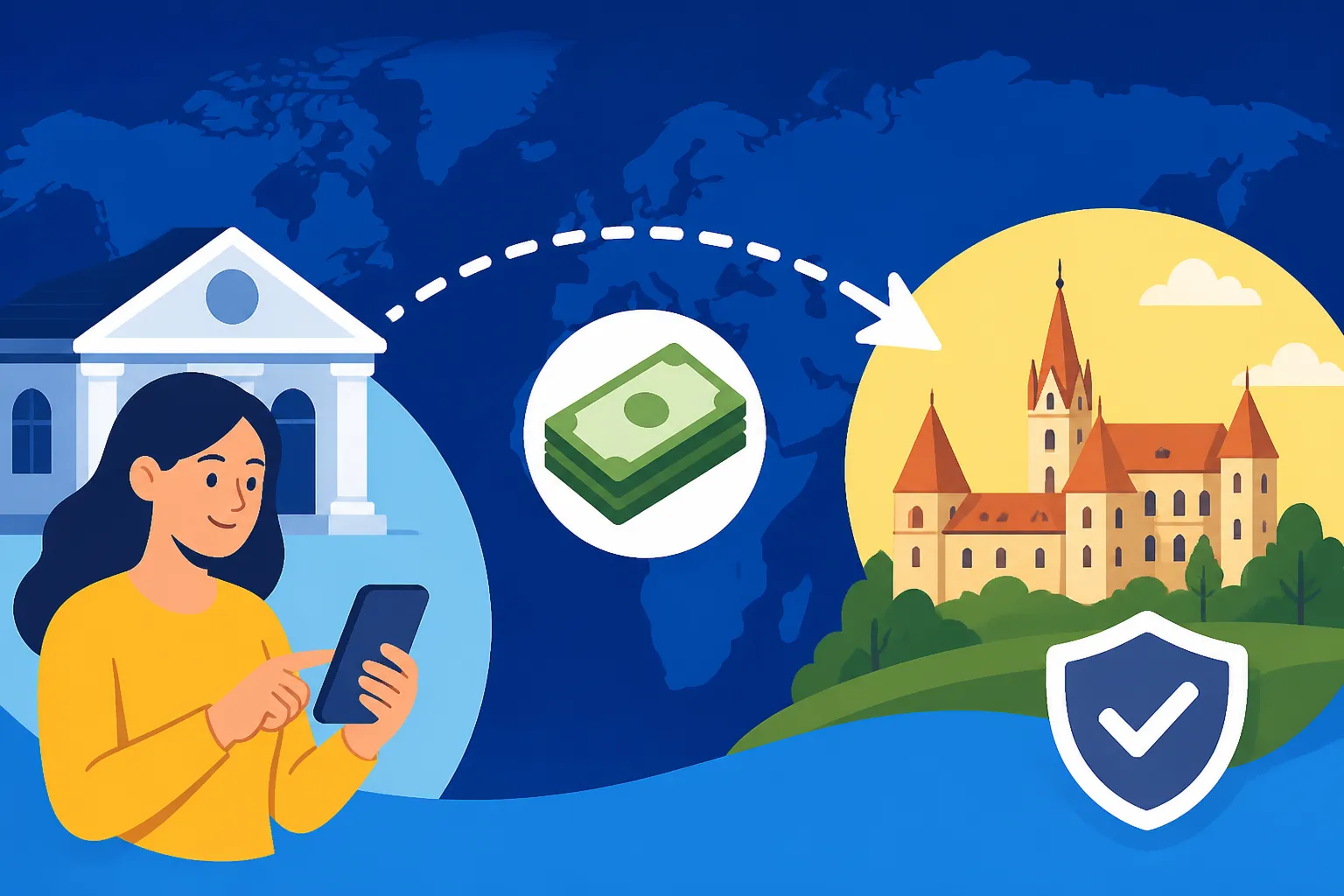
Moving money from your home country to your bank account in Romania can often feel like navigating a maze blindfolded. You've just moved to a new country, you're trying to set up your life, and the last thing you need is stress about getting your hard-earned cash where it needs to be, quickly and without being eaten alive by fees and baffling exchange rates. This guide is here to demystify the process, exploring the various methods, hidden costs, and crucial considerations for expats transferring funds to Romania.
Understanding the Landscape of International Money Transfers to Romania
The sheer thought of moving money across borders can trigger a headache for many expats. It's not just about pressing a button and hoping for the best; there are layers of complexity, from banking regulations and currency exchange fluctuations to the varying speeds and costs associated with different transfer methods. For those of us who've lived this experience in Romania, the frustration of unexpected deductions or a transfer taking much longer than anticipated is all too real.
The Hidden Costs and Common Pitfalls
When you're dealing with international transfers, the initial quoted fee is rarely the only charge you'll face. Traditional banks, in particular, are notorious for their opaque fee structures. You might be told there's a low transfer fee, only to find that your money has gone through several intermediary banks, each taking a cut, before it finally reaches your Romanian account. This can significantly reduce the amount your recipient actually receives, which is especially painful when you're relying on a specific sum to cover rent or other immediate expenses.
Beyond direct transfer fees, the exchange rate is where many of us truly lose out. Banks often apply a less favorable "retail" exchange rate, which includes a hidden margin on top of the actual mid-market rate (the one you see on Google or Reuters). This spread can amount to several percentage points, effectively costing you more without a clear line item on your statement. It’s a common pitfall that new arrivals often learn about the hard way. Additionally, the speed of transfer can be a major issue; sometimes, what is advertised as a few business days can stretch into a week or more, leaving you in a lurch when you need funds for something urgent, like paying your monthly utilities or securing an apartment rental.
Why Choosing the Right Method Matters
Your choice of transfer method isn't just a matter of convenience; it directly impacts how much money arrives, how quickly, and with what level of transparency. For an expat managing finances in a new country, every leu counts. Overpaying on transfer fees or losing money to poor exchange rates chips away at your budget, which is already stretched thin with the initial costs of setting up a new life. Whether you're sending your salary, paying for an apartment, or simply topping up your Romanian account from savings back home, understanding the pros and cons of each method is vital. Making an informed decision can save you a considerable amount of money and a great deal of stress in the long run.
Popular Methods for Sending Money to Romania
When it comes to getting your funds into Romania, you've got a few main avenues, each with its own quirks and benefits. Let's break them down so you can figure out what works best for your situation.
Traditional Bank Transfers
Ah, the old faithful – or perhaps, the old painful for international transfers. Sending money via a traditional bank involves what's known as a SWIFT (Society for Worldwide Interbank Financial Telecommunication) transfer. You'll typically need your Romanian bank's SWIFT/BIC code, along with your IBAN (International Bank Account Number) for your specific account. You initiate the transfer from your home bank, and the money theoretically makes its way to Romania.
Pros:
- Familiarity: Most people are comfortable using their bank.
- Security: Banks are highly regulated, offering a sense of security for large sums.
- Reliability: Once initiated, the transfer generally reaches its destination, even if it takes a while.
Cons:
- High Fees: Expect significant transfer fees, often on both ends (sending and receiving). Some Romanian banks might charge a fee to receive international transfers, which can be an unpleasant surprise.
- Unfavorable Exchange Rates: As mentioned earlier, banks rarely offer the mid-market rate. They add a margin, which is essentially another hidden fee.
- Slow Speed: SWIFT transfers can take anywhere from 3 to 7 business days, sometimes longer if there are multiple intermediary banks involved or if the transfer hits a weekend or public holiday. Waiting for crucial funds can be incredibly frustrating.
- Lack of Transparency: Tracking the exact status of your transfer can be difficult, and the final amount received often differs from what you calculated due to various deductions along the way.
For instance, if you're sending money from a UK bank to your account at Banca Transilvania, you'd give your UK bank your Romanian IBAN and the SWIFT code (e.g., BTRLRO22). While seemingly straightforward, the process might involve delays and fees from both banks, plus currency conversion charges. It's often best for very large, less urgent transfers where security outweighs cost and speed. You might also want to look into how much it costs to send money abroad from a Romanian bank if you ever need to reverse the process.
Online Money Transfer Services
This is where things get a lot more competitive and, frankly, often better for expats. Services like Wise (formerly TransferWise) have revolutionized international money transfers by offering more transparent fees and better exchange rates than traditional banks. They operate on a different model, often using local bank accounts in both the sending and receiving countries to minimize international fees.
Pros:
- Lower Fees: Generally, fees are significantly lower and more transparent than banks, often displayed upfront.
- Better Exchange Rates: Most services offer very close to the mid-market exchange rate, with their profit coming from a small, clear percentage fee.
- Faster Transfers: Many transfers complete within minutes, a few hours, or at most 1-2 business days. This speed is a game-changer when you have urgent expenses.
- Transparency: You can typically see exactly how much your recipient will receive before you confirm the transfer, and you can track the progress of your money in real-time.
- Convenience: Easy to use via websites or mobile apps, allowing you to initiate transfers from anywhere.
Cons:
- Transfer Limits: Some services might have daily or per-transaction limits, though these are usually high enough for most personal transfers.
- Security Perception: While highly regulated, some users might initially feel less secure using an online service compared to a traditional bank, though major players like Wise have robust security measures.
For example, if you need to pay your rent or deposit into your account at ING Bank Romania, using a service like Wise can mean your money arrives much faster and with a better exchange rate than a traditional bank transfer. It’s a popular choice among expats because it directly addresses the high costs and slow speeds that traditional banks often impose. Many expats ask, "Can I use Wise or Revolut instead of a Romanian bank?" and the answer for transfers is often a resounding yes. These services work alongside your local Romanian bank account, not instead of it.
Other Methods: Cash Pickup, International Money Orders, and Cryptocurrency
While less common for direct bank-to-bank transfers for long-term expats, these methods still exist:
- Cash Pickup Services (e.g., Western Union, MoneyGram): These allow you to send money for cash collection at a physical agent location in Romania.
- Pros: Very fast (often minutes), useful for sending money to someone without a bank account or in an emergency.
- Cons: Highest fees, often very poor exchange rates, and limits on transfer amounts. Not practical for regular, larger transfers.
- International Money Orders (IMOs): An old-school method, often available through postal services.
- Pros: Can be perceived as secure.
- Cons: Extremely slow, cumbersome, high fees, and limited availability in modern times. Rarely used by expats.
- Cryptocurrency: Sending funds via stablecoins (like USDT, USDC) or other cryptocurrencies.
- Pros: Can be very fast and have low transaction fees once you navigate the crypto ecosystem. Potentially better exchange rates.
- Cons: Highly volatile market, complex for beginners, security risks if not handled correctly, and conversion to RON requires a local crypto exchange or platform, which adds another layer of fees and complexity. Not recommended unless you are already well-versed in crypto and are comfortable with the risks.
For the average expat looking to transfer money from their home bank to their Romanian bank account, online money transfer services are generally the most efficient, cost-effective, and transparent option.
Key Factors to Consider When Choosing a Transfer Method
Choosing the right way to send money to Romania isn't a one-size-fits-all situation. Your personal circumstances, how much you're sending, and how quickly you need it to arrive will all play a crucial role. Having lived through these choices myself, I can tell you that a little bit of foresight here can save you a lot of grief later.
Cost: Fees vs. Exchange Rates
This is often the number one concern for most of us, and rightly so. The "cost" isn't just the upfront transfer fee. You have to think about the total amount deducted from your original sum, taking into account both:
- Direct Transfer Fees: These are the explicit charges for sending the money. Traditional banks often charge a flat fee or a percentage of the amount, sometimes even an additional fee if you want to expedite the transfer. Online services like Wise are usually very transparent about their fees, which are typically lower.
- Exchange Rate Margin: This is the real hidden cost with many traditional banks. As we discussed, banks rarely offer the mid-market rate. They give you a retail rate that's less favorable, essentially profiting from the spread. A difference of even 1-2% on a large transfer can amount to a significant sum. Always compare the rate offered by your chosen service against the mid-market rate (easily found on Google or xe.com) to understand the true cost.
Sometimes, a service might advertise "zero fees" but then hit you with a terrible exchange rate. Always calculate how many Romanian Lei (RON) you will actually receive for your home currency. This total received amount is the best metric for comparison.
Speed of Transfer
How quickly do you need the money? This question is critical, especially when you're setting up a new life in Romania. Waiting for funds can hold up critical processes, from paying your initial apartment deposit to ensuring you have cash for daily expenses.
- Immediate Needs: If you need money within hours for an emergency, cash pickup services, despite their high cost, might be an option. However, for bank transfers, some online services can deliver funds in minutes or a few hours, especially if it's a popular currency corridor.
- Urgent, But Not Instant: Most online transfer services typically complete transfers within 1-2 business days. This is usually sufficient for things like monthly rent payments or utility bills.
- Less Urgent: Traditional bank transfers can take 3-7 business days. While reliable, this slowness makes them less ideal for time-sensitive payments. If you're planning a large transfer from your foreign bank account to Romania, such as for a property purchase, then the extra time might be less of a concern than the overall security, but you'll still want to keep an eye on the exchange rate fluctuations.
Security and Reliability
Your money's safety should always be a top priority.
- Traditional Banks: Are generally perceived as the most secure due to stringent regulations. However, their slower processes and potential for intermediary bank involvement can sometimes lead to tracking complexities.
- Online Transfer Services: Reputable services like Wise are heavily regulated in the countries they operate in (e.g., by the FCA in the UK, FinCEN in the US) and employ advanced encryption and fraud prevention measures. For most typical expat transfers, they are very reliable. Always ensure you're using a well-known and reputable service.
- Other Methods: Cash pickup services are secure for the sender, but the recipient needs to be careful when collecting cash. Cryptocurrency, while technologically secure, carries risks related to market volatility and the complexity of managing private keys and wallets.
Convenience and Ease of Use
No one wants to jump through hoops to send money.
- Online Services: Are generally the most convenient, allowing you to initiate transfers 24/7 from your phone or computer. The user interfaces are usually intuitive, and setting up repeat transfers is often simple.
- Traditional Banks: May require you to visit a branch or navigate a less user-friendly online banking portal, sometimes with additional verification steps for international transfers.
- Documentation: For any method, especially for larger sums, you might be asked for supporting documentation (e.g., proof of funds, purpose of transfer) for anti-money laundering regulations. Be prepared for this, especially when setting up accounts or making significant transfers. If you're making larger transfers, you may even need to consult with tax professionals, potentially using resources like "Taxes for Expats," to ensure compliance in both your home country and Romania regarding the origin and declaration of funds.
Recipient Options and Requirements
Consider how your recipient (which might be yourself) needs to receive the money.
- Bank Account: The most common and generally preferred method for expats. Ensure you have the correct IBAN and SWIFT/BIC for your Romanian bank account, such as those at BCR, Raiffeisen, or BRD. If you haven't opened one yet, you might want to read about what documents you need to open a bank account in Romania or how to choose the best bank for expats in Romania.
- Cash Pickup: Only viable for services specifically offering this.
- Mobile Wallet: Less common for direct international bank transfers to Romania, but some services may offer this.
By carefully weighing these factors against your specific needs, you can make an informed decision that saves you time, money, and hassle when transferring funds to Romania.
Navigating Exchange Rates and Hidden Fees
This is truly the wild west of international money transfers, where many unsuspecting expats find their funds diminished. Understanding how exchange rates work and where hidden fees lurk can empower you to make smarter choices. It's not just about finding a service with "low fees"; it's about the total cost of the transaction.
Deciphering the Exchange Rate Puzzle
The exchange rate is simply the value of one currency in terms of another. But there are different types, and knowing the difference is key:
- Mid-Market Rate (Interbank Rate): This is the true exchange rate – the midpoint between the buy and sell prices of two currencies on the global market. It's the rate you see on financial news sites like Reuters, Google, or XE.com. This is your benchmark. Banks and transfer services typically don't offer you this rate directly.
- Retail Exchange Rate: This is the rate that traditional banks and some less transparent services offer to their customers. It includes a "spread" or "markup" on the mid-market rate. This markup is pure profit for them. For example, if the mid-market rate is 1 USD = 4.5 RON, a bank might offer you 1 USD = 4.45 RON. That 0.05 RON difference per dollar adds up quickly on larger sums.
The trick is that while the official transfer fee might seem low, a poor exchange rate can cost you far more. Always, always, always compare the rate offered to you by any service against the current mid-market rate. Even a small difference can mean losing tens or hundreds of Lei on your transfer.
Unmasking Hidden Fees
Beyond the exchange rate spread, several other fees can eat into your money:
- Sending Bank Fees: Your home bank will almost certainly charge you a fee for initiating an international wire transfer. This might be a flat fee (e.g., $25-50 USD) or a percentage.
- Receiving Bank Fees: Many Romanian banks, including some of the big names like BCR or BRD, might charge a fee to receive an international transfer. This can be a percentage of the amount or a flat fee, and it's something you often only discover when the money arrives, or less of it arrives than you expected. It’s crucial to check with your specific Romanian bank about their incoming international transfer fees.
- Intermediary Bank Fees: For traditional SWIFT transfers, especially when dealing with less common currency pairs or banks, your money might pass through one or more "correspondent" or "intermediary" banks. Each of these can take a small cut (e.g., $10-30 USD) from your transfer. You often have no control over this and won't know about it until the money arrives, short of the expected amount. This is a common source of expat frustration.
- Conversion Fees: Some services might add a separate "conversion fee" on top of the exchange rate margin, though this is less common with transparent online providers.
Strategies to Save Money on Transfers
Now that you know where the money goes, here’s how to keep more of it:
- Always Compare: Use online comparison tools or simply check the current mid-market rate yourself. Then, for each service you're considering, calculate the final amount in RON your recipient will receive. This is the only true way to compare apples to apples.
- Opt for Online Transfer Services: Platforms like Wise have built their business on transparency and competitive exchange rates. They clearly show you the fee and the exact exchange rate they're using, which is typically very close to the mid-market rate. They often use local bank transfers on both ends to avoid intermediary bank fees. This is why for most regular transfers, from sending money for utilities to topping up your Romanian account, these services are the expat's best friend.
- Understand Your Romanian Bank's Fees: Before having money sent to your Romanian account, check with your bank (e.g., UniCredit, Raiffeisen) about their fees for receiving international transfers. This might influence your decision on which bank to use or which transfer method. While setting up an account, it's worth asking how much a Romanian bank account costs per month and what fees apply to international transactions.
- Consider Larger, Less Frequent Transfers: If you can consolidate smaller transfers into one larger one, you might save on fixed transfer fees. However, this also means your money is exposed to exchange rate fluctuations for a longer period if not timed well.
- Timing Your Transfers: For very large transfers, keeping an eye on currency exchange rates can be beneficial. A slight improvement in the rate can mean a significant saving on a substantial amount. However, don't get too caught up in trying to predict the market; small daily fluctuations usually don't make a huge difference for routine transfers.
- Review Your Needs: If you're a self-employed person (PFA) or run a micro-enterprise and frequently deal with foreign clients, you might have specific tax implications to consider regarding foreign income. While transferring money is distinct from tax filing, understanding your financial situation holistically is important. Resources for How to File the Declarația Unică (Single Tax Return) in Romania or information on your tax residency in Romania might be relevant, and for complex situations, consulting with specialists like "Taxes for Expats" can be invaluable to ensure you're compliant.
By staying vigilant about both explicit fees and the often-overlooked exchange rate margins, you can significantly reduce the cost of moving your money into Romania and ensure more of your funds arrive safely and soundly.
Comparing Money Transfer Options to Romania
To give you a clearer picture, here's a comparison of the most common methods for sending money from your home bank to a Romanian bank account, based on typical expat needs.
| Feature | Traditional Bank Transfer (SWIFT) | Online Money Transfer Service (e.g., Wise) | Cash Pickup Service (e.g., Western Union) |
|---|---|---|---|
| Typical Use | Large, less urgent transfers; high perceived security. | Regular, urgent, or medium-to-large transfers; personal use. | Emergency cash for unbanked recipients; very small amounts. |
| Speed | 3-7 business days (can be longer). | Minutes to 2 business days (often same-day). | Minutes. |
| Cost (Fees) | High (flat fees, % of amount, intermediary bank fees). | Low to moderate (transparent percentage-based fee). | Highest (significant fees on top of poor exchange rates). |
| Exchange Rate | Unfavorable retail rate (significant markup on mid-market). | Very competitive, close to mid-market rate (minimal markup). | Very unfavorable retail rate (highest markup). |
| Transparency | Low (hidden intermediary fees, unclear exchange rate margin). | High (all fees and rates shown upfront, real-time tracking). | Low (often only cash received is clear, high implied fees). |
| Convenience | Moderate (may require branch visit, complex forms). | High (user-friendly app/website, 24/7 access). | Moderate (requires sender & receiver to visit agent locations). |
| Security | High (highly regulated institutions). | High (regulated, advanced encryption). | Moderate (secure transfer, but cash pickup has inherent risks). |
| Transfer Limits | Very high, often no practical limit for personal transfers. | Varies by service, usually high enough for most expat needs. | Lower limits compared to bank or online services. |
| Recipient Needs | Bank account (IBAN, SWIFT/BIC). | Bank account (IBAN). | Government-issued ID for cash collection. |
As you can see, for the vast majority of expat needs in Romania, online money transfer services offer the sweet spot between cost, speed, and convenience. While traditional banks might feel safer due to familiarity, the financial hit and slower service can quickly diminish that comfort.
When you're dealing with the practicalities of living in Romania, from opening a bank account to filing your taxes, every step requires careful consideration. Understanding how your money moves is a huge part of that. Make sure you've got your Romanian tax number (NIF) and CNP sorted, as these are often necessary for larger financial transactions and linking your funds to your local identity. And remember, the goal is to get your money to Romania without feeling like you've taken a significant pay cut in the process.
Disclaimer
The information provided in this guide is for general informational purposes only and does not constitute financial, legal, or tax advice. While we strive to keep the information up-to-date and correct, rules and regulations regarding international money transfers, banking, and taxation in Romania can change frequently. Expats should always consult with a qualified financial advisor, tax professional, or legal expert for advice tailored to their specific situation. We are not responsible for any actions taken based on the information provided herein.