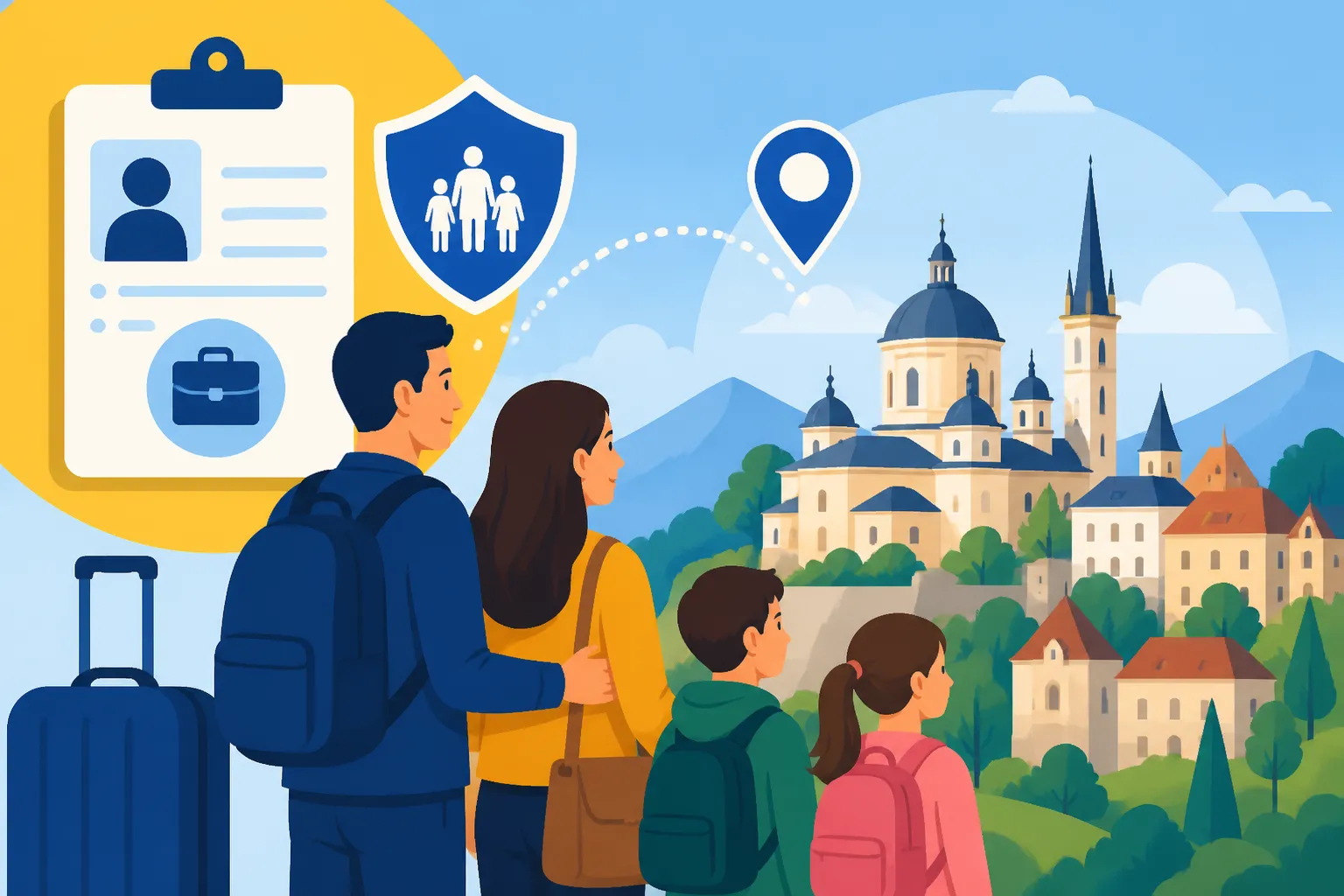
How Do I Move My Family to Romania on a Work Permit?
Moving to a new country is a monumental task, but bringing your entire family along adds an entirely new layer of complexity, especially when your own entry is tied to a Romanian work permit. The fear of getting bogged down in endless paperwork, understanding the nuanced legal requirements, and ensuring your loved ones are settled comfortably is a very real source of stress for many expats. This guide aims to demystify the process of moving your family to Romania under the umbrella of your work permit, offering clear steps and practical advice to help you navigate the system.
Understanding the Initial Steps for Family Reunification
Bringing your family to Romania isn't a single-step affair; it's a carefully orchestrated process that often hinges on the primary applicant – that's you, the work permit holder – being firmly established first. It can feel like a chicken-and-egg situation at times, but there's a logical flow to it. You need to lay your own foundation before you can build a home for your family. This foundational phase involves ensuring your own status is impeccable and understanding the prerequisites for your family's applications.
Securing Your Own Work Permit and Residence First
Before you can even begin thinking about bringing your spouse or children over, your own legal status in Romania needs to be rock solid. This means you must have successfully obtained your work permit (Aviz de Muncă) and subsequently converted your long-stay visa (Type D) into a Romanian Residence Permit (Permis de Ședere). This isn't just a formality; it's the primary legal anchor that allows your family to apply for their own residence based on "family reunification." Without your established legal presence, their applications simply won't have a basis.
The process for you, the main applicant, involves several bureaucratic hurdles. First, your employer in Romania must secure a work permit for you from the General Inspectorate for Immigration (IGI). Once that's in hand, you apply for a long-stay visa from a Romanian embassy or consulate in your home country. Upon entering Romania with this visa, the final and crucial step is to apply for your residence permit at the local IGI office. This entire journey can be lengthy and fraught with paperwork, but it’s absolutely non-negotiable before you initiate family reunification proceedings. You'll want to review the comprehensive details in our guide on The Expat Guide to Romanian Work Visas and Permits (2027) to make sure your own ducks are in a row.
Only once you hold a valid Romanian residence permit are you legally positioned to sponsor your family. This period also gives you a chance to settle into your job, find suitable accommodation, and get a lay of the land, which will be invaluable when your family arrives. It's a waiting game, I know, but patience here is truly a virtue, preventing potential headaches and rejections further down the line.
Key Documents Needed for Your Family's Application
The paperwork for family reunification can feel overwhelming, but a systematic approach helps. You’ll be looking at a substantial stack of documents, both for yourself as the sponsor and for each family member. For yourself, this includes your valid residence permit, a copy of your passport, proof of income, and proof of accommodation. This demonstrates your capacity to house and support your family without becoming a burden on the state.
For each family member (spouse, minor children, or adult dependent children/parents under specific circumstances), you will need their valid passports, birth certificates (translated and apostilled/legalized, if from a non-EU country), and marriage certificate for your spouse (also translated and apostilled/legalized). You'll also need clear, recent passport-style photos. Remember, Romanian authorities are sticklers for authenticated documents, so ensure every foreign document goes through the correct legalization or apostille process in its country of origin, followed by certified translation into Romanian by an authorized translator here. Missing even one stamp can send you back to square one, causing significant delays.
Don't forget the medical side of things. All family members will likely need a medical certificate from a Romanian public health institution upon arrival, confirming they don't suffer from any diseases that could endanger public health. While you might already have your own health insurance sorted, you’ll also need to consider coverage for your family, which we'll discuss further. Being thorough with documentation from the outset will save you immense stress later on.
Financial Requirements to Support Your Family
Romania, like any country, wants assurance that you can financially support your family without relying on public funds. The financial requirements for family reunification are explicitly defined and often updated, so always check the latest IGI regulations. Typically, you must demonstrate stable and sufficient income, usually equivalent to the gross minimum wage for each family member for at least 12 months. This means your income needs to be significantly higher than if you were just supporting yourself.
For example, if the current gross minimum wage is X, and you're bringing a spouse and two children, you'll need to prove you earn at least 4X (your own income + 3 dependents) consistently. This proof usually comes in the form of employment contracts, payslips from your Romanian employer, and bank statements showing regular deposits. It's not enough to just meet the threshold; the authorities want to see a consistent income stream. You'll need to provide these documents not just at the visa application stage, but also when applying for residence permits at the IGI.
The proof of accommodation is equally crucial. You must have a valid rental contract (registered with ANAF) or property deed that clearly states the number of people who will reside at the address and confirms it's spacious enough for your entire family. A tiny studio apartment won't cut it for a family of four, for instance. Landlords can sometimes be hesitant to list many occupants, but it's essential for your family's application. Ensuring both your income and accommodation meet the criteria upfront will smooth the path for your family's approval.
The Family Reunification Application Process in Detail
Once your own status is secured and you've gathered all the necessary documents and financial proofs, you're ready to embark on the actual family reunification journey. This is a multi-stage process that involves interaction with the immigration authorities here in Romania and, for your family, with Romanian diplomatic missions abroad. It demands meticulous attention to detail and a good understanding of Romanian bureaucracy.
Initiating the Application at the Immigration Office
The first crucial step is to submit your family reunification application directly to the General Inspectorate for Immigration (IGI) office in the county where you reside. This is your application as the sponsor, requesting permission for your family members to join you. You cannot just show up; you need to book an appointment, often online, which can sometimes be a challenge itself. Our guide on How to Book an Appointment at the Immigration Office (IGI) in Romania might come in handy here.
When you attend your IGI appointment, you'll present all the documents proving your income, accommodation, and your own residence permit, along with the personal documents for each family member you wish to bring over. The IGI will review your application and, if everything is in order, they will issue a decision, typically within 30 to 90 days. This decision is called an "Aviz Favorabil" or a positive notification, which essentially grants preliminary approval for your family members to apply for their visas. This approval has a limited validity period, so you need to act quickly once you receive it.
During this stage, the IGI officers will scrutinize your eligibility and the authenticity of your documents. They want to ensure there's no doubt that you can genuinely support your family in Romania. Be prepared for potential requests for additional information or clarification. It’s vital to be polite, patient, and persistent, as this initial approval is the gateway for your family to even apply for their visas back home.
The Approval and Visa Application Stages
Once you receive that precious "Aviz Favorabil" from the IGI, you need to send it to your family members. This document, along with copies of your Romanian residence permit and other supporting documents, will be critical for them. With the Aviz Favorabil in hand, each family member must then apply for a long-stay visa for family reunification (Type D/VF) at the Romanian embassy or consulate in their country of residence. They cannot apply for this visa without your prior approval from the IGI.
The visa application process for your family will mirror many of the requirements you faced for your own work visa, but with the added layer of proving their relationship to you and your capacity as a sponsor. They'll need their passports, photographs, proof of the "Aviz Favorabil," marriage/birth certificates (translated and apostilled/legalized), and crucially, proof of travel medical insurance. This insurance is mandatory for the visa application and must cover any emergencies for their initial entry period. Considering providers like Cigna Global can offer comprehensive international health coverage that meets these requirements, giving you peace of mind during this transitional phase.
This stage can be particularly stressful, as your family members are dealing with bureaucracy from afar. The processing times for visas vary greatly depending on the consulate and country. It's essential for them to follow all instructions meticulously and prepare for a potential interview at the consulate. The goal here is to secure the long-stay visa, which allows them legal entry into Romania, paving the way for their own residence permits.
Obtaining Residence Permits for Your Family Members
After your family members successfully obtain their long-stay visas and arrive in Romania, the journey isn't over. Just like you did, they now need to apply for their own Romanian residence permits. This must be done within a specific timeframe, usually no later than 30 days before their visa expires. This is another trip to the IGI office, for which you'll again need to book appointments. You can find more details on this general process in How to Apply for a Romanian Residence Permit (Permis de Ședere).
Each family member will submit their visa, passport, the "Aviz Favorabil," copies of your residence permit, and all their personal documents (marriage/birth certificates, medical certificate, etc.). They will also need to provide proof of local Romanian health insurance coverage. As the sponsor, you’ll typically need to be present or at least provide an authorized statement. The IGI will then process their applications, and if all checks out, they will be granted their individual residence permits, usually for the same duration as your own.
This residence permit is crucial as it grants them the right to legally live in Romania for an extended period. For children, this permit also facilitates their enrolment in schools. It’s important to understand that while a work permit allows you to work, your family's residence permits grant them the right to reside. For spouses, having their own residence permit can also open doors for them to seek employment in Romania, though they would generally need to apply for their own work permits unless specific exceptions apply (e.g., EU citizens).
Practical Considerations for Settling Your Family in Romania
Getting the paperwork done is one thing, but actually settling your family into a new life in Romania is another entirely. This phase involves a lot of practical decisions, from healthcare and education to finding a comfortable home. It's where the real expat experience begins, full of challenges but also rewarding discoveries.
Navigating Healthcare for Your Entire Family
One of the most immediate concerns for any family moving abroad is healthcare. In Romania, once your family members have their residence permits, they can typically register for public health insurance (CASS) just like you, assuming they meet the eligibility criteria (e.g., employment, PFA, or voluntary contributions for non-working adults). Our guide on The Complete Guide to Healthcare in Romania for Expats (2027) provides an in-depth look at the system.
However, the public system, while comprehensive, can sometimes involve longer waiting times for specialist appointments or less comfortable facilities. Many expats, especially those with families, opt for private health insurance or a private medical subscription (abonament) to complement or even replace public coverage. Providers like Regina Maria or MedLife offer various subscription plans that provide access to private clinics, English-speaking doctors, and faster appointments. This can be a huge relief, particularly when you have young children who often need more frequent doctor visits. Understanding Private Health Insurance and Subscriptions (Abonament) in Romania is key to making an informed choice.
Beyond insurance, finding a family doctor (medic de familie) who speaks English and is comfortable with expat families is paramount. This doctor acts as your gatekeeper to the public system, handles referrals, and manages routine care. For children, finding a good pediatrician (medic pediatru) is vital. Don't underestimate the comfort of being able to communicate clearly with medical professionals, especially when your child is unwell. Having all your family's healthcare sorted before any emergencies arise will reduce a huge amount of stress.
Finding Schools and Childcare Options
If you're moving with children, schooling will be high on your list of priorities. Romania offers a range of options, from public Romanian schools to private international schools. Public schools are free and follow the national curriculum, and while they can be an excellent way for your children to integrate and learn Romanian, they often involve a language barrier for non-Romanian speaking children initially. Enrolling in a public school typically requires an interview and assessment of your child's Romanian language proficiency, particularly for older children.
International schools, such as the American International School of Bucharest or the British School of Bucharest, offer curricula in English (or other languages) and are generally the preferred choice for expat families who plan a shorter stay or wish to maintain an international educational path. These schools come with significant tuition fees, but they offer a familiar learning environment and often a strong expat community. Our comprehensive guide on Schools and Education in Romania: A Complete Guide for Expat Families can help you explore all the options available.
For younger children, there are also various kindergartens (grădiniță) and daycare options, both public and private. Private kindergartens often have bilingual programs and more flexible hours. Researching these options, visiting schools, and understanding enrolment procedures well in advance is highly recommended, as popular schools can have waiting lists.
Housing and Daily Life for Families
Finding suitable accommodation that comfortably fits your entire family is a big consideration. While you might have initially rented a smaller place for yourself, now you'll need something larger – perhaps a two or three-bedroom apartment, or even a house, depending on your family size and preferences. Location will be key, considering proximity to your workplace, schools, and amenities. Exploring our guide on The Complete Guide to Renting an Apartment in Romania (2027) will be very useful.
Many expat families gravitate towards specific neighborhoods in larger cities like Bucharest that are known for being family-friendly, having parks, and good access to international schools. For instance, areas like Pipera, Băneasa, or Floreasca in Bucharest are popular with expat families. When signing a rental contract, ensure all family members are listed as residents, as this can be important for proving residency later. You will also need to get your utilities set up in your name, including electricity, gas, water, and internet – essentials for family life.
Daily life will involve getting used to Romanian culture, shops, and public transport. Romania is generally very child-friendly, and you'll find plenty of parks, playgrounds, and family-oriented activities in larger cities. Integrating into local life often involves learning some basic Romanian phrases, which locals always appreciate. Remember, moving is more than just logistics; it's about building a new home and a new routine for your loved ones. Consider a professional moving service like Sirelo to help you with the actual relocation, as they can streamline the often-complex process of moving household goods internationally, allowing you to focus on your family's settlement.
Final Tips and Common Pitfalls to Avoid
Navigating the intricacies of moving your family to Romania on a work permit is a marathon, not a sprint. There will be moments of frustration, confusion, and possibly even despair, but with the right mindset and preparation, you can overcome them. Drawing on the experiences of other expats and staying proactive are your best tools.
Preparing for Bureaucratic Delays and Language Barriers
Let's be realistic: Romanian bureaucracy can be… an experience. Applications, especially for family reunification, often take longer than expected, and you might find yourself needing to resubmit documents or revisit offices multiple times. This is par for the course, so bake in extra time for every step and try not to get too disheartened by delays. Always follow up politely but persistently.
A significant challenge, especially outside of major expat hubs, can be the language barrier. While many younger Romanians and those in international companies speak English, staff at public institutions (like the IGI, ANAF, or local councils) may not. Bringing a Romanian speaker with you for appointments is almost always a good idea. This could be a colleague, a friend, or a professional translator. Having someone who can clarify questions and explain procedures in Romanian will save you immense headaches and ensure you don't miss crucial details. Even if you're learning Romanian, having that extra linguistic support for official matters is invaluable.
Embrace the reality that things won't always go according to plan. What seems logical in your home country might not apply here. Take a deep breath, accept that it's part of the expat journey, and remember that countless others have successfully navigated these waters before you.
Leveraging Expat Resources and Support Networks
You are not alone in this journey. Romania has a vibrant and growing expat community, especially in cities like Bucharest, Cluj-Napoca, and Timișoara. These communities are an invaluable resource for advice, support, and friendship. Online forums, social media groups (e.g., "Expats in Bucharest," "Expat Mums in Romania"), and local expat associations are fantastic places to connect with people who have gone through similar experiences.
These networks can offer practical tips on everything from finding an English-speaking dentist to recommending reliable childcare or navigating specific bureaucratic hurdles. They can also provide emotional support, which is just as important when you’re facing the challenges of relocation with your family. Don’t be afraid to ask questions, share your frustrations, and seek recommendations. Sometimes, a simple piece of advice from someone who’s been there can save you days of searching or a mountain of paperwork.
Building a social circle for your family, especially your children, will also be crucial for their integration. Expat events, international school communities, and local clubs can help your children make friends and feel more at home in Romania. Remember that moving is a journey for the whole family, and fostering a sense of belonging for everyone will make the transition much smoother and more enjoyable.
Disclaimer
The information provided in this guide is for general informational purposes only and does not constitute legal, financial, or medical advice. While every effort has been made to ensure accuracy, regulations and procedures in Romania can change frequently. It is highly recommended to consult with relevant Romanian authorities (such as the General Inspectorate for Immigration, local tax offices, or legal professionals) for the most current and specific advice tailored to your individual situation before making any decisions.