How Do I Avoid Double Taxation Between Romania and My Home Country?
One of the biggest anxieties I hear from fellow expats, myself included, when moving to a new country like Romania, is the dreaded fear of being taxed twice on the same income. It’s a completely valid concern, and navigating the complexities of international tax law can feel like trying to untangle a ball of yarn after a cat's had its way with it. This guide is here to walk you through exactly how to avoid double taxation between Romania and your home country, making sure you keep what’s rightfully yours.
Understanding the Beast: What is Double Taxation?
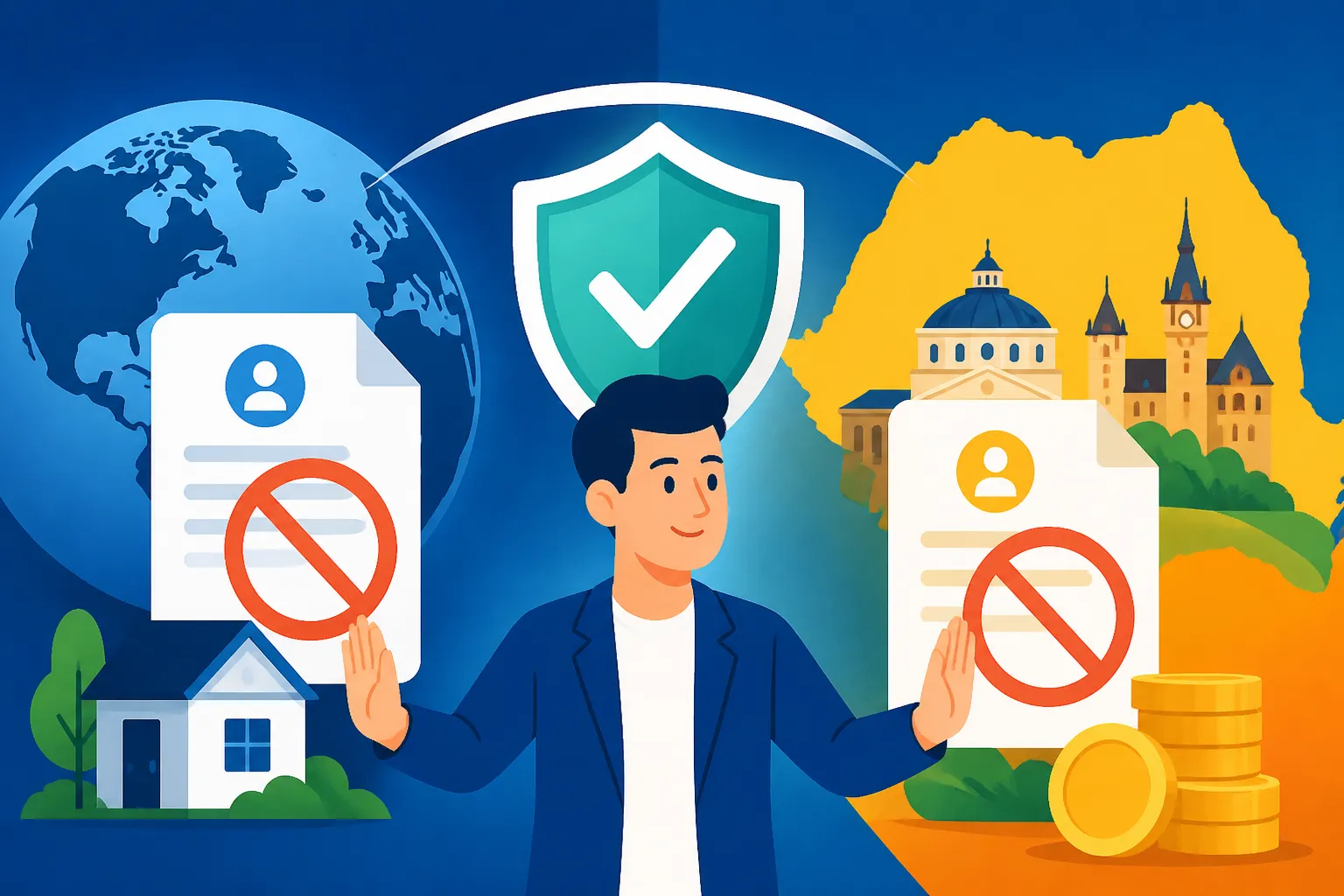
Let's start by demystifying what "double taxation" actually means. Simply put, it's when two different countries claim the right to tax the same income in your hands. Imagine earning a salary in Romania, having it taxed here, and then your home country also wants a slice of that same pie because they still consider you a tax resident. Ouch, right? This isn't just about income; it can apply to capital gains, pensions, or even rental income if you still own property back home. The potential for this overlap arises because different countries have different rules for determining tax residency, and sometimes, you can inadvertently meet the criteria for tax residency in both places at the same time. It's a financial headache that can seriously deplete your hard-earned cash, which is why understanding how to prevent it is absolutely crucial for any expat.
Your Shield Against Double Taxation: Double Taxation Treaties (DTTs)
Thankfully, most developed countries have anticipated this problem and have entered into agreements specifically designed to prevent individuals and companies from being taxed twice. These are called Double Taxation Treaties, or DTTs, and Romania has signed quite a few of them with various nations across the globe. These treaties are essentially international legal agreements that override domestic tax laws when there's a conflict between two signatory countries. Think of them as a set of rules that decide which country gets to tax what, and under what conditions. They provide clarity and predictability, which is a rare and precious thing in the expat world!
How DTTs Work in Practice
DTTs operate on a few core principles to avoid double taxation. They usually do this in one of two main ways:
- The Exemption Method: Under this method, income taxed in one country is completely exempted from tax in the other country. So, if your income is sourced and taxed in Romania according to the treaty, your home country might agree not to tax it at all. This means you only pay tax in one place.
- The Credit Method: This is more common. Here, both countries can tax the income, but the country where you are a tax resident (often your home country initially) gives you a credit for the tax you've already paid in the other country (Romania). Essentially, they reduce the amount of tax you owe them by the amount you’ve already paid in Romania, up to their own tax rate on that income. So, if Romania taxed you 10% on a specific income, and your home country's rate for that income is 15%, you'd pay 10% in Romania and then an additional 5% to your home country. If Romania's rate was 15% and your home country's was 10%, you'd pay 15% in Romania and then nothing more in your home country because the credit covers it.
Most treaties use a combination of these methods depending on the type of income. For example, employment income might be exempt in your home country if you meet certain conditions, while dividend income might be subject to a credit.
Finding Romania's DTTs
The first step in leveraging these treaties is to find out if your home country has one with Romania. Romania has an extensive network of DTTs with many countries, including most EU member states, the USA, Canada, Australia, and many others. You can usually find a list of these treaties on the website of the Romanian Ministry of Finance (Ministerul Finanțelor Publice) or by checking with your home country's tax authority. Each treaty is unique, so once you find the relevant one, you’ll need to read it carefully (or, more realistically, consult with a tax professional who specialises in international tax for expats). Understanding the specifics of the treaty that applies to you is paramount. A good professional, perhaps through a service like Taxes for Expats, can help you interpret the nuances and ensure you're compliant while minimizing your tax burden.
The Foundation: Determining Your Tax Residency
Before any DTT can be applied, you absolutely must determine where you are considered a tax resident. This is often the trickiest part for expats, as different countries have different criteria, and you might inadvertently qualify as a resident in two places simultaneously. DTTs include "tie-breaker" rules specifically for these situations, which help to decide a single country of tax residency.
Romanian Tax Residency Rules
In Romania, you are generally considered a tax resident if you meet any of the following criteria in a calendar year:
- The 183-Day Rule: You are present in Romania for a period or periods exceeding 183 days in any 12-month period ending in the calendar year concerned. This is the most straightforward rule, often tracked by entry/exit stamps or flight records.
- Center of Vital Interests: This is a bit more subjective. It refers to the country where your personal and economic ties are stronger. This includes factors like where your immediate family (spouse, children) lives, where your home is, where your bank accounts are, your professional and social connections, and where your primary income is generated. For example, if your family moves to Bucharest with you, your children enrol in a local school, and you open accounts with Banca Transilvania, these all point to Romania being your centre of vital interests.
- Habitual Abode: If you have a permanent home available to you in Romania, and it's where you habitually reside. This doesn't necessarily mean owning; it can include renting a long-term apartment.
If you meet any of these, Romania will consider you a tax resident. However, if your home country also considers you a tax resident under their rules, that's when the DTT's tie-breaker rules come into play. These rules typically look at things in a specific order: permanent home, then centre of vital interests, then habitual abode, then nationality, and finally, mutual agreement between the two countries' tax authorities.
For a deeper dive into the specifics of becoming a Romanian tax resident, you might want to read our guide on Tax Residency in Romania: A Definitive Guide for Expats (2027).
Getting a Tax Residency Certificate (Certificat de Rezidență Fiscală)
Once you've established your tax residency in Romania (or believe you have, according to the DTT), you’ll need official proof for the tax authorities in your home country. This is where the Certificat de Rezidență Fiscală comes in. This certificate, issued by the Romanian tax authority (ANAF), states that you are a tax resident of Romania for a specific period.
The process to obtain it involves submitting a request to ANAF. Typically, you'll need:
- Application Form: The official request form (form 088 "Cerere pentru eliberarea certificatului de rezidență fiscală") which can be found on the ANAF website.
- Proof of Address in Romania: Your rental contract (Contract de închiriere) or property ownership documents.
- Proof of Income: Employment contract, salary slips, or other documents proving your economic activity in Romania.
- Proof of Presence: Copies of your passport with entry/exit stamps, residence permit (Permis de Ședere), or flight tickets.
- Proof of Family Ties (if applicable): Marriage certificate, children's birth certificates, if they also reside with you in Romania.
You submit these to the ANAF office competent for your address. It’s a bureaucratic process, often requiring patience and multiple visits, so brace yourself! Having this certificate is vital as it officially informs your home country that, under the DTT, Romania is your primary taxing jurisdiction. It's the key document that unlocks the benefits of the double taxation treaty for you. For more on interacting with the local tax authority, check out How the Romanian Tax Authority (ANAF) Works.
Deconstructing Income Types and Treaty Articles
DTTs aren't a blanket rule for all income; they have specific articles addressing different types of income. Understanding these will help you apply the correct provisions.
Employment Income and Pensions
For most expats, employment income is the biggest concern. Generally, DTTs state that income from employment is taxable only in the country where the employment is exercised. So, if you're working physically in Romania, your salary will primarily be taxed in Romania. However, there are nuances:
- Short-Term Assignments: If you work for an employer from your home country, and you spend less than 183 days in Romania within a 12-month period, and your salary isn't paid by a Romanian permanent establishment of your employer, your salary might still be taxed only in your home country. This is a complex area and needs careful assessment against the specific treaty wording.
- Pensions: Generally, private pensions are taxable only in your country of residence (as determined by the DTT). Government pensions (e.g., from your home country's public service) might remain taxable only in the country that pays them, regardless of where you reside.
Rental Income and Capital Gains
If you own property or investments back home, or even in a third country, the DTT will dictate how rental income and capital gains are taxed.
- Rental Income: Income from immovable property (like rental properties) is almost always taxable in the country where the property is located. So, if you rent out a property in your home country, that country will have the primary right to tax that rental income. Your country of residence (Romania, if you're a tax resident here) would then apply the DTT to prevent double taxation, usually by granting a credit for the tax paid abroad.
- Capital Gains: Gains from the sale of property are typically taxable in the country where the property is located. For other capital gains, like from shares or other movable property, the DTT will usually grant taxing rights to your country of residence. Again, the specific treaty wording is crucial here. Romania has its own Capital Gains Tax in Romania rules, so comparing these with your home country and the DTT is essential.
Practical Steps to Claim Treaty Benefits
Knowing about DTTs is one thing; actually claiming their benefits is another. It requires proactive steps both in Romania and in your home country.
Informing Romanian Authorities (ANAF)
If you're a non-resident of Romania but earning income here, or if you're a Romanian tax resident earning income from abroad, you need to inform ANAF.
- For non-residents earning in Romania: If a DTT means your income is only taxable in your home country, you might need to submit a certificate of tax residency from your home country to your Romanian employer or payer. This allows them to apply the reduced withholding tax rates or exemptions as stipulated by the DTT. Without this, they're legally obliged to withhold Romanian taxes at the standard domestic rates.
- For Romanian residents with foreign income: You will need to declare your worldwide income on your annual Single Tax Return (Declarația Unică) in Romania. When you do this, you'll indicate the foreign income and the tax paid on it, and then claim the credit or exemption as per the DTT. This is where your foreign tax payment receipts and, if applicable, your Romanian tax residency certificate for your home country's authorities become indispensable. Navigating the Filing Your Annual Tax Return in Romania: The Complete Walkthrough (2027) can be a task, so having all documents prepared is key.
Informing Home Country Authorities
This step is equally important to avoid double taxation from the other side.
- Submitting Your Romanian Tax Residency Certificate: This is the primary document to show your home country that you are no longer considered a tax resident there for treaty purposes, or that Romania has the primary taxing rights. They will then apply the DTT provisions, either exempting your Romanian-sourced income or giving you a credit for the taxes paid here.
- Filing Non-Resident or Specific Expat Tax Returns: Depending on your home country's laws, you might still need to file a tax return there, even if you're a non-resident. This could be to declare any income that is still taxable there (e.g., rental income from property you own back home), or simply to inform them of your change in tax status. Be sure to submit all relevant documentation, including your Romanian tax assessment and proof of tax paid.
Here's a quick summary to keep things straight:
| Step | Purpose | Key Document(s) | Authority to Contact |
|---|---|---|---|
| 1. Identify Applicable DTT | Confirm if Romania has a tax treaty with your home country. | Treaty text (online via Ministry of Finance) | Romanian Ministry of Finance |
| 2. Determine Tax Residency | Establish where your primary tax obligations lie. | Personal circumstances (days present, vital interests, permanent home) | ANAF & Home Country Tax Authority |
| 3. Obtain Tax Residency Cert. | Official proof for your home country. | Certificat de Rezidență Fiscală (Form 088 + supporting documents) | ANAF |
| 4. Declare Worldwide Income | Inform Romania of all your income sources. | Declarația Unică (Single Tax Return) | ANAF |
| 5. Claim Treaty Benefits | Apply DTT exemption/credit in both countries. | Romanian Tax Residency Certificate, foreign tax payment receipts, DTT articles. | ANAF & Home Country Tax Authority |
| 6. Seek Professional Advice | For complex cases or clarity. | All personal and financial documents | Tax advisor (e.g., Taxes for Expats) |
Navigating these steps can be complex, and getting professional advice is often invaluable. Services like Taxes for Expats specialize in helping foreigners understand their tax obligations and apply DTTs effectively. They can guide you through the process, ensure you're compliant, and help you minimize your tax liabilities. Also, when it comes to managing your finances internationally, services like Wise can be incredibly helpful for transferring money between countries efficiently and with transparent fees, once your tax situation is all sorted.
Remember, the goal is to be proactive. Don't wait until you've received a notice from a tax authority in your home country. Understand your situation, gather your documents, and if in doubt, get expert help. Your financial peace of mind as an expat in Romania is worth it!
Disclaimer
The information provided in this guide is for general informational purposes only and does not constitute professional tax advice. Tax laws and regulations are subject to change and can be highly complex. It is strongly recommended to consult with a qualified tax advisor or legal professional specializing in international taxation to discuss your specific situation and ensure compliance with both Romanian and your home country's tax laws. The author and publisher are not liable for any actions taken based on the information provided herein.