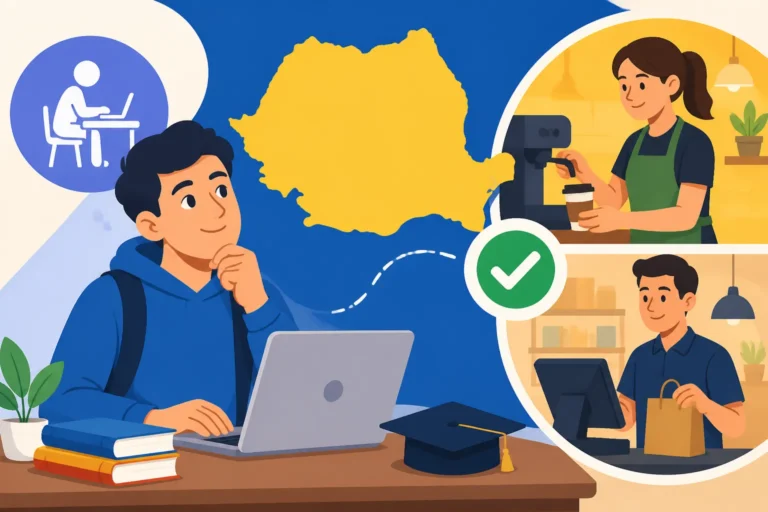
Do I Need to Speak Romanian to Get a Job in Romania?
The question of whether you need to speak Romanian to land a job here is one that weighs heavily on the minds of so many expats considering a move to this vibrant, often bewildering, country. It’s a completely valid concern, filled with anxiety about integration, career prospects, and simply navigating daily life. Let me tell you, you're not alone in feeling this way. This guide is here to shed some realistic light on the language landscape of the Romanian job market, dispelling myths and providing actionable insights so you can plan your career move with confidence.
The Nuance of Language: Why It's Not a Simple Yes or No Answer
When you first start thinking about working in Romania, the language question often feels like a giant, intimidating barrier. "Do I have to speak Romanian?" is usually the first thing people ask. The simple, frustrating answer is: it depends. Romania is a country undergoing rapid development, with a dynamic job market that is increasingly globalized, especially in certain sectors. However, it's also a place where tradition and local culture run deep, and language is a key part of that.
It's not like moving to a country with a single, universally accepted business language. Here, you'll find pockets where English is the lingua franca, areas where German or French are highly valued, and then the vast majority of daily interactions where Romanian is absolutely essential. The reality is far more nuanced than a straightforward requirement. Your industry, the type of company you target, the specific role, and even the city you choose to live in will all play a significant role in determining just how much Romanian you'll need. Don't let the thought of learning a new language completely deter you; instead, understand where it truly matters and where you might find a comfortable foothold without it.
Understanding Romania's Business Landscape
Romania’s economy is a fascinating mix of large international corporations, bustling local businesses, a burgeoning tech scene, and traditional industries. This diversity directly impacts language requirements. Multinationals, for instance, often operate with English as their primary internal and external communication language, especially if they are serving a global client base. Think about the shared service centers or IT hubs in Bucharest or Cluj-Napoca – these places thrive on linguistic diversity, and often, the more languages you speak other than Romanian (like German, French, Spanish, or even Nordic languages), the more desirable you are.
On the other hand, if you're looking at a smaller, purely local Romanian company, or a role that involves direct interaction with the Romanian public, then a strong command of the local language will almost certainly be a prerequisite. Imagine working in customer service for a Romanian telecom provider, or a sales role for a local distributor; it would be nearly impossible without fluency. It’s about matching your language skills to the operational needs of the business. You wouldn't expect to walk into a local village shop in your home country and speak a foreign language and expect seamless service, and the same applies here in many sectors.
Cultural Integration Beyond Just Words
Beyond the practicalities of the job itself, speaking Romanian also plays a massive role in your overall cultural integration and career progression. While you might get a job without it, truly understanding the workplace dynamics, connecting with colleagues on a deeper level, and participating in informal office banter often requires at least a conversational grasp of Romanian. It shows respect and a genuine effort to become part of the community, not just an outsider here for a paycheck.
Many expats start their careers here in English-speaking roles, only to hit a ceiling when it comes to advancing into leadership positions or roles requiring more significant internal cross-departmental collaboration. Often, the unspoken expectation for these higher-level roles is a solid grasp of Romanian, allowing you to navigate complex discussions, engage with local partners, or present to Romanian-speaking stakeholders without relying on translators. It’s not just about what you can do, but what opportunities open up when you demonstrate that commitment to the local culture. It’s a marathon, not a sprint, and learning the language is a vital part of that journey.
Industries Where Romanian is Not a Deal-Breaker
Good news! There are definitely sectors in Romania where you can absolutely thrive without speaking fluent Romanian. These are often the first port of call for many new expats, and for good reason. They are generally export-oriented, international in their outlook, and staffed by a diverse workforce.
The Booming IT and Tech Sector
Romania's IT and tech sector is, without a doubt, the most welcoming for English-speaking professionals. Cities like Bucharest, Cluj-Napoca, Iași, and Timișoara have become major tech hubs, attracting significant foreign investment and fostering a dynamic startup ecosystem. Companies here are often building products or providing services for international clients, making English the de facto language of business.
Think software development, quality assurance, project management, data analysis, cybersecurity, and IT support. Many of these roles involve teams composed of both Romanians and other expats, communicating entirely in English. You'll find giants like Amazon, Microsoft, and Oracle with significant operations here, alongside countless innovative smaller companies. They're more interested in your technical skills and problem-solving abilities than your Romanian vocabulary. In these environments, while colleagues might chat in Romanian during breaks, professional communication remains firmly in English. If your expertise lies in tech, this is likely your strongest entry point into the Romanian job market. You can explore a deeper dive into this sector with our guide on Working in Romania's IT and Tech Sector: The Expat Guide (2027).
Business Process Outsourcing (BPO) and Shared Service Centers
Another significant area where English (and other foreign languages) is highly valued is in the BPO and Shared Service Centers (SSC) sector. These centers handle various business functions like customer service, technical support, finance, human resources, and IT for multinational corporations, often serving clients across Europe and beyond.
Here, the primary language requirement isn't Romanian, but typically the language of the clients they serve. So, if you're fluent in German, French, Spanish, Italian, or even Nordic languages, you'll find plenty of opportunities. English is usually the baseline for internal communication, and often a prerequisite for any role. You'll be using your linguistic skills to support a diverse client base, and your colleagues will likely be a mix of Romanians and other foreign language speakers. Companies in this sector are constantly recruiting, providing a steady stream of job opportunities for multilingual expats. While the pay might not always be as high as in specialized IT roles, it's a solid pathway to gaining work experience in Romania.
International Companies and Academia
Many international companies, regardless of sector, will have positions where English is sufficient. These might be executive roles, specialized expert positions, or jobs within specific departments that are globally integrated. Marketing, communications, and some research roles within these companies often fall into this category.
In academia, particularly at universities with strong international programs, teaching and research positions can also be available to non-Romanian speakers. Many Romanian universities offer degrees taught entirely in English, German, or French, especially in fields like Medicine, Engineering, and Business. If you have a postgraduate degree and experience in these areas, exploring academic roles could be a viable option. For those considering a move specifically for work, our comprehensive guide, The Expat Guide to Finding a Job in Romania (2027), offers more pathways.
Here's a quick look at how language requirements might stack up across different sectors:
| Sector / Role Type | Romanian Requirement | Primary Working Language(s) | Notes |
|---|---|---|---|
| IT & Tech (Development, QA, Data) | Optional / Basic | English | High demand for skilled professionals. Internal team communication often fully in English. |
| BPO / Shared Service Centers | Optional / Basic | English + other EU languages | Roles like customer support, finance, HR. Language depends on client base. Multilingual skills (non-Romanian) are highly valued. |
| International Company (Expert/Exec) | Optional / Conversational | English | Specialized roles, global teams. Some basic Romanian for daily life interactions is helpful but not mandatory for work. |
| Teaching English | Optional / Basic | English | Obvious, but worth noting. Opportunities in private language schools or international schools. |
| International Academia | Optional / Conversational | English (+ German/French) | University positions for programs taught in foreign languages. Research often conducted in English. |
| Local Romanian Companies (Sales/CS) | Essential | Romanian | Direct interaction with Romanian clients/public. Fluency is usually a strict requirement. |
| Public Sector / Government | Essential | Romanian | Almost always requires full fluency, especially for roles involving administrative or legal processes. |
| Healthcare (Doctor/Nurse) | Essential / Advanced | Romanian | Direct patient interaction, complex medical terminology. Some exceptions in private clinics catering specifically to expats with English-speaking doctors, but these are rare. |
When Speaking Romanian Becomes a Major Advantage
While it's comforting to know you can find a job without Romanian, let's be realistic: learning the local language will open up a whole new world of opportunities and greatly enhance your life here. It moves you from merely working in Romania to truly living and thriving in Romania.
Roles Requiring Direct Public Interaction
Any job that involves direct, regular interaction with the Romanian public will almost certainly require fluency in Romanian. This includes roles in:
- Retail and Hospitality: Unless it's a very specific, high-end international hotel or tourist attraction, most shops, restaurants, and hotels will expect you to communicate with customers in Romanian.
- Customer Service for local companies: As mentioned before, if the company primarily serves a Romanian client base, you'll need the language.
- Healthcare: If you're a doctor, nurse, or medical professional aiming to work in the public healthcare system or most private clinics that cater to the general population, a strong command of medical Romanian is non-negotiable. While you might find some private clinics, like certain Regina Maria or MedLife locations in major cities, that have English-speaking doctors, they are exceptions rather than the rule for broader employment.
- Legal and Administrative Roles: Navigating Romania's legal system or working in any administrative capacity (like a public notary or within government offices) demands native or near-native Romanian proficiency. The intricacies of legal jargon and bureaucratic processes are challenging enough in your native tongue, let alone a new one.
Career Progression and Leadership Positions
Even if you start in an English-speaking role, career advancement often hinges on your ability to integrate more fully, and language is a huge part of that. If you aspire to management, leadership, or roles that require significant cross-functional collaboration within a company that has a large Romanian workforce, learning the language becomes a significant asset.
Being able to communicate directly with all team members, understand subtle cultural cues, and participate fully in meetings conducted in Romanian demonstrates commitment and fosters trust. It shows you're invested in the long-term, not just passing through. Imagine a scenario where a local team leader needs to relay complex instructions to a Romanian-speaking team: if you, as a foreign manager, can do that without an intermediary, you immediately stand out. It empowers you to build stronger relationships and exert more influence within the organization.
Entrepreneurship and Local Business Ventures
If your dream is to start your own business or engage in entrepreneurship that serves the local Romanian market, then embracing the language is critical. From registering your business with the trade registry (ONRC) to dealing with tax authorities like ANAF, negotiating with local suppliers, or marketing to Romanian customers, you'll need a solid grasp of the language. While you can hire assistance, understanding the basics yourself will save you countless headaches and potential misunderstandings. For anyone setting up a business, understanding local regulations and navigating bureaucracy, whether in English or Romanian, is key to success. Speaking of which, once you're earning, you'll need to figure out your financial obligations; for deep dives into that, consider our guide, The Complete Guide to Taxes in Romania for Expats (2027).
Practical Steps to Navigate the Language Barrier
So, you’ve weighed your options, and you’re either confident in an English-speaking role or ready to tackle the challenge of learning Romanian. Either way, there are practical steps you can take to make your job search and eventual employment smoother.
Emphasize Your Other Language Skills
If Romanian isn't your strong suit, highlight what is. Are you fluent in German, French, Spanish, or other languages? Make sure these are prominently featured on your CV and cover letter. For many international companies in Romania, these secondary languages are a massive bonus, often even more sought after than Romanian itself. Tailor your application to show how your linguistic abilities align with the specific needs of the company and the role. If the job description is in English and mentions "international team" or "global clients," that's your cue to lean into your existing foreign language skills.
Start Learning Romanian, Even Just the Basics
Even if your job doesn't require Romanian, making an effort to learn the basics will pay dividends in your daily life and in demonstrating your commitment. Learning a few polite phrases, numbers, and basic conversational elements can significantly ease your transition. It shows respect for the local culture and will be appreciated by colleagues and locals alike.
There are many resources available:
- Online Platforms: Websites and apps like Duolingo, Memrise, or even more specialized platforms like iTalki can connect you with Romanian tutors for personalized lessons. iTalki, for example, allows you to find native speakers for conversational practice at a flexible schedule, which is invaluable for practical application.
- Language Schools: Many cities, especially Bucharest and Cluj-Napoca, have language schools offering Romanian courses specifically for foreigners. These often provide structured learning and a chance to meet other expats. Our guide, Learning Romanian: A Complete Guide to Language Courses and Levels, has more details.
- Conversation Exchanges: Look for local meet-up groups or online communities where you can practice Romanian with native speakers who want to learn English from you.
- Immersion: Don't shy away from engaging with locals. Order your coffee in Romanian, try to navigate a grocery store, or ask for directions. Every small interaction is a learning opportunity.
Tailor Your CV and Cover Letter
When applying for jobs, ensure your CV is professionally formatted and clearly highlights your relevant skills and experience. If you’re targeting an English-speaking role, make sure your English is impeccable. If you have any Romanian proficiency, even basic, include it. Use a clear, concise format, and remember that while Romanian companies are increasingly modern, a well-structured CV is always preferred. Our guide, How to Write a Romanian-Style CV and Cover Letter, can provide invaluable tips here.
Network and Seek Out Expat Communities
Networking can be a powerful tool. Attend industry events, join expat groups on social media, or participate in local community activities. Many job opportunities, especially in the international sector, are found through personal connections. Expats already working in Romania can offer invaluable advice, share job leads, and provide insights into companies that are genuinely English-friendly. Don't underestimate the power of a good referral!
Be Prepared for the Bureaucracy (Regardless of Language)
Finding a job is one thing, but getting all your papers in order to work here is another. You’ll need to navigate the immigration system for your residence permit, understand social contributions, and get a tax number (NIF) and personal numeric code (CNP). While much of the official documentation will be in Romanian, many companies that hire expats will have HR departments or external consultants who can assist with these processes. Even so, having a basic understanding of the process, and knowing what documents like your work permit (aviz de muncă) you'll need, will certainly help. For detailed information on this, check out How to Get a Work Permit (Aviz de Muncă) and Long-Stay Visa in Romania and Understanding Social Contributions (CAS and CASS) for Employees in Romania.
Ultimately, while speaking Romanian is an undeniable advantage and will greatly enrich your experience, it is absolutely not a universal requirement to find a job in Romania. Strategic targeting of industries and companies, coupled with an eagerness to learn and adapt, can open up a multitude of exciting career paths in this fascinating Eastern European country.
Disclaimer
The information provided in this guide is intended for general informational purposes only and does not constitute legal, financial, or professional advice. While we strive to keep the content accurate and up-to-date, regulations and procedures in Romania can change. Always consult with qualified professionals for advice tailored to your specific situation.