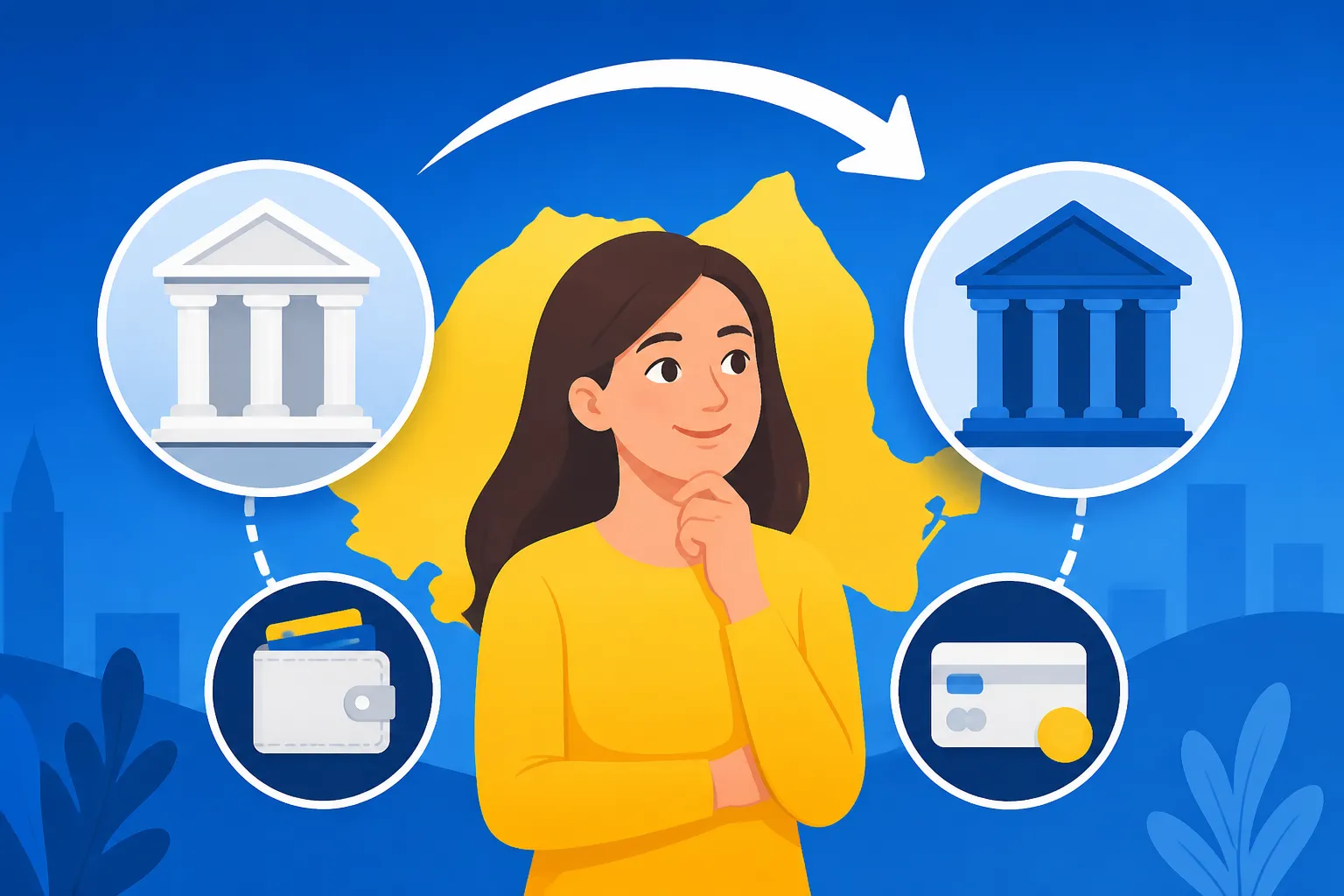
How Do I Switch Banks in Romania?
Moving to Romania, you quickly realize that setting up your financial life can be… well, an adventure. You might have eagerly opened an account with the first bank that seemed accommodating, only to find yourself a few months or years down the line scratching your head, wondering if there’s a better option out there. Whether it’s high fees, clunky online banking, or simply a lack of expat-friendly services, feeling stuck with a bank that doesn’t quite fit your needs is a common frustration. This guide is here to walk you through the often-dreaded but ultimately freeing process of switching banks in Romania, giving you the confidence to make a change for the better.
Why Are Expats Even Considering a Bank Switch in Romania?
It's a question I hear a lot from fellow expats: "Is it really worth the hassle?" And my answer is almost always, "If you're truly unhappy, absolutely." Life here comes with its unique set of financial realities, and the bank that seemed perfectly fine when you first landed might not be serving you well as you settle in.
Common Gripes with Existing Romanian Banks
Let's be honest, Romanian banking has come a long way, but it still has its quirks. For foreigners, these quirks can quickly turn into major headaches. One of the biggest complaints I hear is about customer service. Trying to resolve an issue when you're not fully fluent in Romanian, or when the staff aren't accustomed to dealing with non-locals and their unique financial situations, can be incredibly draining. You might find yourself bouncing between departments, repeating your story, and feeling like you're speaking a different language even when you're both speaking English.
Then there are the fees. Oh, the fees! Many traditional banks have monthly maintenance fees, transaction fees, and sometimes even fees for receiving international transfers. These can quietly chip away at your savings, especially if you're frequently sending or receiving money from abroad. And let's not forget the exchange rates. If your income or primary savings are still in a foreign currency, converting it to RON can be costly if your bank doesn't offer competitive rates or transparent charges. This is often where services like Wise come into play for expats, offering far better rates and lower fees for international transfers compared to traditional banks.
Finally, the digital experience can be a mixed bag. While some Romanian banks have invested heavily in modern apps and online platforms, others lag behind. For those of us used to seamless digital banking back home, a clunky, non-intuitive app or website, especially one not fully translated into English, can be a major source of irritation. Imagine trying to pay a bill or set up a new direct debit only to navigate through Romanian menus you don't fully understand. It's not just an inconvenience; it can be a barrier to managing your finances effectively.
When is a Switch Truly Necessary?
So, when do these "gripes" cross the line into "time to jump ship"? It’s a personal decision, but usually, it comes down to a few key indicators. If you're consistently paying high fees that you could easily avoid elsewhere, that's a red flag. Perhaps you're self-employed, and your current bank's business account options are too rigid or expensive, making it harder to manage your income and expenses. Or maybe you've moved cities within Romania, and your current bank's branch network isn't convenient anymore.
Another major trigger is when your banking needs evolve. When you first arrived, a basic current account might have been all you needed. But now you might be looking to invest, get a mortgage, or need more sophisticated foreign exchange services. If your existing bank can't cater to these evolving needs, or does so poorly, then it's definitely time to explore alternatives.
Don't underestimate the value of peace of mind. If dealing with your bank consistently causes stress or frustration, that's a legitimate reason to switch. Your banking experience should ideally be smooth, efficient, and transparent, not a source of constant low-level anxiety. For a deeper dive into choosing a financial institution, you might find it useful to read about How to Choose the Best Bank for Expats in Romania.
The Step-by-Step Process of Switching Your Bank in Romania
Alright, so you’ve decided enough is enough. You’re ready for a change. The good news is that while it requires a bit of legwork, it’s a manageable process. Think of it as spring cleaning for your finances!
Initial Research and Choosing Your New Bank
Before you dive in, do your homework. This isn't a decision to be made lightly, as switching banks impacts nearly every aspect of your financial life. Start by clearly outlining what you dislike about your current bank and, more importantly, what you need from a new one. Are you looking for lower fees? Better online banking? Multilingual customer support? Specific investment products?
Romania has several major banks, both local and international, and they all offer different strengths. Banks like Banca Transilvania, BCR, ING Bank, and Raiffeisen Bank are popular choices among expats, each with its own advantages. For instance, ING is often lauded for its digital-first approach and modern app, while Banca Transilvania has an extensive branch network across the country. Raiffeisen and BCR also have strong presences and often cater to a diverse client base.
Look into their fee structures for current accounts, savings accounts, and international transfers. Check their exchange rates and any associated costs for foreign currency transactions. Scrutinize their online banking and mobile apps – many banks offer virtual demos or screenshots, so you can get a feel for the interface before committing. Don't shy away from asking other expats for recommendations or checking expat forums. Their real-world experiences can be invaluable. This research phase is crucial, as it sets the stage for a smoother transition. You can learn more about this in our guide on The Expat Guide to Opening a Bank Account in Romania.
Opening Your New Account (The Paperwork Marathon)
Once you’ve identified your preferred new bank, it’s time to actually open an account. Be prepared for a fair bit of paperwork, as this is Romania after all! The process usually involves an in-person visit, though some banks are increasingly offering online or partially online application options.
The essential documents you’ll need typically include:
- Your passport and, if applicable, your residence permit (permis de ședere).
- Proof of address in Romania, such as a utility bill or rental contract (the contract de închiriere).
- Your Personal Numeric Code (CNP) – this is absolutely critical for all official interactions in Romania, including banking. If you don't have one, you'll need to obtain it first. Our guide on What Documents Do I Need to Get a CNP in Romania? can help here.
- Proof of income, which could be your employment contract, recent payslips, or tax declarations if you're self-employed.
- Your Romanian tax identification number (NIF) if you're a non-resident for tax purposes or self-employed. For a deeper understanding of tax numbers, see How to Get a Romanian Tax Number (NIF) and CNP.
Banks are increasingly diligent about anti-money laundering regulations, so be prepared to answer questions about the source of your funds and your financial activity. It might feel intrusive, but it’s standard practice. Many banks will require you to declare your tax residency, confirming whether you are a tax resident in Romania or another country. This declaration is important for compliance with international agreements like FATCA and CRS.
The actual opening of the account might be quick, but receiving your debit card and setting up online banking access can take a few days to a week. Make sure you understand how to activate your card, set up your PIN, and get access to the mobile app and internet banking platform. Don’t leave the bank until you’re confident you know how to use these essential services. You can find more details on How to Open a Bank Account at a Romanian Bank as a Foreigner.
Closing Your Old Account and Migrating Services
This is often the part people dread, but it doesn't have to be. The key is to manage the transition systematically.
First, don’t close your old account until your new one is fully operational and you’ve moved all critical services. That means your new debit card is activated, online banking is working, and you’ve tested a few transactions.
Start by updating your income source. If you're employed, provide your employer with your new bank details. If you're self-employed, update your invoicing software and inform your clients of the change. This is critical to ensure your salary or freelance payments go into the correct account. For those navigating the world of freelancing or self-employment, understanding your financial obligations is key. You might want to check out information on How to Pay Social Contributions as a Freelancer in Romania.
Next, identify all your direct debits (debite directe) and standing orders (ordine de plată programate). These are often the trickiest to transfer because they can be easily overlooked. Think about:
- Utility bills (electricity, gas, water, internet)
- Rent payments
- Loan repayments
- Insurance premiums
- Mobile phone contracts
- Gym memberships
- Subscriptions (Netflix, Spotify, etc.)
Many of these can be updated directly with the service provider (e.g., your electricity provider, your landlord). For others, you might need to cancel the old direct debit at your old bank and set up a new one at your new bank. I recommend making a list and ticking them off one by one. It’s tedious but essential.
Once all your income and outgoing payments are successfully migrated to your new account and you've given it a month or two to ensure nothing has slipped through the cracks, then, and only then, consider closing your old account. To do this, you’ll typically need to visit your old bank branch in person. They will likely ask for a written request to close the account and return any unused cards or chequebooks. Ensure you have a zero balance, or transfer any remaining funds to your new account before you go. Ask for a confirmation of account closure for your records.
Practical Considerations and Potential Hurdles
Switching banks in Romania isn't just about forms and signatures; it involves navigating practicalities that can trip up even the most organized expat. Being prepared for these can save you a lot of grief.
Updating Direct Debits and Standing Orders
As mentioned, this is often where the real work lies. Unlike some countries where a new bank can automatically transfer all your direct debits and standing orders for you, in Romania, you're usually responsible for informing each payee individually. This means calling your electricity provider (ENEL, E.ON, CEZ, etc.), your internet/mobile provider (Digi, Vodafone, Orange), your landlord, or any other service you pay regularly.
It's a good idea to gather all your recent bills and statements from your old account to compile a comprehensive list of regular payments. For many utility providers, you can update your bank details through their online customer portals. For others, a phone call or even a visit to their local office might be necessary. Remember to factor in potential processing times. It's wise to leave a buffer period, perhaps a month, where both your old and new accounts are active, just in case a payment is processed from the old account after you've made the switch. This way, you avoid missed payments and potential late fees or service interruptions.
Transferring Funds and Foreign Currency Needs
When it comes to moving your actual money, you have a few options. For small amounts, a simple transfer via online banking from your old Romanian bank to your new one is usually straightforward. However, for larger sums, or if you're dealing with foreign currency that needs to be converted to RON, you'll want to be strategic.
Traditional banks often apply less favorable exchange rates and may charge fees for currency conversion. This is where dedicated money transfer services shine. Companies like Wise (formerly TransferWise) offer highly competitive exchange rates and transparent, often lower fees for international transfers. Many expats in Romania use Wise not just for moving money from their home country but also for converting funds between different currencies within Romania itself, especially if they hold multi-currency accounts. If you have significant funds in a foreign currency, compare the exchange rates offered by your new Romanian bank with those from services like Wise. The difference can be substantial.
Remember that if you're bringing in a large sum of money from abroad, your new bank might ask for documentation regarding the source of these funds, in line with anti-money laundering regulations. This is standard procedure, so don't be alarmed; just be ready with the necessary paperwork, such as bank statements from your previous account. For a detailed look at international transfers, consult How to Transfer Money Internationally from a Romanian Account.
The CNP and Tax Implications
Your Personal Numeric Code (CNP) is your unique identifier in Romania and is linked to almost everything official, including your bank accounts and your tax records. When you switch banks, your CNP remains the same, but the financial institution associated with your declared income and transactions changes.
For most employed individuals, your employer will simply update your bank details, and your salary deductions for social contributions (CAS and CASS) and income tax will continue as usual. However, if you are self-employed (PFA or SRL owner), this switch can have minor tax implications, especially if you handle your own declarations. It's crucial that the bank account you use for your business income and expenses is correctly registered with ANAF (the Romanian tax authority) if required for your specific business structure.
While switching banks itself doesn't directly alter your tax obligations, it’s a good moment to ensure all your financial accounts are properly linked to your tax profile, especially if you're filing a Declarația Unică (Single Tax Return) in Romania. If you have any doubts about the tax implications for your specific situation, particularly if you run a business or have complex income streams, it’s always best to consult with a Romanian tax advisor. Services specializing in Taxes for Expats can offer invaluable guidance here, ensuring your bank switch doesn't inadvertently lead to any tax woes.
After the Switch: Ensuring a Smooth Transition
You’ve done the heavy lifting, opened the new account, and diligently migrated your services. Now comes the monitoring phase to ensure everything is running like a well-oiled machine.
Monitoring Your Accounts
For the first few months after switching, be extra vigilant with both your new and old accounts. While you should aim to have zero activity on your old account, keep an eye on it for any unexpected debits or credits that might indicate you missed a direct debit or a recurring payment. If you discover a payment that accidentally went to your old, now-closed account, contact the payee immediately to update their records and arrange for the payment to be resent to your new account.
On your new account, verify that all your expected income (salary, freelance payments) and outgoing payments (rent, utilities, subscriptions) are being processed correctly and on time. Check your bank statements regularly, either through your online banking portal or mobile app. This proactive monitoring will help you catch any issues early before they escalate. It’s also a good practice to familiarize yourself with the new bank's online banking platform and mobile app to feel comfortable with all its features, from making payments to managing your budget. Understanding How to Set Up Online Banking and Instant Payments in Romania can make this process much smoother.
Handling Unexpected Charges or Issues
Despite your best efforts, sometimes things don't go perfectly. You might encounter an unexpected charge on your old account, a missed payment from a service provider, or a delay in receiving funds in your new account.
If you find an unexpected charge, first review your statements to understand its origin. If it's a payment you genuinely missed migrating, update the payee. If it's an erroneous charge or a fee you believe is incorrect, contact your previous bank's customer service. Be patient and persistent. Having clear records of when you requested account closure and confirmations can be very helpful here.
For missed payments or delays with your new bank, reach out to their customer support immediately. Be clear and concise in explaining the issue. If you're still within the initial transition period, they might be more understanding. Keep a record of all your communications – dates, times, names of representatives, and what was discussed. If you're facing ongoing difficulties, don't hesitate to escalate the matter within the bank or seek advice from consumer protection agencies in Romania, though hopefully, it won't come to that!
Switching banks can feel like a daunting administrative task, particularly in a foreign country. But with careful planning, attention to detail, and a bit of patience, you can successfully transition to a bank that truly meets your needs as an expat in Romania. It’s about taking control of your financial well-being and ensuring your money works for you, not against you.
Disclaimer
The information provided in this guide is for general informational purposes only and does not constitute financial, legal, or tax advice. While we strive to keep the information up-to-date and accurate, regulations and banking practices in Romania can change. We recommend consulting with a qualified financial advisor, tax professional, or legal expert for advice tailored to your specific situation.