How Much Does a Two-Room Apartment Cost in Cluj-Napoca?
Ah, Cluj-Napoca! It's quickly become one of Romania's most vibrant cities, drawing in expats with its booming tech scene, lively student culture, and stunning Transylvanian backdrop. But let's be real, while the dream of living here is exciting, the practicalities—especially finding an affordable place to call home—can quickly turn into a bureaucratic puzzle wrapped in a language barrier. One of the most common questions I hear from newcomers is about the cost of a "two-room apartment," and let me tell you, this seemingly simple query has more layers than a traditional Romanian sarmale. This comprehensive guide will peel back those layers, giving you a realistic, no-fluff breakdown of what you can expect to pay for a two-room apartment in Cluj-Napoca, along with all the hidden costs and essential tips to navigate the market.
Understanding the "Two-Room Apartment" in Romania
Before we dive into the numbers, it's crucial to clarify what exactly constitutes a "two-room apartment" in the Romanian housing lexicon, because it’s not always what foreigners expect. In many Western countries, a "two-room apartment" might imply two bedrooms, plus a living room and kitchen. In Romania, however, it's a bit different.
The Romanian Room Classification System
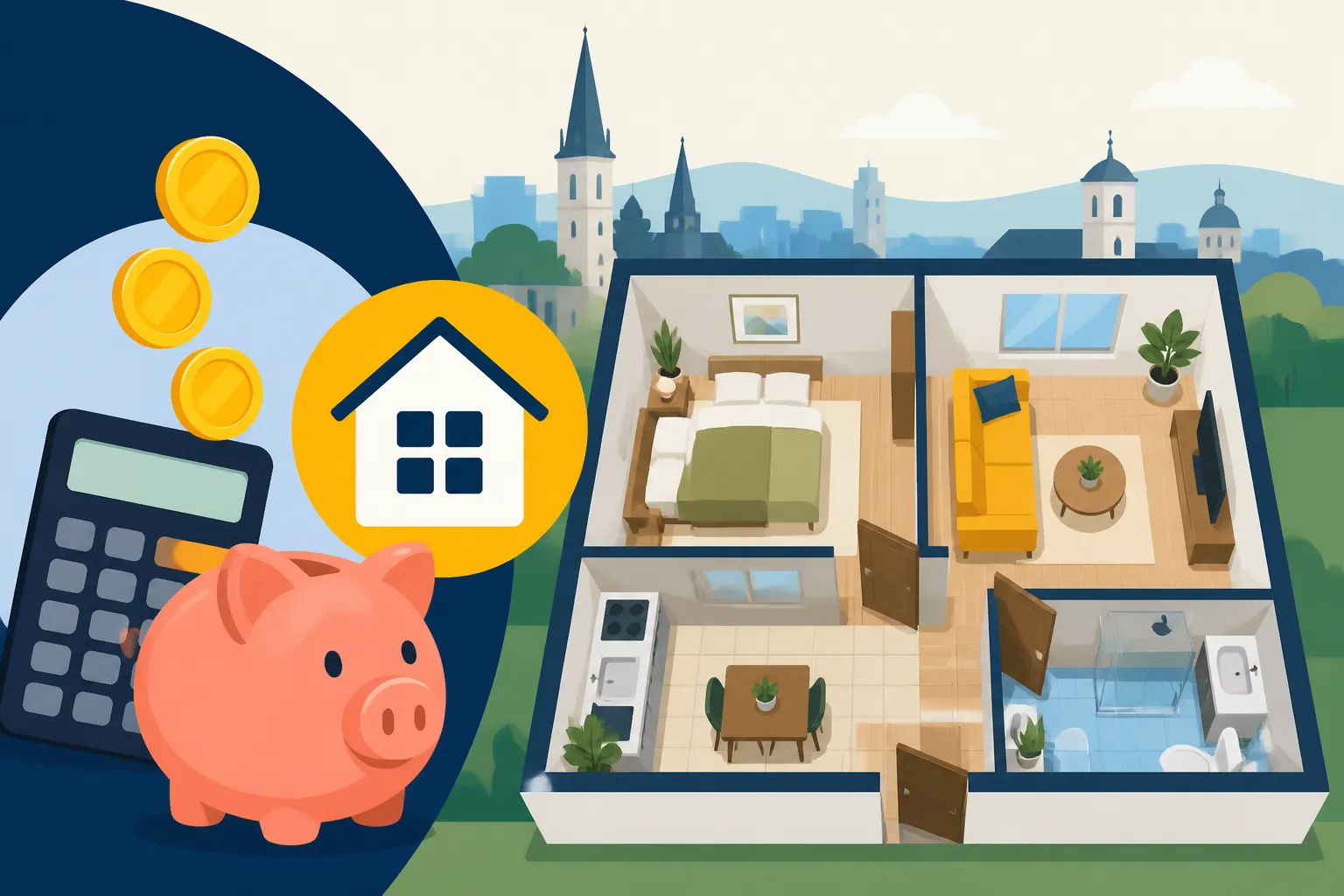
When Romanians talk about an apartment with două camere (two rooms), they are generally referring to an apartment with two main habitable spaces: typically a living room and one bedroom. The kitchen, bathroom, and hallway are separate and usually not counted as "rooms" in this context. So, if you're picturing a place with a spare bedroom for guests or a dedicated home office in addition to your main sleeping and living areas, you'll actually be looking for a trei camere (three-room) apartment.
This distinction is vital because it directly impacts your search and, naturally, the price. Many expats arrive expecting one thing and find another, leading to initial frustration. Always double-check the layout and floor plan, or ask for specifics like "how many bedrooms?" to avoid misunderstandings. Most listings will specify the number of camere (rooms), and then separately list the number of bedrooms if it's different from the standard "living room + bedroom" assumption.
Furnished vs. Unfurnished Expectations
A significant majority of rental apartments in Cluj-Napoca, especially those targeting students or young professionals, come fully furnished. This means you can often walk in with just your suitcase and be ready to go. Furnishings can range from basic and functional to stylish and modern, and this will naturally be reflected in the price.
Unfurnished apartments are less common in the rental market but do exist, usually at a slightly lower rent, which can be tempting. However, the cost of furnishing an entire apartment from scratch in Romania, even with IKEA and local options, can quickly add up, easily negating any monthly savings. For short to medium-term stays, a furnished apartment is almost always the more practical and cost-effective choice. When you're just starting out in a new country, you want fewer headaches, not more furniture assembly.
The Rollercoaster of Rental Costs in Cluj-Napoca
Cluj-Napoca’s real estate market has seen a consistent upward trend for years, driven by its economic growth and desirability. This means apartment costs can feel quite high compared to other Romanian cities, though still often more affordable than major Western European capitals. The price of a two-room apartment hinges heavily on several key factors, chief among them being its location, condition, and the time of year you’re looking.
Location, Location, Location: Where You Choose to Live Matters
Just like anywhere else in the world, the specific neighborhood in Cluj-Napoca where you decide to rent will be the biggest determinant of your monthly expenditure. The city can broadly be divided into central, semi-central, and periphery zones, each with its own price tag.
Central Areas: Neighborhoods like Centru, Zorilor (closer to the center), Grigorescu, or even parts of Gheorgheni, especially those close to universities or the city center, command the highest rents. Here, you're paying for convenience, proximity to amenities, vibrant nightlife, and short commutes. Expect to pay anywhere from €450 to €750+ per month for a well-maintained two-room apartment. A newly renovated, stylish apartment in a prime central location, perhaps with a view or parking, could easily push into the upper end or even exceed this range, reaching €850 – €900. This area is perfect if you want to be in the thick of it all, constantly surrounded by the city's buzz and easily walk to most places.
Semi-Central / Developed Neighborhoods: Moving slightly outwards to areas like Mărăști, some parts of Mănăștur (especially near the center or tram lines), Bună Ziua, or further into Gheorgheni and Zorilor, you'll find a slightly more palatable price range. These areas offer a good balance of accessibility and slightly lower costs, often with better access to parks or larger supermarkets. Here, a decent two-room apartment will likely set you back between €350 and €550 per month. You might still find modern blocks, but also older, solid apartments that have been renovated. Commute times are still reasonable, and public transport links are generally excellent.
Periphery / Satellite Towns: If budget is your absolute top priority and you don't mind a longer commute, looking at the city's outskirts or even satellite towns like Florești, Apahida, or Baciu can yield significant savings. These areas are popular with families and those working slightly outside the urban core. For a two-room apartment here, you could be looking at €250 to €450 per month. However, factor in increased travel time and potentially less frequent public transport. While Florești, for example, has developed its own infrastructure, relying on a car becomes more of a necessity here, and traffic into Cluj-Napoca during peak hours can be notoriously bad. Consider your total cost, including transportation, when evaluating these options.
Condition, Amenities, and Building Age
The age and condition of the building, along with the amenities offered, also play a huge role. A two-room apartment in a brand-new residential complex with a dedicated parking spot, modern appliances, and perhaps a gym or concierge service will naturally cost more than one in a communist-era block.
Many older apartments have been fully renovated internally, offering modern comforts within a more established neighborhood. These often strike a good balance between price and quality. However, some older blocks might have higher întreținere (maintenance fees) due to less energy-efficient heating systems or aging infrastructure. On the other hand, newer builds are generally more energy-efficient, meaning lower utility bills in the long run, which is a definite plus when you're trying to figure out The Complete Guide to Cost of Living in Romania for Expats (2026).
Seasonal Fluctuations and Market Trends
The rental market in Cluj-Napoca experiences noticeable seasonal fluctuations. The period leading up to the academic year, typically August and September, sees a surge in demand as students flock back to the city. This is when prices are at their peak and competition is fierce. If you can avoid searching during this window, you might find slightly better deals.
Outside of student season, the market tends to be more stable, though prices in Cluj have generally shown an upward trend over the past few years. Keeping an eye on broader economic trends and local developments can sometimes give you an edge, but largely, expect prices to remain robust due to continuous demand.
Beyond the Monthly Rent: The Full Financial Picture
It's tempting to only focus on the advertised monthly rent, but as any seasoned expat will tell you, the true cost of renting goes far beyond that single number. There are several other expenses that can quickly add up, especially when you're just getting settled in Romania.
Initial Outlay: Deposits and Agent Fees
When you first secure a rental apartment in Cluj-Napoca, prepare for a significant upfront payment. Typically, landlords require:
- First Month's Rent: This is straightforward, payable before you move in.
- Security Deposit (Garanție): Almost universally, landlords ask for a security deposit, usually equivalent to one month's rent, but sometimes two, especially for higher-end apartments or if you have pets. This deposit is held to cover any damages beyond normal wear and tear or unpaid bills upon your departure. Make sure this is clearly stipulated in your rental contract (contract de închiriere) and understand the conditions for its return. For a deeper dive into this, you might want to read How Much Deposit Do Landlords Require in Romania?.
- Real Estate Agent Fees: If you use a real estate agent to find your apartment (which many expats do for convenience and language assistance), you'll almost certainly pay a commission. This is often 50% of one month's rent, sometimes 100%, payable upon signing the contract. While it feels like a pinch, a good agent can save you a lot of time and heartache, especially with navigating local bureaucracy and ensuring your How to Sign a Rental Contract (Contract de Închiriere) in Romania is watertight. You can also explore How Much Is the Real Estate Agent Commission in Romania? for more details.
So, for a two-room apartment costing €500 a month, your initial payment could easily be €500 (first month) + €500 (deposit) + €250-€500 (agent fee) = €1,250 to €1,500 before you even pay for utilities or groceries.
Utilities and Building Maintenance (Întreținere)
These ongoing monthly costs are often overlooked but are essential to budget for. They are usually not included in the advertised rent.
- Building Maintenance Fees (Întreținere): This is a mandatory fee paid to the apartment block's administration (asociația de proprietari) covering shared services like cleaning of common areas, elevator maintenance, minor repairs, security, and sometimes communal heating for older blocks. The cost varies greatly depending on the size of the apartment, the number of residents, and the services included, but for a two-room apartment, expect to pay between €50-€150 per month, significantly more in winter if it covers central heating for an older, less efficient building. This topic is covered comprehensively in How Much Is the Building Maintenance Fee (Întreținere) in Romania?.
- Electricity: The cost depends entirely on your consumption. Expect anywhere from €20-€60 per month, but heavy usage of air conditioning or electric heaters will push this higher. Setting up your electricity account is one of the first things you'll do; see How Do I Set Up Electricity After Moving Into a Romanian Apartment? for guidance.
- Gas: Used for cooking and often for heating and hot water if your apartment has its own centrală termică (central heating unit). Costs fluctuate seasonally; much higher in winter. Budget €30-€100+ per month. More details on this can be found in How Do I Set Up Gas and Heating in My Romanian Apartment?.
- Internet and TV: Romania boasts some of the fastest internet in the world, and prices are very reasonable. A package including high-speed internet and basic TV channels typically costs between €10-€25 per month. Check out How Do I Set Up Home Internet and TV in Romania? to understand your options. When you first arrive, having a local SIM card, perhaps from a provider like Airalo (using an eSIM for instant data), can be incredibly useful for communication and navigation while you're sorting out your home internet. It ensures you’re always connected to search for apartments, communicate with agents, or just find your way around a new city.
- Water: Billed based on consumption, usually monthly or bi-monthly. Expect around €10-€25 per month for an individual or couple.
Other Potential Costs
Don't forget to factor in other living expenses. When comparing costs with other cities, it's worth checking out How Much Is the Cost of Living in Cluj-Napoca for Expats? for a broader perspective. If you're moving from abroad, moving companies like Sirelo can help simplify the logistics of relocating your belongings, saving you a headache and potentially money in the long run.
Here's a quick summary of estimated monthly rental costs for a two-room apartment in Cluj-Napoca:
| Area/Condition | Estimated Monthly Rent Range (EUR) | Estimated Monthly Utilities + Maintenance (EUR) | Total Estimated Monthly Cost (EUR) |
|---|---|---|---|
| Central / New Build | €600 – €900 | €120 – €200 | €720 – €1,100 |
| Central / Older Renovated | €500 – €700 | €100 – €180 | €600 – €880 |
| Semi-Central / New Build | €450 – €650 | €100 – €180 | €550 – €830 |
| Semi-Central / Older Renovated | €380 – €550 | €80 – €150 | €460 – €700 |
| Periphery / Modern | €350 – €500 | €80 – €150 | €430 – €650 |
| Periphery / Older | €250 – €400 | €60 – €120 | €310 – €520 |
Note: These are estimates and market prices can fluctuate based on demand, specific amenities, and general economic conditions.
Navigating the Hunt: Tips for Finding Your Two-Room Haven
Finding an apartment in a new city, especially one with a competitive market like Cluj-Napoca, can be daunting. But with the right approach and a bit of patience, you can land a great place.
Online Platforms and Real Estate Agents
Most expats start their search online. Popular Romanian real estate portals include:
- OLX.ro: This is a general classifieds website, but it has a very active property section. You can find listings directly from owners, potentially saving on agent fees, but be prepared for potentially less professional communication and vetting.
- Imobiliare.ro: A dedicated real estate portal, often used by both agencies and private owners. It's generally more structured and professional than OLX.
- Facebook Groups: Search for "Chirie Cluj-Napoca" or "Rentals Cluj-Napoca" groups. Many expats find their apartments here, as landlords or other expats post directly. This can be a great way to find something quickly, but again, exercise caution and verify everything.
Using a reputable real estate agent can be a huge advantage, especially if your Romanian isn't fluent. They can filter listings, arrange viewings, negotiate on your behalf, and help you understand The Complete Guide to Renting an Apartment in Romania (2027) and the quirks of the local market. While there's a fee involved, as discussed, the peace of mind and time saved can be invaluable. For those of you specifically looking for a place in this vibrant city, a good agent can greatly assist you in your hunt for How Do I Find a Long-Term Rental in Cluj-Napoca?.
Essential Documents and Bureaucracy
Get your documents in order before you start viewing apartments. Landlords and agents will often ask for proof of income, your residence permit, and identification. Key documents you might need include:
- Passport/ID Card: For identification.
- Residence Permit or Visa: Proof of your legal right to reside in Romania. Remember, you might struggle to even rent an apartment without having some initial form of authorization to stay. If you're wondering What Documents Do I Need to Rent an Apartment in Romania?, having your legal residency squared away is paramount.
- Proof of Income: Employment contract, bank statements, or a letter from your employer showing your salary. Landlords want assurance you can pay the rent.
- CNP (Personal Numeric Code): While it's sometimes possible to rent without one initially, having your CNP will make everything, from signing contracts to setting up utilities, significantly smoother. If you're concerned about whether Can I Rent an Apartment in Romania Without a CNP?, know that while it might be possible, it's certainly more challenging. It's best to sort out your CNP as soon as possible after arriving.
The administrative side of moving to Romania can feel like a maze, full of papers and signatures. Validate your frustrations; you're not alone in feeling overwhelmed by the sheer volume of paperwork required for seemingly simple tasks. Take it step by step, and don't hesitate to ask for help from friends, colleagues, or professionals.
Be Prepared and Patient
Cluj-Napoca's rental market is fast-paced. Good apartments, especially two-room ones in desirable locations, get snapped up quickly. Be prepared to act swiftly if you find something you like. That means having your documents ready, being available for viewings, and having your initial deposit money accessible.
While it can be disheartening to miss out on an apartment, don't rush into a decision out of desperation. Take your time, weigh your options, and trust your gut. The right place for you is out there, even if it takes a bit of a treasure hunt to find it.
Disclaimer
The information provided in this article is for general guidance only and does not constitute legal or financial advice. Rental prices and market conditions in Romania, particularly in Cluj-Napoca, can change rapidly. Always verify current prices, terms, and legal requirements with reliable local sources, real estate professionals, and legal advisors before making any commitments. We strive to provide accurate and up-to-date information, but cannot guarantee its completeness or suitability for every individual situation.