Do I Need a Motorway Vignette (Rovinieta) to Drive in Romania?
Driving in Romania, especially for the first time as an expat or a tourist, often brings with it a mix of excitement and a healthy dose of administrative head-scratching. One of the first things you'll encounter when planning any journey outside city limits is the infamous Rovinieta – Romania’s mandatory road tax. Many foreigners, accustomed to physical stickers or toll booths, find themselves confused about this digital system, often leading to unexpected fines. This guide will walk you through everything you need to know about the Rovinieta, ensuring your travels across Romania are smooth and penalty-free.
What Exactly Is a Rovinieta and Why Do I Need It?
Let's cut right to it: a Rovinieta is essentially a road usage tax, a digital vignette that grants you permission to drive on almost all national roads in Romania. Unlike what some might assume, it’s not just for the autostrăzi (motorways); it's for the vast majority of roads connecting cities and towns across the country. Think of it as your passport to the Romanian road network outside of urban areas. The system is entirely electronic, meaning there's no sticker to display on your windshield, which can sometimes lull newcomers into a false sense of security, believing they don't need one if they don't see physical checks.
The legal requirement stems from a governmental decree that mandates all vehicles, regardless of their country of registration, to have a valid Rovinieta when using national roads. This contribution helps fund the maintenance and development of Romania's road infrastructure. Failure to comply can result in substantial fines, which are often issued automatically by roadside cameras linked to the national road infrastructure company (CNAIR) database. These fines can stack up quickly, so understanding and acquiring your Rovinieta correctly is paramount before you even think about hitting the highway. It's one of those essential pieces of red tape that, while perhaps annoying, is non-negotiable for a hassle-free driving experience here.
More Than Just Motorways: Understanding the Scope
A common misconception among expats and tourists is that the Rovinieta is only required for high-speed motorways, much like toll systems in other countries. This couldn't be further from the truth in Romania. The Rovinieta is mandatory for driving on all national roads, which includes not just the newly built motorways (like A1, A2, A3) but also all European roads (E-roads) and national roads (DN). This means that even if you're just driving from one small town to another on a seemingly quiet two-lane road, if it's classified as a national road, you need a Rovinieta.
Where you typically don't need a Rovinieta is within the administrative boundaries of cities, towns, and communes on local streets. For instance, driving through Bucharest or Cluj-Napoca on local streets doesn't require one, but as soon as you hit the DN or E-road that takes you out of the city, it becomes mandatory. This distinction is crucial and often catches people off guard. Always assume you need one if you're traveling any significant distance between localities. Getting caught without it, even for a short stretch, can lead to a fine.
The Electronic System: How It Actually Works
Forget physical stickers you have to peel off and stick to your window, only to ruin them later. Romania moved to a fully electronic Rovinieta system years ago. When you purchase a Rovinieta, whether online or at a physical point of sale, your vehicle's registration number (license plate number) is entered into a central database managed by CNAIR. This database is then linked to a network of cameras strategically placed along national roads and motorways. These cameras automatically scan passing vehicles' license plates.
If your license plate is scanned and the system doesn't find a corresponding valid Rovinieta in the database for that specific vehicle category and time period, it can automatically trigger a fine. There's no human intervention needed in this initial detection phase, which is why mistakes in entering your license plate number, even a single digit, can be incredibly costly. You'll typically receive a notification of the fine much later by post, and by then, if you've been driving regularly, you might have racked up multiple fines. It's a "set it and forget it" system from the driver's perspective once purchased, but it's crucial to get the initial data entry absolutely correct.
How to Purchase Your Rovinieta: A Step-by-Step Guide
Purchasing your Rovinieta is one of those administrative tasks that can actually be quite straightforward in Romania, thankfully. You have a few options, both online and in person, each with its own conveniences. As someone who has navigated quite a bit of Romanian bureaucracy, I can tell you that the online route is usually the path of least resistance, especially when you're still getting settled and perhaps setting up home internet and TV in Romania or managing other aspects of your relocation with companies like Sirelo.
The most important thing to remember, regardless of how you buy it, is to double-check every single detail before finalising your purchase. A typo in your license plate number or selecting the wrong vehicle category means your Rovinieta is invalid, and you're essentially driving without one, even if you paid for it. So, let's look at your options.
Online Purchase: The Easiest Route
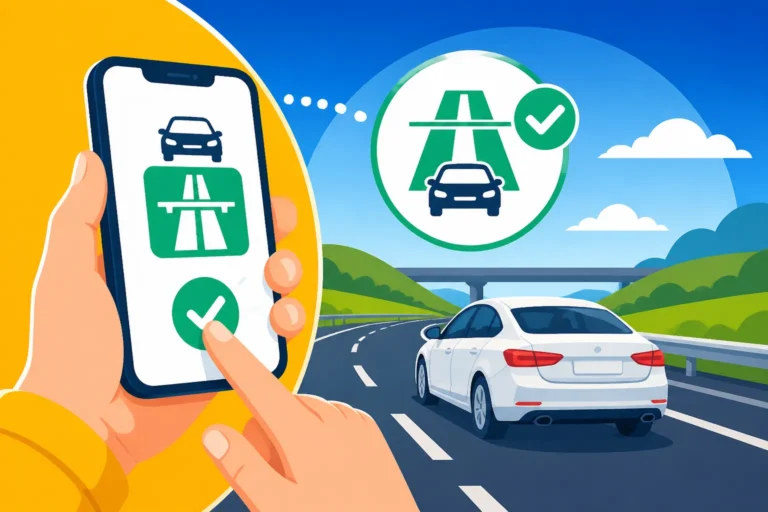
For most expats, purchasing a Rovinieta online is by far the most convenient method. It saves you time, potential language barrier issues, and ensures you have a digital record of your purchase. The official website for purchasing is roviniete.ro, which is managed by CNAIR. There are also several other authorized third-party platforms, such as e-rovinieta.ro, which offer similar services, often with English interfaces, making the process even smoother.
Here’s a general rundown of the online purchase process:
- Access the Website: Go to the official roviniete.ro website or a trusted authorized reseller. Make sure the website address is correct to avoid scams.
- Select Vehicle Type: Choose your vehicle category (e.g., car, van, truck). This is critical for correct pricing.
- Enter Vehicle Details: Input your vehicle's registration number (license plate) and its country of origin. Be meticulously accurate here – even one incorrect character will invalidate your purchase.
- Choose Validity Period: Decide how long you need the Rovinieta for (7 days, 30 days, 90 days, 12 months).
- Select Start Date: Crucially, you can choose a future start date. If you're planning a trip, buy it a day or two in advance and set the start date for when you begin driving. This prevents any accidental overlap or driving without cover.
- Enter Personal Details: Provide your name, email address, and sometimes a phone number. This is where your confirmation will be sent.
- Payment: Most online platforms accept credit/debit cards (Visa, MasterCard).
- Confirmation: After successful payment, you'll receive a confirmation email, usually with a PDF attachment containing all the details of your Rovinieta. Keep this email safe, as it serves as your proof of purchase. Sometimes, an SMS confirmation is also sent.
Using your phone to buy it on the go, perhaps with a reliable eSIM like those offered by Airalo, can be a lifesaver if you suddenly realize you need one. Just remember to pull over safely to complete the transaction!
Physical Purchase: For When You're On the Go (or Old School)
While online purchasing is recommended, there are situations where buying a Rovinieta in person might be more practical. Perhaps you're crossing the border into Romania and haven't had a chance to buy it online, or you prefer a paper receipt. The good news is that there are numerous physical locations where you can purchase one.
Your primary options include:
- Gas Stations: Most major gas station chains across Romania, such as OMV, Petrom, Rompetrol, and Mol, offer Rovinieta purchasing services. You can usually ask at the counter.
- Post Offices (Poșta Română): Many Romanian post office branches also sell Rovinietas.
- CNAIR Offices: At border crossings or larger cities, you might find dedicated CNAIR offices where you can purchase it.
When buying in person, you'll need to provide your vehicle's registration number and country of origin. The attendant will enter the details into their system. It's absolutely vital to visually check the information on the receipt before you leave the counter. Don't be shy about asking them to double-check the license plate number, vehicle category, and validity dates, especially if there's a language barrier. A small error can lead to a big fine. Make sure you keep the physical receipt as proof of purchase, although the electronic record in the CNAIR database is the ultimate authority.
Validity Periods, Costs, and Vehicle Categories
Understanding the different validity periods and vehicle categories is essential for choosing the correct Rovinieta and avoiding unnecessary expenses or, worse, fines. The system is designed to cater to various needs, from short-term visitors to long-term residents who have completed tasks like registering a vehicle and getting Romanian plates.
The prices are set by the government and are subject to change, though they typically remain quite stable for extended periods. All costs are denominated in Romanian Leu (RON).
Choosing the Right Duration and Vehicle Category
The duration options for a Rovinieta are designed to be flexible:
- 7 days: Ideal for tourists making a quick visit or transit through Romania.
- 30 days (1 month): Suitable for slightly longer trips or those getting settled and needing to drive around while sorting out residency.
- 90 days (3 months): A good option for extended stays or for expats who are in Romania for a few months but don't want an annual commitment.
- 12 months (1 year): The most cost-effective option for long-term residents, expats living and working in Romania, or those who frequently drive on national roads.
Vehicle categories are based on the weight and type of your vehicle. For most expats, their personal car will fall into Category A, which is for passenger vehicles with a maximum of 9 seats. However, if you drive a larger van, a campervan, or a vehicle towing a trailer (especially a heavy one), you might fall into a different category, which will affect the price. Always refer to your vehicle's registration documents to confirm its classification. For instance, Category B is for freight vehicles between 0 and 3.5 tonnes, while categories go up to H for heavy goods vehicles over 12 tonnes. It's critical to select the correct category to ensure your Rovinieta is valid.
What Does a Rovinieta Actually Cost?
The cost of a Rovinieta varies significantly depending on your vehicle category and the chosen validity period. To give you a clear idea, here’s a table outlining the typical costs for the most common vehicle categories, particularly Category A (passenger cars up to 9 seats), which most expats will fall under. These prices are indicative and based on recent rates; always check the official roviniete.ro website for the absolute latest figures.
| Vehicle Category | Description | 7 Days (RON) | 30 Days (RON) | 90 Days (RON) | 12 Months (RON) |
|---|---|---|---|---|---|
| A | Passenger cars (up to 9 seats) | 16 | 36 | 64 | 120 |
| B | Freight vehicles (0 – 3.5 tonnes) | 32 | 80 | 152 | 480 |
| C | Freight vehicles (3.5 – 7.5 tonnes) | 60 | 160 | 300 | 1,200 |
| D | Freight vehicles (7.5 – 12 tonnes) | 92 | 240 | 450 | 1,800 |
| E | Freight vehicles (over 12 tonnes, 2-3 axles) | 116 | 300 | 560 | 2,200 |
| F | Freight vehicles (over 12 tonnes, 4+ axles) | 144 | 376 | 704 | 2,800 |
| G | Passenger vehicles (10 – 23 seats) | 36 | 80 | 152 | 480 |
| H | Passenger vehicles (over 23 seats) | 64 | 160 | 300 | 1,200 |
Note: Prices are approximate and subject to change. Always verify current prices on the official roviniete.ro website.
As you can see, a yearly Rovinieta for a standard passenger car is quite affordable, making it the practical choice if you plan on driving in Romania for an extended period. For those moving here, it’s one of the recurring costs to factor into your overall cost of living in Romania.
Common Pitfalls and How to Avoid Fines
Even with the best intentions, it's surprisingly easy to fall foul of the Rovinieta rules, especially when you're new to the country and juggling other administrative tasks like [getting your foreign degree recognised through CNRED] or dealing with local utilities. The electronic nature of the system means errors are less visible but can be more impactful. The fines can range from RON 250 to RON 4,500, and they can be issued multiple times if you continue driving without a valid Rovinieta after an initial detection.
Double-Checking Your Purchase and Avoiding Fines
The single most important piece of advice when purchasing a Rovinieta is to double-check, triple-check, and then check one more time all the details entered during the purchase process.
- License Plate Number: This is where most errors occur. A single wrong digit or letter makes your Rovinieta invalid for your vehicle. If you make a mistake, unfortunately, the only solution is usually to buy a new, correct one. Refunds or corrections for incorrect entries are extremely rare.
- Vehicle Category: Ensure you've selected the correct category that matches your vehicle's registration documents. If you selected 'Category A' for a small van that actually falls under 'Category B', your Rovinieta is invalid.
- Validity Period and Start Date: Confirm that the start date corresponds to when you actually begin driving on national roads. Don't let your Rovinieta expire mid-trip. If you're planning a future trip, buy it in advance but ensure the start date is correct.
- Confirmation: Always ensure you receive a confirmation email or SMS. Keep this digital proof somewhere safe. If you don't receive one shortly after purchase, contact the vendor immediately to confirm the transaction.
If you ever want to check the validity of your existing Rovinieta, or simply verify that your purchase was correctly registered, you can easily do so on the roviniete.ro website. There's a section where you input your license plate number, and it will tell you the current status and validity period. This is an excellent habit to develop, especially after a new purchase or renewal.
When You Don't Need a Rovinieta
While the general rule is "always assume you need one," there are a few very specific and limited circumstances where a Rovinieta is not required. However, for the average expat driver, these exceptions are unlikely to apply regularly:
- Local Roads: As mentioned earlier, driving exclusively on roads within city or town administrative limits, which are not classified as national roads (DN, E-roads), does not require a Rovinieta. This usually means driving within Bucharest, Cluj-Napoca, or Timișoara on local streets and boulevards.
- Emergency Vehicles: Vehicles belonging to emergency services (ambulance, police, fire department) are exempt.
- Military Vehicles: Vehicles used by the national defense, public order, and national security forces.
- Public Transport within City Limits: Some specific public transport vehicles operating solely within urban areas might be exempt.
- Historic Vehicles (specific cases): There might be rare exemptions for certain historic vehicles, but this is highly specialized.
For any recreational or commuter driving on roads connecting different localities, you absolutely need a Rovinieta. It's safer and less stressful to just buy one for the appropriate duration than to risk a fine by trying to navigate intricate exemptions. If you're a long-term resident, an annual Rovinieta is one of the basic requirements for driving in Romania: licences, registration and rules for expats.
Disclaimer
The information provided in this guide is intended for general informational purposes only and does not constitute legal or professional advice. While we strive to keep the information accurate and up-to-date, laws and regulations in Romania, particularly concerning road tax and vehicle registration, can change. It is always recommended to consult official government sources (such as CNAIR) or legal professionals for the most current and specific advice tailored to your individual situation. The author and publisher are not responsible for any errors or omissions, or for the results obtained from the use of this information.