How Do I Set Up Electricity After Moving Into a Romanian Apartment?
Moving into a new place in Romania, whether it's a cozy studio in Bucharest or a sprawling house in the Transylvanian countryside, always comes with a unique set of challenges. Beyond unpacking boxes and trying to figure out where to buy decent coffee, one of the most immediate and often confusing tasks is getting your electricity sorted. It’s not just flipping a switch; it's a bureaucratic dance that can test even the most patient expat. This guide is here to walk you through the process, from understanding who does what, to getting that first bill in your name.
The Initial Shock: Understanding Romania's Electricity Landscape
When you first arrive, the Romanian electricity system can feel like a labyrinth, especially if you're used to a simpler, all-in-one provider back home. It’s not just one company; there are different entities handling different aspects, and knowing who to talk to is half the battle.
Distinguishing Between Suppliers and Distributors
This is crucial, and it’s where many expats get tripped up. Imagine the electricity journey: it’s generated, then it travels through a vast network of wires to your building, and finally, it's sold to you.
The distributor (operator de distribuție) is responsible for the physical infrastructure – the power lines, poles, transformers, and your meter. They ensure the electricity actually reaches your home and maintain the network. If your power goes out, or there's a technical issue with the lines outside your apartment, they are the ones you call. They are a monopoly in their assigned geographical area. You can't choose your distributor; it's dictated by your address.
The supplier (furnizor de energie electrică), on the other hand, is the company you pay your bills to. They buy electricity from the producers and sell it to consumers like you. This is the company you can choose. There are several suppliers operating in Romania, and they offer different tariffs and service packages. Think of it like this: the distributor owns the road, but the supplier is the bus company you choose to take. Understanding this distinction will save you a lot of headache when troubleshooting or comparing contracts.
Key Players in the Market
Romania's electricity market has seen some changes over the years, and while there are many smaller players, a few major ones dominate the residential sector. Your previous landlord or the seller of your new property will likely tell you which supplier the property was connected with.
- ENEL Energie and ENEL Energie Muntenia: These are two of the largest, especially prevalent in the south of Romania, including Bucharest and its surrounding areas. They are now part of the PPC Group (Public Power Corporation), a Greek company, so you might see their branding change or new names appearing.
- E.ON Energie România: Dominant in the northern part of the country, particularly Transylvania and Moldova.
- CEZ Vanzare: Primarily serves the southwestern regions of Romania. They are also undergoing changes and rebranding to Premier Energy.
- Electrica Furnizare: Another significant player, especially strong in central and eastern parts of the country.
Each of these companies offers various types of contracts, from regulated tariffs (which are increasingly rare for new contracts) to market-based offers. It's always a good idea to check their current offers once you know who the previous supplier was, as you might find a better deal. When you're ready to dive deeper into the nitty-gritty of utilities, our guide on The Expat Guide to Setting Up Utilities in Romania can provide even more context.
Step-by-Step: Taking Over an Existing Electricity Contract
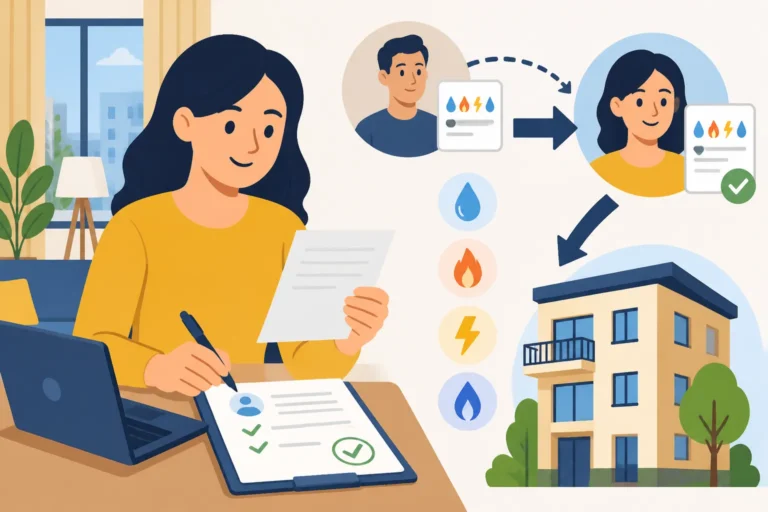
For most expats moving into an already-built apartment, you won't be starting a contract from scratch. Instead, you'll be transferring an existing one from the previous tenant or owner into your name. This process is known as a "cesionare" (cession).
The Transfer Process: Cession (Cesionare)
The "cesionare" is by far the simplest way to get electricity in your name. It means you're essentially stepping into the shoes of the previous account holder. The existing meter and connection remain active, and you simply change the name on the account. This avoids the much more complicated process of establishing a brand-new connection, which involves technical checks and can take weeks, if not months.
When you arrange a cession, you'll need to communicate with the previous tenant/owner to get information about their current supplier and account number. Ideally, they will have paid all their outstanding bills up to your move-in date. Make sure to take a clear photo of the electricity meter reading on the day you take possession of the apartment. This reading, signed by both you and the previous occupant, will be crucial in ensuring you're not charged for their past consumption. This simple step can save you so much grief down the line, believe me.
Required Documents for Cession
Romania, like many countries, loves its paperwork. Having all your documents in order will significantly speed up the process. Don't go to the supplier's office without them!
Here’s a typical list of what you'll need:
- Identity Document: Your passport (for non-EU citizens) or national ID card (for EU citizens). Make sure it's valid.
- Residence Permit (Permis de Ședere): If you're a non-EU citizen, your valid Romanian residence permit is essential. For EU citizens, your registration certificate (certificat de înregistrare) serves a similar purpose.
- Personal Numeric Code (CNP): This is your unique Romanian identification number, which you will have obtained as part of your residence process. It's absolutely vital for any official contract. If you’re still working on this, our guide How to Get Your CNP (Personal Numeric Code) for Healthcare Access in Romania can help, but it's equally important for utility setup!
- Proof of Address: This could be your rental agreement (contract de închiriere) or the title deed (act de proprietate) if you've bought the property. The contract must be officially registered with ANAF (the tax authority) to be fully valid for most administrative purposes. Our article on How to Sign a Rental Contract (Contract de Închiriere) in Romania goes into more detail about this crucial document.
- Previous Electricity Bill: A copy of a recent bill from the previous tenant or owner is incredibly helpful. It contains the POD (Point of Delivery) code and customer number, which are unique identifiers for that specific meter and connection.
- Meter Reading Protocol: A signed document (even handwritten) by both you and the previous occupant, stating the meter reading on the day you moved in. This prevents disputes over who owes what.
- Bank Account Details: You’ll need a Romanian bank account to set up direct debit payments or online transfers. This is usually not required for the initial application but will be for payment. You can learn more about opening an account in our The Expat Guide to Opening a Bank Account in Romania.
Always make sure you have both original documents and a few photocopies. Some offices will make copies for you, but it’s best to be prepared.
Navigating the Application: Online, In-Person, or Phone
Once you have your documents ready, it’s time to submit your application. Each supplier offers different channels.
- In-Person at Customer Service Centers: This is often the most reliable way, especially if you anticipate needing clarification or prefer face-to-face interaction. The staff can review your documents on the spot and tell you if anything is missing. Be prepared for potential waiting times, particularly in larger cities. Bring someone who speaks Romanian if you’re not confident in your language skills. This is where a local friend or a translator can be invaluable.
- Online Application: Many suppliers now offer online portals or email submission for contract transfers. This can be more convenient, but requires you to scan and upload documents correctly, and communication might be slower. Make sure your internet connection is stable – nothing worse than a dropped upload mid-process! If you're having trouble getting connected, remember that a temporary eSIM from a provider like Airalo can keep you online until your home internet is set up, which is a lifesaver for navigating these administrative hurdles.
- Phone Application: Some suppliers might allow initial inquiries or even full applications over the phone. However, for a contract transfer that requires multiple documents, they will almost certainly ask you to follow up with an in-person visit or an online submission.
It’s always a good idea to follow up on your application after a few days, regardless of the method you chose. Don't be shy about calling or visiting again to check on the status. Romanians are generally very understanding of expats navigating bureaucracy, but a polite nudge can sometimes help things along.
Setting Up a New Electricity Contract from Scratch
While less common for those moving into existing homes, there are situations where you might need to establish a completely new electricity contract. This is a more complex process and usually takes longer.
When a New Contract is Necessary
You'll typically need a brand-new contract in these specific scenarios:
- Brand-New Construction: If you've bought a newly built home or apartment that has never had an electricity connection before.
- Property Vacant for an Extended Period: Sometimes, if a property has been vacant for many years, the previous connection might have been completely disconnected and terminated, rather than just transferred.
- Major Electrical System Overhaul: In very rare cases, if the property underwent such significant renovations that the entire electrical connection infrastructure needed to be redone, a new contract might be required.
It's important to differentiate between a simple disconnection (where the meter is still in place but service is paused) and a complete termination of the connection (where the physical infrastructure linking the property to the grid might have been removed). Your landlord or the seller should clarify this for you.
The New Connection Headache
Starting a new connection is a multi-step process that involves both the distributor and the supplier. You can’t just pick a supplier and expect them to set it all up. First, you need a technical connection agreement from the distributor. This agreement outlines how your property will be connected to the grid and what technical requirements need to be met. This involves site visits, technical assessments, and a lot of back-and-forth. Only once this technical connection is established and certified can you then approach a supplier to sign an electricity supply contract.
The bureaucratic steps and necessary inspections can be time-consuming. You'll likely need to coordinate with electricians and potentially construction workers to ensure everything is up to code before the distributor gives the green light. This is definitely one of those times when having a reliable local contact or a good real estate agent can be a massive advantage. If you used a professional moving service like Sirelo to help get your belongings over, they might also have local partners who can assist with this sort of administrative heavy lifting.
Documents for a Brand New Contract
Given the complexity, the documentation required for a new connection is more extensive:
- Identity Document and Residence Permit/Certificate: Same as for cession.
- CNP: Absolutely essential.
- Proof of Ownership: The title deed (act de proprietate) for the property. A rental contract alone won't suffice here, as you're establishing a permanent connection to the grid.
- Building Permit (Autorizație de Construire): For new constructions, proof that the building was legally constructed.
- Technical Connection Permit (Aviz Tehnic de Racordare): This is issued by the electricity distributor after they assess your property and confirm it can be connected to their network. This is often the first and most time-consuming step.
- Electrical Installation Project: A technical project for the internal electrical installation of your property, prepared by a certified electrician.
- Conformity Certificates: Documents certifying that your internal electrical installation meets safety and technical standards.
- Electrical Meter Number: While you're getting a new connection, the distributor will usually assign a new meter. You'll need its details once it's installed.
As you can see, this is a much more involved process, requiring technical expertise and patience. If you're building a new home, this will typically be handled as part of the overall construction project management. If you're moving into an old, disconnected property, be prepared for a marathon, not a sprint.
Understanding Your Electricity Bill (Factura de Electricitate)
Once you've successfully navigated the application process, your first electricity bill will arrive. Don't be intimidated; it might look a bit different from what you're used to, but it's manageable. Understanding how to read it is key to managing your expenses and ensuring you're being billed correctly.
Decoding the Components: Consumption, Taxes, and Fees
Romanian electricity bills, like utility bills elsewhere, are broken down into several components.
- Energy Consumed (Consum Energie Electrică): This is the core of your bill – the actual amount of electricity you've used, measured in kilowatt-hours (kWh). It will show your tariff per kWh.
- Network Service Tax (Tarif Serviciu Rețea): This is what you pay to the distributor for using their network infrastructure. It’s a regulated fee.
- Cogeneration Contribution (Contribuție Cogenerare): A small fee meant to support electricity generation from combined heat and power plants.
- Green Certificates (Certificate Verzi): A charge to support renewable energy sources. This often appears as a separate line item.
- Accise (Excise Duty): A government tax on energy.
- VAT (TVA): Value Added Tax, currently 19% on most goods and services in Romania, including electricity. This is applied to the total of all previous charges.
- Fixed Fee (Taxă Fixă): Some contracts might include a small fixed monthly fee, regardless of consumption.
Your bill will also clearly state your POD (Point of Delivery) code – a unique identifier for your meter – and your customer code (cod client), which you’ll use for payments and inquiries. Keep these handy! For a deeper dive into the specifics of Romanian utility costs, check out our guide on How Do I Understand My Utility Bills (Facturi) in Romania?.
Reading Your Meter (Index Contor)
Your electricity meter, usually found either inside your apartment near the entrance, in a hallway closet, or in a common area for the building, tracks your consumption. Most modern meters are digital, displaying the reading clearly.
- Self-Reporting (Autocitire): Many suppliers encourage or require you to submit your meter reading during a specific window each month. This is called "autocitire" and ensures you're billed for actual consumption, not an estimate. You can usually submit this online, through a dedicated phone number, or via their mobile app. If you don't submit a reading, the supplier will estimate your consumption based on previous months, which can sometimes lead to surprisingly high or low bills that are later adjusted.
- Estimated vs. Actual Consumption: Pay attention to whether your bill is based on an "index citit" (actual reading) or "index estimat" (estimated reading). If it's estimated for too long, you might build up a large credit or debt with the supplier, which gets painful when the actual reading comes in.
Payment Methods: Online, Bank, and Physical Locations
Paying your bills in Romania is generally straightforward and offers several options:
- Online Banking / Mobile App: Most Romanian banks (like Banca Transilvania, BCR, ING) allow you to pay utility bills directly through their online platforms or mobile apps. You'll need the supplier's name, your customer code, and sometimes the invoice number. This is often the most convenient method.
- Supplier's Online Portal / App: Many electricity suppliers have their own dedicated online portals or mobile applications where you can view bills and make payments.
- Ghișeul.ro: This is a national platform for paying various taxes and utility bills online, often using a bank card. It's a useful resource for digital interactions with Romanian public services.
- Direct Debit (Debit Direct): You can set up a direct debit mandate with your bank, allowing the electricity supplier to automatically collect the payment each month. This is great for peace of mind, but ensure you have sufficient funds in your account.
- Physical Payment Locations: You can still pay bills in person at Posta Română (Romanian Post Offices), self-service payment terminals found in supermarkets (like Mega Image or Kaufland), or at the supplier's own customer service centers. Just bring your physical bill or your customer code.
Setting up your utilities is a key part of getting settled. You can learn about other essential connections in our guide on How Do I Set Up Home Internet and TV in Romania?.
Troubleshooting and Essential Tips for Expats
Even with all the information in the world, things can sometimes go sideways. Here are a few pointers for navigating common issues and making your electricity experience smoother in Romania.
Language Barriers and Getting Assistance
Let's be honest, not everyone in customer service will speak perfect English, especially outside of major cities. This can be a huge source of frustration when you're trying to explain a complex issue.
- Bring a Romanian Speaker: If you're going to a physical office, try to bring a Romanian friend, colleague, or even hire a translator. Their assistance will be invaluable.
- Use Translation Apps: For phone calls or email communication, Google Translate or similar apps can help you formulate your questions and understand responses. Keep sentences simple and direct.
- Email Communication: When possible, use email. This creates a written record of your communication and gives you time to translate messages properly before responding.
- Customer Service in English: Some larger suppliers, particularly in big cities like Bucharest or Cluj-Napoca, might have dedicated English-speaking lines or agents. It's always worth asking if they offer service in English when you call.
Remember that patience and politeness go a long way. Frustration is understandable, but maintaining a calm demeanor will yield better results.
Dealing with Power Outages and Emergencies
Power outages do happen, especially during severe weather conditions like heavy snow or strong winds, or due to planned maintenance.
- Distributor is Key: If you have a power outage, remember the distinction between supplier and distributor. It's the distributor who manages the network and resolves outages. Find their emergency contact number on your bill or their website.
- Check Online: Many distributors have websites or social media pages where they announce planned outages or provide updates on widespread disruptions.
- Ask Your Neighbors: If you’re unsure if it’s just your apartment or the whole building/street, ask a neighbor. They might already know the cause or have called the distributor.
- Emergency Number (112): For genuine electrical emergencies that pose a danger (e.g., sparking wires, fire), dial the universal emergency number 112.
Energy Efficiency and Cost Saving
Managing your electricity consumption can save you money and is good for the environment.
- LED Lighting: Switch to LED bulbs. They consume significantly less energy and last much longer than traditional incandescent or even fluorescent bulbs.
- Unplug Electronics: Many electronics draw "phantom" power even when turned off but still plugged in. Unplug chargers, TVs, computers, and other appliances when not in use.
- Efficient Appliances: When buying new appliances, look for those with high energy efficiency ratings (A+++ is best).
- Thermostat Management: If you have electric heating or air conditioning, be mindful of your thermostat settings. Even a small adjustment can make a difference. Use timers if available.
- Compare Tariffs: Periodically, check if your current supplier has new, more favorable tariffs, or if a competitor offers a better deal. The Romanian energy market allows for switching suppliers, which can be done with relative ease once your initial contract is established.
Understanding the nuances of your bills and payment options can save you a headache and some cash.
| Category | Cession (Transfer Existing Contract) | New Connection (Starting from Scratch) |
|---|---|---|
| Complexity | Low to Moderate | High |
| Typical Timeframe | 1-2 weeks (after documents submitted) | 1-3 months or more (involving technical approvals and installations) |
| Key Documents | Passport/ID, Residence Permit, CNP, Rental Contract/Deed, Old Bill, Meter Reading Protocol | All Cession Docs + Building Permit, Technical Connection Permit, Electrical Project, Conformity Certs |
| Main Contacts | Electricity Supplier (e.g., ENEL, E.ON) | Electricity Distributor (first), then Electricity Supplier |
| Primary Advantage | Faster activation, less bureaucracy, continuity of service | Necessary for new builds or completely disconnected properties |
| Primary Disadvantage | Still requires careful document preparation and follow-up | Long wait times, technical complexities, potentially higher initial costs |
This table summarizes the core differences in the process, offering a quick overview of what to expect based on your situation. Getting your utilities sorted can be one of the more demanding tasks when first moving to Romania, but with a bit of patience and preparation, you'll have the lights on in no time.
Disclaimer
Please note that while this guide aims to provide accurate and up-to-date information, Romanian laws, regulations, and administrative procedures can change. It is always recommended to verify the latest requirements with the relevant authorities or consult with a local legal or administrative expert for personalized advice. We cannot be held responsible for any inaccuracies or outdated information.