How to Enrol Your Child in a Romanian Public School
Moving to a new country with children brings a whole new layer of complexity, and perhaps one of the most significant anxieties for expat parents is figuring out their kids' education. Enrolling your child in a Romanian public school can feel like navigating a maze, especially with language barriers and a different administrative system. This comprehensive guide is here to demystify the process, walking you through every step to help your child settle into their new academic life in Romania.
Understanding the Romanian Public School System for Expats
Romania's public education system is structured and comprehensive, designed to provide free education to all residents. For expat families, understanding this structure is the first crucial step. It's a system deeply rooted in Romanian culture and language, which presents both opportunities for deep integration and initial challenges.
Key Educational Stages and Ages
The Romanian public school system is divided into several stages, much like many other European countries, each catering to specific age groups and developmental needs. Understanding these stages will help you pinpoint where your child fits in.
Firstly, we have Grădiniță (kindergarten). This is for children typically aged 3 to 6 years old. While not strictly mandatory, attending grădiniță is highly encouraged as it provides a foundational introduction to social interaction, basic concepts, and often, early literacy and numeracy in Romanian. It’s a great way for younger children to start their language immersion in a less formal setting before primary school.
Next comes Școala Primară (primary school), which is mandatory and typically starts at age 6 or 7 with "preparatory class" (clasa pregătitoare), followed by grades 1-4. During these years, the curriculum focuses heavily on reading, writing, mathematics, and environmental studies, all taught in Romanian. The teacher-student bond is usually quite strong, with one main teacher guiding the class through most subjects.
After primary school, children transition to Gimnaziu (middle school), covering grades 5-8, usually from ages 11 to 14. This stage introduces a broader range of subjects, with specialist teachers for each, including history, geography, physics, chemistry, and multiple foreign languages, alongside Romanian language and literature and mathematics. This shift requires a greater level of independence and organization from students.
Finally, Liceu (high school) spans grades 9-12 and typically caters to students aged 15 to 18. This is where students begin to specialize, choosing from various profiles such as theoretical (e.g., sciences, humanities), technological, or vocational. The liceu culminates in the Bacalaureat exam, a national examination essential for university admission in Romania. Throughout all these stages, the core curriculum is delivered in Romanian, emphasizing the need for robust language skills.
The Role of Romanian Language and Integration
This is often the biggest hurdle for expat families: the language. Romanian public schools operate almost entirely in Romanian. For children arriving without prior knowledge of the language, this can be an incredibly daunting, yet ultimately rewarding, experience.
For younger children, especially those entering grădiniță or primary school, language acquisition can happen quite rapidly through immersion. Their brains are incredibly adaptable, and within a few months, many are able to understand and communicate at a basic level, progressing quickly from there. However, it’s not always a smooth ride, and initial weeks or even months can be filled with frustration and confusion. Some public schools, particularly in larger cities or areas with more international residents, might have teachers who are somewhat accustomed to having non-Romanian speakers in their class, but structured language support is not a given. You shouldn't expect dedicated ESL (English as a Second Language) programs or special language classes within the public system, unlike in international schools.
For older children entering middle or high school, the challenge is significantly greater. They are not only learning a new language but also complex academic subjects through that language. This often requires substantial supplementary support outside of school hours, such as private tutoring. Parents must be proactive in finding resources to help their child bridge the linguistic gap. It’s a testament to a child's resilience, and with effort and patience, they can indeed thrive. This immersion, while tough initially, is often the fastest and most effective way for children to become truly fluent in Romanian and integrate deeply into the local culture. It also profoundly shapes their experience of living here, providing a unique perspective that private or international schools might not offer.
Eligibility and Initial Requirements for Foreign Children
Before you even think about visiting a school, you'll need to ensure your child meets the basic eligibility criteria for enrolment in the Romanian public education system. This primarily revolves around legal residency and gathering the correct documentation. Navigating bureaucracy can be tiresome, but thorough preparation is your best defense.
Residence and Legal Status Considerations
The first and most critical requirement for enrolling your child in a Romanian public school is that they, and at least one parent, must hold legal residency in Romania. This isn't a simple tourist visa or a short-stay permit; it means having a valid Romanian residence permit.
For EU/EEA citizens, this typically means registering your right of residence at the Inspectoratul General pentru Imigrări (IGI) and obtaining a registration certificate (certificat de înregistrare). For non-EU citizens, it means holding a long-stay visa (Type D) followed by a residence permit (permis de ședere). The type of residence permit you hold (e.g., for work, study, family reunification, or even the How to Apply for Romania's Digital Nomad Visa) will dictate your family's legal status, but as long as it grants you the right to reside here long-term, your child is generally eligible for public schooling. It’s important to remember that the child's residence permit is usually dependent on the parent's, so ensuring your own status is solid is paramount.
Without proper legal residency, public schools will not be able to enrol your child. It's a foundational step, and any delays in obtaining or renewing your residence documents can directly impact your child's ability to attend school. The process of getting these permits can be lengthy and require meticulous attention to detail, but it's a non-negotiable part of setting up your life here. For a comprehensive overview of how to navigate these essential first steps, you might find our guide on The Complete Guide to Romanian Residence Permits for Expats (2027) extremely helpful.
Essential Documents You'll Need to Gather
Once your legal status is in order, the next phase involves compiling a formidable stack of documents. This is where patience truly becomes a virtue, as many foreign documents will require specific processing.
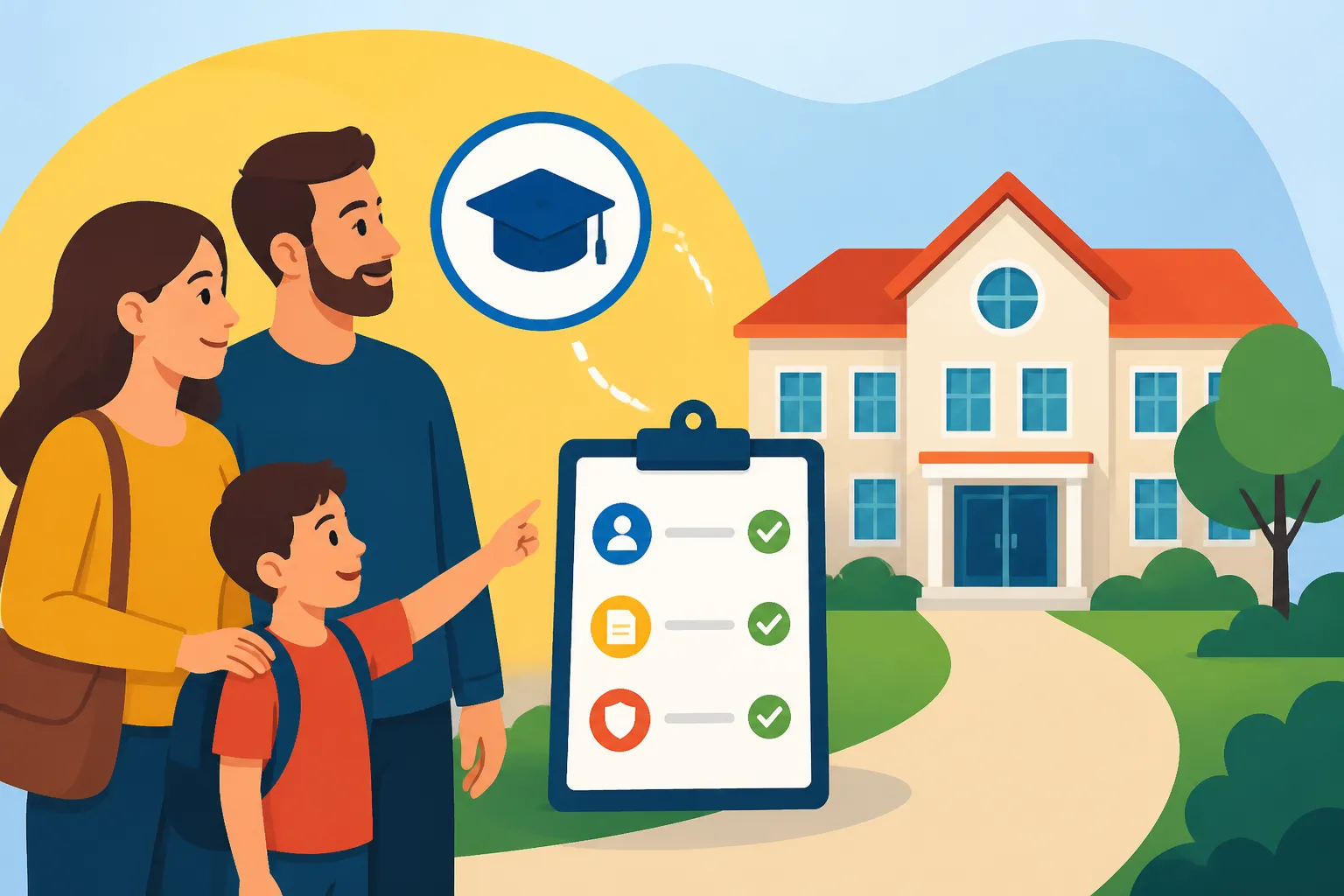
Here’s a breakdown of the typical documents you'll need for your child's school enrolment:
- Child’s Birth Certificate: This is fundamental. If issued outside Romania, it must be apostilled or superlegalized in the country of origin, then officially translated into Romanian by a certified translator, and finally notarized by a Romanian public notary. This process ensures its legal validity here.
- Child’s Passport or ID: A copy of the child’s identification document.
- Parent’s ID/Passport and Residence Permit: Copies of the legal guardian's identification and their valid Romanian residence permit or registration certificate.
- Proof of Address: A document proving your residence in Romania. This could be your rental contract (contract de închiriere) or property deed (act de proprietate), also usually translated and notarized if not originally in Romanian. This is crucial for determining the school's catchment area. Getting How to Get Proof of Address and Residence Documents in Romania can often be intertwined with your broader relocation process.
- Medical Certificate (Fișa Medicală): A certificate from a Romanian family doctor (medic de familie) or school doctor (medic școlar) stating the child is fit to attend school and indicating their vaccination status. This is a mandatory health check, and obtaining it often requires your child to have a Personal Numeric Code (CNP) already, which is essential for healthcare access. Our guide on How to Get Your CNP (Personal Numeric Code) for Healthcare Access in Romania explains this in detail.
- Previous School Records: While not always strictly mandatory for younger children, for those entering middle or high school, records from their previous educational institution (transcripts, last report card) are vital. These also need to be translated and potentially verified by the Romanian Ministry of Education, especially if they need to determine the equivalent grade level in the Romanian system.
- Application Form: This will be provided by the school itself.
Remember, the administrative burden can be heavy, but it's manageable. Organizations like Sirelo can sometimes assist with understanding general relocation processes, indirectly helping streamline your document preparation by connecting you with services, but for the specific school enrolment documents, you'll be navigating local notaries and translators. Always make multiple copies of everything and keep originals safe!
The Step-by-Step Enrolment Process
With your documents in hand and a clear understanding of the system, you're ready to tackle the actual enrolment. This process can vary slightly between cities and even individual schools, but generally follows a predictable path. Being proactive and persistent will serve you well.
Finding the Right School and Catchment Areas
Unlike some countries where parents have complete freedom to choose any school, Romania operates on a "catchment area" system, known as circumscripția școlară. This means your child is generally assigned to a public school based on your registered residential address. It's designed to ensure equitable distribution of students and facilities within a local community.
Your first step is to identify which public school corresponds to your address. This information is usually publicly available on the websites of local Inspectoratele Școlare Județene (County School Inspectorates) or directly at the city hall. Sometimes, asking neighbours or local expat groups can also provide quick insights. Once you know your assigned school, it's highly recommended to pay them a visit. While you might not be able to choose freely, visiting allows you to get a feel for the environment, meet staff (even if communication requires a translator), and understand the school's specific requirements or procedures. Some parents, particularly in larger cities like Bucharest or Cluj-Napoca, try to enrol their children in schools outside their designated catchment area. This is possible in theory, if there are available spots after all in-area children have been enrolled, but it's a more challenging process and requires a formal request and approval from the school director and potentially the Inspectoratul Școlar. It's not guaranteed, and priority will always be given to children from the local area.
Therefore, for a smoother experience, it's often best to embrace the local school assigned to your address. This choice also has an impact on practical aspects, such as the child's commute and their ability to forge friendships with neighbourhood children. Remember, finding How to Find and Rent Long-Term Accommodation in Romania that places you in a desirable school zone can significantly simplify this initial step.
Application Submission and Potential Interviews
Once you've identified your school, the formal application process begins. This usually takes place directly at the school's secretariat (administrative office).
You'll need to physically go to the school with all your meticulously prepared documents. The secretariat staff will provide you with the specific application form (cerere de înscriere) to fill out. This form will ask for basic details about your child, parents, and previous educational history. Be prepared for this process to be entirely in Romanian, so if your Romanian isn't up to par, bringing a Romanian-speaking friend or a professional translator is invaluable. Communication is key to ensuring all details are correctly submitted and understood.
For older children, particularly those entering middle or high school from a vastly different curriculum, the school might request an assessment or interview. This isn't usually an entrance exam in the competitive sense, but rather a way for the school to gauge your child's academic level, language proficiency, and help place them in the most appropriate grade or identify areas where they might need additional support. Don't be surprised if this involves a meeting with a school counselor or a relevant subject teacher. The goal is integration, not exclusion. Be open about your child's background and any language challenges, as this information can help the school prepare for their arrival. The period for enrolment typically runs from spring through early summer for the upcoming academic year, but specific dates are announced annually by the Ministry of Education. If you're arriving mid-year, the process might be more ad-hoc, requiring direct consultation with the school director.
Medical Checks and School Readiness
A crucial, and often overlooked, step in the enrolment process for Romanian public schools is the mandatory medical check. Before your child can officially start classes, you'll need to obtain a medical certificate, known as fișa medicală.
This certificate typically needs to be issued by a medic școlar (school doctor) or your child's medic de familie (family doctor) in Romania. The purpose is to ensure your child is healthy enough for school, to document their vaccination history, and to identify any special medical needs. If you haven't yet registered with a family doctor in Romania, this will be a prerequisite. Our guide, The Expat Guide to Finding a Family Doctor (Medic de Familie) in Romania, can help you navigate that essential step. The doctor will review your child's existing medical records (if you brought them from your home country, remember they may need translation) and administer any necessary vaccinations that are part of the Romanian national immunization schedule.
It's common for there to be specific deadlines for submitting this medical certificate, usually closer to the start of the academic year in September. Don't leave this until the last minute, as getting an appointment with a doctor and potentially undergoing any required tests can take time. The medical certificate often includes a general assessment of the child’s physical and mental development, confirming their readiness for the academic environment. It's a testament to Romania's focus on holistic child well-being within its educational framework.
Navigating Challenges and Settling In
Enrolling your child is just the first hurdle. The real journey begins as they settle into their new school. This period requires immense support, understanding, and proactive engagement from parents to help children navigate a new academic and cultural landscape.
Language Barriers and Support Systems
The language barrier is undoubtedly the most significant challenge for most expat children entering Romanian public schools. While children are incredibly resilient and soak up languages like sponges, the initial weeks and months can be isolating and frustrating.
As mentioned, public schools typically do not offer dedicated English as a Second Language (ESL) or Romanian as a Foreign Language (RFL) programs. This means your child will be thrown into the deep end, expected to learn Romanian alongside their peers. For parents, this means becoming a crucial part of their child's language learning support system. This might involve enrolling them in private Romanian language lessons outside of school, utilizing language learning apps like Duolingo or Memrise at home, and creating an environment that encourages speaking Romanian with local friends. Don't underestimate the power of everyday interactions – going to the park, shopping, and engaging in local activities are all opportunities for language practice.
It's vital to maintain open communication with the school, even if it requires a translator. Teachers might be able to offer informal support or connect you with resources. Remember that a strong grasp of Romanian is also essential for parents to understand homework, school announcements, and participate effectively in parent-teacher meetings. Consider our guide, Learning Romanian: A Complete Guide to Language Courses and Levels, for yourself and your child. Patience is key; celebrate small victories in language acquisition and provide consistent emotional support during what can be a challenging, but ultimately enriching, transition.
Cultural Adjustments and Parental Involvement
Beyond language, cultural differences in the classroom and school environment can also present a period of adjustment for expat children. Romanian schools, particularly public ones, might have different teaching methodologies, classroom dynamics, and social norms compared to what your child is used to.
Teaching styles might be more traditional, with a stronger emphasis on rote learning and teacher-led instruction, especially in older grades. Parent-teacher interactions might also differ; while parental involvement is valued, it may be structured differently, often through scheduled meetings or specific school events rather than informal drop-ins. Expats might find the communication more formal, and again, a translator can be crucial for ensuring mutual understanding during these interactions. Joining local expat parent groups can be a lifesaver here, offering a network for sharing experiences, advice, and tips on navigating school culture. These groups often discuss everything from homework help to managing school holidays.
Parents are generally expected to be actively involved in their child's education, from monitoring homework to attending school assemblies and contributing to class funds for various activities or supplies. While the formal fees are non-existent, there can be informal contributions for things like class trips, school supplies, or gifts for teachers. It's part of the local culture of supporting the school community. Embrace these opportunities to engage; it helps both you and your child integrate more fully. A little cultural sensitivity and an open mind can go a long way in making this transition smoother for everyone.
Extracurricular Activities and Social Integration
School isn't just about academics; it's also about social development and exploring interests. For expat children, participating in extracurricular activities can be a fantastic way to make friends, practice Romanian, and feel more connected to their new environment.
Romanian public schools do offer extracurricular activities, though the range and availability can vary significantly from school to school and depend on resources and teacher initiatives. Common options might include sports clubs (e.g., football, handball), art clubs, music classes, drama groups, or chess clubs. These activities are often offered after school hours and can be a fantastic outlet for children to pursue hobbies and interact with peers in a less academically focused setting. In some cases, these might incur a small fee or require parental volunteer support. To discover what's available, inquire directly at the school secretariat or with your child's teacher.
Encouraging your child to participate is key to their social integration. It provides a natural environment for building friendships, developing a sense of belonging, and practicing their Romanian in a fun, low-pressure setting. Beyond school, explore local community centers (case de cultură or centre de tineret) which often offer a wider array of affordable courses and workshops, from traditional dance to various sports. These outside activities complement school life and accelerate the integration process. For families moving here, preparing for all aspects of relocation, including children's integration, is a big task. Utilizing services like Sirelo to organize your move can free up mental space to focus on these important aspects of your child's well-being. Keeping connected digitally is also important, and having a reliable eSIM from providers like Airalo can ensure you're always able to coordinate after-school activities or communicate with other parents, even if you're out and about.
Comparing Public Schools with Alternatives
While this guide focuses on public schools, it's important for expat families to understand the broader educational landscape in Romania and how public options stack up against private or international alternatives. Each choice comes with its own set of advantages and considerations.
Public vs. Private and International Schools
The decision between public, private, or international schools is a deeply personal one, influenced by factors like budget, language proficiency, long-term plans, and desired curriculum.
Public Schools (Școli de Stat):
- Pros: Free tuition (excluding potential small voluntary contributions and materials). Full immersion in Romanian language and culture, leading to rapid language acquisition and deep integration. Follows the Romanian national curriculum, preparing students for Romanian universities. Readily available in most communities.
- Cons: Instruction is exclusively in Romanian, posing significant challenges for non-Romanian speakers without external support. Curriculum and teaching methods might differ from what expats are accustomed to. Facilities can vary greatly and may not always be as modern as private institutions. Lack of dedicated ESL support.
Private Schools (Școli Private):
- Pros: Often smaller class sizes, potentially more modern facilities, and a broader range of extracurricular activities. Some private Romanian schools might offer enhanced foreign language instruction or a slightly adapted curriculum. They still follow the national curriculum but often with more resources.
- Cons: Tuition fees, which can be significant. Still primarily Romanian-language instruction.
International Schools:
- Pros: Instruction typically in English, French, German, or other major languages. Offer international curricula (e.g., IB, British, American), ensuring continuity for highly mobile expat families. Often boast excellent facilities, diverse student bodies, and strong extracurricular programs. Provides a familiar environment for children who are not yet fluent in Romanian.
- Cons: Very high tuition fees, often a major budget item for expat families. Can sometimes create a "bubble" effect, limiting a child's interaction with local Romanian culture and language. Availability is usually limited to major cities like Bucharest, Cluj-Napoca, or Timișoara.
The choice really boils down to your family's unique circumstances. If language immersion and cultural integration are top priorities and your budget is tight, a public school is an excellent, albeit challenging, route. If you plan to move frequently or prioritize a consistent international curriculum and English-language instruction, an international school might be more suitable. For a similar comprehensive analysis in a different context, you can refer to our guide on Public vs Private Healthcare in Romania: Which Should Expats Choose? which explores the nuances of choice based on cost, quality, and accessibility.
Cost Implications and Financial Planning
While public education in Romania is technically free, it’s a misconception to think it’s entirely without cost for parents. Expats enrolling their children in public schools should factor in several "hidden" or indirect expenses into their budget.
Firstly, there are costs associated with school supplies and textbooks. While basic textbooks might be provided, additional workbooks, notebooks, art supplies, and general stationery are typically purchased by parents. These costs are usually manageable but add up, especially if you have multiple children. Secondly, some schools might request voluntary contributions to a class fund, which is used for things like classroom improvements, celebration supplies, or small gifts for teachers. While voluntary, most parents contribute to these funds.
Beyond the classroom, consider extracurricular activities if the school offers them for a fee, or if you opt for external clubs and lessons to supplement your child's interests. The biggest financial consideration, particularly for children new to the language, will likely be private Romanian language tutoring. This can range from €15-€30 per hour or more, depending on the tutor's experience and location. It's often a critical investment to help your child catch up and keep pace with the curriculum. Other costs might include school trips, uniforms (if required by the school), and transportation. For a broader understanding of family budgeting in Romania, our article on The Complete Guide to Cost of Living in Romania for Expats (2026) can provide useful insights into managing your finances effectively. Preparing for these additional costs will ensure a smoother educational journey for your child.
Disclaimer
The information provided in this guide is intended for general informational purposes only and does not constitute legal, financial, or educational advice. While we strive to provide accurate and up-to-date information, regulations and procedures in Romania can change. We recommend consulting with official Romanian education authorities, legal professionals, and individual schools for the most current and personalized advice regarding your child's enrolment.