Prescription Medications and Pharmacies in Romania: The Complete Guide
Standing in a dimly lit pharmacy in Bucharest while a queue of impatient locals sighs behind you is a rite of passage for every expat. Navigating the world of Romanian prescriptions, deciphering the "compensated" medication lists, and understanding why you can't buy basic antibiotics over the counter can be incredibly overwhelming. This guide breaks down everything you need to know about pharmacies and medication in Romania to ensure you never leave a "Farmacie" empty-handed or confused.
Understanding the Romanian Pharmacy Landscape
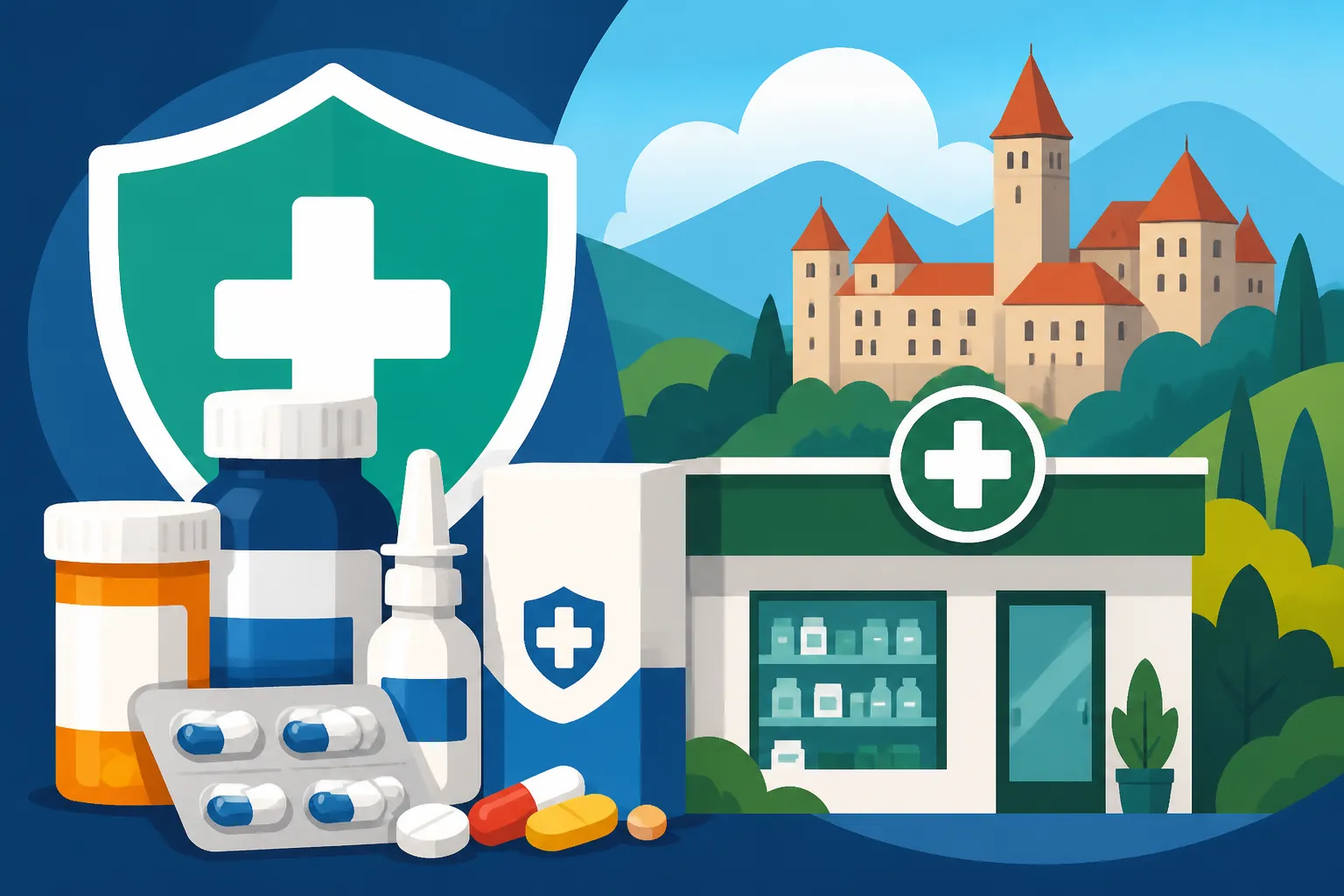
When you first arrive in Romania, you will notice that pharmacies, or "farmacii," are almost as common as coffee shops. They are easily identified by the bright green neon crosses that line the boulevards of cities like Cluj-Napoca, Timișoara, and Iași. However, just because there is one on every corner does not mean they are all created equal. Understanding the difference between the massive corporate chains and the smaller independent shops is the first step toward managing your health effectively.
The market is dominated by several large chains, including Dr. Max (which recently absorbed many Sensiblu and Punto locations), Catena, Dona, and Help Net. Catena is often recognized by its vibrant interior and frequent "pensioner" discounts, making it a very busy spot during morning hours. Dr. Max tends to have a more modern, streamlined feel and often carries a wider variety of international dermato-cosmetic brands. While these chains offer consistency, you might find that smaller, independent pharmacies in residential neighborhoods offer a more personal touch, which can be invaluable when you are trying to explain a specific medical need in broken Romanian.
The role of the pharmacist in Romania is significantly more clinical than in some other Western countries. Pharmacists here are highly trained medical professionals who are often comfortable suggesting alternatives or offering preliminary diagnostic advice for minor ailments. They are not merely retail clerks. If you walk in with a cough, don't be surprised if the pharmacist asks several detailed questions about your symptoms before handing you a bottle of syrup. This level of involvement is a double-edged sword; it provides an extra layer of safety, but it also means transactions can take much longer than you might expect.
One thing to keep in mind is that a "farmacie" is strictly for medication and medical supplies. Unlike American drugstores, you won't find aisles of snacks, magazines, or household cleaning supplies here. You might find some specialized orthopedic shoes, baby formula, or high-end skincare, but the focus remains squarely on health. If you are looking for simple vitamins or herbal teas, you might also visit a "Plafar," which is a traditional Romanian health shop specializing in natural remedies, though these cannot dispense regulated prescription medications.
How Prescriptions Work in Romania
The prescription system in Romania has undergone a massive digital transformation over the last decade. Gone are the days of trying to read a doctor’s illegible handwriting on a scrap of paper. Today, the system revolves around the "Rețeta Electronică," or electronic prescription. When you visit a doctor, whether in the public or private sector, they will enter your medication into a national database linked to your CNP (Personal Numeric Code). Even so, you will almost always be handed a printed copy of this prescription, complete with a barcode and several stamps.
This printed document is vital. Even though the prescription exists in the digital cloud, the physical paper is what the pharmacist will scan to "release" the medication. You will need to present this paper along with your ID card or residence permit. For those who have already integrated into the local system, Understanding the Electronic Prescription (Rețeta Electronică) System in Romania is essential knowledge, as it explains how the barcode ties into your medical history and insurance status. If you are an expat just starting out, ensure your doctor has your correct CNP, or the pharmacy will not be able to process any subsidized medications.
One of the most confusing aspects for foreigners is the "compensated" medication list. In Romania, the government subsidizes a vast range of drugs, categorized into lists (A, B, C, and D). Depending on your medical condition and your insurance status, a medication might be 50%, 70%, 90%, or even 100% covered by the state. To access these discounts, you must be a contributor to the national health fund. This is why you will often see locals paying only a few lei for expensive chronic disease medications, while an uninsured foreigner might pay the full market price. Knowing How Do I Use an Electronic Prescription at a Pharmacy in Romania? can save you a lot of time at the counter, especially if you are trying to understand why your bill is different from the person in front of you.
Prescriptions also have strict validity periods. A standard prescription for an acute illness (like an infection) is typically valid for only a few days or weeks. For chronic conditions, a doctor might issue a prescription that allows you to collect medication for 30, 60, or 90 days. If you miss your window, the electronic system will "lock" the prescription, and you will have to return to your The Expat Guide to Finding a Family Doctor (Medic de Familie) in Romania to have a new one issued. This bureaucratic hurdle is a frequent source of frustration for expats, so it’s wise to set calendar reminders for your refills.
Navigating Over-the-Counter (OTC) and Restricted Drugs
The availability of over-the-counter (OTC) medication in Romania might surprise you. Some drugs that require a prescription in North America or Northern Europe, such as certain high-strength anti-inflammatories or specific creams, can sometimes be bought by simply asking the pharmacist. However, the opposite is true for antibiotics and psychoactive drugs. Romania has implemented very strict regulations to combat antibiotic resistance, meaning you cannot buy even a basic Z-pack without a valid prescription from a licensed doctor.
If you find yourself in a situation where you are unwell on a weekend and cannot reach a doctor, some pharmacists have the legal discretion to dispense a "48-hour emergency dose" of certain medications, including antibiotics. However, this is not a guaranteed right; the pharmacist must be convinced of the emergency, and you will still be expected to see a doctor immediately after to get a full prescription. This rule is often applied strictly in big cities like Bucharest, though you might find more leniency in smaller rural towns.
Another common hurdle is the difference in brand names. You won't find "Tylenol" or "Advil" on the shelves here. Instead, you need to look for the generic names: Paracetamol and Ibuprofen. For common colds, brands like Nurofen, Coldrex, and Fervex are the local staples. If you are looking for something specific from your home country, it is highly recommended to look up the active ingredient (the chemical name) before going to the pharmacy. The pharmacist can then check their database for a local equivalent.
For those requiring strong painkillers or medications for ADHD or anxiety, be prepared for significant red tape. These are classified as "regim special" (special regime) and require a specific type of green or yellow prescription form that only certain specialists can sign. These prescriptions are tracked meticulously, and not every pharmacy is authorized to stock these medications. If you are moving to Romania with these types of requirements, it is crucial to start the process of Registering for Public Health Insurance (CASS) in Romania (2027) as early as possible so you can get a local specialist to take over your care.
The Cost of Medications and Health Insurance
The cost of healthcare and medication is generally lower in Romania than in Western Europe or the US, but it can still add up if you are paying entirely out of pocket. For expats, the price you pay depends heavily on whether you are "insured" in the eyes of the Romanian state. The National Health Insurance House (CNAS) regulates the prices of most essential medications. If you have a residency permit and are paying your social contributions, you are entitled to the same subsidized rates as any Romanian citizen.
If you are not yet part of the public system, you will be paying the "uncompensated" price. While still affordable for basic items, specialized biological drugs or advanced cancer treatments can be very expensive. This is where private insurance becomes a lifesaver. Many expats use international plans like SafetyWing, which can be particularly useful for digital nomads or those in the "waiting period" for their local residency. SafetyWing can provide coverage for unexpected illnesses and, depending on the plan, may allow you to claim back the costs of medications prescribed during an emergency. It acts as a vital bridge while you are navigating the complexities of How Romania's Health Insurance House (CNAS) Works: A Full Overview.
For those using the public system, the process involves the pharmacist scanning your "Card de Sănătate" (Health Card). This card is a small plastic chip card that you receive after being registered in the system for a few months. Without this card, even with a valid prescription, the pharmacist cannot apply the state discount. If you haven't received your card yet, you will need a paper certificate from the CNAS office proving your insured status. This is one of those "hidden" bureaucratic steps that often trips up new arrivals.
| Service/Chain | Availability | English Proficiency | Best For |
|---|---|---|---|
| Dr. Max | Everywhere | High in cities | Dermato-cosmetics and general RX |
| Catena | Everywhere | Moderate | Subsidized (compensated) meds |
| Farmacia Tei | Selected Cities | High | Low prices and bulk medical supplies |
| 24-Hour Pharmacies | Major Hubs | Variable | Emergencies and late-night refills |
Pricing transparency in Romania is actually quite good. Most pharmacies have digital screens or stickers on the boxes, and the government maintains a public database (CANAMED) of the maximum allowed prices for prescription drugs. If you feel you are being overcharged, you can always ask for a "bon fiscal" (receipt) and check the prices online. It is also worth noting that "Farmacia Tei" has gained legendary status among both locals and expats for having the lowest prices in the country. Their stores, particularly in Bucharest and Constanța, often have long lines, but the savings on non-prescription items and supplements are significant.
Language Barriers and Communication Tips
While many young pharmacists in larger cities speak excellent English, you cannot always count on it, especially in the middle of a night shift or in less international neighborhoods. The fear of not being understood when you are in pain or sick is real. However, with a few key phrases and a bit of preparation, you can navigate the interaction smoothly. Always start with a polite "Bună ziua" (Good day) and ask "Vorbiți engleză?" (Do you speak English?).
If they don't speak English, have your symptoms written down or translated on your phone. Key words to know include:
- Durere (Pain)
- Febră (Fever)
- Tuse (Cough)
- Răceală (Cold/Flu)
- Rețetă (Prescription)
- Prospect (The medicine leaflet/instructions)
One common cultural quirk in Romanian pharmacies is "substitution." If the specific brand your doctor wrote on the prescription is out of stock, the pharmacist will likely offer you a "generic" version with the same active ingredient. They are legally required to offer you the cheapest version available if the medication is compensated. Don't be alarmed by this; it is standard practice. However, if you are strictly loyal to a specific brand (like wanting Panadol instead of a generic paracetamol), you should state that clearly.
To avoid confusion regarding dosage, always ask the pharmacist to write the instructions on the box. They will usually write something like "1 caps. la 8 ore" (1 capsule every 8 hours). If you are unsure about the instructions, ask The Cost of Healthcare in Romania: A Complete Breakdown for Foreigners (2026) for a general idea of how medical costs and instructions are structured. It is also worth checking if the pharmacy has a "consultation room"—some larger pharmacies have a small private area where you can discuss more sensitive health issues with the pharmacist away from the line.
Special Situations: Emergency Care and Chronic Illness
If you find yourself needing medication at 3:00 AM, you need a "Farmacie Non-Stop." Every major city has at least one or two pharmacies designated to stay open 24/7. In Bucharest, these are often located near major hospitals or transport hubs like Gara de Nord or Piața Victoriei. You can find these by searching for What Pharmacies Are Open Late or 24 Hours in Bucharest or the equivalent for your city. Be prepared to ring a bell at a small night-window; the main doors are usually locked after 10:00 PM for security reasons.
Managing a chronic illness as an expat requires a proactive approach. If you are moving to Romania with a pre-existing condition, do not assume you can just walk into a pharmacy with a prescription from your home country. While some pharmacists might accept an EU prescription, many will refuse it because it cannot be entered into the local electronic system. The best course of action is to bring a 3-month supply of your meds from home, along with a translated medical letter, and immediately find a local specialist.
Can you import medication? Technically, yes, for personal use, but it can be a nightmare at customs if the drugs are regulated. It is much safer to get a local equivalent. If you are wondering, Can I Use a Foreign Prescription at a Romanian Pharmacy? the answer is "maybe" for EU citizens with a cross-border prescription, but "no" for most non-EU citizens. For non-EU expats, the local doctor is your only reliable path to long-term medication access.
For parents, the rules for pediatric medication are similar. Most children's medications for fever or pain are available OTC, but anything involving a suspected infection will require a visit to a pediatrician. If your child is enrolled in the local system, many of their medications might be 100% compensated. This is a huge benefit of the Romanian system that many expats overlook. Just make sure you have their birth certificate and your residency documents in order.
Practical Tips for Expats
Navigating the system becomes second nature after a few months, but here are some veteran tips to keep you ahead of the curve. First, always check stock online before trekking across the city. Chains like Dr. Max and Farmacia Tei have excellent websites where you can see which specific branch has your medication in stock. This is particularly useful for rare medications that aren't kept in every neighborhood shop. You can even check if Can I Get My Prescriptions Delivered in Romania? is an option; while prescription drugs usually cannot be delivered, many OTC items can be sent to your door via apps like Tazz or Glovo.
Second, keep a digital folder on your phone with photos of your prescriptions, your Health Card, and your residence permit. Romanian bureaucracy loves paper, but having a digital backup can save you if you lose the physical copy or if a pharmacist needs to cross-reference a past dosage. If you are ever in doubt about the quality of care or the legitimacy of a system, remember that the Romanian healthcare system is part of the EU network and follows strict EMA (European Medicines Agency) guidelines. You are in safe hands, even if the process feels archaic at times.
Third, be aware of the "lack of stock" phenomenon. Occasionally, Romania faces shortages of certain imported drugs due to pricing disputes between the government and manufacturers. If your medication is unavailable, don't panic. Ask the pharmacist for the "substanță activă" (active ingredient) and see if there is a different brand or a locally manufactured version available. Often, the Romanian-made version (from companies like Antibiotice Iași or Terapia Cluj) is just as effective and significantly cheaper.
Finally, remember that your pharmacy experience is just one part of the broader medical journey. If you are feeling overwhelmed, take a step back and read The Complete Guide to Healthcare in Romania for Expats (2027) to get a bird's-eye view of how all these pieces—doctors, hospitals, insurance, and pharmacies—fit together. With a bit of patience and the right information, you will find that the Romanian healthcare system, while complex, is quite robust and accessible.
Disclaimer
The information provided in this guide is for informational purposes only and does not constitute medical or legal advice. Always consult with a qualified healthcare professional or a licensed pharmacist in Romania regarding your specific health needs and medication requirements. Regulations and healthcare policies in Romania are subject to change, and while we strive for accuracy, you should verify any critical information with official government sources or your local embassy.