What Is the VAT Registration Threshold in Romania?
Navigating the labyrinthine world of Romanian taxes as an expat can often feel like trying to solve a Rubik's Cube blindfolded. One of the most common questions, and frankly, sources of anxiety, for foreign entrepreneurs, freelancers, or anyone starting a small business here, revolves around VAT – or as it's known locally, TVA. This guide aims to pull back the curtain on the VAT registration threshold in Romania, helping you understand when and why you need to get involved with this particular tax, and what to do when that moment arrives.
The Foundations of VAT in Romania: Understanding TVA
First things first, let's break down what TVA (Taxa pe Valoarea Adăugată) actually is. For those coming from outside the EU, the concept of Value Added Tax might be entirely new, and even for those from VAT-operating countries, Romania has its own flavour of bureaucracy that can make things feel a bit different.
What Is TVA (Taxa pe Valoarea Adăugată)?
TVA, or VAT as you might know it, is essentially a consumption tax. It's an indirect tax levied on most goods and services that are bought and sold for use or consumption within Romania. Think of it this way: when you purchase an item from a shop or pay for a service, a portion of that price goes towards TVA. Businesses collect this tax from their customers and then periodically pay it over to the state, specifically to ANAF (Agenția Națională de Administrare Fiscală), the Romanian tax authority.
The core idea behind VAT is that each step in the production and distribution chain adds value, and a tax is applied to that added value. However, only the final consumer truly "bears" the cost, as businesses that are VAT-registered can typically reclaim the VAT they pay on their own purchases (input VAT) against the VAT they collect from their sales (output VAT). This mechanism is designed to prevent double taxation within the supply chain.
For example, if you run a small consulting business, the fee you charge your client might include TVA. When you pay your utility bills for your office, those bills also include TVA. If you're a VAT-registered entity, you'd collect TVA from your clients and then, at the end of the tax period, subtract the TVA you've paid on your expenses before remitting the net amount to the state. It sounds straightforward in theory, but the practical application requires careful record-keeping and understanding the specific rates and rules. The standard VAT rate in Romania is 19%, but there are reduced rates of 9% and 5% for certain goods and services, like food, water, medical products, hotel accommodation, and cultural events.
Why Expats Need to Care About VAT
As an expat running any kind of economic activity in Romania, whether you're a freelancer, a PFA (Persoană Fizică Autorizată – authorized natural person), or managing a micro-enterprise, understanding VAT is absolutely critical. Ignoring it or misunderstanding the rules can lead to significant financial penalties, fines, and a whole lot of stress with the tax authorities.
Many expats come here and start small businesses, offering services remotely or locally, without initially grasping the nuances of Romanian tax law. You might be invoicing clients in different currencies or even working for clients outside Romania. This is where things can get tricky, as cross-border transactions have their own set of VAT rules. The responsibility to comply with VAT regulations ultimately falls on you, the business owner. If you hit the threshold and fail to register, you could be liable for all the uncollected VAT from your sales, plus penalties and interest. Trust me, you don't want to find yourself in a situation where ANAF comes knocking with a hefty bill.
Moreover, if you plan to do business with other VAT-registered companies, especially within the EU, they will expect you to be VAT-registered yourself. It facilitates transactions and avoids complications for them. So, even if you’re below the threshold, there might be strategic reasons to voluntarily register, which we'll touch upon later. It's all part of The Complete Guide to Taxes in Romania for Expats (2027) and something every new arrival needs to grapple with.
Deciphering the VAT Registration Threshold for Businesses and PFAs
The million-lei question, often literally, is "When do I have to register for VAT in Romania?" This isn't a simple yes or no answer; it depends on your specific economic activity and, crucially, your turnover.
The Standard Threshold for Goods and Services
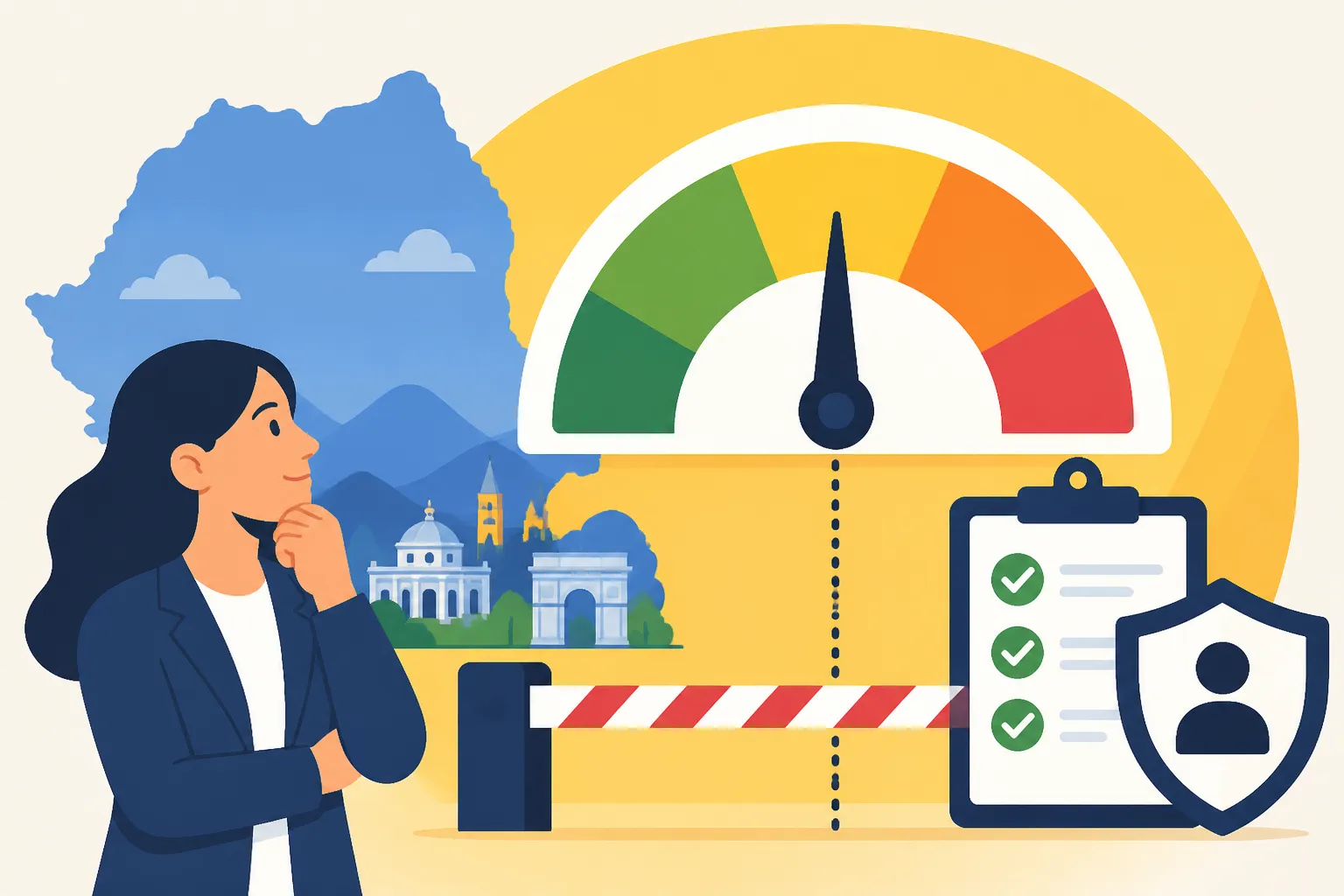
For most domestic economic activities involving the sale of goods or the provision of services, the standard VAT registration threshold in Romania is RON 300,000. This figure refers to your total annual turnover, excluding VAT, from all taxable transactions performed in Romania.
Let's break that down:
- RON 300,000: This is the magic number. As of my last check, this threshold has remained consistent for a while, providing some stability in a sometimes-changing tax landscape. To give you a rough idea, this currently translates to approximately €60,000-€61,000, though exchange rates always fluctuate, so always refer to the RON amount.
- Annual Turnover: This is key. It's not your profit, but your total revenue generated from your economic activities. Every single sale, every service rendered, contributes to this figure. It's measured on a calendar year basis.
- Excluding VAT: If you're already charging VAT (for example, if you voluntarily registered or were previously registered), you exclude the VAT amount from your turnover calculation for the threshold. For most starting out, this won't apply as they'll be below the threshold and not charging VAT anyway.
- Taxable Transactions: This generally means transactions that are subject to Romanian VAT, not exempt supplies (like certain medical or educational services, although these are specific and rare for most expat businesses).
So, the moment your cumulative turnover from your economic activities in Romania, within a calendar year, exceeds RON 300,000, you are legally obligated to register for VAT. You cannot just ignore it hoping it will go away. The clock starts ticking from January 1st to December 31st. If you cross this threshold at any point during the year, you need to act.
Scenario Example:
Imagine you started a graphic design PFA in February. By September, you've landed several fantastic local clients and your total invoices for the year, without any VAT included, sum up to RON 310,000. Congratulations, you've just crossed the threshold! You now have a strict deadline to notify ANAF and begin the registration process. Failing to do so can result in significant fines and backdated VAT payments. This proactive monitoring of your income is crucial for any freelancer or small business owner in Romania. It’s part of the wider framework of How to Pay Taxes as a PFA in Romania.
When Does the Threshold Not Apply? Special Cases
While the RON 300,000 threshold covers many situations, there are indeed special cases where you might need to register for VAT regardless of your turnover, or where different rules apply. This is where it gets a bit more complex, and often, professional advice from an accountant becomes invaluable.
Here are a few common scenarios:
- Intra-Community Acquisitions (ICA): If you purchase goods from another EU country for your business in Romania, and the value of these purchases exceeds RON 34,000 within a calendar year, you are generally required to register for VAT for these specific transactions. This is often handled through a reverse charge mechanism, meaning you declare both the input and output VAT, so it's often fiscally neutral but requires registration.
- Distance Sales: If you are selling goods online from Romania directly to end-consumers in other EU countries, and your total sales to all other EU countries exceed €10,000 per year, you will need to register for VAT in the consumers' countries or use the One-Stop Shop (OSS) scheme for EU VAT compliance. This is a crucial point for e-commerce businesses.
- Services to EU VAT-Registered Businesses (B2B): If you provide services to a business client in another EU country that is VAT-registered there, Romania applies a reverse charge mechanism. This means your invoice won't include Romanian VAT, but you'll need a valid VAT number (VIES number) and will declare these transactions. You won't be charged VAT in the client's country either; they will account for it. This requires you to be registered for VAT for intra-community operations, even if your domestic turnover is below RON 300,000.
- Voluntary Registration: You can, in fact, choose to register for VAT even if your turnover is well below the RON 300,000 threshold. Why would you do this? The main reason is to be able to reclaim input VAT. If your business has significant expenses on which you pay VAT (e.g., buying expensive equipment, renting office space with VAT), being VAT-registered allows you to reclaim that VAT, which can significantly reduce your costs. This is often a strategic decision, especially for businesses with high initial investments or those primarily serving VAT-registered clients who prefer to deal with other VAT-registered entities. However, remember that once you register, you also have the administrative burden of collecting and remitting VAT, and filing regular declarations.
Understanding these special scenarios is paramount. Many expats, especially those in tech or consulting, frequently engage in cross-border services, making knowledge of the reverse charge and VIES registration critical. This area can be confusing, highlighting why it's so important to have a solid grasp of Understanding the Micro-Enterprise Tax Regime in Romania and how it interacts with VAT.
Calculating Your Turnover: What Counts and What Doesn't
When you're trying to figure out if you're nearing that RON 300,000 threshold, accurate calculation of your turnover is essential. It's not just about adding up every payment you receive; there are specific rules.
What Counts Towards the Threshold:
- Sales of Goods: Any goods you sell within Romania, whether new or used, are generally included.
- Provision of Services: Fees from services rendered in Romania (e.g., consulting, web development, translation, teaching, design) count towards your turnover.
- Rental Income (for certain activities): While typically exempt, if renting is part of an ongoing commercial activity (e.g., short-term tourist rentals managed like a business), it might be included, so it's best to check with an expert.
- Payments in kind: If you receive goods or services as payment instead of money, their market value should generally be included.
- Advance payments: Payments received in advance for goods or services to be delivered later also count towards the turnover at the moment the advance is received.
What Doesn't Count Towards the Threshold (generally):
- Sales of fixed assets: Selling property or significant equipment that was used for your business, but not your core activity, usually doesn't count towards the VAT turnover threshold. This is distinct from, say, a car dealership selling cars.
- Exempt transactions: Certain types of transactions are explicitly exempt from VAT, such as specific financial services, insurance, and some educational or medical services. If your business primarily deals with these, they won't count towards the threshold.
- EU Intra-Community Supplies of Goods: If you sell goods to a VAT-registered business in another EU country and these goods are shipped there, these are typically zero-rated and don't count towards your Romanian threshold, though they require specific reporting.
- Services to non-EU clients: For many service-based expats (like IT consultants working for US companies), services provided to clients outside the EU are generally outside the scope of EU VAT, meaning they don't count towards your Romanian VAT threshold, nor do you charge VAT on them. However, you'll still need to declare them for income tax purposes as per How to Report Foreign Income to ANAF in Romania.
Monitoring Your Turnover:
The best way to stay on top of this is through diligent record-keeping. Whether you use simple spreadsheets, accounting software, or work with a local accountant (which I highly recommend), you need a clear, running total of your income. Many freelancers receive payments in foreign currencies (EUR, USD, GBP) via services like Wise. For VAT threshold purposes, you need to convert these amounts to RON using the exchange rate on the date the invoice was issued or the payment was received, depending on your accounting method.
Setting up a reliable system to track all your incoming funds, categorize them, and convert them to RON is not just good practice, it's essential for compliance. This continuous monitoring prevents nasty surprises when you suddenly realize you've crossed the threshold without registering.
The Process: What Happens When You Hit the Threshold (or choose to register)
So, you've crunched the numbers, or perhaps had a quick check with your accountant, and you've realised you've either sailed past the RON 300,000 threshold or strategically decided that voluntary registration is the way to go. What now? It’s time to engage with the authorities, which can feel like another administrative mountain for an expat.
Notifying ANAF and the Registration Process
The moment your turnover exceeds the RON 300,000 threshold, you have a legal obligation to inform ANAF. Specifically, you must submit a declaration to the competent tax authority within 10 days of the end of the month in which you exceeded the threshold. For instance, if you cross it on September 25th, you have until October 10th to file.
Here's a general outline of the steps and documents typically involved:
-
Preparation of Documents:
- Application Form: You'll need to fill out a specific form, generally Form 010 (for legal entities, including micro-enterprises) or Form 070 (for PFAs and other individual entrepreneurs). These forms are declarations for registration/modification/cancellation of tax vectors.
- Proof of Turnover: You'll need to submit supporting documentation proving that you've exceeded the threshold. This usually means a detailed turnover report from your accounting records, showing all invoices issued, payment receipts, or other relevant financial statements.
- Company Registration Documents (if applicable): For SRLs (limited liability companies), your company's registration certificate from the Trade Register will be needed. For PFAs, your PFA registration documents.
- Personal Identification: Your passport, residence permit, and your Romanian Personal Numeric Code (CNP) will also be required.
- Bank Account Details: Information about your Romanian bank account where you'll receive/make VAT payments.
- Contract with Accountant: Often, ANAF will want to see that you have an accountant who will manage your VAT obligations, especially for companies.
-
Submission to ANAF:
- The forms and supporting documents are submitted to the local ANAF office where your business is registered.
- While in the past, physical submission was common, ANAF is increasingly pushing for digital interaction through their "Virtual Private Space" (SPV). Your accountant will almost certainly use the SPV for submission. You can learn more about this by reading Understanding the ANAF SPV Virtual Private Space in Romania.
- The process involves a review by ANAF. They might ask for additional clarifications or documents.
-
VAT Registration (Obtaining a VIES Number):
- Once your application is approved, ANAF will issue you a VAT registration code, which will be the same as your company's unique identification code (CUI) or your PFA's fiscal registration code, but with the prefix "RO." This RO-prefixed number is your valid VAT number for domestic and intra-community transactions.
- If you plan to deal with other EU businesses (for goods or services), you'll also need to be registered in the VIES (VAT Information Exchange System) database. This is usually part of the standard VAT registration process when you apply, but it's worth confirming.
The entire process, from submission to receiving your VAT code, can take anywhere from a few days to a few weeks, depending on your local ANAF office and the completeness of your documents. It's not a quick rubber stamp, so don't leave it to the last minute! This journey is detailed more extensively in How to Register for VAT (TVA) in Romania.
Navigating VAT Once Registered: Obligations and Benefits
Once you're officially VAT-registered, a new set of responsibilities and, yes, some benefits, come into play. It's a significant administrative shift from being a non-VAT payer.
Key Obligations:
- Issuing VAT-Inclusive Invoices: All your invoices for taxable supplies (unless subject to reverse charge or specific exemptions) must now include VAT at the applicable rate. You'll need to clearly state the VAT amount, the net amount, and the gross total.
- Maintaining Accurate Records: Your bookkeeping needs to be meticulous. You must keep detailed records of all your sales (output VAT) and all your purchases (input VAT), including invoices, receipts, and other relevant documents.
- Filing VAT Declarations: You'll be required to file regular VAT declarations with ANAF. For most businesses, this is monthly, but for smaller entities, it might be quarterly.
- Declaration 300 (D300): This is your main VAT return, where you declare your total output VAT, total input VAT, and the net amount owed to or reclaimable from ANAF.
- Declaration 394 (D394): This is a summary declaration of all your domestic VAT-taxable transactions with other Romanian entities.
- Declaration 390 (D390): If you conduct intra-community transactions (buying or selling goods/services to/from other EU VAT-registered businesses), you'll need to file this declaration, usually monthly.
- Paying VAT: If your output VAT exceeds your input VAT, you'll need to remit the difference to ANAF by the deadline (usually the 25th of the month following the reporting period). If you're due a refund, it will be processed, though often with a bit of a wait and potentially an audit.
- VAT Group Registration: In specific cases, if you own multiple companies in Romania, you might consider VAT group registration, but this is for more complex setups.
Benefits of VAT Registration:
- Reclaiming Input VAT: This is the most significant financial benefit. Any VAT you pay on goods and services for your business (e.g., office supplies, rent, utilities, business trips) can be reclaimed from ANAF. This can lead to substantial savings, especially if you have high business expenses.
- Professional Credibility: Being VAT-registered often lends more credibility, especially when dealing with larger companies or international clients. It signifies that your business is established and compliant with tax regulations. Many B2B clients prefer to work with VAT-registered suppliers to simplify their own accounting.
- Access to EU Market Mechanisms: VAT registration, particularly VIES registration, is essential for engaging in seamless intra-community trade and services under the reverse charge mechanism.
The administrative burden of VAT compliance is not trivial, and this is where the value of a good Romanian accountant truly shines. They can help you prepare and file your declarations, ensure compliance, and even handle communication with ANAF. Platforms like Taxes for Expats also provide invaluable guidance and services for navigating these complexities, offering peace of mind to foreign residents.
| Key Aspect | Below RON 300,000 Threshold (Non-VAT Payer) | Above RON 300,000 Threshold (VAT-Registered) |
|---|---|---|
| Invoicing | Invoices do NOT include VAT. | Invoices MUST include VAT (except exemptions/reverse charge). |
| VAT Reclaim | Cannot reclaim VAT on purchases. | CAN reclaim input VAT on business purchases. |
| ANAF Declarations | Fewer, simpler declarations (e.g., Declarația Unică for income). | Regular, more complex VAT declarations (D300, D394, D390). |
| Compliance Burden | Lower administrative burden. | Higher administrative burden, requires meticulous bookkeeping. |
| Intra-Community Trade | Limited, or special rules apply (e.g., RON 34,000 ICA limit). | Smoother transactions with other EU VAT-registered entities. |
| Customer Base | Often preferred by end-consumers for slightly lower prices (no VAT). | Preferred by VAT-registered businesses (can reclaim VAT). |
Practical Advice and Common Expat Pitfalls
As an expat who's been through the Romanian administrative wringer more times than I care to admit, I can tell you that preparation and vigilance are your best friends. VAT is one of those areas where a small oversight can quickly escalate into a big problem.
Keeping Track and Staying Compliant
The cornerstone of successful VAT compliance is meticulous record-keeping. This isn't just a suggestion; it's a necessity.
- Dedicated Accounting Software: Consider investing in accounting software that can help you track your income, expenses, and automatically generate reports for your accountant. There are many options available, both local and international, that can be tailored to Romanian tax rules.
- Regular Turnover Checks: Don't wait until the end of the year to check your turnover. Make it a habit to review your cumulative income at least monthly, especially if you are approaching the RON 300,000 threshold. Set reminders for yourself.
- Understand Currency Conversions: If you're like many expats working with international clients, you're likely getting paid in EUR, USD, or GBP. For VAT threshold purposes, always convert your foreign currency income to RON using the exchange rate published by the National Bank of Romania (BNR) on the date the invoice was issued or the payment was received, as per Romanian accounting standards. This consistency is crucial.
- Stay Informed: Tax laws can change. Make sure you stay updated, or better yet, rely on a professional accountant who does. ANAF issues regular updates and clarifications, often on their website.
- Common Pitfalls:
- Ignoring the Threshold: The most common mistake is simply not tracking turnover and crossing the threshold without realizing it. This leads to back-payments and fines.
- Misunderstanding EU Rules: Assuming that because you're below the domestic threshold, you don't have to deal with VAT for EU cross-border transactions (like ICA or B2B services). These have separate triggers.
- Incorrect Invoicing: Once registered, issuing invoices without VAT or with incorrect VAT rates is a compliance breach.
- Late Filing/Payment: Missing deadlines for VAT declarations or payments will incur penalties.
Compliance might seem daunting, but it's manageable with a systematic approach and the right support.
Getting Professional Help and Financial Tools
This is arguably the most important piece of advice I can give you: Don't try to navigate Romanian VAT entirely on your own, especially if you're not fluent in Romanian or experienced with the local tax system. The intricacies of the tax code, coupled with the administrative processes, are enough to make anyone's head spin.
- Hire a Local Accountant: A good Romanian accountant who specializes in expat or small business taxation is worth their weight in gold. They will:
- Help you accurately track your turnover and advise you when you're nearing the threshold.
- Assist with the VAT registration process, preparing and submitting all necessary forms to ANAF.
- Ensure your invoices are compliant.
- Prepare and file all your monthly or quarterly VAT declarations (D300, D394, D390).
- Advise you on specific scenarios, such as intra-community acquisitions or services to non-EU clients.
- Communicate with ANAF on your behalf, handling any queries or audits.
- Overall, they act as your personal guide through The Complete Guide to Taxes in Romania for Expats (2027).
- Utilize Financial Tools for International Transactions: For expats who receive income or make payments internationally, services like Wise are incredibly helpful. Wise allows you to:
- Receive payments in multiple currencies (EUR, USD, GBP, etc.) directly into local bank details without high conversion fees.
- Convert funds to RON at real exchange rates, which simplifies tracking your RON-equivalent turnover.
- Make international payments to suppliers or for expenses with transparent fees.
- While Wise simplifies the currency aspect, remember that the accounting for these transactions still needs to be handled by your accountant for tax purposes.
Remember, investing in good accounting support is not an expense; it's an investment in your business's compliance and your peace of mind. Trying to save a few lei by doing it yourself could end up costing you significantly more in fines and stress. When it comes to something as complex as VAT, especially in a new country, expert guidance from firms like Taxes for Expats or a reputable local accounting firm is truly invaluable. They can help you understand How Do I File the Declarația Unică (Single Tax Return) in Romania? and other key annual obligations.
Disclaimer
The information provided in this article is for general guidance and informational purposes only, and does not constitute professional tax or legal advice. Tax laws and regulations in Romania are subject to change and may vary depending on individual circumstances. It is strongly recommended to consult with a qualified Romanian tax advisor or accountant for advice tailored to your specific situation. The author and publisher disclaim any liability for decisions made based on this information.