How Do I Find a Job in Romania That Sponsors a Work Permit?
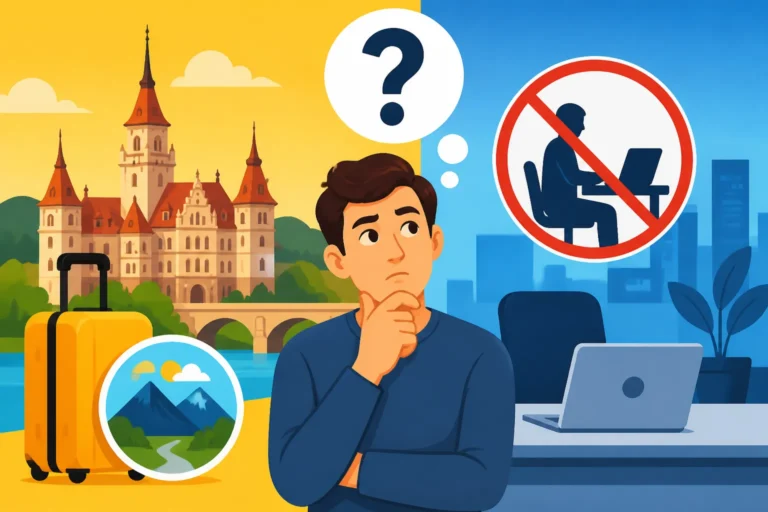
Moving to a new country like Romania is an exciting prospect, but the dream can quickly hit a snag if you're a non-EU/EEA citizen without a pre-arranged job offer that includes work permit sponsorship. It's a chicken-and-egg situation: you need a job to get a permit, but many jobs require you to already have the right to work. This guide is here to untangle that knot, offering a realistic roadmap to finding an employer in Romania willing to sponsor your work permit and set you on the path to a new life here.
Understanding the Work Permit Sponsorship Landscape in Romania
First, let's get real about what "sponsorship" actually means in Romania for non-EU/EEA citizens. It’s not just a friendly gesture; it’s a legal and administrative commitment from an employer. They are essentially vouching for you and going through a specific process to justify why you, a foreign national, are the right person for the job over a Romanian or other EU/EEA candidate. This process can be quite demanding for them, so understanding their perspective is key to your strategy.
Who Needs a Work Permit in Romania?
If you're from a country outside the European Union (EU) or European Economic Area (EEA), you will almost certainly need a work permit (Aviz de Muncă) to be legally employed in Romania. This is the crucial first step. Once the work permit is issued, you can then apply for a long-stay D-type visa for employment purposes, and finally, a residence permit once you're on Romanian soil.
EU/EEA citizens, on the other hand, enjoy the freedom of movement and generally do not need a work permit. They just need to register their residence after a certain period. So, if you're a third-country national, this entire process of finding sponsorship is your hurdle.
The Employer's Role and Responsibilities
When a Romanian company decides to sponsor you, they're taking on significant responsibilities. They have to prove to the General Inspectorate for Immigration (IGI) that they genuinely need a non-EU worker for a specific position. This usually involves:
- Job Market Testing: Advertising the position publicly for a certain period (often 10 days or more) through the National Employment Agency (ANOFM) to demonstrate that no suitable Romanian or EU/EEA candidate could be found. This is a big one, and it's where many expats get stuck.
- Document Preparation: Gathering a stack of company documents, your personal documents, and the employment contract details.
- Application Fees: Paying the fees associated with the work permit application.
- Compliance: Ensuring ongoing compliance with immigration and labor laws once you're hired.
The bureaucratic steps involved for the employer mean that many smaller companies or those not accustomed to hiring foreign talent might be hesitant. This immediately narrows your search to companies that either have a dedicated HR/legal department for international hires or a genuine, demonstrable need for your specific skillset that they can't find locally.
Strategies for Finding Sponsoring Employers
Now that we understand the landscape, let’s talk strategy. Finding a job in Romania that sponsors a work permit is absolutely achievable, but it requires a targeted and persistent approach.
Target Industries and Companies
Certain sectors in Romania are more prone to hiring foreign specialists and, consequently, more experienced in navigating the sponsorship process.
- IT & Tech: This is probably the biggest one. Romania's IT sector is booming, with strong demand for software developers, QA engineers, data scientists, and IT support specialists. Many international companies have operations in cities like Bucharest, Cluj-Napoca, Iași, and Timișoara, and they are frequently open to sponsoring non-EU talent. These companies often have English as a working language.
- Business Process Outsourcing (BPO) / Shared Service Centers: These centers handle various back-office functions (finance, HR, customer service) for international clients. They often require multilingual staff, and if your language combination is in demand (e.g., German, French, Spanish, Nordic languages), they might be willing to sponsor.
- Engineering & Manufacturing: Particularly in niche areas or for roles requiring highly specialized expertise that isn't readily available on the local market.
- Healthcare: While the public system has its challenges, there's a growing private healthcare sector that might seek foreign medical professionals, especially those with specific qualifications or who speak in-demand languages.
- Education: International schools often hire foreign teachers, though they usually have their own visa and permit processes tailored for educators.
Focusing your job search on companies within these sectors, especially larger multinational corporations or those with a history of international recruitment, significantly increases your chances. Look for companies like [mention a couple of real companies if possible, e.g., large tech firms or BPOs known to be present in Romania like a major international bank's service center or a software development house].
Where to Look for Job Openings
Gone are the days of just sending out random CVs. You need to be strategic about where you search.
- Online Job Boards:
- eJobs.ro and BestJobs.eu are the two largest Romanian job portals. While most listings are for local hires, many international companies will post their roles here. Use keywords like "English," "international," or the specific languages you speak. Filter by industry.
- LinkedIn: This is perhaps your most powerful tool. Many international companies recruit directly through LinkedIn. Make sure your profile is fully optimized, highlights your international experience, and clearly states your visa status or need for sponsorship. Connect with recruiters and HR managers in your target industries in Romania.
- Specialized IT Job Boards: Sites like Hipo.ro also list many IT roles, and you might find more English-language job descriptions there.
- Company Websites: Directly check the "Careers" or "Join Us" sections of the multinational companies you've identified in Romania. Many jobs are posted there first.
- Recruitment Agencies: Engage with recruitment agencies that specialize in placing foreign talent or in the high-demand sectors (especially IT and BPO). Agencies often have established relationships with companies willing to sponsor and understand the process. They can act as a crucial intermediary.
- Professional Networking: Leverage your existing network. Attend online (or in-person, if you're already here on a tourist visa) industry events, webinars, or expat meetups. Sometimes, the best opportunities come through referrals.
Crafting Your Application
Your application needs to scream "hire me, even if it's more work for you!"
- Tailored CV and Cover Letter: Don't just send a generic CV. Highlight why your specific skills and experience are uniquely valuable and hard to find locally. Address the sponsorship elephant in the room directly and professionally. Briefly state your understanding of the process and your commitment.
- Language Skills: If you speak Romanian, even at a basic conversational level, definitely mention it. It shows commitment and eases integration. If not, focus on your excellent English or other in-demand language skills. For those looking to pick up some Romanian to boost their chances, platforms like iTalki can be a fantastic resource for connecting with tutors and gaining practical language skills that will impress potential employers.
- Portfolio/Projects: For creative or technical roles, a strong portfolio or GitHub profile can speak volumes and differentiate you from local candidates.
- Be Prepared for Interviews: Expect questions about your long-term plans in Romania and your understanding of the immigration process. Show that you've done your homework and are a serious candidate.
Navigating the Application and Visa Process
Once you've secured that coveted job offer with sponsorship, the real administrative journey begins. It’s a multi-stage process involving both the employer and you, the future employee.
Employer Obtains the Work Permit (Aviz de Muncă)
This is the employer's primary responsibility. After they’ve formally offered you the job, they will initiate the work permit application with the General Inspectorate for Immigration (IGI). They will need various company documents, your CV, copies of your educational qualifications, and potentially a criminal record certificate from your home country.
The IGI will evaluate their application, ensuring they've met the criteria, including the job market test. This phase can take several weeks, sometimes even a couple of months, depending on the IGI's workload and the complexity of the case. Patience is a virtue here; constantly pestering your employer won't speed things up. It’s a bureaucracy, and it moves at its own pace.
Applying for the Long-Stay D-Type Visa for Employment
Once the employer successfully obtains the Aviz de Muncă (work permit) for you, they will send you the original document. With this, you can then apply for your Long-Stay D-Type Visa for Employment (D/AM) at the Romanian Embassy or Consulate in your country of residence. This visa allows you to enter Romania with the intention of working.
The documents you'll typically need include:
- The original Aviz de Muncă
- Your passport (valid for at least 6 months beyond your intended stay)
- A visa application form
- Recent passport-sized photos
- Proof of accommodation in Romania (e.g., a rental agreement or a declaration from your employer)
- Proof of financial means (enough to support yourself, though your employment contract often suffices)
- Travel medical insurance for the validity of the visa, covering a minimum of €30,000
- A criminal record certificate or equivalent from your home country, apostilled or super-legalized
- Flight reservation
- An invitation letter from the employer
The visa processing time can also vary, usually taking between 2-4 weeks. Ensure all your documents are correctly translated into Romanian and apostilled or super-legalized if required. Mistakes at this stage can lead to frustrating delays. For more in-depth information on this step, you might find a guide like How to Get a Work Permit (Aviz de Muncă) and Long-Stay Visa in Romania particularly useful.
Obtaining Your Residence Permit
After you arrive in Romania on your D-type employment visa, you have a limited window (usually within 30 days) to apply for your residence permit (Permis de Ședere) at the local General Inspectorate for Immigration office. This permit will be your official proof of legal residence and work authorization in Romania.
Again, you’ll need to present various documents, including your passport, visa, the original work permit, your employment contract, proof of accommodation, and proof of health insurance. Many expats opt for private health insurance during their initial period before fully integrating into the public system. You'll also be fingerprinted and photographed for your biometric residence card. This card usually arrives within a few weeks to a month after your application. Remember, this is distinct from your work permit; the work permit grants the employer permission to hire you, while the residence permit grants you permission to reside and work. You can learn more about this crucial step in a guide like How to Apply for a Romanian Residence Permit Permis de Ședere.
Key Considerations Before You Commit
Before you pack your bags and jump into the Romanian job market, there are a few important things to keep in mind to ensure a smooth transition.
Financial Preparedness
Even with a job offer, the initial move to Romania can incur significant costs. You'll likely need funds for:
- Visa Application Fees: While some employers might cover parts of this, it's typically your responsibility.
- Travel Costs: Flights, transport within Romania upon arrival.
- Initial Accommodation: Deposit and first month's rent for an apartment, or temporary accommodation like an Airbnb while you search for something permanent.
- Settling In: Groceries, local transport, setting up utilities.
- Health Insurance: You'll need private health insurance until you officially register for the public system (CASS), which usually happens once you start working and your employer begins making contributions.
- Buffer Funds: Always have some emergency savings.
Understanding The Complete Guide to Cost of Living in Romania for Expats (2026) can help you budget effectively for these initial expenses.
Language and Integration
While many companies in sectors like IT and BPO operate primarily in English, daily life in Romania will inevitably involve Romanian. Learning some basic phrases can significantly ease your integration, from going to the market to dealing with administrative tasks. Romanians appreciate the effort, even if your accent is terrible!
Consider taking some introductory Romanian classes, even before you arrive. It will not only make your life easier but also help you connect with locals and show your commitment to your new home. Don't be afraid to use platforms like iTalki to get a head start on the language; even a few basic lessons can make a world of difference when you first land.
Understanding Your Rights and Obligations as an Employee
Once you're employed, you'll be subject to Romanian labor law. It's vital to understand your employment contract, working hours, annual leave entitlements, and social contributions. Romania has a clear legal framework for employees, and being aware of your rights protects you. For example, knowing your Understanding Annual Leave Concediu de Odihnă Entitlements in Romania can prevent misunderstandings.
Moreover, you'll be contributing to the Romanian social security system (CAS and CASS), which covers things like pensions and healthcare. You can delve deeper into this with a resource like Understanding Social Contributions CAS and CASS for Employees in Romania. On the financial side, you’ll also be a tax resident, and understanding your tax obligations is crucial. Resources like Taxes for Expats can be incredibly helpful in navigating the intricacies of the Romanian tax system, especially if you have income from other sources or need to understand double taxation treaties. Knowing How Much Income Tax Will I Pay in Romania in 2026 will be a key part of your financial planning.
The Bigger Picture: Your Long-Term Goals
Think about your long-term plans. Do you see yourself staying in Romania for many years, eventually pursuing permanent residence or even citizenship? Each step you take now, from getting your initial work permit to maintaining consistent employment, builds towards these longer-term goals. Romania offers pathways for long-term residents, but they all require continuous legal residence.
Moving to Romania for work as a non-EU citizen is a journey with its share of bureaucratic hurdles, but with persistence, a targeted job search, and careful preparation, it's a journey many expats successfully complete. Welcome to Romania!
Disclaimer
The information provided in this guide is for general informational purposes only and does not constitute legal or professional advice. Immigration laws and procedures in Romania are subject to change. It is highly recommended to consult with a qualified immigration lawyer or relevant Romanian authorities (such as the General Inspectorate for Immigration or the Ministry of Foreign Affairs) for personalized advice pertaining to your specific situation.