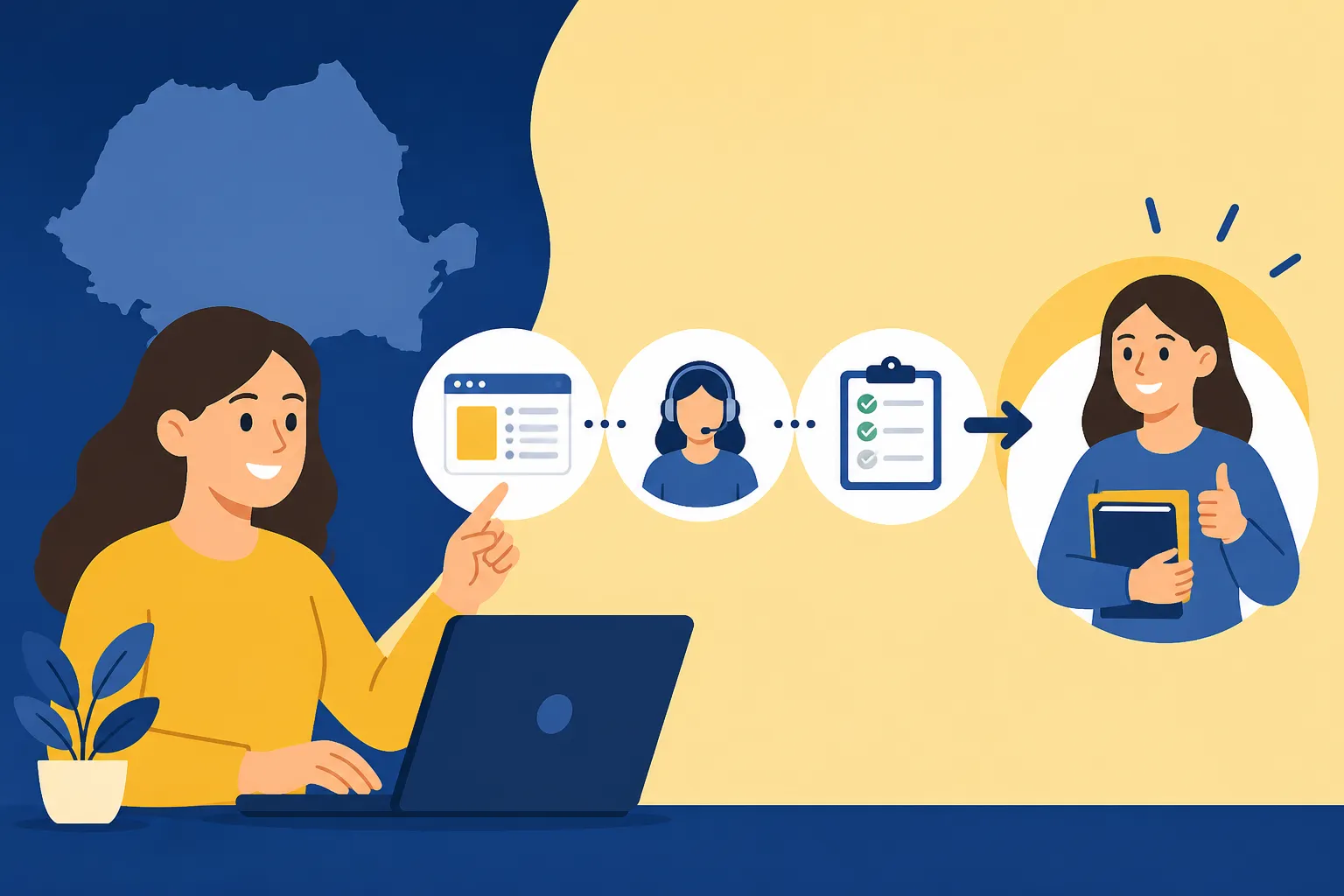
How to Enrol in a Romanian Language Course
Moving to Romania, you quickly realize that while many people in bigger cities speak English, especially the younger generation, there's a certain invisible barrier that learning the local language can break. It's not just about ordering food or understanding directions; it's about truly connecting, navigating the labyrinthine bureaucracy without a translator, and feeling genuinely at home. This guide is here to walk you through the various avenues for enrolling in a Romanian language course, helping you find the best fit for your needs and easing your transition into this beautiful, complex country.
Why Learning Romanian is More Than Just a Language (and Why It's Worth It)
When you first arrive, especially in Bucharest or Cluj-Napoca, you might think, "Oh, I can get by with English." And for a while, you probably can. But I've been here long enough to tell you, getting by and living are two very different things. Learning Romanian isn't just a practical skill; it's an investment in your well-being and a pathway to a much richer expat experience.
Navigating Daily Life and Bureaucracy
Let's be honest, Romanian bureaucracy can be a beast. Even for Romanians, it's often a source of sighs and endless paperwork. Imagine adding a language barrier to that! Trying to explain a complex issue at the tax office (ANAF), or understanding the nuances of your utility bills, or even just explaining your symptoms to a doctor outside of a private clinic can be incredibly frustrating. While Google Translate is a godsend for quick queries, it falls short in genuine, back-and-forth communication.
For example, I remember a friend who needed to clarify a point with their local city hall regarding their property tax. They brought a Romanian friend along, but even then, the official's rapid-fire explanations and specific terminology were hard to follow. Being able to understand the core of the conversation, even if you can't articulate a perfect response, shifts the power dynamic. It allows you to ask targeted questions, understand deadlines, and confirm information yourself, rather than relying solely on someone else's interpretation. This is particularly crucial when dealing with official matters like registering your residence (Viză de Flotant) in Romania or trying to understand the intricacies of your social contributions.
Deeper Cultural Immersion and Friendships
Beyond the practical, there's the human element. Romanians are incredibly warm and hospitable, but like any culture, they appreciate when you make an effort to engage in their language. A simple "Bună ziua!" (Good day!) or a fumbled attempt at a sentence can immediately open doors and melt away initial reservations. It shows respect, a willingness to integrate, and an open heart.
Think about it: many of the most profound cultural experiences happen organically – eavesdropping on conversations at a local market, understanding a joke shared in a village pub, or simply being able to chat with your elderly neighbor. These moments are often inaccessible without some grasp of Romanian. Forming genuine friendships also becomes much easier. While many younger Romanians speak excellent English, their innermost thoughts, feelings, and the rich tapestry of their cultural references are often best expressed in their mother tongue. You might find yourself invited to a sărbătoare (celebration) or a weekend trip, and while the hosts will likely try their best with English, imagine the joy and connection of sharing stories and laughter in Romanian. It’s an irreplaceable part of truly building a life here.
Understanding Your Options: In-Person vs. Online Courses
When you decide to take the plunge and start learning Romanian, the next big question is how. Thankfully, expats in Romania have a wealth of options, from traditional classroom settings to flexible online platforms. Each approach has its merits and drawbacks, so it's worth considering what best suits your learning style, schedule, and personal goals.
Traditional Language Schools and Universities
For many, the structure and routine of a classroom setting are ideal. Romania, especially in its larger cities, offers several reputable language schools and university programs designed for foreigners. These typically provide a comprehensive curriculum, qualified instructors, and the invaluable opportunity to interact with fellow students.
- University Language Centres: Many universities, like the University of Bucharest, Universitatea Babeș-Bolyai in Cluj-Napoca, or Universitatea Alexandru Ioan Cuza in Iași, have dedicated language departments or summer schools that offer intensive or semester-long Romanian courses for foreigners. These programs are often highly academic, focusing on grammar, vocabulary, and cultural context. They might be particularly appealing if you're a student yourself or if you're looking for a very structured, in-depth approach. However, university programs might follow strict academic calendars, which can be less flexible for working professionals.
- Private Language Schools: Cities like Bucharest, Cluj-Napoca, and Timișoara also host various private language schools. These schools tend to offer more flexible schedules, including evening or weekend classes, making them suitable for expats with full-time jobs. They often have smaller class sizes, allowing for more personalized attention, and a strong focus on conversational skills. Some well-known names include the Romanian Cultural Institute (ICR) which sometimes offers courses, or smaller, local language centers. It’s worth checking reviews and asking for a trial class if possible. The fees for these courses can vary significantly, so it’s wise to compare a few options.
The benefit of these in-person options is the immersion factor – you're physically in a Romanian-speaking environment, practicing with your peers and teacher. The shared experience of struggling through conjugations and new vocabulary can also foster a great sense of community among expats. Plus, these institutions often have experience guiding foreigners through the process, which can be a huge relief if you're new to the country.
Private Tutors and Online Platforms
If the rigidity of a classroom isn't your thing, or if you live in a smaller town where options are limited, private tutors and online platforms offer fantastic alternatives. These options provide unparalleled flexibility and often a more tailored learning experience.
- Private Tutors: Hiring a private tutor means you get one-on-one attention, and the curriculum can be entirely customized to your needs. If you're struggling with specific grammar points, or you need to focus on vocabulary for your job, a private tutor can adapt. You can find tutors through recommendations from other expats, local expat Facebook groups, or dedicated tutoring websites. Many Romanian university students or retired teachers offer private lessons at very reasonable rates. A good tutor won't just teach you grammar; they'll also share cultural insights and practical tips that a textbook might miss. This can be a game-changer if you're looking to gain practical fluency quickly.
- Online Platforms: The digital age has revolutionized language learning. Platforms like iTalki connect you with native Romanian speakers for one-on-one lessons from anywhere in the world. You can choose tutors based on their price, experience, and teaching style, often with trial lessons to ensure a good fit. Other platforms might offer self-paced courses with interactive exercises, videos, and quizzes. Duolingo, Memrise, and similar apps are great for vocabulary building and daily practice, although they often don't provide the structured grammar explanations or conversational practice you get from a dedicated course or tutor. The main advantage here is flexibility – you can learn on your schedule, at your pace, and from the comfort of your home. This is especially useful for those with busy work schedules or families.
| Feature | In-Person Courses (Schools/Universities) | Online Platforms (e.g., iTalki) & Private Tutors |
|---|---|---|
| Pros | Structured curriculum, peer interaction, immersive environment, formal certification (often) | Highly flexible, customized learning, convenience, wide tutor choice, often more affordable |
| Cons | Less flexible schedule, potentially larger class sizes, fixed location, might be more expensive | Requires self-discipline, less peer interaction, internet dependency, quality can vary |
| Best For | Learners who thrive in a classroom, prefer routine, want formal qualifications, enjoy group dynamics | Learners needing flexibility, specific learning goals, one-on-one attention, remote locations |
| Typical Cost | €200-€800 per course/semester (variable) | €5-€25 per hour for tutors, subscription fees for apps (variable) |
Choosing the Right Course for Your Needs (and Budget)
With so many options, deciding which path to take can feel a bit overwhelming. But don't worry, it's about aligning the course with your personal situation and what you hope to achieve. There's no single "best" option; only the best one for you.
Assessing Your Learning Style and Goals
Before you even look at prices or schedules, take a moment to reflect on how you learn best and what your ultimate goal is.
- Are you a visual, auditory, or kinesthetic learner? Some people absorb information by seeing it written down (visual), others by hearing it spoken (auditory), and some by actively doing and practicing (kinesthetic). Traditional classrooms often combine these, but a private tutor can lean heavily into your preferred style. For instance, if you're a kinesthetic learner, a tutor might focus on role-playing daily scenarios or walking you through practical tasks like going to the market.
- What's your main motivation? Do you need to learn Romanian for administrative purposes, like understanding the nuances of how Romania's Health Insurance House (CNAS) Works or simply interacting at the local piață? Or are you aiming for fluency to truly integrate and perhaps even secure a job that requires Romanian? If your goal is more formal, perhaps to validate Romanian language skills for employment or even apply for Romanian citizenship by naturalisation down the line, a structured course with formal assessments might be more beneficial. If it's purely for conversational ease, a tutor or regular practice sessions on a platform like iTalki could be perfect.
- How much time can you realistically dedicate? Be honest with yourself. An intensive university program might be amazing, but if you're working full-time, will you have the energy for hours of homework each night? Sometimes, consistency with shorter, more frequent sessions is more effective than sporadic, long ones. Many expats find that an evening Romanian course in Bucharest or Cluj fits well around their work schedule.
Understanding these aspects will help you narrow down your choices considerably. For example, if you know you thrive on interaction and structured homework, a language school is likely a better bet than relying solely on apps.
Considering Location, Schedule, and Cost
Once you have a clearer picture of your learning preferences and goals, it's time to get practical.
- Location, Location, Location: If you opt for in-person classes, proximity is key. Commuting across a busy city like Bucharest after a long workday can quickly lead to burnout. Look for schools or tutors that are easily accessible from your home or workplace. For those in smaller towns, online options might be the only viable choice.
- Schedule Flexibility: This ties back to your time commitment. Do you need weekend classes, evening sessions, or can you carve out an hour or two during your workday for online lessons? Some language schools offer various intensity levels, from super-intensive daily classes to once-a-week evening sessions.
- Cost and Budget: This is often a major factor. As noted in the table above, the cost of a Romanian language course can vary widely. University programs might have higher upfront costs but offer comprehensive packages. Private schools fall somewhere in the middle, and private tutors/online platforms can be very budget-friendly, especially if you opt for conversation partners rather than certified teachers. Always inquire about all fees – registration, materials, and tuition – to avoid surprises. Sometimes, looking into packages or longer-term commitments can offer a better per-hour rate. Remember that investing in your language skills is also an investment in your life here in Romania, potentially saving you money on translation services or facilitating easier administrative processes, especially when it comes to understanding complex topics like Taxes in Romania for Expats.
The Enrolment Process: What to Expect (and What Documents You'll Need)
Once you've zeroed in on a few promising options, it's time for the nitty-gritty: enrolment. While the exact steps might differ slightly between institutions, there's a general process you can expect. Having your documents ready and knowing what to anticipate will make the experience much smoother.
Placement Tests and Level Assessment
Unless you're a complete beginner (A0 level), most reputable language schools and university programs will require you to take a placement test. This isn't meant to intimidate you; it's simply to ensure you're placed in a class that matches your current proficiency. Being in the right level is crucial for effective learning – you don't want to be bored in a class that's too easy, nor overwhelmed by one that's too advanced.
- What to Expect: Placement tests typically involve a written component (grammar, vocabulary) and often an oral interview. The oral part is where they assess your speaking and listening comprehension. Don't stress too much about it! Just do your best. They're looking for an honest assessment of where you stand.
- Why it Matters: Imagine you've learned Romanian for a year, but you're placed in a beginner's class. You'll quickly lose motivation. Conversely, if you're a beginner thrown into an intermediate class, you'll feel lost and frustrated. This assessment ensures you get the most out of your investment. For those curious about the official European framework, most courses will classify levels from A1 (beginner) to C2 (proficiency). Many expats eventually aim for a B2 or C1 if they need to get a Romanian language certificate for residence or employment.
Required Documents and Payment Procedures
After your placement, or if you're a true beginner, the next step is formal registration. This is where Romania's love for paperwork might make an appearance, but typically it's quite straightforward for language courses.
- Standard Documents: You'll usually need your passport or national ID (if you're an EU citizen), a copy of your residence permit (Permis de Ședere) if you have one, and sometimes proof of address. While not always strictly required for a language course, having your CNP (Personal Numeric Code) can sometimes streamline administrative processes, even for non-official applications. It's always a good idea to bring both original documents and a few photocopies, just in case.
- Application Forms: You'll fill out an application form with your personal details, contact information, and chosen course.
- Payment: Payment procedures vary. Some schools require full payment upfront for a semester or course package, while others might allow for installment payments. Most accept card payments, bank transfers, or even cash. Always ask for a receipt or invoice (factură) for your records. If your employer is sponsoring your language lessons, they might need specific types of invoices. For self-employed individuals (PFA), this might even be a deductible expense, something worth discussing with your accountant who handles your Taxes for Expats in Romania.
Once all the paperwork is done and fees are paid, congratulations! You're officially enrolled. You'll receive information on your class schedule, classroom number (if in-person), and any required textbooks or materials.
Beyond the Classroom: Practicing and Maintaining Your Romanian
Enrolling in a course is a fantastic first step, but language learning doesn't stop when you leave the classroom. To truly make progress and internalize what you're learning, consistent practice and real-world application are non-negotiable. This is where the magic happens – taking those textbook phrases and making them yours in everyday interactions.
Engaging with Local Communities
This is arguably the most effective (and sometimes intimidating) way to practice your Romanian. Romanians are generally very patient and encouraging when they see foreigners trying to speak their language. Don't be afraid to make mistakes; they're an essential part of learning!
- Daily Interactions: Start small. Instead of immediately switching to English, try ordering your coffee in Romanian, asking for directions, or chatting with the cashier at the supermarket. Even a simple "Mulțumesc" (Thank you) or "Cu plăcere" (You're welcome) goes a long way. The key is consistency. Make it a personal challenge to use Romanian in at least one interaction every day.
- Social Groups and Meetups: Look for language exchange groups in your city. Many expat communities organize "tandem" exchanges where you can practice Romanian with a native speaker who wants to learn English (or another language). Websites like Meetup.com or local Facebook groups are great resources for finding these. You might also find local hobby groups or sports clubs where you can interact with Romanians in a relaxed, social setting. If you're pondering if you need to speak Romanian to get a job in Romania, while many international companies operate in English, for local roles or for deeper integration, it's definitely a huge asset.
- Volunteering: This is a fantastic way to give back to the community while immersing yourself in Romanian. Whether it's helping at an animal shelter, an NGO, or a community event, you'll be surrounded by native speakers in a meaningful context. It takes the pressure off "performing" perfectly and allows for natural language acquisition.
- Befriending Locals: This might seem obvious, but actively seeking out Romanian friends can significantly boost your language skills. Beyond your expat bubble, connect with your colleagues, neighbors, or people you meet through hobbies. They can correct your mistakes kindly, explain idioms, and expose you to colloquialisms that textbooks rarely cover.
Leveraging Technology and Media
In addition to face-to-face interactions, there are countless digital resources to supplement your learning and keep Romanian present in your daily life.
- Romanian Media: Dive into Romanian TV shows, movies, podcasts, and music. Start with subtitles in Romanian, then try watching without them. Listen to Romanian radio during your commute. Websites like TVR (national television) or Radio România Actualități offer live streams and archives. This exposes you to natural speech patterns, different accents, and contemporary vocabulary.
- Language Learning Apps & Tools: Continue using apps like Duolingo, Memrise, or Anki (for flashcards) for daily vocabulary reinforcement. Translate new words you encounter and add them to your personalized flashcard deck.
- Online Forums & Communities: Join online forums or Facebook groups dedicated to Romanian language learners. You can ask questions, share resources, and even find practice partners.
- Change Device Language: A simple yet effective trick: change the language on your phone, computer, or social media accounts to Romanian. You're already familiar with the interface, so you'll pick up new words without even trying.
The key is consistency and making Romanian a part of your daily routine, not just a task you do in class. The more you expose yourself to the language and actively use it, the faster you'll progress and the more confident you'll become in your new home. Whether it's understanding the electronic prescription (Rețeta Electronică) system at a pharmacy or simply making small talk, every word you learn makes your life in Romania a little bit richer.
Disclaimer
The information provided in this guide is for general informational purposes only and does not constitute professional advice. While we strive to keep the information accurate and up-to-date, administrative procedures, course availability, and legal requirements in Romania can change. We recommend verifying all details with official institutions, language schools, or qualified professionals before making any decisions. We do not assume any liability for actions taken based on the information contained herein.